Conversational AI: Reshaping the Hotel Guest Experience and Defining the Future of Hospitality
By:
TokenRing AI
November 12, 2025 at 10:49 AM EST
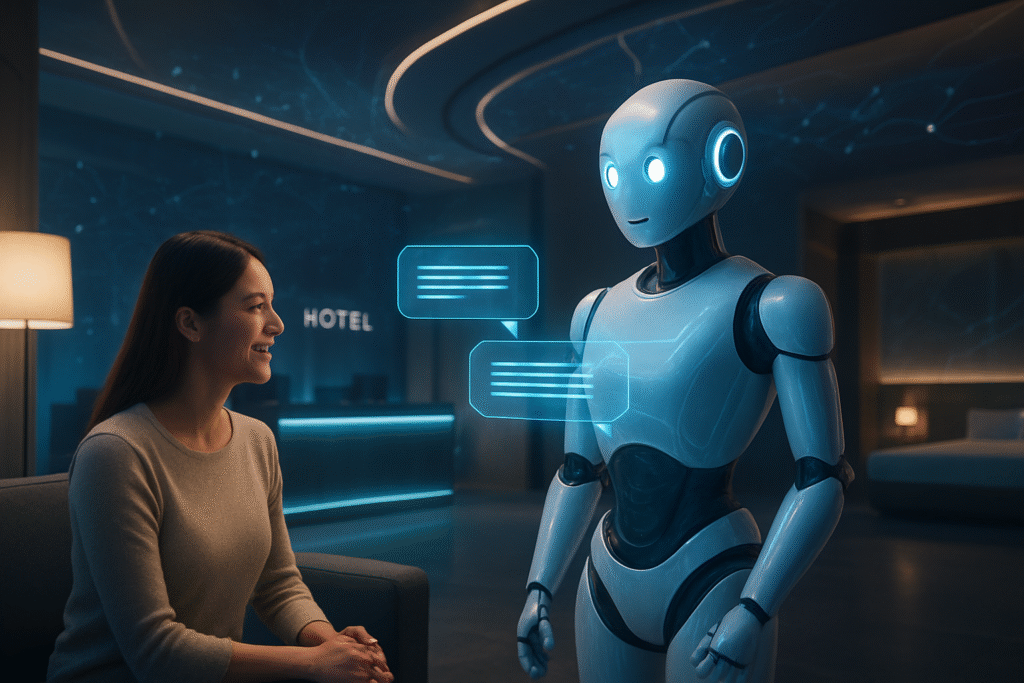
Conversational Artificial Intelligence is rapidly transforming the hotel guest experience, offering immediate, personalized, and efficient service that significantly enhances both guest interaction and operational efficiency. This technology is no longer a mere buzzword but a practical application with profound implications for the hospitality industry, moving hotels into an era of hyper-personalization and seamless digital interaction. By providing instant, round-the-clock support and alleviating staff workload, conversational AI is carving out a notable competitive edge for early adopters. This shift is not just about automation; it's about augmenting human service, allowing hotel staff to focus on delivering truly exceptional, empathetic service while AI handles the repetitive and transactional elements, creating a more seamless, personalized, and efficient experience for guests from pre-arrival to post-checkout. Detailed Technical Coverage: The AI-Powered Guest JourneyConversational AI is transforming the hospitality sector by introducing advanced automation and personalization across various guest touchpoints. This technology, encompassing chatbots, voice assistants, and integrated platforms, significantly enhances guest experience, streamlines operations, and offers capabilities far beyond traditional methods. Chatbots: The Digital ConciergeChatbots in hotels serve as virtual concierges and customer service agents, handling a wide array of guest interactions. Key applications include booking and reservation management, providing instant answers to frequently asked questions (FAQs), streamlining pre-arrival and check-in/check-out processes, offering in-stay support for requests like room service or housekeeping, and delivering personalized recommendations for local attractions or hotel services. Modern hotel chatbots are powered by sophisticated AI technologies such as Natural Language Processing (NLP) and Machine Learning (ML), which are core to understanding and interpreting guest inquiries in human-like language, often leveraging Large Language Models (LLMs) for more advanced conversational abilities. They offer multilingual support, often in over 100 languages, and seamlessly integrate with vital hotel systems like Property Management Systems (PMS) and Customer Relationship Management (CRM) for real-time data access. Unlike static FAQs or rigid Interactive Voice Response (IVR) systems, AI-powered chatbots engage in natural, conversational dialogues, providing context-aware information. This drastically reduces the workload on human staff, automating up to 80% of routine queries and eliminating guest wait times. Voice Assistants: Hands-Free ConvenienceVoice assistants bring hands-free convenience to the hotel room and beyond. Guests can control various room amenities such as lighting, temperature, curtains, and television using simple voice commands. They can also make service requests like ordering room service, requesting extra towels, or reporting maintenance issues verbally. Acting as in-room digital concierges, they provide information on hotel services, local attractions, weather forecasts, and can even assist with reservations for hotel restaurants or spa treatments. These systems rely on sophisticated technologies including Voice Recognition (Speech-to-Text), NLP, ML, and Text-to-Speech. They integrate with Internet of Things (IoT) devices for smart room controls and connect with PMS, CRM, and Point of Sale (POS) systems to fulfill service requests. Unlike traditional physical controls or in-room phones, voice assistants offer unparalleled hands-free convenience, centralizing control over multiple devices and services. Privacy and security are paramount, with many hotel-specific voice assistants (e.g., Alexa for Hospitality from Amazon (NASDAQ: AMZN), Google for Hospitality from Google (NASDAQ: GOOGL)) designed not to store voice recordings or link activity to personal guest accounts. Integrated Platforms: A Holistic ApproachIntegrated conversational AI platforms combine chatbots and voice assistants with back-end systems to provide a holistic and consistent guest experience across all communication channels. These platforms manage the entire guest journey, from pre-arrival inquiries to post-stay feedback, ensuring seamless and consistent service. They centralize all guest communications (web chat, SMS, WhatsApp, voice calls, in-room interactions) and automate routine tasks while intelligently routing complex queries to the appropriate human staff. Technically, these platforms feature omnichannel integration, connecting with all major communication channels and internal hotel systems. They utilize advanced AI engines (NLP, ML, LLMs) to understand diverse inputs, maintain context, and continuously learn. By creating unified guest profiles from aggregated data, they enable hyper-personalized offers and dynamic pricing strategies. This approach differs significantly from fragmented legacy systems, which often operated in silos, leading to disconnected guest experiences. Integrated platforms break down these silos, offering comprehensive automation and personalization that was previously unattainable with disparate systems or purely human-driven processes. Company Impact: Shifting Sands in the AI and Hospitality LandscapeThe integration of conversational AI is profoundly reshaping the hospitality industry, creating new opportunities and challenges for AI companies, tech giants, and startups alike. This technology, encompassing chatbots, virtual assistants, and voice AI, leverages natural language processing (NLP), machine learning (ML), and large language models (LLMs) to enhance guest experiences and streamline operations. Beneficiaries Across the SpectrumAI Infrastructure Providers: Tech giants and major AI labs stand to benefit immensely as they provide the foundational AI models, platforms, and cloud infrastructure essential for developing and deploying conversational AI solutions. Companies like Google (NASDAQ: GOOGL) with its Google Assistant and Vertex AI, OpenAI (private) with ChatGPT and GPT-4o, Microsoft (NASDAQ: MSFT) with Azure AI, and Amazon (NASDAQ: AMZN) with AWS AI Services and Alexa, are crucial for powering sophisticated, human-like conversational AI in hospitality. IBM (NYSE: IBM) Watson has also demonstrated its capabilities in this sector. Specialized Conversational AI Solution Providers: A burgeoning ecosystem of startups and niche AI companies focuses specifically on developing and implementing AI solutions tailored for the hospitality sector. These include Quicktext (private) with its multilingual Velma AI chatbot, Teneo.Ai (private), which leverages advanced AI including GPT-4o for comprehensive solutions, Callin.io (private) specializing in AI phone agents, and Visito AI (private) using LLMs like OpenAI's GPT-4o. Other notable players include Aiello (private), Chatlyn (private), and Inntelo AI (private), all offering specialized tools and platforms for hotels. Competitive Dynamics and DisruptionsThe rise of conversational AI presents a dual competitive dynamic. Tech giants benefit from increased demand for their core AI services and cloud infrastructure, reinforcing their position as fundamental AI enablers. Their existing smart home ecosystems (Google Assistant, Alexa) provide a strategic advantage in embedding AI directly into hotel infrastructure. However, they also face competition from nimble startups that can rapidly develop highly specialized, industry-specific applications and integrations. This allows tech giants to gather vast amounts of industry-specific conversational data, refining their general AI models. Conversational AI is poised to disrupt several traditional aspects of hospitality. It significantly reduces the reliance on large human call centers and front-desk staff for routine inquiries, leading to cost reduction and staff optimization. AI-driven booking agents can streamline the reservation process, potentially reducing reliance on traditional Online Travel Agencies (OTAs) and shifting towards direct bookings. In-room voice-activated controls and virtual concierges are replacing physical room service menus and information binders. Furthermore, AI's ability to analyze guest data enables hyper-personalized offers and dynamic pricing, potentially disrupting generic marketing campaigns. Strategic Market PositioningCompanies can establish strong market positions through specialization and deep industry integration, offering highly tailored solutions that seamlessly integrate with existing Property Management Systems (PMS) and Customer Relationship Management (CRM) platforms. Providing a seamless omnichannel experience across all guest touchpoints, robust multilingual capabilities, and a clear demonstration of ROI through cost reduction and revenue enhancement are crucial differentiators. A human-in-the-loop design, ensuring seamless escalation to human agents for complex issues, is also vital. Emphasis on data privacy, security, ethical AI, and customizable platforms will further solidify a competitive advantage, enabling predictive and proactive guest services. Wider Significance: AI's Broad Impact on Hospitality and SocietyThe integration of conversational Artificial Intelligence (AI) is profoundly reshaping the hospitality industry, marking a significant evolution within the broader AI landscape and bringing forth a range of impacts, concerns, and parallels to past technological milestones. Fitting into the Broader AI LandscapeConversational AI in hospitality is a key component of the rapidly expanding global conversational AI market, driven by advancements in Natural Language Processing (NLP), Machine Learning (ML), and speech recognition technologies. This technology extends beyond simple chatbots to sophisticated virtual assistants capable of understanding nuanced human intent. Major tech companies like Microsoft (NASDAQ: MSFT), Google (NASDAQ: GOOGL), and Amazon (NASDAQ: AMZN) are integrating AI into their broader ecosystems, offering scalable, cloud-based solutions. The rise of generative AI further enhances conversational AI's capabilities, allowing for more dynamic content creation and personalized interactions, aligning with a broader trend of hyper-personalization. Investment in AI in hospitality is expected to grow by 60% annually from 2023 to 2033, underscoring its centrality to future industry operations. Impacts on Industry and SocietyThe impact on the hospitality industry is multi-faceted:
Societally, conversational AI is shifting customer expectations towards personalized, instant, and digital interactions. It is also redefining human roles, allowing employees to focus on delivering "human magic" through empathy and genuine connection, necessitating a shift in required skill sets. Potential ConcernsDespite the benefits, significant concerns exist:
Comparisons to Previous AI MilestonesThe current evolution of AI in hospitality builds upon earlier milestones:
In essence, conversational AI is a powerful manifestation of broader AI trends, offering unprecedented opportunities for efficiency and personalization while simultaneously necessitating careful consideration of ethical concerns, particularly regarding human employment and data privacy. Future Developments: The Horizon of AI in HospitalityConversational AI is rapidly transforming the hospitality industry, moving beyond basic chatbots to intelligent systems that provide personalized guest experiences, streamline operations, and drive revenue. This evolution is driven by advancements in natural language processing (NLP), machine learning, and generative AI, enabling more natural and contextual interactions. Near-Term Developments (1-3 years)In the near term, conversational AI in hospitality will focus on enhancing current capabilities and broader adoption. We can expect:
Long-Term Developments (5+ years)Looking further ahead, conversational AI is predicted to become deeply integrated into the entire hospitality ecosystem, leading to more autonomous and predictive systems:
Potential Applications and Use Cases on the HorizonThe applications are vast:
Challenges That Need to Be AddressedSuccessful and ethical implementation requires overcoming challenges:
Expert PredictionsExperts predict a rapid and transformative future:
Wrap-up: The Dawn of Intelligent HospitalityConversational AI is rapidly reshaping the hospitality landscape, moving beyond mere novelty to become an indispensable tool for enhancing guest experiences, streamlining operations, and driving efficiency. This transformative force is redefining guest interactions and operational processes, pushing the industry into a new era of intelligent service. Summary of Key TakeawaysThe integration of conversational AI, encompassing chatbots, virtual assistants, and voice assistants, brings enhanced personalization, 24/7 instant service, and multilingual support to guests. For hotels, it translates to improved operational efficiency, significant cost savings through automation of routine tasks, streamlined booking processes, and invaluable data-driven insights for strategic decision-making. While the benefits are clear, challenges such as data privacy, the need to maintain a human touch, seamless integration with existing systems, and ethical considerations regarding job displacement remain critical areas of focus. Significance in AI History and the Hospitality IndustryIn AI history, the advancements in Natural Language Processing (NLP), Machine Learning (ML), and Large Language Models (LLMs) have enabled conversational AI to evolve from rule-based systems to sophisticated, context-aware, and human-like interactions. The integration of generative AI is further accelerating this evolution. For the hospitality industry, conversational AI is a paradigm shift, directly addressing persistent challenges like staffing shortages and the growing demand for personalized, instant service. It allows businesses to scale service quality and reach a broader customer base without proportional increases in human resources, driving the industry towards more data-driven, customer-centric service models. The projected annual growth of AI adoption in hospitality by 60% from 2023 to 2033 underscores its pivotal role. Final Thoughts on Long-Term ImpactThe long-term impact will be profound: redefined guest expectations, an evolution of human roles towards higher-value activities and "human magic," and the realization of hyper-personalization at scale. Conversational AI will integrate seamlessly into smart ecosystems, becoming a crucial competitive differentiator for hotels. However, navigating ethical considerations around data privacy, bias, and job displacement will be paramount. The future workforce will increasingly involve human employees working collaboratively with AI, with training programs essential for this new paradigm. What to Watch for in the Coming Weeks and MonthsIn the immediate future, we should watch for advancements in emotionally intelligent chatbots, further integration of generative AI for more natural conversations, and the expansion of seamless omnichannel support across all platforms. Greater focus on robust data privacy and security solutions will be critical. Expect the emergence of more specialized AI agents handling niche tasks and the increased use of AI for internal workforce support. Finally, the development of real-time predictive capabilities, allowing AI to anticipate guest needs proactively, will mark a significant leap forward. The journey of conversational AI in hospitality is dynamic and evolving, poised to become a fundamental pillar, pushing the boundaries of guest satisfaction and operational excellence. This content is intended for informational purposes only and represents analysis of current AI developments. TokenRing AI delivers enterprise-grade solutions for multi-agent AI workflow orchestration, AI-powered development tools, and seamless remote collaboration platforms. More NewsView More
Nike Beats on Earnings but Struggles in China and Faces Tariffs ↗
December 19, 2025
Via MarketBeat

Is the AI Boom a Bubble? These 2 Dividend Stocks Say No ↗
December 19, 2025

4 High-Potential ETFs for 2026: Small Caps, Space Stocks, and More ↗
December 19, 2025

META Rises Amid Tech Decline, Trump's AI Order Praised By Analyst ↗
December 19, 2025

TL;DR: Why Reddit is the New Growth Stock to Beat ↗
December 19, 2025
Via MarketBeat
Recent QuotesView More
Stock Quote API & Stock News API supplied by www.cloudquote.io
Quotes delayed at least 20 minutes. By accessing this page, you agree to the Privacy Policy and Terms Of Service.
© 2025 FinancialContent. All rights reserved.
|