SK Hynix Unleashes $14.6 Billion Chip Plant in South Korea, Igniting the AI Memory Supercycle
By:
TokenRing AI
December 11, 2025 at 17:16 PM EST
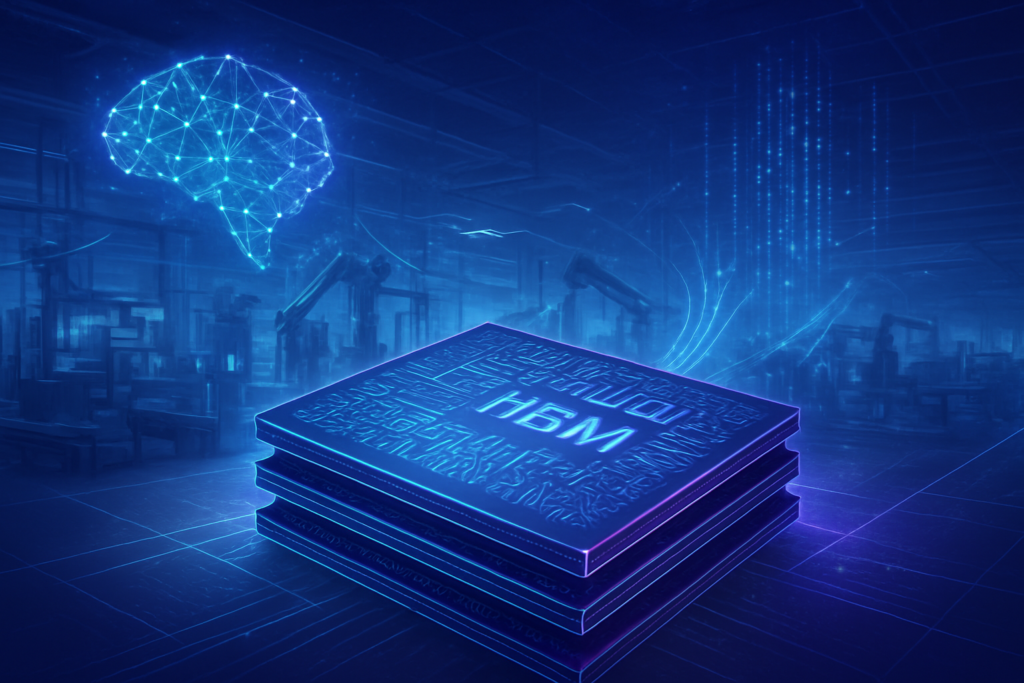
SK Hynix (KRX: 000660), a global leader in memory semiconductors, has announced a monumental investment of over 20 trillion Korean won (approximately $14.6 billion USD) to construct a new, state-of-the-art chip manufacturing facility in Cheongju, South Korea. Announced on April 24, 2024, this massive capital injection is primarily aimed at dramatically boosting the production of High Bandwidth Memory (HBM) and other advanced artificial intelligence (AI) chips. With construction slated for completion by November 2025, this strategic move is set to reshape the landscape of memory chip production, address critical global supply shortages, and intensify the competitive dynamics within the rapidly expanding semiconductor industry. The investment underscores SK Hynix's aggressive strategy to solidify its "unrivaled technological leadership" in the burgeoning AI memory sector. As AI applications, particularly large language models (LLMs) and generative AI, continue their explosive growth, the demand for high-performance memory has outstripped supply, creating a critical bottleneck. SK Hynix's new facility is a direct response to this "AI supercycle," positioning the company to meet the insatiable appetite for the specialized memory crucial to power the next generation of AI innovation. Technical Prowess and a Strategic Pivot Towards HBM DominanceThe new M15X fab in Cheongju represents a significant technical leap and a strategic pivot for SK Hynix. Initially envisioned as a NAND flash production line, the company boldly redirected the investment, increasing its scope and dedicating the facility entirely to next-generation DRAM and HBM production. This reflects a rapid and decisive response to market dynamics, with a downturn in flash memory coinciding with an unprecedented surge in HBM demand. The M15X facility is designed to be a new DRAM production base specifically focused on manufacturing cutting-edge HBM products, particularly those based on 1b DRAM, which forms the core chip for SK Hynix's HBM3E. The company has already achieved significant milestones, being the first to supply 8-layer HBM3E to NVIDIA (NASDAQ: NVDA) in March 2024 and commencing mass production of 12-layer HBM3E products in September 2024. Looking ahead, SK Hynix has provided samples of its HBM4 12H (36GB capacity, 2TB/s data rate) and is preparing for HBM4 mass production in 2026. Expected production capacity increases are substantial. While initial plans projected 32,000 wafers per month for 1b DRAM, SK Hynix is considering nearly doubling this, with a new target potentially reaching 55,000 to 60,000 wafers per month. Some reports even suggest a capacity of 100,000 sheets of 12-inch DRAM wafers monthly. By the end of 2026, with M15X fully operational, SK Hynix aims for a total 1b DRAM production capacity of 240,000 wafers per month across its fabs. This aggressive ramp-up is critical, as the company has already reported its HBM production capacity for 2025 is completely sold out. Advanced packaging technologies are at the heart of this investment. The M15X will leverage Through-Silicon Via (TSV) technology, essential for HBM's 3D-stacked architecture. For the upcoming HBM4 generation, SK Hynix plans a groundbreaking collaboration with Taiwan Semiconductor Manufacturing Company (TSMC) (NYSE: TSM) to adopt TSMC's advanced logic process for the HBM base die. This represents a new approach, moving beyond proprietary technology for the base die to enhance logic-HBM integration, allowing for greater functionality and customization in performance and power efficiency. The company is also constructing a new "Package & Test (P&T) 7" facility in Cheongju to further strengthen its advanced packaging capabilities, underscoring the increasing importance of back-end processes in semiconductor performance. Initial reactions from the AI research community and industry experts have been overwhelmingly positive, highlighting the persistent HBM supply shortage. NVIDIA CEO Jensen Huang has reportedly requested accelerated delivery schedules, even asking SK Hynix to expedite HBM4 supply by six months. Industry analysts believe SK Hynix's aggressive investment will alleviate concerns about advanced memory chip production capacity, crucial for maintaining its leadership in the HBM market, especially given its smaller overall DRAM production capacity compared to competitors. Reshaping the AI Industry: Beneficiaries and Competitive DynamicsSK Hynix's substantial investment in HBM production is poised to significantly reshape the artificial intelligence industry, benefiting key players while intensifying competition among memory manufacturers and AI hardware developers. The increased availability of HBM, crucial for its superior data transfer rates, energy efficiency, and low latency, will directly address a critical bottleneck in AI development and deployment. Which companies stand to benefit most? Competitive Implications: Potential Disruption and Market Positioning: Wider Significance: Fueling the AI Revolution and Geopolitical ShiftsSK Hynix's $14.6 billion investment in HBM production transcends mere corporate expansion; it represents a pivotal moment in the broader AI landscape and global semiconductor trends. HBM is unequivocally a "foundational enabler" of the current "AI supercycle," directly addressing the "memory wall" bottleneck that has traditionally hampered the performance of advanced processors. Its 3D-stacked architecture, offering unparalleled bandwidth, lower latency, and superior power efficiency, is indispensable for training and inferencing complex AI models like LLMs, which demand immense computational power and rapid data processing. This investment reinforces HBM's central role as the backbone of the AI economy. SK Hynix, a pioneer in HBM technology since its first development in 2013, has consistently driven advancements through successive generations. Its primary supplier status for NVIDIA's AI GPUs and dominant market share in HBM3 and HBM3E highlight how specialized memory has evolved from a commodity to a high-value, strategic component. Global Semiconductor Trends: Chip Independence and Supply Chain Resilience Geopolitical Considerations: Potential Concerns: Environmental impact is another growing concern. The increasing die stacks within HBM, potentially reaching 24 dies per stack, lead to higher carbon emissions due to increased silicon volume. The adoption of Extreme Ultraviolet (EUV) lithography for advanced DRAM also contributes to Scope 2 emissions from electricity consumption. However, advancements in memory density and yield-improving technologies can help mitigate these impacts. Comparisons to Previous AI Milestones: The Road Ahead: Future Developments and Enduring ChallengesSK Hynix's aggressive HBM investment strategy sets the stage for significant near-term and long-term developments, profoundly influencing the future of AI and memory technology. In the near term (2024-2025), the focus is on solidifying leadership in current-generation HBM. SK Hynix began mass production of the world's first 12-layer HBM3E with 36GB capacity in late 2024, following 8-layer HBM3E production in March. This 12-layer variant boasts the highest memory speed (9.6 Gbps) and 50% more capacity than its predecessor. The company plans to introduce 16-layer HBM3E in early 2025, promising further enhancements in AI learning and inference performance. With HBM production for 2024 and most of 2025 already sold out, SK Hynix is strategically positioned to capitalize on sustained demand. Looking further ahead (2026 and beyond), SK Hynix aims to lead the entire AI memory ecosystem. The company plans to introduce HBM4, the sixth generation of HBM, with production scheduled for 2026, and a roadmap extending to HBM5 and custom HBM solutions beyond 2029. A key long-term strategy involves collaboration with TSMC on HBM4 development, focusing on improving the base die's performance within the HBM package. This collaboration is designed to enable "custom HBM," where certain compute functions are shifted from GPUs and ASICs to the HBM's base die, optimizing data processing, enhancing system efficiency, and reducing power consumption. SK Hynix is transforming into a "Full Stack AI Memory Creator," leading from design to application and fostering ecosystem collaboration. Their roadmap also includes AI-optimized DRAM ("AI-D") and NAND ("AI-N") solutions for 2026-2031, targeting performance, bandwidth, and density for future AI systems. Potential Applications and Use Cases: Challenges to be Addressed: Talent acquisition is another hurdle, with fierce competition for highly specialized HBM expertise. SK Hynix plans to establish Global AI Research Centers and actively recruit "guru-level" global talent to address this. Economically, HBM production demands substantial capital investment and long lead times, making it difficult to quickly scale supply. While current shortages are expected to persist through at least 2026, with significant capacity relief only anticipated post-2027, the market remains susceptible to cyclicality and intense competition from Samsung and Micron. Geopolitical factors, such as US-China trade tensions, continue to add complexity to the global supply chain. Expert Predictions: Comprehensive Wrap-Up: A Defining Moment in AI HardwareSK Hynix's $14.6 billion investment in a new chip plant in Cheongju, South Korea, marks a defining moment in the history of artificial intelligence hardware. This colossal commitment, primarily directed towards High Bandwidth Memory (HBM) production, is a clear strategic maneuver to address the overwhelming demand from the AI industry and solidify SK Hynix's leadership in this critical segment. The facility, expected to commence mass production by November 2025, is poised to become a cornerstone of the global AI memory supply chain. The significance of this development cannot be overstated. HBM, with its revolutionary 3D-stacked architecture, has become the indispensable component for powering advanced AI accelerators and large language models. SK Hynix's pioneering role in HBM development, coupled with this massive capacity expansion, ensures that the fundamental hardware required for the next generation of AI innovation will be more readily available. This investment is not merely about increasing output; it's about pushing the boundaries of memory technology, integrating advanced packaging, and fostering collaborations that will shape the future of AI system design. In the long term, this move will intensify the competitive landscape among memory giants SK Hynix, Samsung, and Micron, driving continuous innovation and potentially leading to more customized HBM solutions. It will also bolster global supply chain resilience by diversifying manufacturing capabilities and aligning with national chip independence strategies. While concerns about potential oversupply in the distant future and the environmental impact of increased manufacturing exist, the immediate and near-term outlook points to persistent HBM shortages and robust market growth, fueled by the insatiable demand from the AI sector. What to watch for in the coming weeks and months includes further details on SK Hynix's HBM4 development and its collaboration with TSMC, the ramp-up of construction at the Cheongju M15X fab, and the ongoing competitive strategies from Samsung and Micron. The sustained demand from AI powerhouses like NVIDIA will continue to dictate market dynamics, making the HBM sector a critical barometer for the health and trajectory of the broader AI industry. This investment is a testament to the fact that the AI revolution, while often highlighted by software and algorithms, fundamentally relies on groundbreaking hardware, with HBM at its very core. This content is intended for informational purposes only and represents analysis of current AI developments. TokenRing AI delivers enterprise-grade solutions for multi-agent AI workflow orchestration, AI-powered development tools, and seamless remote collaboration platforms. More NewsView More
Post 35% Surge, Analysts Eye More Upside in Copper Giant Freeport ↗
December 17, 2025
Via MarketBeat

Why a SpaceX IPO Could Be a Major Catalyst for GOOGL Stock ↗
December 17, 2025

Can Upwork Maintain Its Comeback? Reasons to Be Bullish and Bearish ↗
December 17, 2025
Via MarketBeat

Is Tesla Overvalued? 2 Reasons It Might Be a Bargain ↗
December 17, 2025
Via MarketBeat
Tickers
TSLA
How These 2 Stocks Won 2025's AI Race—And What's In Store for 2026 ↗
December 17, 2025
Recent QuotesView More
Stock Quote API & Stock News API supplied by www.cloudquote.io
Quotes delayed at least 20 minutes. By accessing this page, you agree to the Privacy Policy and Terms Of Service.
© 2025 FinancialContent. All rights reserved.
|