WASHINGTON, D.C. / ACCESS Newswire / June 17, 2026 / As the Drug Enforcement Administration prepares for its June 29 marijuana rescheduling hearing, an unusual group of experts is emerging to challenge the government's approach.
They are not cannabis activists.
They are not industry lobbyists.
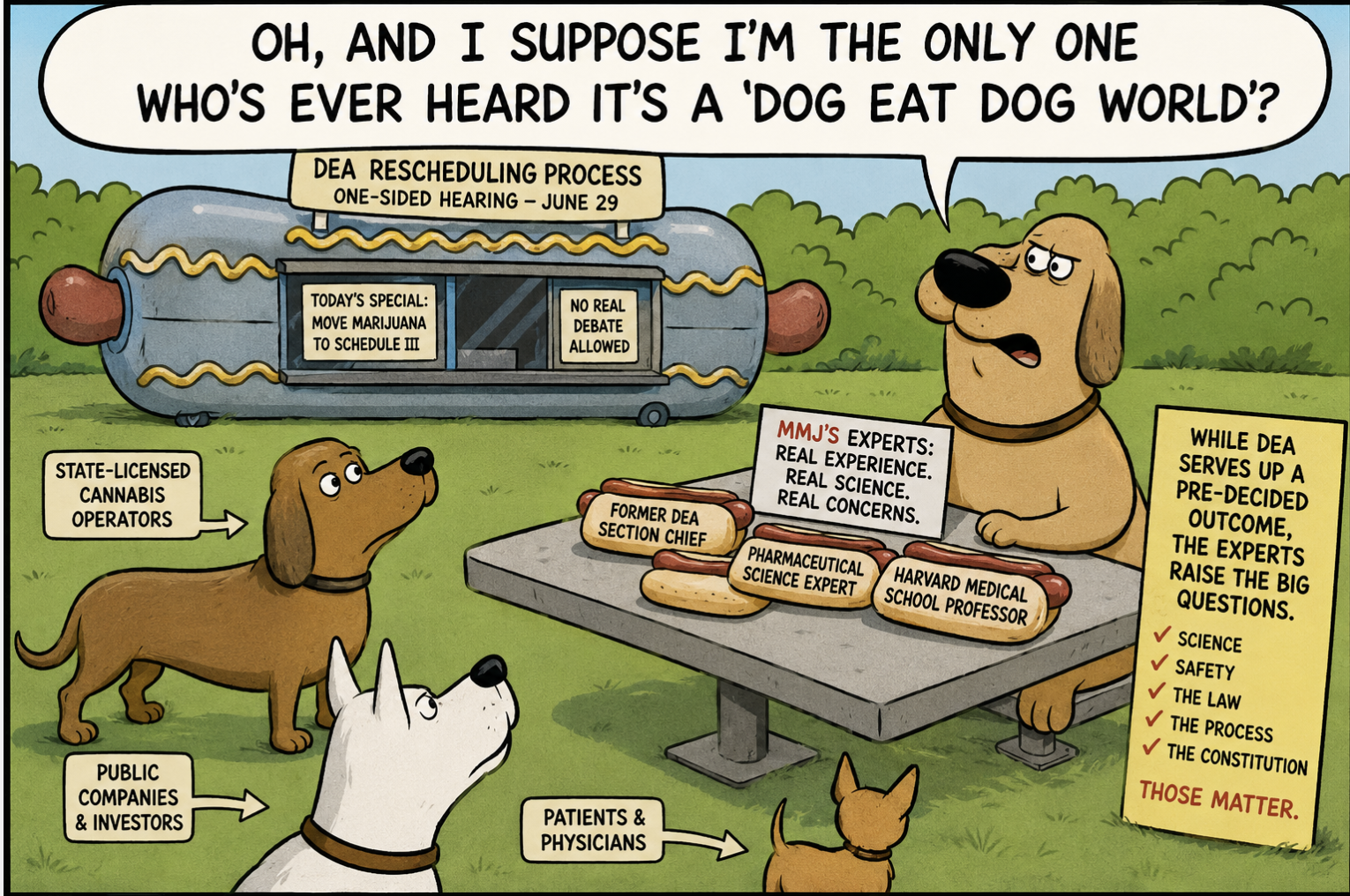
Among them is Jorge Jimenez, a retired DEA Supervisory Diversion Investigator who spent nearly two decades inside the DEA and ultimately served as Section Chief of both the Regulatory Section and the Import/Export Section within DEA Headquarters. During his tenure, Jimenez oversaw the registration of bulk manufacturers, importers, exporters, and controlled-substance registrants throughout the United States.
Simply put, few individuals understand the DEA registration process better.
That is why his participation in the marijuana rescheduling proceedings deserves attention.
For years, federal regulators insisted that companies seeking to manufacture cannabis derived medicines must comply with the same standards applied to every other controlled-substance pharmaceutical developer. MMJ International Holdings followed those rules.
The company obtained FDA Investigational New Drug authorizations, secured Orphan Drug Designation, established a DEA-registered analytical laboratory, completed pharmaceutical manufacturing activities, and spent years navigating the DEA registration process.
Now, according to Jimenez, the federal government appears poised to create an entirely different pathway for state marijuana operators without requiring the same regulatory foundation that federally compliant applicants were required to satisfy.
From Jimenez's perspective, this represents a departure from long-standing DEA practice.
His concern carries unique weight because he previously managed the very regulatory programs now at issue.
For MMJ, the issue is not whether cannabis has medical value.
The issue is whether the federal government can selectively abandon the standards it historically required of applicants who followed the law.
Joining Jimenez is Dr. Elio Mariani, a pharmaceutical scientist whose career spans more than forty-five years in drug development, FDA regulatory affairs, manufacturing, analytical chemistry, and pharmaceutical commercialization.
Dr. Mariani's experience includes leadership positions responsible for developing more than one hundred pharmaceutical products, interactions with FDA on IND and NDA submissions, and oversight of scientific affairs for publicly traded pharmaceutical companies.
According to Mariani, the distinction between a pharmaceutical product and a commercial cannabis product is not political-it is scientific.
Drug products are required to demonstrate reproducibility, stability, impurity control, validated manufacturing processes, analytical characterization, and clinical evidence.
Those requirements exist to protect patients.
MMJ argues that many state marijuana products entering the marketplace have never undergone those processes despite being positioned to benefit from federal policy changes.
Also participating in opposition filings is Harvard Medical School professor Dr. Bertha Madras, one of the nation's most recognized experts on addiction, neurobiology, and drug policy.
Dr. Madras has warned that rescheduling marijuana without resolving significant public-health concerns could create unintended consequences, particularly among vulnerable populations.
Taken together, these experts present a challenge to the narrative that opposition to marijuana rescheduling is driven solely by ideology.
One spent his career enforcing federal controlled-substance laws.
One spent his career developing FDA-regulated medicines.
One spent her career studying the neurological and public-health effects of drugs.
Their backgrounds are different.
Their conclusions are remarkably similar.
The question before DEA is no longer simply whether marijuana belongs in Schedule III.
The larger question is whether federal regulators can bypass the scientific, regulatory, and constitutional safeguards that have historically governed controlled-substance medicines.
As the June 29 hearing approaches, DEA will not merely be hearing from industry participants.
It will be hearing from former officials and scientific experts who helped build the very regulatory framework now being challenged.
For investors, patients, physicians, and policymakers, that may prove to be the most important development of all.
CONTACT:
Madison Hisey
MHisey@mmjih.com
203-231-8583
SOURCE: MMJ International Holdings
View the original press release on ACCESS Newswire