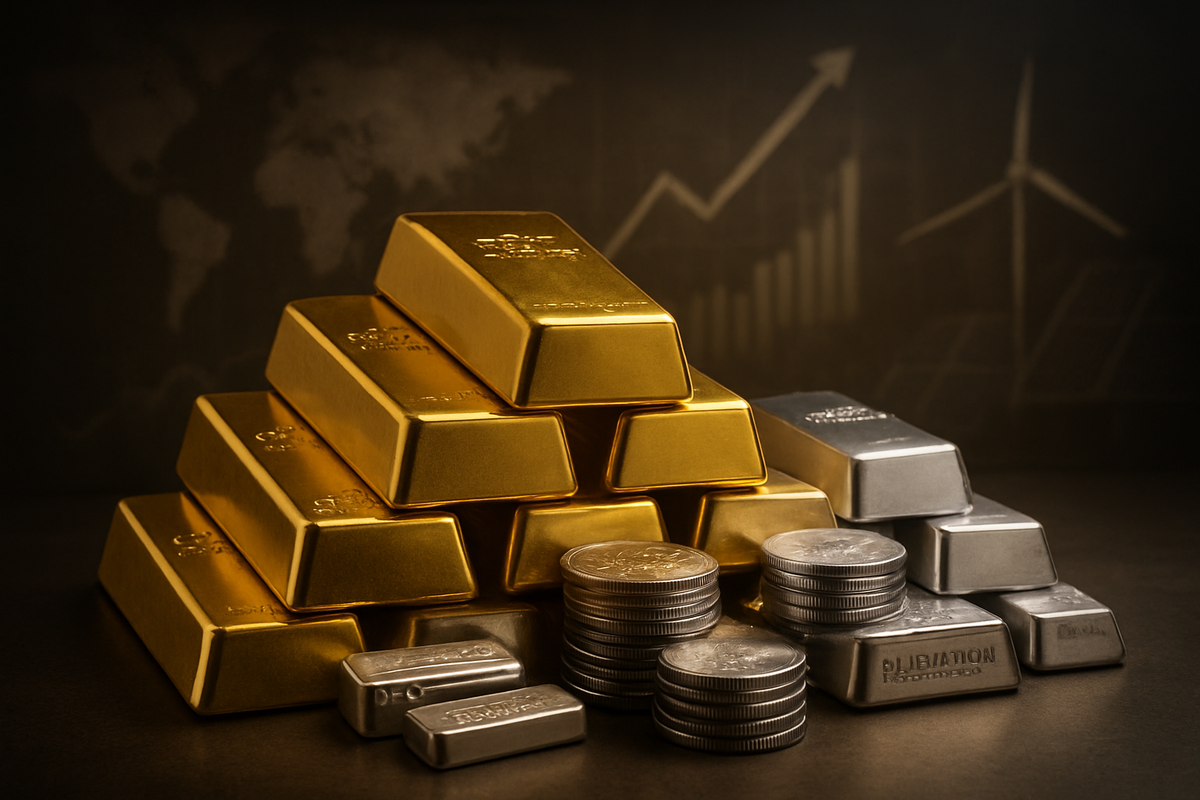
New York, NY – December 15, 2025 – The global financial markets are witnessing an unprecedented surge in precious metal prices, with gold and silver shattering all-time records throughout 2025. This historic rally, driven by a complex interplay of geopolitical tensions, economic uncertainty, strategic shifts in monetary policy, and robust industrial demand, has far-reaching implications for investors, public companies, and the broader global financial system. As gold surpassed $4,300 per troy ounce and silver climbed above $64 per troy ounce, the market is grappling with what this sustained ascent signifies for the future of commodities and traditional asset classes.
The immediate implication of this rally is the re-establishment of precious metals, particularly gold and silver, as premier safe-haven assets. Investors are flocking to these tangible assets to hedge against inflation, currency debasement, and systemic risks in an increasingly volatile world. This flight to quality underscores a growing apprehension about the stability of fiat currencies and sovereign debt, prompting a re-evaluation of global asset allocation strategies.
A Year of Unprecedented Gains: Tracing the Precious Metals' Ascent
The year 2025 has been nothing short of extraordinary for precious metals. The rally gained significant momentum from late 2024, fueled by escalating geopolitical conflicts in Eastern Europe and the Middle East, alongside persistent inflation concerns globally.
Timeline of Key Events and Price Movements in 2025:
- Early 2025: Persistent geopolitical tensions, particularly the ongoing Russia-Ukraine conflict and unresolved issues in Palestine, continued to create a "geopolitical premium." Inflationary pressures across major economies spurred demand for hedges against eroding purchasing power. Central banks globally intensified their gold acquisition programs, viewing gold as a strategic national asset.
- Mid-2025: The U.S. Federal Reserve began a series of interest rate cuts. A significant decision around March saw the FOMC hold rates steady but revise growth projections downward and inflation projections upward, creating a stagflationary scenario favorable for gold. A weakening U.S. dollar, depreciating by nearly 10% in 2025, made dollar-denominated precious metals more attractive. Industrial demand for silver, particularly from solar panel manufacturing and AI technologies, surged, contributing to a projected fifth consecutive year of supply deficits.
- Late 2025 (as of December 15): The Federal Reserve delivered a third 25-basis-point cut, bringing the federal funds rate to 3.50%-3.75%, providing further impetus to precious metals. Central banks continued aggressive gold accumulation, with year-to-date net purchases reaching 254 tonnes through October.
Specific Price Movements:
- Gold: Reached an all-time high of $4,381.58 per troy ounce in October 2025. As of December 15, 2025, it traded around $4,345.98 USD/t.oz, marking a staggering 63.90% increase year-over-year.
- Silver: Achieved an all-time high of $64.66 per troy ounce in December 2025, trading at approximately $63.89 USD/t.oz, an astounding 109.40% increase compared to December 2024.
- Platinum: Rose to $1,826.20 USD/t.oz on December 15, 2025, up 94.90% year-over-year.
- Palladium: Rose to $1,586 USD/t.oz on December 15, 2025, up 70.08% year-over-year, recovering sharply from a seven-year low earlier in the year.
Key Players and Stakeholders:
- Central Banks: The most significant players, with institutions like Poland, Brazil, Uzbekistan, and Indonesia actively increasing their gold reserves. This reflects a strategic shift towards de-dollarization and hedging against geopolitical risks.
- Investment Firms: Major banks like Goldman Sachs have revised gold price targets upward, with forecasts of $4,900 per ounce by the end of 2026. UBS projects silver to reach $55 by mid-2026. Firms specializing in precious metals IRAs, such as Augusta Precious Metals and American Hartford Gold, have also seen increased interest.
- Mining Companies: Direct beneficiaries include major gold miners like Newmont Corporation (NYSE: NEM), Barrick Gold Corporation (NYSE: GOLD), and Alamos Gold Inc. (NYSE: AGI), as well as silver miners such as Pan American Silver Corp. (NASDAQ: PAAS) and First Majestic Silver (NYSE: AG).
Initial Market and Industry Reactions:
Beyond price increases, the rally signals a fundamental shift in global monetary strategy, with central banks' gold holdings surpassing their U.S. Treasury holdings for the first time in nearly 30 years. There has been a robust increase in demand for Exchange-Traded Funds (ETFs) and physical bullion, with gold ETF assets hitting a record $470 billion by Q3 2025. The strong industrial demand for silver and platinum highlights their critical roles in emerging technologies and green initiatives, underscoring a structural shift in demand drivers.
Corporate Fortunes: Winners and Losers in the Precious Metals Boom
The soaring prices of precious metals are creating clear winners and presenting significant challenges for various public companies across the globe.
Companies Poised to Win:
1. Mining Companies: Precious metal mining companies are direct beneficiaries. Higher prices lead to expanded profit margins and increased cash flows, incentivizing higher production and investment in exploration. Companies with lower "all-in sustaining costs" (AISC) are particularly well-positioned to capitalize on these gains. * Gold Miners: Companies like Barrick Gold (NYSE: GOLD), Newmont Corporation (NYSE: NEM), Alamos Gold (NYSE: AGI), and Agnico Eagle Mines (NYSE: AEM) are seeing enhanced revenues and increased profitability. * Silver Miners: Pan American Silver Corp. (NASDAQ: PAAS), First Majestic Silver (NYSE: AG), and Hecla Mining Co. (NYSE: HL) benefit from silver's dual role as an industrial metal and an investment hedge. * Platinum/Palladium Miners: Major players in the Platinum Group Metals (PGMs) sector, such as Sibanye-Stillwater, are also seeing benefits, though PGM prices are also sensitive to the automotive industry's demand.
2. Royalty and Streaming Companies: These firms provide upfront capital to miners in exchange for future metal deliveries or a percentage of production. They benefit immensely from rising spot prices without direct exposure to mining's operational complexities. * Examples: Franco Nevada (TSX: FNV) (NYSE: FNV), Royal Gold (NASDAQ: RGLD), and Wheaton Precious Metals Corp. (NYSE: WPM).
3. Investment Vehicles (ETFs): Exchange-Traded Funds tracking precious metals see their Net Asset Value (NAV) increase directly with metal prices, attracting more investors and potentially increasing fees for fund managers. * Examples: SPDR Gold Shares (NYSEARCA: GLD) and iShares Silver Trust (NYSEARCA: SLV). Mining stock ETFs like VanEck Gold Miners ETF (NYSEARCA: GDX) offer leveraged exposure.
Companies Facing Challenges (Potential Losers):
1. Industrial Users: Many industries rely heavily on precious metals for their unique properties. Higher prices directly increase input costs, impacting profitability if these costs cannot be passed on to consumers. * Electronics Manufacturing: Companies producing smartphones and other electronic devices face higher costs for components using gold and silver. * Automotive Industry: A major consumer of platinum and palladium for catalytic converters, and increasingly silver in EVs. Higher prices directly impact vehicle manufacturing costs. * Solar Panel Production: Manufacturers rely on silver as a critical input, facing increased production costs. * Chemical and Energy Industries: Users of platinum in various processes, including petroleum refining, are sensitive to price increases.
2. Jewelers: While nuanced, a rally can present challenges. Jewelers face higher acquisition costs for raw materials, which can shrink profit margins if retail prices cannot be raised or if demand softens due to higher consumer prices. Luxury brands with strong pricing power, such as Tiffany & Co., may be more resilient, but many smaller jewelers could struggle.
3. Refiners: While integral, their impact is less straightforward. They profit from processing fees, so increased mining activity could boost volumes. However, if high prices curb industrial demand, it could negatively affect throughput for certain metals.
Beyond the Headlines: Broader Significance and Historical Echoes
The current precious metal rally is not merely a fleeting market phenomenon but a robust indicator of profound shifts in economic, geopolitical, and technological landscapes. It intertwines with several broader industry trends, signaling a re-evaluation of global asset allocation strategies.
Broader Industry Trends:
- De-dollarization: The rally is intrinsically linked to the accelerating trend of de-dollarization. Central banks, particularly from emerging markets and BRICS+ nations, are strategically accumulating gold to diversify reserves away from the U.S. dollar, spurred by concerns over potential dollar weakness and geopolitical factors. This represents a fundamental shift in global reserve management.
- Green Energy Transition: The transition to green energy is a significant, albeit nuanced, driver for specific precious metals. Silver, with its unmatched conductivity, is pivotal in solar cells, electric vehicles (EVs), and data centers. Platinum and iridium are crucial catalysts in fuel cells and green hydrogen production. This growing industrial demand, especially for silver, has contributed to a structural supply deficit for five consecutive years.
Potential Ripple Effects:
- Financial Institutions: Investment firms with significant holdings in physical precious metals or related ETFs are seeing increased assets under management. Conversely, institutions heavily exposed to fiat currencies or government bonds might face pressure if the rally signifies broader concerns about currency stability or sovereign debt.
- Regulatory and Policy Implications: Central bank monetary policies, including interest rate decisions, directly influence precious metal prices. Stricter environmental regulations can increase mining costs, constraining supply. The surge in prices also exacerbates illegal mining, posing environmental and social challenges, prompting calls for enhanced regulatory oversight.
Historical Precedents and Comparisons:
The current rally draws comparisons to past periods of significant price appreciation for precious metals:
- 1970s and 1980: Gold soared to over $2,000 per ounce (inflation-adjusted) by 1980, and silver peaked above $50 per ounce, driven by high inflation and geopolitical tensions.
- Early 2000s and Post-2008 Financial Crisis: Gold experienced another major rally, reaching nearly $1,900 per ounce in 2011, fueled by economic uncertainty and monetary easing.
- Silver's Outperformance: Historically, silver often acts as "gold on steroids," amplifying gold's gains during bull markets. The current silver rally is partly fueled by a "physical silver run" and a growing loss of confidence in the "paper silver" system, reminiscent of the 1980 Hunt Brothers' attempt to corner the silver market, though current dynamics are more fundamentally driven.
What Comes Next: Navigating a Dynamic Landscape
The precious metals market is poised for continued dynamism, with both short-term fluctuations and compelling long-term trends shaping the outlook for gold, silver, platinum, and palladium. The global precious metal market is projected to grow from an estimated USD 302.79 billion in 2025 to approximately USD 545.57 billion by 2034, expanding at a CAGR of 6.77%.
Short-Term and Long-Term Possibilities:
- Gold: Expected to remain elevated in the short term, with forecasts suggesting prices between $4,029 and $4,642 per ounce by the end of 2025. Long-term, gold's outlook remains robust, with projections of $5,800–$9,500 by 2027–2030, driven by central bank demand and its safe-haven appeal.
- Silver: Forecasted to rise to between $61 and $77 per ounce by the end of 2025. Long-term prospects are particularly strong, with predictions of $64–$240 by 2026 and potentially $228.93 to $311.26 by 2030, largely due to its increasing use in green technologies.
- Platinum: Expected to trade around $1,766 to $1,960 per troy ounce in the next 12 months. Long-term forecasts range from $2,170–$2,300 by 2026 and potentially reaching $3,853 by 2027–2030, driven by automotive recovery and new green technology applications.
- Palladium: Expected to trade around $1,522 to $1,720 per troy ounce in the next 12 months. Its long-term outlook is more complex, influenced by the shift to EVs, though new industrial uses in hydrogen technology could emerge.
Strategic Pivots and Adaptations:
- For Investors: Diversification remains key, integrating precious metals into long-term strategies. Strategic accumulation during price dips and robust risk management are crucial. Focusing on mining companies with strong fundamentals and stable political environments is also advisable.
- For Companies: Mining companies are increasingly focusing on sustainable practices and technological advancements. Supply chain resilience through collaborative partnerships and ESG (Environmental, Social, and Governance) compliance are becoming paramount.
Emerging Market Opportunities and Challenges:
- Opportunities: Growing demand from emerging markets, particularly China and India, continues to drive the market. Central bank diversification away from the U.S. dollar provides a robust floor for prices.
- Challenges: Price volatility due to macroeconomic factors and geopolitical events remains a challenge. Supply chain disruptions, resource nationalism, and declining ore grades due to underinvestment in exploration also pose significant hurdles.
The Enduring Allure: A Comprehensive Wrap-Up
The historic rally in precious metal prices throughout 2025 underscores a profound recalibration in global financial markets. The key takeaways are clear: gold and silver have firmly re-established their roles as critical safe-haven assets and hedges against inflation and systemic risk. This surge is not merely a speculative bubble but reflects deep-seated structural shifts, including central bank de-dollarization efforts and the burgeoning industrial demand driven by the green energy transition.
Moving forward, the market is likely to remain dynamic, characterized by continued volatility but with a strong underlying bullish trend for most precious metals. The structural demand from electrification, AI infrastructure, and sustained central bank buying provides fundamental support, mitigating downside risk.
Investors should closely watch central bank monetary policies, particularly interest rate decisions, and geopolitical developments. The ongoing narrative of de-dollarization and the increasing integration of precious metals into high-tech industries will be crucial determinants of future price trajectories. While the rapid gains may invite temporary pullbacks, the long-term outlook for precious metals appears robust, signaling their enduring significance in an increasingly uncertain global economic landscape.
This content is intended for informational purposes only and is not financial advice