It’s no secret that the reason why people gravitate toward advanced services like Barchart Premier is to gain an edge in the market. Of course, the best advantage is the one that’s impossible to attain — a crystal ball that magically tells the future every single time. However, a more realistic innovation is a category of insight called microstructure analytics.
One of the most important of these tools is volatility skew. By definition, volatility skew identifies implied volatility (IV) — or a stock’s potential range of motion — across the strike price spectrum of a given options chain. Basically, this screener showcases the surface-area distortion of volatility space, allowing retail traders to understand how the smart money is positioning its risk profile.
Elevated spikes in the skew’s curvature reveal areas of vulnerability that smart money traders are concerned about; specifically, they’re willing to pay extra premium for either downside protection or upside convexity.
However, in the equities market, a transaction involves two parties: a buyer and a seller. In other words, it’s not just sophisticated market participants that leave their transactional footprints. Dealers must also keep their books balanced, which is a practice known as staying delta-neutral.
Because of this balancing act, retail traders can refer to Barchart’s Gamma Exposure screener. This tool measures the change in delta exposure for options based on changes in the underlying price. In essence, the screener can be utilized to estimate how the accelerative property of the target stock is based on shifting market conditions.
When used in harmony, both the volatility skew and gamma exposure can help retail traders craft smarter, multi-leg options strategies.
Palo Alto Networks (PANW)
Recently, Palo Alto Networks (PANW) flashed a Buy signal from Barchart’s Top Trade Alerts — and it’s a signal that appears to enjoy fundamental credibility. Given the current geopolitical crisis in Iran and the wider Middle East, cybersecurity will likely be a hot topic. Plus, PANW stock has already dropped more than 16% in the past six months, making it ripe for a contrarian trade.
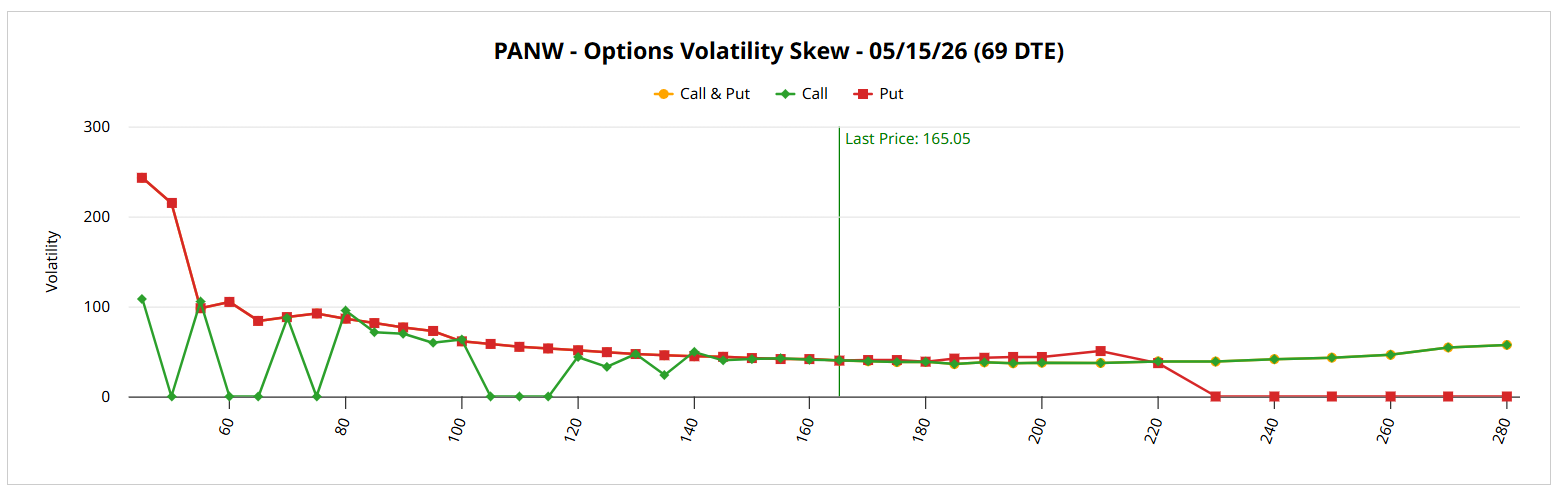
Despite the relevance boost, the volatility skew for the May 15 expiration date shows a net prioritization of tail risk protection. Toward the left-hand boundaries (that is, toward lower strike prices), put IV rises to nearly 243%. On the other end, both put and call IV readings are relatively flat, suggesting little thought toward upside convexity.
Stated differently, smart money traders of PANW stock are more interested in not losing than they are in directly winning.
Looking at gamma exposure, the gamma flip will occur at $166.89, with the metric reaching a maximal clustering between $180 and $210. In other words, it’s at this point where dealers will be net long gamma, leading to sales of PANW stock as its share price rises.
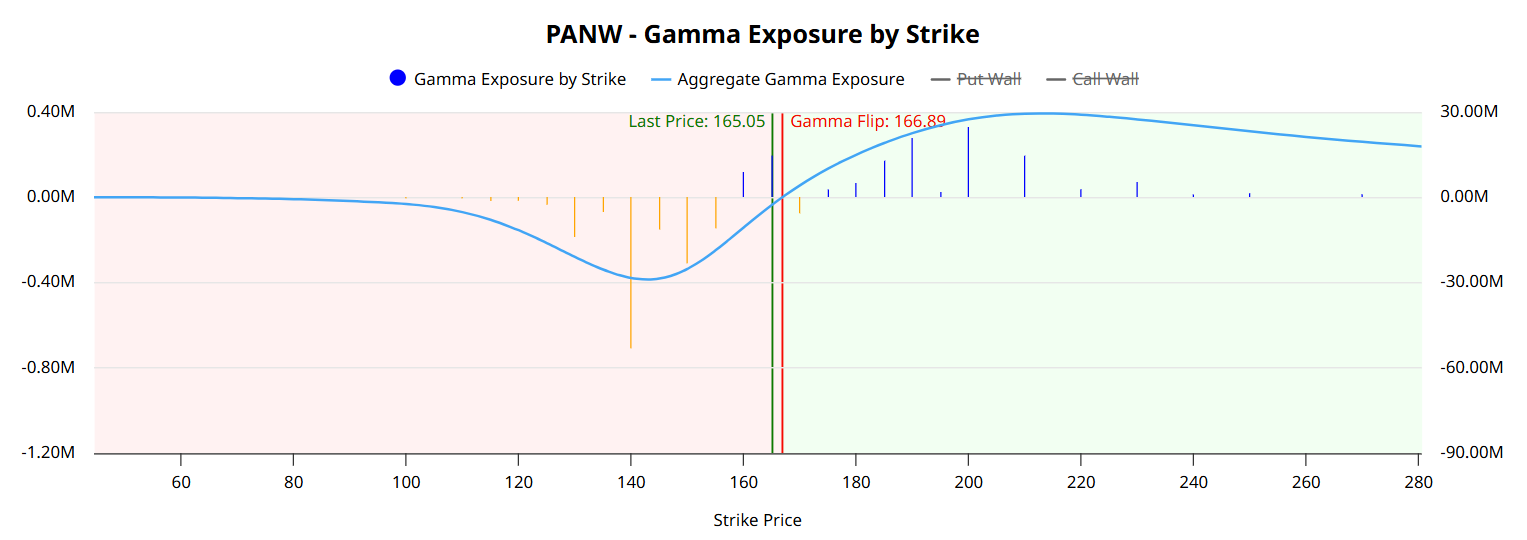
Basically, we may be looking at a situation where the $180 to $210 level could become technical resistance. For a balanced trade, then, speculators may consider the 175/180 bull call spread expiring May 15, which features a maximum payout of 100%.
Advanced Micro Devices (AMD)
If we’re looking at the Iran conflict objectively, the broader tech and artificial intelligence sectors are at elevated risk due to the targeting of data centers and other digitally critical establishments. Such a situation places a temporary dark cloud over companies like Advanced Micro Devices (AMD). Coincidentally, AMD stock recently flashed a Sell signal from the Top Trade Alerts.
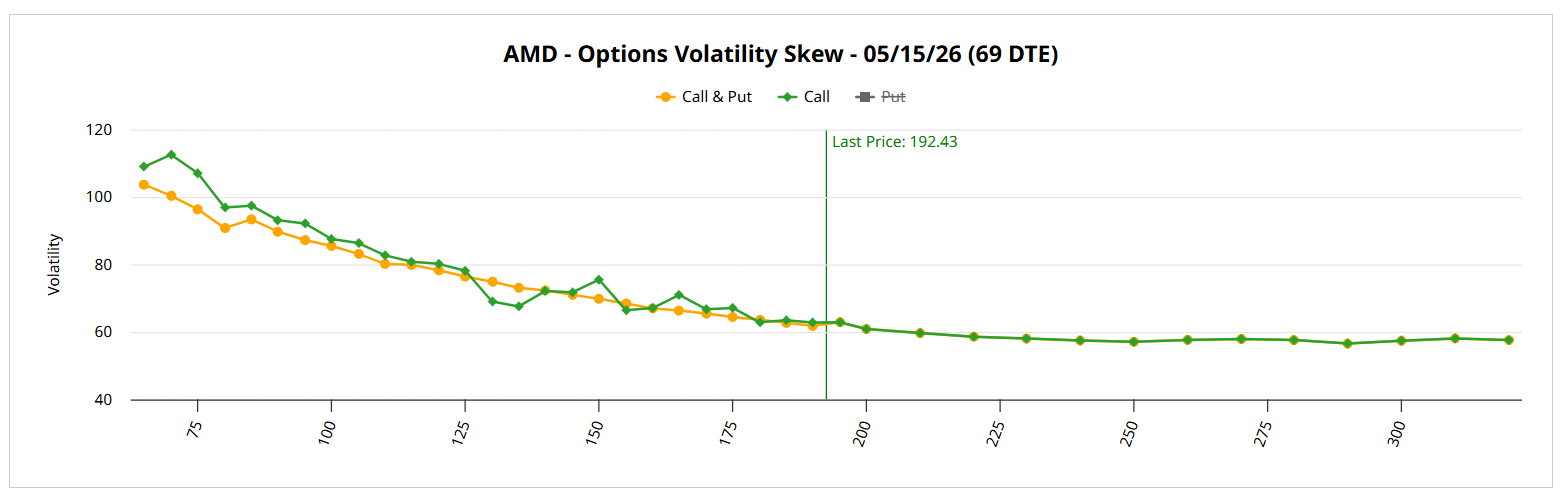
Looking at volatility skew for the May 15 expiration date, it’s quite clear that the smart money is concerned about protecting itself against further erosion. Because the skew continues to rise toward the left-hand boundaries, the prioritization is to mitigate tail risk. Further, the skew slowly declines toward the right boundaries, which means there is little motivation to seek upside convexity.
Basically, advanced traders of AMD stock have placed themselves in a defensive shell. Again, they’re interested in not losing rather than directly winning.
Switching over to gamma exposure, the metric’s clustering is centered roughly around the $170 to $180 strikes, with the deepest point in the aggregate gamma curve landing around $175. It’s at that point where dealers may start to buy AMD stock in a bid to stay delta-neutral.
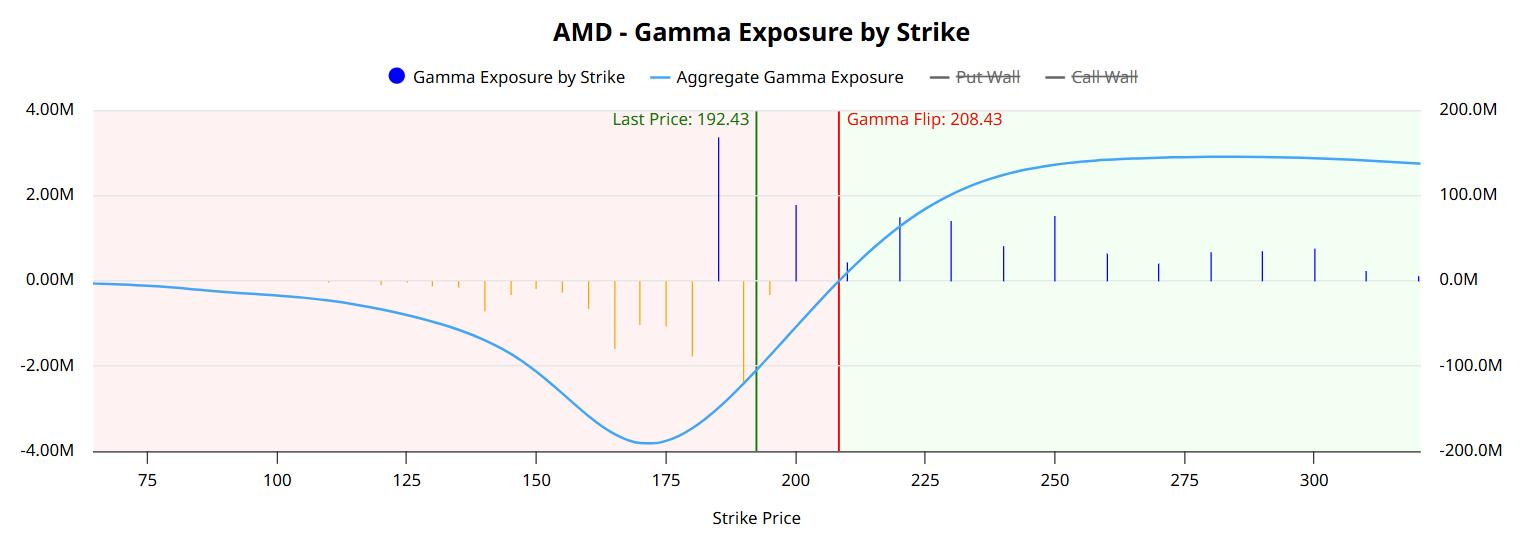
With that in mind, I’m looking at the 185/180 bear put spread expiring May 15, which features a maximum payout of 92.31%.
On the date of publication, Josh Enomoto did not have (either directly or indirectly) positions in any of the securities mentioned in this article. All information and data in this article is solely for informational purposes. For more information please view the Barchart Disclosure Policy here.
More news from Barchart
- The Saturday Spread: Using Microstructure Analytics to Trade Multi-Leg Options
- Unusual Options Activity Suggests the Smart Money Is Bullish About Rio Tinto Stock Despite Glencore Deal Collapse
- Tesla Put Option Premiums are High - Attractive to Short Shellers and Value Investors
- Trade the Deep Value and Dubious Option Pricing in Microsoft Stock with This 1 Great Options Strategy