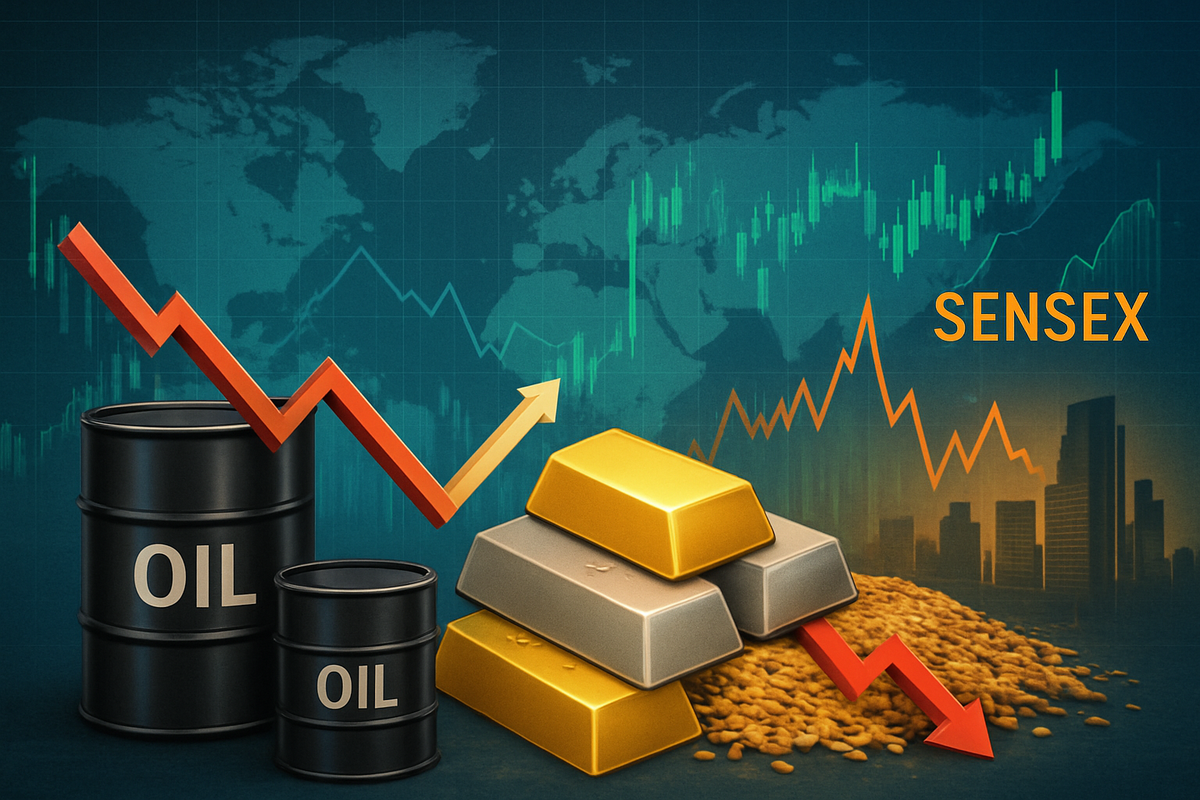
As of December 11, 2025, global financial markets are in a state of dynamic flux, heavily influenced by a complex interplay of commodity price movements. A significant "super glut" in the oil market is driving down crude prices, while precious metals like silver are experiencing unprecedented surges, and agricultural commodities generally face downward pressure due to robust supply. These divergent trends are creating a volatile environment for stock markets worldwide, with the Indian equities market, represented by the Sensex, serving as a prime example of a major economy grappling with these global forces.
The immediate implications of these commodity shifts are profound, shaping investor sentiment and driving sector-specific performance. While a recent dovish pivot by the US Federal Reserve has provided a general uplift to global equities, including a positive close for the Sensex today, underlying commodity dynamics continue to introduce layers of uncertainty and opportunity. From energy-intensive industries feeling the pinch of higher input costs to commodity producers enjoying a windfall, the market is undergoing a significant re-evaluation of value in response to these fundamental shifts.
A Deep Dive into the Commodity Whirlwind
The global commodity landscape as of December 11, 2025, is characterized by a stark contrast between an oversupplied energy market and a surging precious metals sector, all while agricultural prices generally trend downwards. This complex environment is shaping economic narratives and market movements across the globe.
The oil market is currently defined by a "super glut" of supply, pushing prices downwards. West Texas Intermediate (WTI) crude is trading around $57.87 per barrel, and Brent crude hovers near $61.55 per barrel, reflecting a significant 16% decline in Brent throughout 2025. This persistent oversupply has prompted OPEC+ to maintain a cautious stance on output increases. Despite the broader oversupply, geopolitical tensions, such as Ukrainian attacks on Russian energy infrastructure and US actions concerning Venezuelan tankers, occasionally introduce volatility and localized upward pressure on physical crude prices, creating a nuanced picture for energy-dependent economies.
In contrast, the metals sector presents a more mixed but often bullish outlook. Silver has been a standout performer, reaching a record $61.5671 an ounce today, effectively doubling its value this year. This remarkable surge is largely attributed to the US Federal Open Market Committee (FOMC) rate cut, which weakened the dollar and enhanced the appeal of non-yielding assets as an inflation hedge. Copper prices remain elevated, having surpassed the $10,000 per ton mark, with potential US import tariffs looming as a further price driver. Gold, while not experiencing the same meteoric rise as silver, remains stable around $4,200. However, steel prices have shown recent fluctuations, falling to 3,046 CNY/T today, yet recording a 0.53% rise over the past month. Despite this, it is still down 9.05% year-on-year, influenced by demand uncertainties in China and impending EU regulations like the Carbon Border Adjustment Mechanism (CBAM).
Agricultural commodities are generally facing downward pressure due to expectations of robust global supply. Wheat futures have fallen below $5.20 per bushel, reaching their lowest since late October, driven by projected record harvests in Argentina and Australia, and a rebound in output from the EU and Russia. Soybean futures are also trending lower, as Chinese purchases have not met expectations and Brazil anticipates another record crop. Corn futures, however, are mixed to slightly higher, with the USDA projecting lower US ending stocks due to increased demand for ethanol production and higher export volumes. Overall, the broader agricultural commodity index saw food prices increase by 2.4% in November, while raw materials declined by 1.1%.
The immediate market reactions to these commodity shifts are profound. On December 11, 2025, a pivotal moment occurred as the US Federal Reserve cut interest rates by 25 basis points, signaling further cuts for the coming year. This dovish stance has weakened the US dollar and lowered bond yields, generally boosting global sentiment and attracting buying interest in equities. US equities like the S&P 500 (SPX) and Nasdaq Composite (IXIC) are approaching record highs, buoyed by strong performance in technology and AI sectors. European and Asian markets are perceived by analysts to offer more attractive valuations, hinting at a potential rotation of capital. The Indian equities market, the Sensex, closed at 84792 points, gaining 0.47% today, breaking a three-day losing streak, largely in response to the Fed's rate cut. This follows earlier all-time highs driven by strong Q2 FY26 GDP growth, but also recent significant downturns attributed to global jitters, continuous foreign institutional investor (FII) outflows, and a weakening Indian rupee (INR) near a record low of 90.15 against the US dollar, partly pressured by rising crude oil prices.
Winners and Losers in the Commodity Chess Game
The current commodity price fluctuations are creating a clear divide between potential winners and losers across various industries and companies. Understanding these dynamics is crucial for investors navigating the volatile market landscape.
Companies heavily involved in oil and gas production and exploration are facing significant headwinds due to the "super glut" and persistently low crude oil prices. While lower input costs might benefit some downstream industries, the primary producers are experiencing reduced revenues and profit margins. Companies like Reliance Industries Limited (NSE: RELIANCE), a major player in India's energy sector, could see pressure on its refining and petrochemical segments if crude prices remain subdued, though its diversified portfolio offers some insulation. Globally, major oil companies like ExxonMobil (NYSE: XOM) and Chevron (NYSE: CVX) are likely to continue optimizing operations and capital expenditure to adapt to the lower price environment.
Conversely, the surge in precious metals, particularly silver and copper, is a boon for mining companies and countries with significant reserves of these commodities. Companies such as Hindustan Zinc Limited (NSE: HINDZINC), a major producer of zinc, lead, and silver in India, stands to benefit significantly from the record-high silver prices. Copper miners like Vedanta Limited (NSE: VEDL) could also see improved profitability from elevated copper prices, driven by strong industrial demand and potential tariffs. These companies might experience higher revenues and healthier balance sheets, leading to increased investor interest.
The automotive and manufacturing sectors face a mixed bag. Lower oil prices could translate to reduced transportation costs and potentially higher consumer disposable income, benefiting auto manufacturers like Maruti Suzuki India Limited (NSE: MARUTI) or Tata Motors (NSE: TATAMOTORS) through increased demand. However, these sectors are also significant consumers of metals like steel and copper. While steel prices have seen some recent declines, overall metal costs remain elevated, which could squeeze profit margins for companies reliant on these inputs. The IT sector, represented by giants like Tata Consultancy Services (NSE: TCS) or Infosys (NSE: INFY), is generally less directly impacted by commodity price swings but benefits from overall positive market sentiment and a weaker rupee, which can boost their export earnings.
Companies in the agricultural sector are navigating complex dynamics. While some agricultural commodity prices are falling due to oversupply, certain segments might still find opportunities. For example, companies involved in ethanol production, which drives demand for corn, could see stable or growing business. However, large-scale agricultural producers dealing in wheat and soybeans might face pressure on their revenues due to lower selling prices. Food processing companies, on the other hand, could benefit from lower raw material costs, potentially improving their margins. The Multi Commodity Exchange of India (NSE: MCX), despite facing intraday pressure recently, is a key player in commodity trading and stands to benefit from increased trading volumes and volatility across all commodity classes in the long term, as market participants seek to hedge or speculate on these price movements.
Broader Significance and Historical Parallels
The current commodity price fluctuations transcend immediate market reactions, embedding themselves within broader economic trends and signaling potential shifts in global economic power dynamics. This period of divergent commodity performance — an oil glut juxtaposed with surging precious metals and falling agricultural prices — highlights the intricate linkages within the global economy.
These movements are intrinsically tied to broader industry trends, particularly the ongoing battle against inflation and the trajectory of global interest rates. The US Federal Reserve's recent rate cut, while aimed at stimulating economic activity, simultaneously weakens the dollar, making dollar-denominated commodities more attractive and potentially fueling further inflation in certain sectors. For energy-intensive industries, persistent low oil prices offer a reprieve, reducing operational costs and potentially boosting margins. Conversely, industries reliant on surging metals like copper and silver face increased input costs, which could be passed on to consumers, contributing to inflationary pressures in manufactured goods. This creates a challenging environment for central banks attempting to manage overall price stability.
The potential ripple effects extend far beyond individual companies, impacting entire supply chains and international trade relations. Countries that are net exporters of oil, like Russia and Saudi Arabia, will experience reduced revenues, potentially affecting their fiscal stability and geopolitical influence. Conversely, major oil importers, such as India and China, benefit from lower energy costs, which can support domestic growth and reduce import bills. The strength of the Indian rupee (INR) against the US dollar, for instance, is directly influenced by crude oil prices, with a weaker rupee exacerbating import costs and potentially leading to higher inflation. The impending EU Carbon Border Adjustment Mechanism (CBAM) will also have significant regulatory implications, particularly for steel and other carbon-intensive imports, potentially reshaping global trade flows and encouraging cleaner production methods.
Historically, periods of significant commodity price volatility have often coincided with major economic shifts. The 1970s oil shocks, for instance, triggered stagflation and reshaped global energy policies. More recently, the 2000s commodity supercycle, driven by rapid industrialization in China, led to unprecedented wealth accumulation in commodity-producing nations. The current scenario, with its unique blend of an oil glut and precious metal surge, presents a different challenge. While not a direct parallel, the current environment shares similarities with periods where geopolitical tensions (e.g., Ukrainian attacks on Russian energy infrastructure) and central bank policies (e.g., Fed rate cuts) converge to create unpredictable market conditions. This time, however, the focus is also heavily on supply-side dynamics in agriculture and the increasing role of green energy transitions influencing demand for specific metals. The divergence underscores a global economy grappling with both traditional supply-demand imbalances and emerging structural changes.
The Road Ahead: Navigating Future Scenarios
Looking ahead, the global markets face a complex array of short-term and long-term possibilities stemming from the ongoing commodity price fluctuations. The current environment demands strategic pivots and adaptive measures from businesses and investors alike.
In the short-term, continued volatility is almost a certainty. The oil "super glut" is unlikely to dissipate overnight, meaning sustained pressure on crude prices unless OPEC+ implements deeper production cuts or geopolitical events significantly disrupt supply. This could provide a continued tailwind for oil-importing economies like India, but a headwind for oil-producing nations. The momentum in precious metals, particularly silver, could continue, especially if the US Federal Reserve signals further rate cuts, keeping the dollar weaker and enhancing the appeal of non-yielding assets. Agricultural prices might remain subdued due to strong global harvests, offering relief to food processors but challenging farmers. Investors should anticipate continued sector rotation, with capital flowing into perceived beneficiaries of these trends and away from those facing headwinds.
For the long-term, several potential scenarios could unfold. One scenario involves a gradual rebalancing of the oil market, perhaps through increased demand from a recovering global economy or more aggressive supply management by producers, leading to a stabilization or modest increase in prices. Another scenario could see the "green transition" accelerating, leading to sustained high demand for industrial metals like copper and lithium, while traditional fossil fuels face structural demand erosion over decades. This would create significant market opportunities for companies involved in renewable energy infrastructure, electric vehicles, and battery technology. Conversely, challenges will persist for industries heavily reliant on fossil fuels or those unable to adapt to changing raw material costs and regulatory landscapes. For instance, the long-term impact of the EU's Carbon Border Adjustment Mechanism (CBAM) could fundamentally alter trade dynamics for carbon-intensive goods, forcing companies to invest in cleaner production methods or face competitive disadvantages.
Potential strategic pivots for businesses include diversifying supply chains to mitigate commodity price risks, investing in R&D for material efficiency, and exploring hedging strategies to lock in input costs. For investors, this environment necessitates a nuanced approach, favoring companies with strong balance sheets, diversified revenue streams, and a clear strategy for navigating both inflationary and deflationary pressures in different commodity segments. Market opportunities may emerge in sectors benefiting from lower energy costs, such as logistics and certain manufacturing segments, as well as in the mining of "future-critical" metals. Conversely, companies with high exposure to oversupplied commodities or outdated business models may face significant structural challenges. The overarching theme will be resilience and adaptability, as global markets continue to adjust to a multi-faceted commodity cycle.
A Comprehensive Wrap-Up: Navigating the New Normal
The current landscape of global commodity markets, marked by a pronounced oil "super glut," a remarkable surge in silver prices, and generally subdued agricultural commodity costs, presents a multifaceted challenge and opportunity for the global economy. As of December 11, 2025, these divergent movements are not merely transient fluctuations but are indicative of deeper structural shifts and immediate market reactions that demand careful consideration from investors, businesses, and policymakers alike.
Key takeaways from this period include the significant impact of central bank policies, particularly the US Federal Reserve's rate cut, in shaping global market sentiment and currency valuations, which in turn influence commodity prices. The Indian equities market (Sensex) exemplifies a major economy navigating these dynamics, demonstrating both resilience, driven by strong domestic growth and positive global cues, and vulnerability, stemming from foreign institutional investor outflows and a weakening rupee exacerbated by certain commodity price movements. The clear delineation between "winners" (e.g., precious metal miners, oil importers) and "losers" (e.g., oil producers, some agricultural exporters) underscores the importance of sectoral analysis in investment decisions.
Moving forward, the market is likely to remain in a state of elevated volatility. The interplay of geopolitical events, supply-demand rebalances, and evolving regulatory frameworks (like carbon border adjustments) will continue to shape commodity trajectories. While the immediate boost from a weaker dollar and lower bond yields may sustain equity markets in the short term, the underlying commodity dynamics will dictate long-term inflationary pressures and economic growth patterns. Businesses must prioritize supply chain resilience, cost efficiency, and strategic hedging to mitigate risks, while exploring opportunities in emerging sectors driven by global transitions.
Final thoughts on significance and lasting impact point to a global economy that is increasingly interconnected and sensitive to commodity price movements. This period could serve as a catalyst for greater diversification in national economies, particularly for those heavily reliant on single commodity exports. It also highlights the growing importance of sustainable practices and the transition to cleaner energy, which will continue to reshape demand for various raw materials. Investors should watch for several key indicators in the coming months: further actions by major central banks, particularly regarding interest rates; the effectiveness of OPEC+ in managing oil supply; the pace of global economic recovery and its impact on industrial demand; and any significant shifts in geopolitical stability that could disrupt commodity flows. Understanding these drivers will be paramount for navigating the evolving market landscape.
This content is intended for informational purposes only and is not financial advice