Human intelligence matters more, not less, in the age of artificial intelligence - and the companies that understand this will define the next economic era.
TORONTO, ON / ACCESS Newswire / June 30, 2026 / Scanbo Technologies, a healthcare AI company building point-of-care diagnostic systems deployed across hundreds of clinical settings, today released a new perspective from its Founder and CEO, Ashissh Raichura, on what it sees as the most consequential and misunderstood question of the AI era: what happens to human intelligence as artificial intelligence advances.
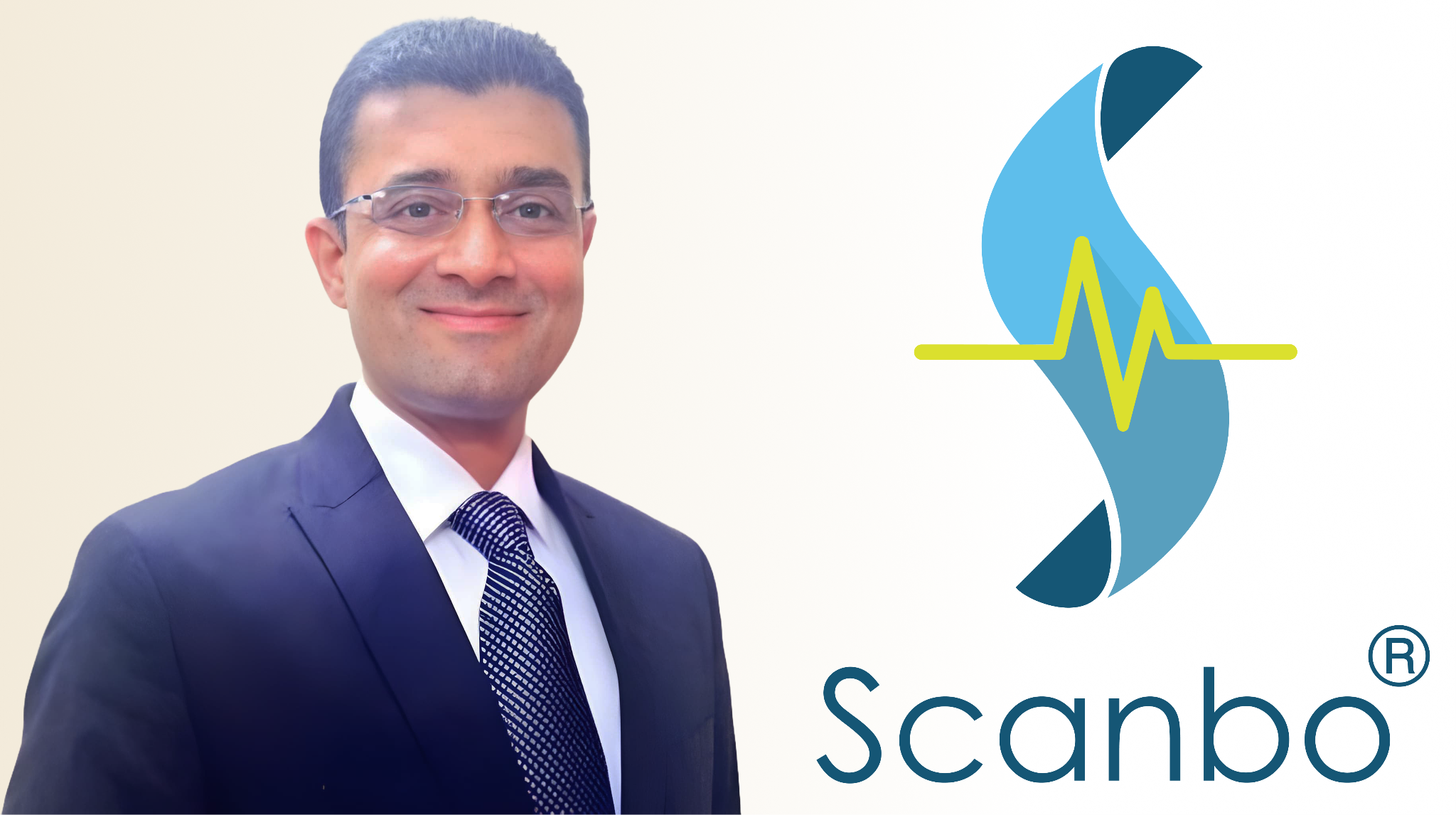
Raichura, who has spent a decade building and deploying AI diagnostics in real clinical environments, argues that the dominant narrative around AI - that machines are replacing human thinking - is not only wrong, but is shaping policy, investment, and product design in ways that could weaken economies and societies for generations.
The Trade Few Are Examining
"Some of the most powerful technology companies in the world have proposed a vision for the AI age in which machines do the work, generate the wealth, and take care of us," Raichura said. "We are offered comfort, convenience, and eventually a cheque to live on while the systems handle the rest. It is presented as generosity. But look closely at what is actually being traded."
According to Raichura, the trade being offered is comfort in exchange for agency, convenience in exchange for control, and care in exchange for the ability to shape one's own life. "A longer life is not a better life if someone else holds the key to it," he said. "Abundance is not freedom if you depend entirely on the system that provides it. The most comfortable cage is still a cage."
Scanbo argues that the framing has economic consequences, not just ethical ones. "A cheque is something handed to you. A stake is something you own," Raichura said. "Economies built on stakeholders out-produce economies built on dependents, every single time. How citizens participate in the AI economy is therefore not just an ethical question. It is a strategic one."
The Misread of Human Intelligence
At the centre of Scanbo's position is a re-examination of what human intelligence actually is. "The replacement story gets it backwards," Raichura said. "Human intelligence is not just calculation. If it were, the machines would have already won, because they calculate faster than we ever will."
Human intelligence, Raichura argues, is judgment in the face of ambiguity, meaning made from experience, and the ability to care about an outcome, take responsibility for it, and live with the consequences. "No model does any of that. They are prediction engines. We are something else entirely."
"The mistake is to measure ourselves on the machine's terms and conclude we are losing. We were never in that race. The question that actually matters is whether artificial intelligence will be used to amplify human intelligence or to make it unnecessary."
Evidence From the Field
Scanbo's perspective is grounded in a decade of real-world deployment. Its AI-powered point-of-care diagnostic systems have been used across hundreds of clinical settings, with the company's cardiac AI agent, HridayTaal, completing over one million AI analyses. The company holds CDSCO approval in India and is pursuing US FDA clearance.
"When you give a skilled human being an intelligent tool, they do not become obsolete. They become extraordinary," Raichura said. "A health worker in a remote village, equipped with the right AI, can detect conditions that once required a specialist, a lab, and weeks of waiting. She does it in minutes, for a patient she knows by name. The AI did not replace her intelligence. It multiplied it."
The company contends that this pattern - empowered humans outperforming systems that try to replace them - has economic implications that extend well beyond healthcare. "Empowered humans generate more value than dependent ones," Raichura said. "The markets that understand this first will outcompete the markets that do not."
The Defining Choice
Scanbo argues that the world is approaching a fork that will shape the century. "One path uses artificial intelligence to concentrate capability in the hands of a few systems and makes everyone else a dependent consumer of what those systems decide," Raichura said. "The other path uses the same technology to distribute capability to every human being and makes them more powerful than they have ever been."
The technology is identical on both paths, according to the company. What differs is the intent of the people building it and the demands of the people using it. "The most important decisions ahead are not technical," Raichura said. "They are human. What do we build. Who does it serve. What do we refuse to trade away."
Dignity Over Dependency
The framework Scanbo is advancing is one Raichura calls Dignity over Dependency. "Dependency, no matter how comfortable, is not dignity," he said. "Dignity is agency. The ability to choose, to create, to own what is yours, and to participate in the value you generate. It is the difference between a life someone designs for you and a life you build for yourself."
Raichura published a manifesto under the same name, available at dignityoverdependency.org, and the principle now guides Scanbo's product design, partnerships, and global expansion strategy.
"Artificial intelligence can serve either future," Raichura said. "It can be the greatest tool for human empowerment ever created, or the most elegant instrument of human dependency ever built. The machines will not make that choice. We will."
Scanbo's closing argument is one aimed directly at industry leaders and investors. "The companies that understand this will define the next economic era," Raichura said. "The ones that do not will spend the next decade explaining to their customers, their employees, and their citizens why a cheque is not the same as a stake."
About Scanbo Technologies
Scanbo Technologies is a healthcare AI company building AI-powered point-of-care diagnostic systems designed to empower clinicians and frontline health workers. The company's products include the Scanbo D8 multi-parameter diagnostic device and HridayTaal, its cardiac AI agent. Scanbo holds CDSCO approval in India, has US FDA clearance in progress, and operates a Make-in-India manufacturing facility built to global standards. Scanbo is headquartered in Canada with manufacturing and R&D in India, serving healthcare deployments globally. The company is the originator of the "Dignity over Dependency" framework, available at dignityoverdependency.org.
Media Contact:
Name: Ashissh Raichura
email: ashisshraichura@scanbo.com
Website: www.scanbo.com
SOURCE: Scanbo Technologies
View the original press release on ACCESS Newswire