Ushering in a new era of AI-driven quantitative trading
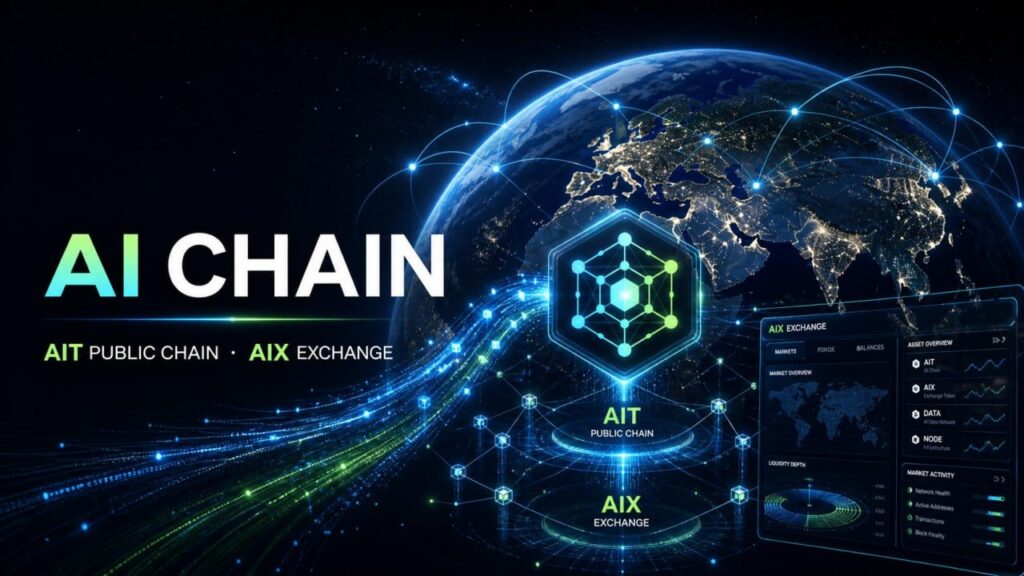
AIT builds the foundation for public chain value, while AIX connects the global digital asset trading ecosystem. The AI public chain connects Web3.0 technology with real-world financial applications through its public chain, physical mining machines, and AI quantitative platform.
With the accelerated integration of artificial intelligence, blockchain, and Web3.0, global digital finance is entering a new phase driven by data, algorithms, and decentralized networks. AI public chains aim to build a global Web3.0 financial infrastructure, providing more open, secure, and efficient digital financial services to global users, developers, and ecosystem partners.
Building Web3.0 intelligent financial infrastructure starting from the underlying network.
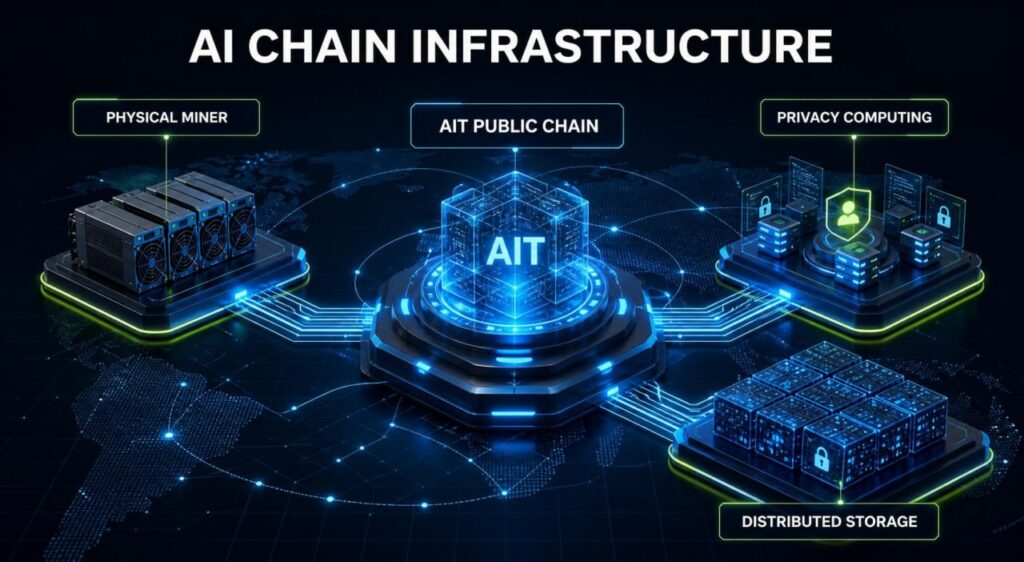
The AI public chain is not a single blockchain network, but a Web3.0 aggregated ecosystem that integrates public chain technology, artificial intelligence, and digital financial applications. The platform builds a complete technical system from the underlying network, providing a unified infrastructure for digital assets, smart contracts, decentralized applications, cross-chain services, distributed storage, and AI financial applications.
• Scalable public blockchain network and smart contract environment;
• Physical mining machines and real hardware infrastructure;
• Decentralized identity, privacy computing, and distributed storage;
• AI-powered quantitative trading, intelligent risk management, and global ecosystem collaboration.
AIT economic model: 2.1 million tokens issued at a fixed rate, with 95% going into the mining machine reward pool.
2,100,000 AIT | No additional issuance by default | 18-bit precision | 1 reward block per minute | 1 AIT released per block | Halved annually
According to the economic model published on the AI public chain’s official website, the total issuance of AIT is 2,100,000 tokens. Of these, 1,995,000 AIT are allocated to the physical mining machine reward pool, accounting for 95% of the total; 21,000 AIT are allocated to exchange circulation, IDO, and node pre-sale, each accounting for 1%; and 42,000 AIT are allocated to the technology and operations team, accounting for 2%.
AIT mining machine rewards adopt a continuous release mechanism: a reward block is generated every minute, releasing 1 AIT per block, with mining output halving annually. The limited total supply, continuous halving, and real hardware contributions together constitute the foundation of AIT’s long-term scarcity.
• Mining machine reward pool: 1,995,000 AIT, accounting for 95%;
• Exchange circulation: 21,000 AIT, accounting for 1%;
• IDO: 21,000 AIT, accounting for 1%;
• Node pre-sale: 21,000 AIT, accounting for 1%;
• Technology and operations team: 42,000 AIT, accounting for 2%.
One ecosystem, two tokens, clear positioning
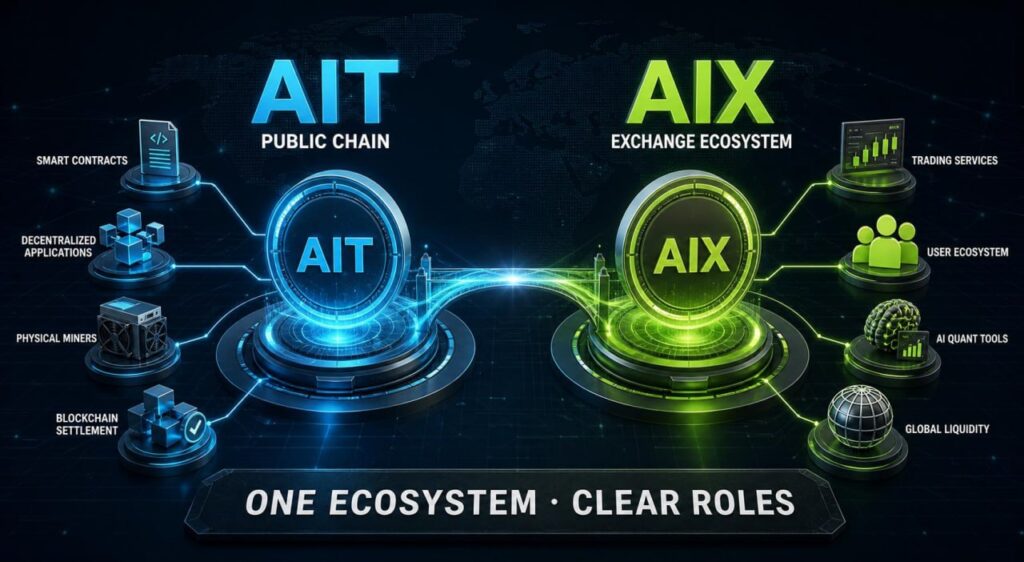
AIT is the native token of the AI public blockchain, primarily serving public blockchain network resources, on-chain transactions, smart contracts, decentralized applications, and ecosystem incentives. As the network and applications continue to improve, AIT will connect users, nodes, developers, mining machines, and application services within the public blockchain.
AIX is the ecosystem token for AI exchanges, primarily targeting digital asset trading, platform services, user benefits, and the development of a global trading ecosystem. AIX will connect trading platforms, users, AI strategies, ecosystem partners, and digital asset services.
- AIT belongs to the AI public blockchain and is its native coin.
- AIX belongs to the AI exchange and is its ecosystem token.
- The two form an ecosystem synergy through public blockchain infrastructure, asset trading services, and AI quantitative applications, but their respective use cases and value boundaries will not be confused.
AIT’s long-term value goal: to surpass BTC
While Bitcoin (BTC) ushered in the era of decentralized digital assets, AIT (AIT) is geared towards a new phase of deep integration between artificial intelligence and Web3.0. The AI public chain sets a clear long-term value goal: AIT is not merely an on-chain circulating asset, but rather an ecological value carrier connecting the public chain network, physical mining machines, smart contracts, distributed storage, developer applications, and global financial services. As the global infrastructure and application ecosystem of the AI public chain continue to expand, AIT aims to create long-term ecological value far exceeding that of Bitcoin, becoming a crucial value core of the next-generation intelligent financial network.
Physical mining machines connect real hardware with on-chain value.
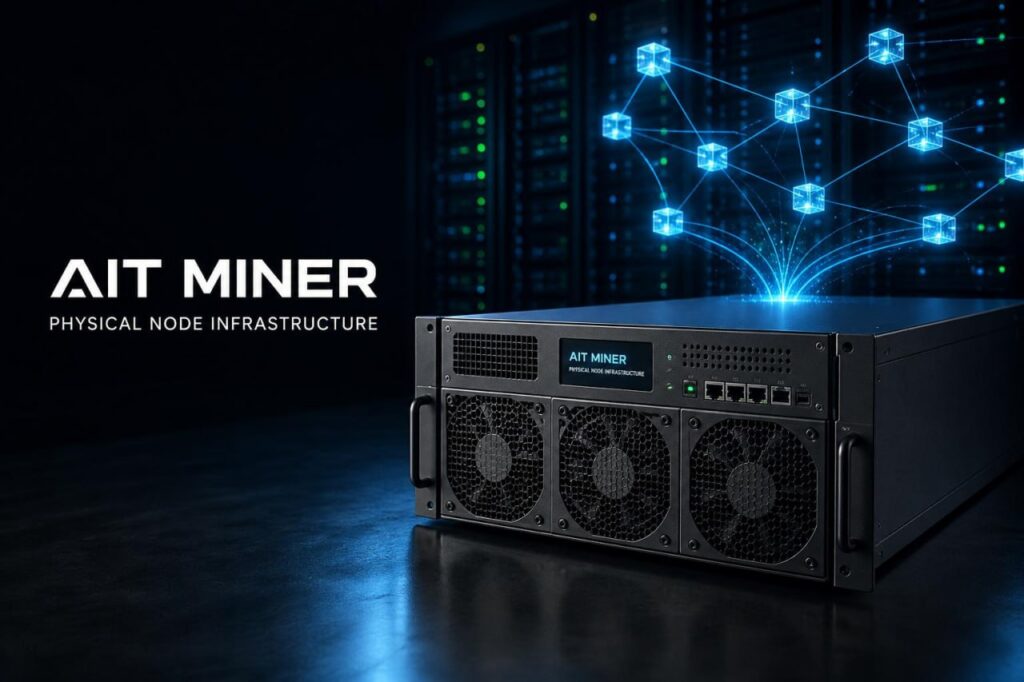
The AI public blockchain uses physical mining machines as a crucial entry point connecting the digital ecosystem with real hardware. Through device identity authentication, operational status verification, and task contribution records, physical mining machines can participate in AI public blockchain-related computing, storage, or infrastructure services.
This model establishes a link between on-chain value and the contributions of real devices, forming a globally distributed infrastructure comprised of hardware, network, data, and applications. The task contribution mechanism of physical mining machines and public blockchain consensus nodes belong to different levels and should not be confused.
Three types of mining machines cover individual, team, and testing scenarios.
- AI Miner X1: Suitable for individual access and wallet binding;
- AI Miner Pro: For team bulk deployment and node application;
- AI Miner Lite: For testing access, community demonstrations, and small-scale deployment;
- Teams with 500 or more mining machines can enter the node qualification application and review system.
The mining machine reward system consists of computing power weight, community rewards, peer rewards, individual staking ranking, and node ranking, enabling individual users, community organizations, and global nodes to develop collaboratively in a unified ecosystem.
AI-driven quantitative trading: using artificial intelligence to improve the efficiency of financial decision-making.
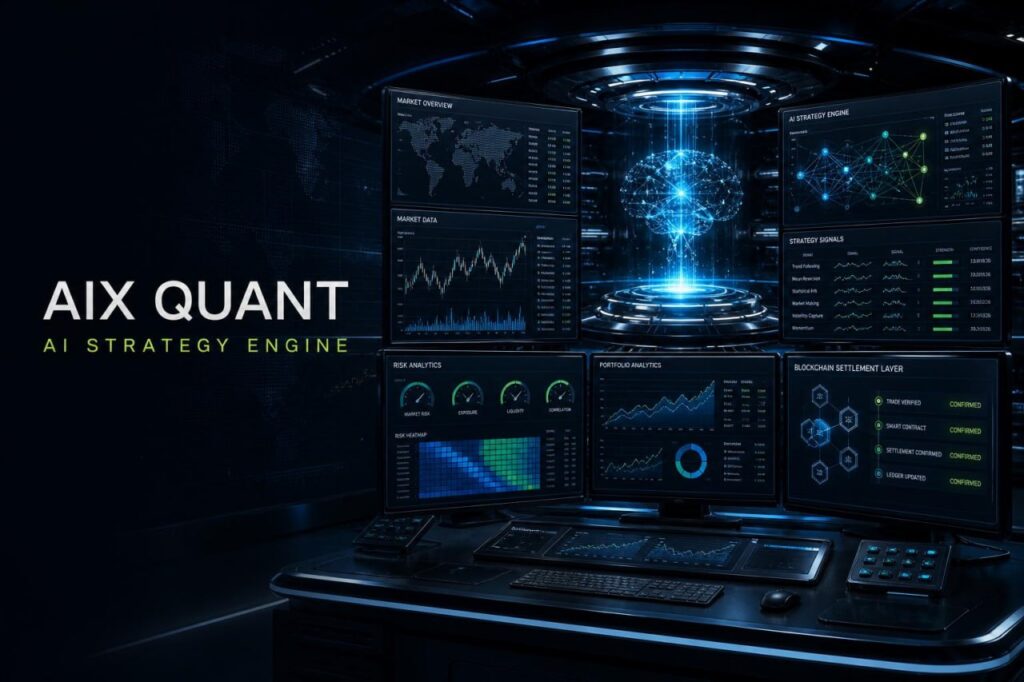
AI Exchange will focus on AI quantitative capabilities as an important product direction, exploring the application of artificial intelligence in areas such as market analysis, strategy research, historical backtesting, risk management, and trade execution.
• Aggregates market data, on-chain data, fund flows, and market sentiment;
• Supports AI factor research, model training, strategy generation, and historical backtesting;
• Establishes dynamic risk control around position size, volatility, drawdown, and liquidity;
• Coordinates trade execution and on-chain settlement, creating a traceable execution record.
The AI-powered quantitative platform will continue to improve market insights, strategy research, risk management, and trade execution efficiency, building a more intelligent and efficient digital asset trading experience for global users.
From wallets to cross-chain technology, building a complete Web3.0 product matrix.
The official website of the AI public chain has established product entry points covering users, miners, and developers: AI Wallet manages AIT, USDT, mining rewards, and on-chain applications; the blockchain explorer queries blocks, transactions, address assets, node status, and mining rewards; a cross-chain bridge connects AIT and USDT with the AI public chain, BSC, and Ethereum; AI Swap provides asset exchange, liquidity pools, and wallet connections; and the mining center and ordering system connect devices, wallet addresses, node applications, and ecosystem services.
At the developer level, the AI public chain is compatible with the EVM system, supporting Solidity, MetaMask, Hardhat, and mainstream EVM toolchains, providing a familiar development environment for smart contracts and decentralized applications.
Building a globally distributed network
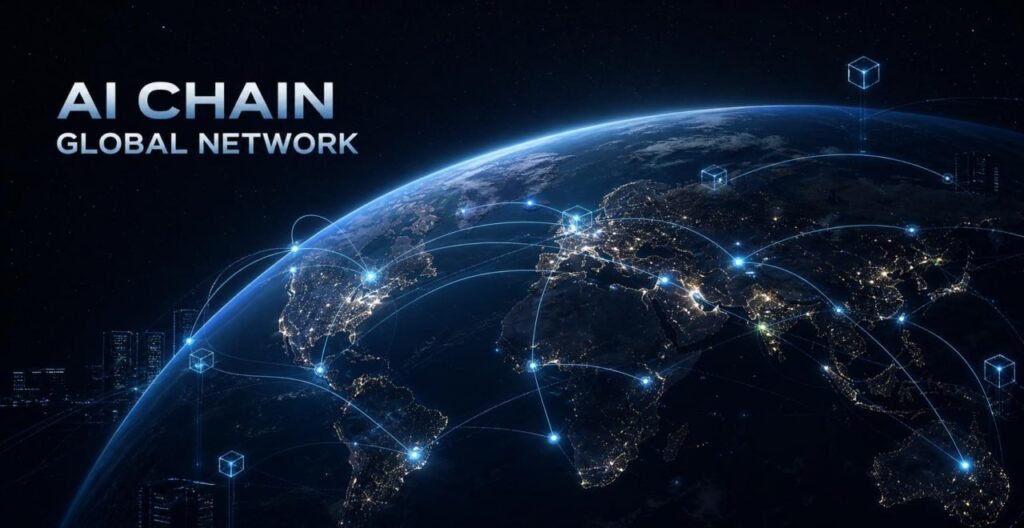
The AI public chain will continuously build a global node ecosystem, on-chain applications, cross-chain infrastructure, block explorer, developer services, and digital finance ecosystem, centered around the public chain network, AI exchange, physical mining machines, and AI quantitative trading platform.
The official website showcases a global node layout covering major regions including Virginia (USA), São Paulo (Brazil), Frankfurt (Germany), Dubai (UAE), Johannesburg (South Africa), Mumbai (India), Hong Kong (China), Singapore, and Sydney (Australia), forming a global network connecting North America, Europe, the Middle East, Asia, and Oceania.
Global Ecological Roadmap 2026-2028
• 2026: Complete the infrastructure deployment of wallets, public chains, mining, staking, on-chain marketplaces, and blockchain games;
• 2027: Promote the development of the public chain mainnet, AI education, AI finance, cross-border payments, and global business collaboration
• 2028: Advance the development of the Dubai global headquarters and international capital markets.
AIT builds the underlying value network of the AI public chain, while AIX connects AI exchanges and the global digital asset trading ecosystem. The AI public chain aims to establish a trusted network through blockchain, improve financial efficiency through artificial intelligence, and connect the real world through physical infrastructure.
AI Public Blockchain – Connecting the real world with Web3.0, ushering in a new era of AI-driven quantitative trading.
Official website: www.aichain.one