Author: Sophie Beckham, International Paper
SOURCE: International Paper Company
DESCRIPTION:
The time for ecosystem restoration is now. With the launch of the United Nations Decade on Ecosystem Restoration, nature-based solutions are getting tremendous attention, including the potential for forests to mitigate climate change. And the holistic health of forest ecosystems is critically important to this solution—not just for our climate but also for water quality, clean air, biodiversity and the estimated 1.6 billion people worldwide who depend directly on forests for their livelihoods.
As responsible stewards of over 10 million hectares of sustainable working forests, the members of WBCSD’s Forest Solutions Group (FSG) are joining the rallying call of the UN Decade on Ecosystem Restoration for the protection and revival of ecosystems around the world. We’re doing this by scaling up low-carbon, circular solutions; promoting sustainable forest management practices that enhance forest ecosystems; and contributing to reforestation and afforestation efforts. The key to success for any of these actions is effective collaboration, such as what is taking place in the Atlantic Forest of Brazil.
A fragmented forest
The Atlantic Forest once covered the eastern coast of Brazil, reaching inland into Argentina and Paraguay. Today, however, it is roughly 12% of its original size in Brazil. Muddy rivers flow through the Mogi Guaçu River basin. The healthy forests needed to prevent soil erosion and naturally filter water no longer line the rivers in many areas. The natural corridors of forestland that animals use to migrate and hunt have become interrupted by the conversion of much of that land for other uses. The forest, while still a hot spot of biodiversity and home to species found nowhere else on Earth, is fragmented.
And yet there is hope.
After so much destruction, people now recognize the importance of a healthy and whole forest ecosystem for the many benefits it provides humans and animals alike.
Collaboration for connectivity
Founded in 2009, the Atlantic Forest Restoration Pact is a collaboration between the private sector, civil society and government. According to World Wildlife Fund (WWF), which has been involved in the pact since its inception, it represents one of the largest habitat restoration efforts ever undertaken. The pact’s goal is to restore more than 37 million acres by 2050.
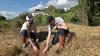
In 2018, under the umbrella of the Atlantic Forest Restoration Pact, WWF and International Paper, one of the world’s largest packaging, pulp and paper companies, created the Raízes do Mogi Guaçu project. Our project specifically tackles forest restoration in the Mogi Guaçu River basin, which supplies International Paper with an essential natural resource for our manufacturing operations in the country—water.
The goal is to restore nearly 250 acres of forest in this vital watershed, which connects existing forest blocks and protects waterways. The project also supports WWF’s development of the world’s first science-based targets for regional forests, which will provide critical input for scaling up this pilot.
A daunting task
The restoration of 250 acres of tropical forestland is more daunting than it may seem at first. Aptly named, Raízes do Mogi Guaçu, which translates to Roots of the Mogi Guaçu, seeks to get to the figurative root of success: multi-stakeholder collaboration.
It is precisely the fragmentation of the forest that requires a special approach to stakeholder buy-in. Much of the land is owned by local family farmers, people who rely on the productivity of their land and working forests for their livelihoods. Success hinges on their buy-in and participation in the project.
WWF and partners have laid the groundwork for local stakeholder engagement by bringing together landowners, local universities, other private companies and municipalities and aligning with them on the restoration vision for the river basin. We’ve partnered with Copaíba, a respected forest restoration organization in Brazil that has built on existing relationships with private landowners.
The collaboration has facilitated knowledge sharing and created real solutions to address landscape-level conservation and restoration. It has enabled us to reach diverse stakeholders and to engage them as catalysts for change. And, ultimately, it lays the groundwork for scaling up the project with new partners. These are the critical building blocks of true systems change, which we could never achieve by simply planting trees on our own.
Scaling up financial investment
The Raízes do Mogi Guaçu project is on pace to restore 250 acres by the end of 2022, but much more importantly, we’ve laid the foundation to grow this project further. We’ve analyzed the landscape and its needs, and we have cultivated a highly engaged local stakeholder coalition. The project has secured additional investment from other corporate funders to restore more prioritized parcels of forest.
This is a fortuitous time for scaling up. As the UN Decade on Ecosystem Restoration has amplified the call to action, the corporate world has become highly interested in investing in nature-based solutions. And the Atlantic Forest is a prime geography for applying these solutions as the supply chains of many commodity industries, such as beef, sugar and forest products, converge there.
Together, International Paper and WWF are exploring a new Atlantic Forest Restoration Fund—an opportunity to extend our restoration model in this high-impact landscape through a dedicated, multi-investor fund. A feasibility analysis is helping us understand the specific barriers to scaling up in the region, identify empty niches in the funding landscape to address these barriers, and appraise the viability and type of funding model required.
There is a demand for high-quality opportunities to invest in restoration efforts such as this one. There is a demand to invest in nature-based solutions to promote a low-carbon future. This demand isn’t limited to the forest products industry and FSG members; corporations, investors, governments, NGOs and landowners alike recognize that the time to act is now and that they have the influence and credibility to lead the change our world needs to ensure we have the quantity, and quality, of forests needed for the planet and people to thrive
If you’re interested in learning more about leading the change in the Atlantic Forest, get in touch. I’d love to learn about your own motivations for contributing to ecosystem restoration.
Sophie Beckham, Chief Sustainability Officer, International Paper
Tweet me: Learn about ecosystem restoration from @IntlPaperCo's Sophie Beckham. @wbcsd. https://bit.ly/3gFmipv
KEYWORDS: NYSE: IP, International Paper Company, Ecosystem Restoration