Next-generation sequencing is helping Native nations with sovereignty and genetic research
SOURCE: Illumina
DESCRIPTION:
International Day of World’s Indigenous Peoples is celebrated each year on August 9. On this day, people from around the world are encouraged to spread the United Nation’s message on the protection and promotion of the rights of indigenous peoples. This year, Illumina is honored to highlight one of their nonprofit partners, and recent donation recipient, Native BioData Consortium (NBDC).
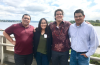
On a windy, overcast, yet unseasonably warm day in March, Joseph Yracheta was excited to welcome two guests to his research facility in Eagle Butte, South Dakota. Illumina Field Applications Scientist Brittny Smith and Field Service Engineer Andrew “AJ” Rutt were traveling to help with the setup of the Illumina NextSeq™ 550, which had been delivered as part of Illumina’s Accelerating Access to Genomics Corporate Social Responsibility initiatives.
Yracheta is the managing director of the Native BioData Consortium (NBDC), the first nonprofit research institute led and staffed by indigenous scientists and tribal community members in the US. Since its inception in 2018, the consortium’s goal has been to ensure that Natives could benefit from advances in genetics and health research. NBDC’s broader vision is to store and study research samples that not only pertain to human health, but also environmental and agricultural health.
Historically, genomic research has utilized samples from people of European descent, and to this day, the genomes of Indigenous peoples are not well represented. This sampling invariably skews the data and finds associations between, for instance, diseases and genetic variants that are common in individuals with European ancestry. Precision medicine, which uses an individuals’ genetics to delineate a course of treatment, still predominantly benefits those of European descent over communities of color.
Native Americans in the US suffer a range of health disparities, including diabetes, cardiovascular disease, and colon cancer. The incidence of rheumatoid arthritis (RA) in Native populations is anywhere from 2.5 to 5 times compared to other ethnicities in the US. While some test negative on conventional diagnostics, Indigenous patients are still diagnosed with RA, which means the biomarkers from those tests don’t always work for them, Yracheta and his colleagues found. One of the many research projects the NBDC will explore are biomarkers for RA in Native populations, and developing new diagnostics based on their genetic findings.
During the pandemic, the Native American Indian communities have been some of the hardest hit groups. With little to no infrastructure in place, they’ve faced delays in testing and assistance from the US government. A year into the pandemic, Illumina donated a NextSeq 550 with the aim to complement and strengthen existing COVID-19 surveillance efforts to monitor and prevent SARS-CoV-2 transmission among the Cheyenne River Sioux Tribe (CRST). In addition to tracking the virus, they will also be able to test for COVID-related comorbidities.
“Genomes need to be interpreted in the appropriate context of global diversity, and we’re really proud to support this opportunity to help close the diversity gap,” says Sharon Vidal, Global Lead of Corporate Social Responsibility at Illumina. “The NextSeq will enable NBDC to keep samples and data local, so that the findings can ultimately benefit the communities they serve. We engaged with Joseph because we wanted to empower the Native community response to the current pandemic, and help them prepare for future risks.”
Illumina representatives Smith and Rutt spent two days alongside NBDC employee Jonathan Kim, a recent Masters of Public Health graduate from the University of Michigan and Audra Crouch, a microbiome grad student at the Ohio State University. While Rutt installed the NextSeq, calibrated the optics, and ran tests to ensure the fluidics and all systems were operational, Smith went over training materials, gave a few demos of the software, and started the very first run on the instrument with Kim and Crouch.
For Yracheta, having this access to next-generation sequencing will help tribes maintain sovereignty, or self-governance. “All this data is likely to become intellectual property in the future, and I wanted to prevent that information being taken from indigenous people.”
Currently, Yracheta is collecting samples from a Northern Plains tribe. He and his colleagues at the NBDC are looking forward to using the Illumina NextSeq to study susceptibility and resistance to SARS-CoV-2 as well as the presence of viruses in wastewater. The team is also creating a soil microbiome map of the Native lands.
“Tribes represent an untapped resource of data and biological diversity,” says Yracheta. “We feel that resources that come from Native people should benefit Native people and that can only happen if Native people can control and implement their own research. Finding solutions and applying them here is our main goal.”
Read the original article from Illumina.
KEYWORDS: illumina, NASDAQ: ILM, China's Rare Disease Community