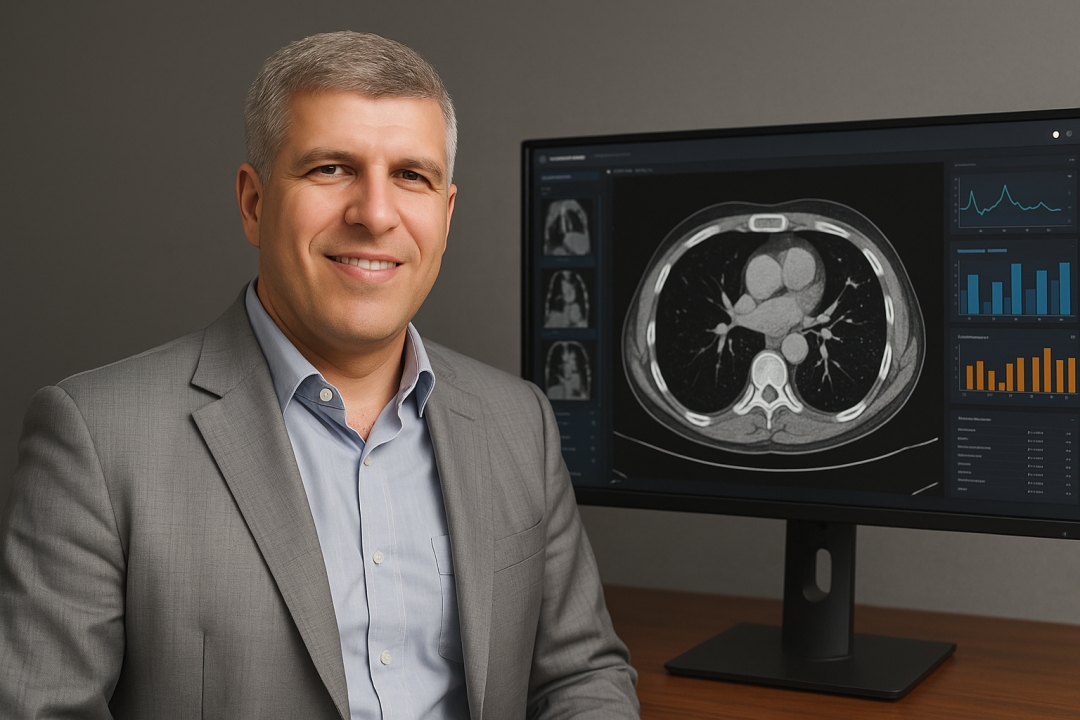
A quiet breakthrough is unfolding in medical imaging—and it’s powered not by new machines, but by new intelligence. Canadian technology strategist Hugo Raposo has developed an artificial intelligence platform that rapidly analyzes diagnostic images to detect early signs of disease, with the potential to transform patient outcomes at scale.
From routine X-rays to advanced MRI and CT scans, the platform acts as an intelligent assistant—one that never tires, forgets, or overlooks the fine details. Deployed in select clinical settings across Ontario, it has already shown promise in reducing diagnostic delays and identifying at-risk patients long before symptoms surface.
Automating the Invisible: A Second Set of Eyes for Every Scan
Built on machine learning and advanced pattern recognition, the platform interprets clinical images in real time, surfacing subtle abnormalities that might escape even experienced eyes under pressure.
It’s not just about speed—it’s about catching what would otherwise be missed:
- Tiny lung nodules that could signal early cancer
- Microbleeds pointing to stroke risk
- Retinal damage indicative of diabetes or neurodegeneration
- Bone or spinal anomalies that don’t yet cause pain
“Radiologists are under immense strain,” said one Toronto-based imaging lead familiar with the rollout. “This kind of tool doesn’t just help—it protects. It extends the quality of care without increasing the workload.”
About the Architect Behind the Platform
Hugo Raposo is no stranger to complex healthcare challenges. With nearly three decades of experience in enterprise architecture and digital health, he served as Chief Architect for one of Canada’s largest provincial healthcare transformation programs. His work bridges clinical operations, AI innovation, and scalable infrastructure—often with an emphasis on underserved or high-risk populations.
He has advised executive teams, contributed to public-sector modernization, and spoken internationally on the intersection of technology and health equity.
More on Raposo: linkedin.com/in/hugoraposo
Real-World Results and Clinical Potential
In early deployments, Raposo’s platform has helped care teams:
- Flag critical findings up to 48 hours earlier
- Reduce missed abnormalities in high-volume radiology centers
- Increase detection sensitivity above 90% across selected use cases
- Improve prioritization for follow-up care and referrals
One pilot site saw a drop in unnecessary imaging repeat requests within weeks—thanks to clearer, AI-assisted reporting. Another clinic, serving a rural population, credited the system with improving access to rapid pre-screening where radiologist review was delayed.
Beyond Hospitals: Designing for Accessibility
Unlike many AI health tools that remain confined to research labs or top-tier institutions, this system was designed for broad use. It operates with or without cloud access, supports mobile deployments, and integrates into existing PACS and EHR systems.
“We didn’t build this for showcase hospitals,” Raposo said in an interview. “We built it for the real world—where a delay in reading a scan can mean the difference between early treatment and emergency surgery.”
The technology adheres to privacy-by-design principles, using federated learning to prevent raw image data from leaving local environments. Model updates and quality controls are handled through a rigorous oversight framework, with bias mitigation and auditability at the core.
Policy Alignment and Global Relevance
With the U.S. and Canada facing rising diagnostic backlogs, Raposo’s work intersects with key national goals:
- Accelerating adoption of AI in radiology
- Supporting value-based care and early intervention
- Extending diagnostic capacity to rural, Indigenous, and underserved populations
The system’s compatibility with both urban and low-resource clinical settings positions it as a candidate for broader adoption in public health and emergency response networks.
What Comes Next
Raposo is advancing the platform’s capabilities to analyze cardiovascular scans and identify early indicators of cognitive decline. He is also developing multi-modality correlation features that link insights across radiology, pathology, and lab data—creating a comprehensive diagnostic profile driven by artificial intelligence.
“This is just the beginning,” Raposo said. “We’re not replacing clinicians. We’re giving them clarity faster, and with that, the power to intervene sooner.”
Media Contact
Company Name: Contatto Media Agency
Contact Person: Boracini, Paula
Email: Send Email
Country: Canada
Website: https://www.agenciacontatto.com.br