DALLAS - May 1, 2026 (NEWMEDIAWIRE) - A stroke can change a life in an instant. In the minutes after symptoms begin, quick action can help protect the brain, reduce long-term disability and save a life, according to the American Stroke Association, a division of the American Heart Association.
On average, nearly 2 million brain cells die every minute a stroke goes untreated, making early recognition and treatment critical. During May, American Stroke Month, the Stroke Association is highlighting the importance of recognizing stroke warning signs and understanding how early treatment and prevention can make a meaningful difference when it matters most.
Stroke is the fourth-leading cause of death, according to the American Heart Association’s 2026 Heart Disease and Stroke Statistical Update[1], and a leading cause of serious, long-term disability in the United States. Each year, approximately 800,000 people in the U.S. experience a stroke. A stroke can happen to anyone, at any age.
3 things you can do to take action against stroke:
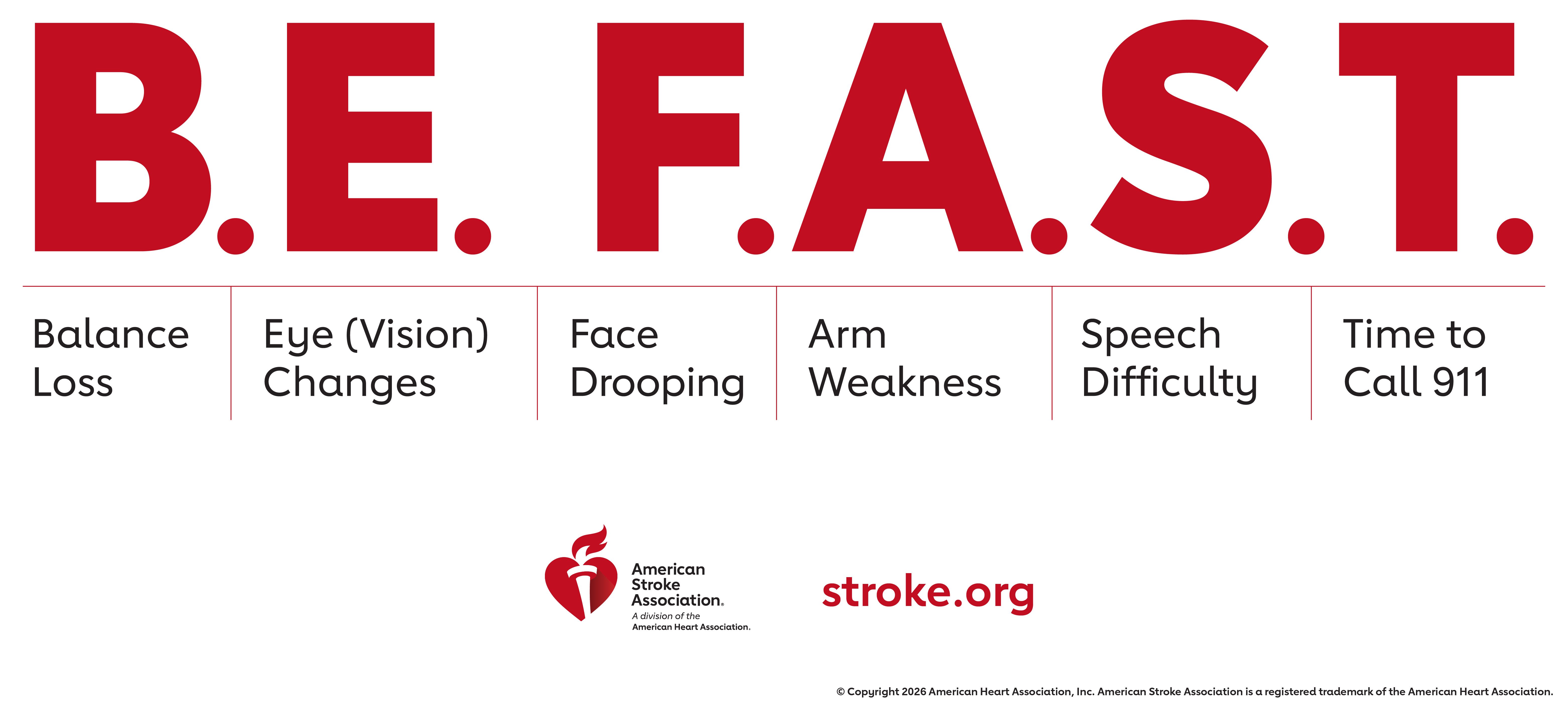
- Learn B.E. F.A.S.T. to spot a stroke. If you see sudden Balance loss, Eye or vision changes, Face drooping, Arm weakness or Speech difficulty, it’s time to call 911. Explore the signs by playing the B.E. F.A.S.T. Experience at Stroke.org/StrokeMonth.
- Understand your stroke risk and explore ways to lower it. Identifying personal risk factors - especially high blood pressure, the leading risk factor for stroke - can help you have informed conversations with your health care team about stroke prevention and long‑term brain health.
- Find support after stroke. Recovery is a journey and connection matters. Explore support services for survivors and care partners, including virtual Stroke Meetups, and sign up for the Stroke Connection e‑newsletter at Stroke.org/StrokeMonth.
Recognize Stroke Warning Signs: B.E. F.A.S.T.
When a stroke happens, blood flow to the brain is interrupted. The longer treatment is delayed, the greater the risk of lasting damage. Calling 911 is the fastest way to get stroke care. EMS can begin treatment immediately and alert the hospital stroke team before you arrive.
B.E. F.A.S.T. is a simple way to remember common stroke warning signs:
- Balance Loss – Sudden trouble walking, dizziness or loss of coordination
- Eye (Vision) Changes – Sudden vision loss or trouble seeing in one or both eyes
- Face Drooping – One side of the face droops or feels numb; a smile may look uneven
- Arm Weakness – One arm feels weak or numb or drifts downward when raised
- Speech Difficulty – Slurred speech or trouble speaking
- Time to Call 911 – If someone shows any of these signs, even if symptoms go away, calling 911 right away can help get lifesaving care started. Noting when symptoms first appeared can also support treatment decisions.
Take steps to prevent stroke
According to the Heart Association and the Stroke Association, approximately 80% of strokes are preventable. High blood pressure is the leading risk factor for stroke[2], and uncontrolled blood pressure, diabetes and obesity significantly increase risk.
A large majority of strokes can be prevented by taking steps to:
- Manage blood pressure. Lowering and controlling blood pressure reduces the risk of stroke. Regular check‑ups, monitoring at home and following a treatment plan can lower risk and support long‑term brain health.
- Build healthy habits. Eating well, staying active, not smoking and keeping up with routine health screenings all play an important role in reducing stroke risk. The Heart Association’s Life’s Essential 8TM outlines key steps for improving and maintaining cardiovascular and brain health.
- Reduce the risk of a second stroke. Prevention takes on added importance for people who have had a stroke or a transient ischemic attack (TIA), sometimes called a “warning stroke.” Nearly 1 in 4 strokes occur in people who have had a previous stroke[3]. Understanding what caused the first stroke and identifying personal risk factors can help guide next steps and reduce the chance of another one.
Support that meets you where you are
Stroke recovery looks different for everyone, and support can play an important role along the way. The Stroke Association offers resources designed to help survivors and care partners feel informed, connected and supported, including live, virtual Stroke Meetups where participants can share experiences, ask questions and learn from trusted experts. Stay connected with recovery tools and support by signing up for the Stroke Connection e‑newsletter.
Stroke can happen suddenly. Knowing the signs with B.E. F.A.S.T. can help you respond when minutes matter. This American Stroke Month, explore trusted resources, practical tools and support Stroke.org/StrokeMonth.
The HCA Healthcare Foundation is a national sponsor of the American Stroke Association’s Together to End Stroke® initiative and American Stroke Month.
Additional resources:
- Multimedia, including B.E. F.A.S.T. graphics, are available on the right column of the release link.
- Spanish News Release
- VIDEO: B.E. F.A.S.T. PSA
- Interactive B.E. F.A.S.T. Experience
- May 4 Live virtual Stroke Meetup: Mental Health After Stroke
- Follow American Heart Association/American Stroke Association news on X @HeartNews
About the American Heart Association
The American Heart Association is a relentless force for a world of longer, healthier lives. Dedicated to ensuring equitable health in all communities, the organization has been a leading source of health information for more than one hundred years. Supported by more than 35 million volunteers globally, we fund groundbreaking research, advocate for the public’s health, and provide critical resources to save and improve lives affected by cardiovascular disease and stroke. By driving breakthroughs and implementing proven solutions in science, policy, and care, we work tirelessly to advance health and transform lives every day. Connect with us on heart.org, Facebook, X or by calling 1-800-AHA-USA1.
About the American Stroke Association
The American Stroke Association is a relentless force for a world with fewer strokes and longer, healthier lives. We team with millions of volunteers and donors to ensure equitable health and stroke care in all communities. We work to prevent, treat and beat stroke by funding innovative research, fighting for the public’s health, and providing lifesaving resources. The Dallas-based association was created in 1998 as a division of the American Heart Association. To learn more or to get involved, call 1-888-4STROKE or visit stroke.org. Follow us on Facebook and X.
For Media Inquiries: 214-706-1173
Darcy Wallace: Darcy.Wallace@heart.org
For Public Inquiries: 1-800-AHA-USA1 (242-8721)
heart.org and stroke.org
[1] L A Palaniappan; et al Heart Disease and Stroke Statistics - 2026 Update: A Report of US and Global Data From the American Heart Association Circulation. 2026; 153:00–00. DOI: 10.1161/CIR.0000000000001412
[2] D W Jones; et al 2025 AHA / ACC / AANP / AAPA / ABC / ACCP / ACPM / AGS / AMA / ASPC / NMA / PCNA / SGIM Guideline for the Prevention, Detection, Evaluation, and Management of High Blood Pressure in Adults. Circulation Volume 152, Issue 11, 16 September 2025; Pages e114-e218 https://doi.org/10.1161/CIR.0000000000001356
[3] L A Palaniappan; et al Heart Disease and Stroke Statistics - 2026 Update: A Report of US and Global Data From the American Heart Association Circulation. 2026; 153:00–00. DOI: 10.1161/CIR.0000000000001412
View the original release on www.newmediawire.com