Measurement equipment distributor Transcat (NASDAQ: TRNS) fell short of the market’s revenue expectations in Q3 CY2024, but sales rose 8% year on year to $67.83 million. Its GAAP profit of $0.35 per share was also 24.5% below analysts’ consensus estimates.
Is now the time to buy Transcat? Find out by accessing our full research report, it’s free.
Transcat (TRNS) Q3 CY2024 Highlights:
- Revenue: $67.83 million vs analyst estimates of $70.29 million (3.5% miss)
- EPS: $0.35 vs analyst expectations of $0.46 (24.5% miss)
- EBITDA: $8.86 million vs analyst estimates of $11.33 million (21.8% miss)
- Gross Margin (GAAP): 31.3%, in line with the same quarter last year
- Operating Margin: 5.5%, down from 8% in the same quarter last year
- EBITDA Margin: 13.1%, in line with the same quarter last year
- Free Cash Flow Margin: 4.2%, down from 9.2% in the same quarter last year
- Market Capitalization: $1.10 billion
“Consolidated revenue was up 8%. Consistent demand in our Calibration Services business was supported by our differentiated value proposition which resonates well in the highly regulated end markets we serve, including life sciences,” commented Lee D. Rudow, President and CEO.
Company Overview
Serving the pharmaceutical, industrial manufacturing, energy, and chemical process industries, Transcat (NASDAQ: TRNS) provides measurement instruments and supplies.
Maintenance and Repair Distributors
Supply chain and inventory management are themes that grew in focus after COVID wreaked havoc on the global movement of raw materials and components. Maintenance and repair distributors that boast reliable selection and quickly deliver products to customers can benefit from this theme. While e-commerce hasn’t disrupted industrial distribution as much as consumer retail, it is still a real threat, forcing investment in omnichannel capabilities to serve customers everywhere. Additionally, maintenance and repair distributors are at the whim of economic cycles that impact the capital spending and construction projects that can juice demand.
Sales Growth
Reviewing a company’s long-term performance can reveal insights into its business quality. Any business can have short-term success, but a top-tier one sustains growth for years. Thankfully, Transcat’s 9.8% annualized revenue growth over the last five years was solid. This is a good starting point for our analysis.
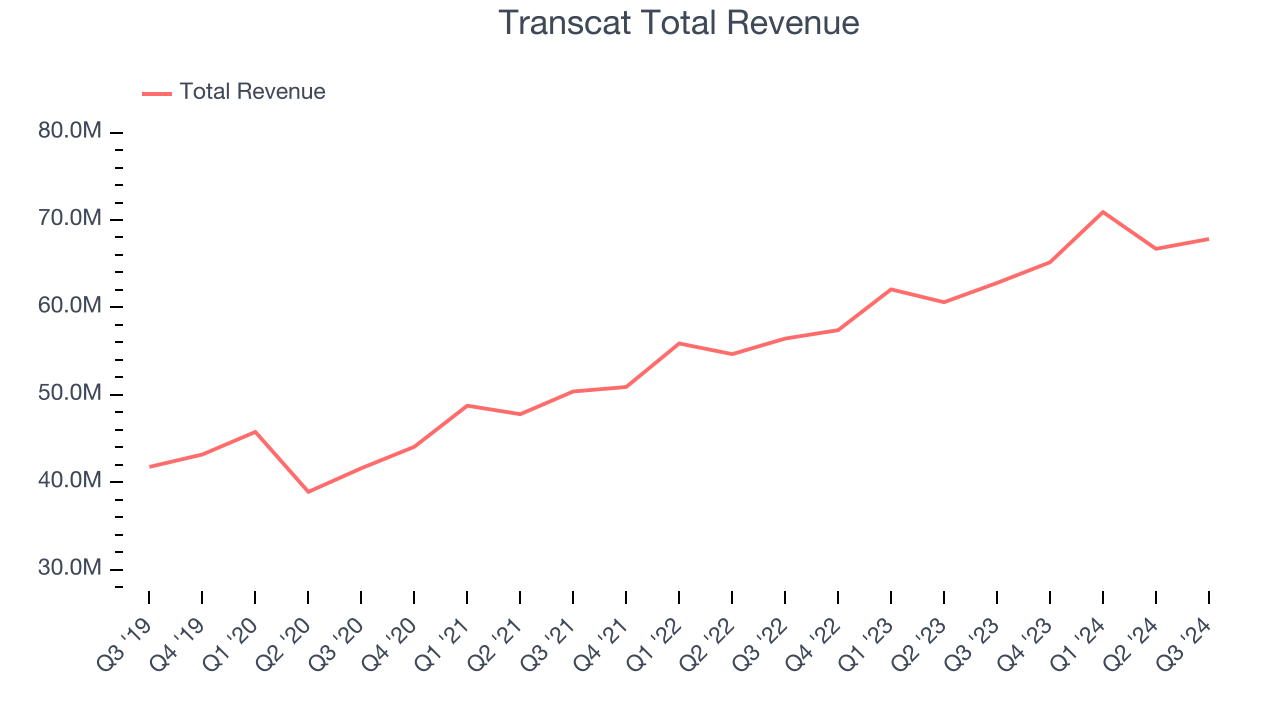
We at StockStory place the most emphasis on long-term growth, but within industrials, a half-decade historical view may miss cycles, industry trends, or a company capitalizing on catalysts such as a new contract win or a successful product line. Transcat’s annualized revenue growth of 11.4% over the last two years is above its five-year trend, suggesting its demand was strong and recently accelerated. 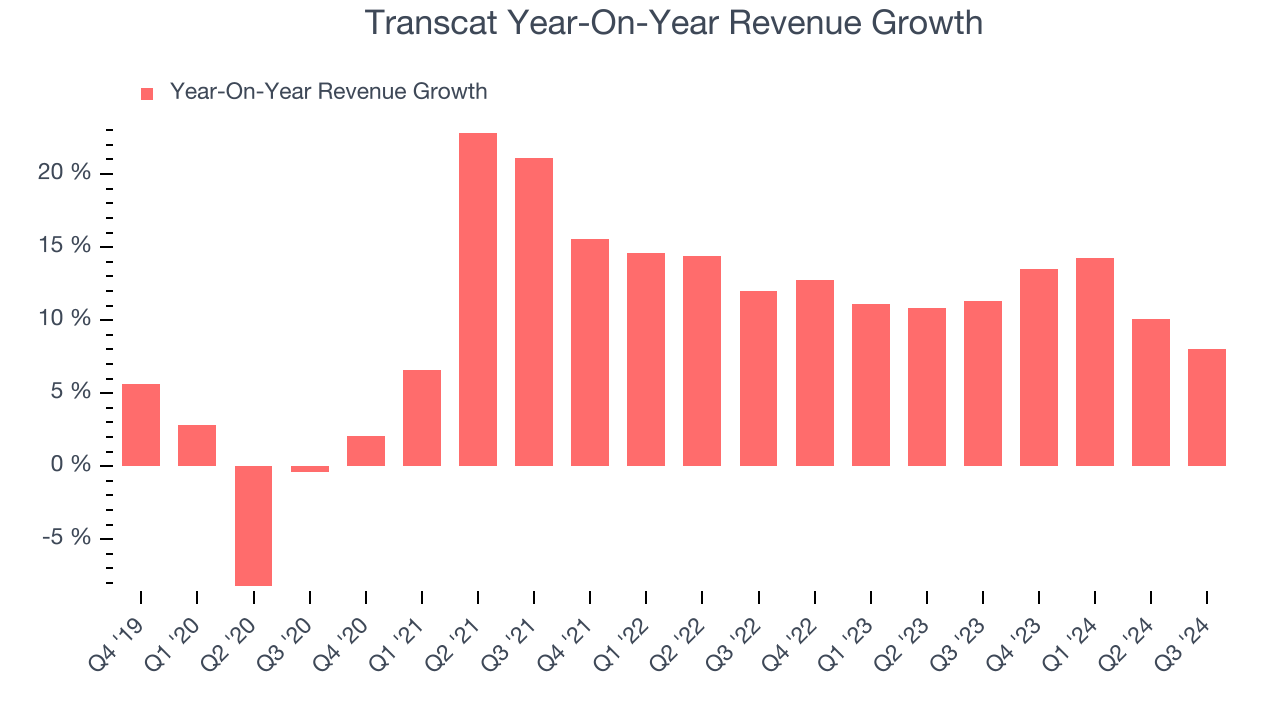
This quarter, Transcat’s revenue grew 8% year on year to $67.83 million, missing Wall Street’s estimates.
Looking ahead, sell-side analysts expect revenue to grow 8.8% over the next 12 months. This projection is still above the sector average and illustrates the market sees some success for its newer products and services.
When a company has more cash than it knows what to do with, buying back its own shares can make a lot of sense–as long as the price is right. Luckily, we’ve found one, a low-priced stock that is gushing free cash flow AND buying back shares. Click here to claim your Special Free Report on a fallen angel growth story that is already recovering from a setback.
Operating Margin
Transcat was profitable over the last five years but held back by its large cost base. Its average operating margin of 7.2% was weak for an industrials business. This result isn’t too surprising given its low gross margin as a starting point.
On the bright side, Transcat’s annual operating margin rose by 1.7 percentage points over the last five years, as its sales growth gave it operating leverage.
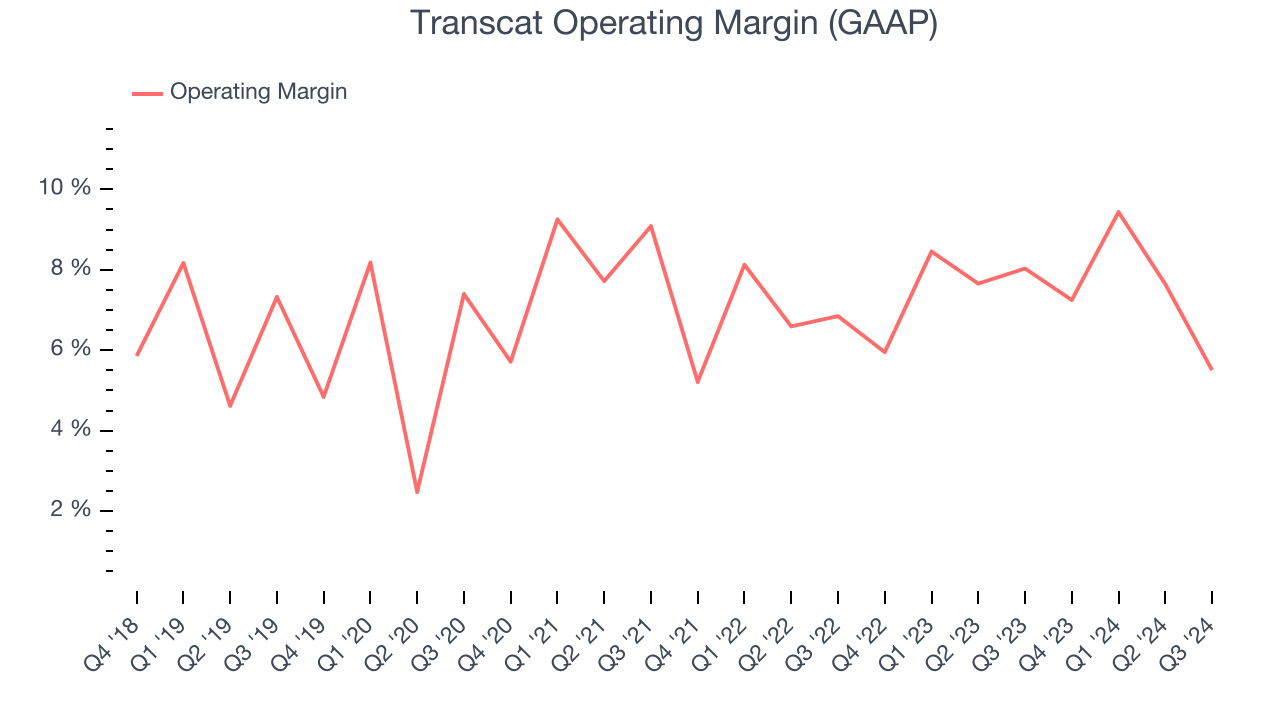
In Q3, Transcat generated an operating profit margin of 5.5%, down 2.5 percentage points year on year. Since Transcat’s operating margin decreased more than its gross margin, we can assume it was recently less efficient because expenses such as marketing, R&D, and administrative overhead increased.
Earnings Per Share
Analyzing revenue trends tells us about a company’s historical growth, but the long-term change in its earnings per share (EPS) points to the profitability of that growth – for example, a company could inflate its sales through excessive spending on advertising and promotions.
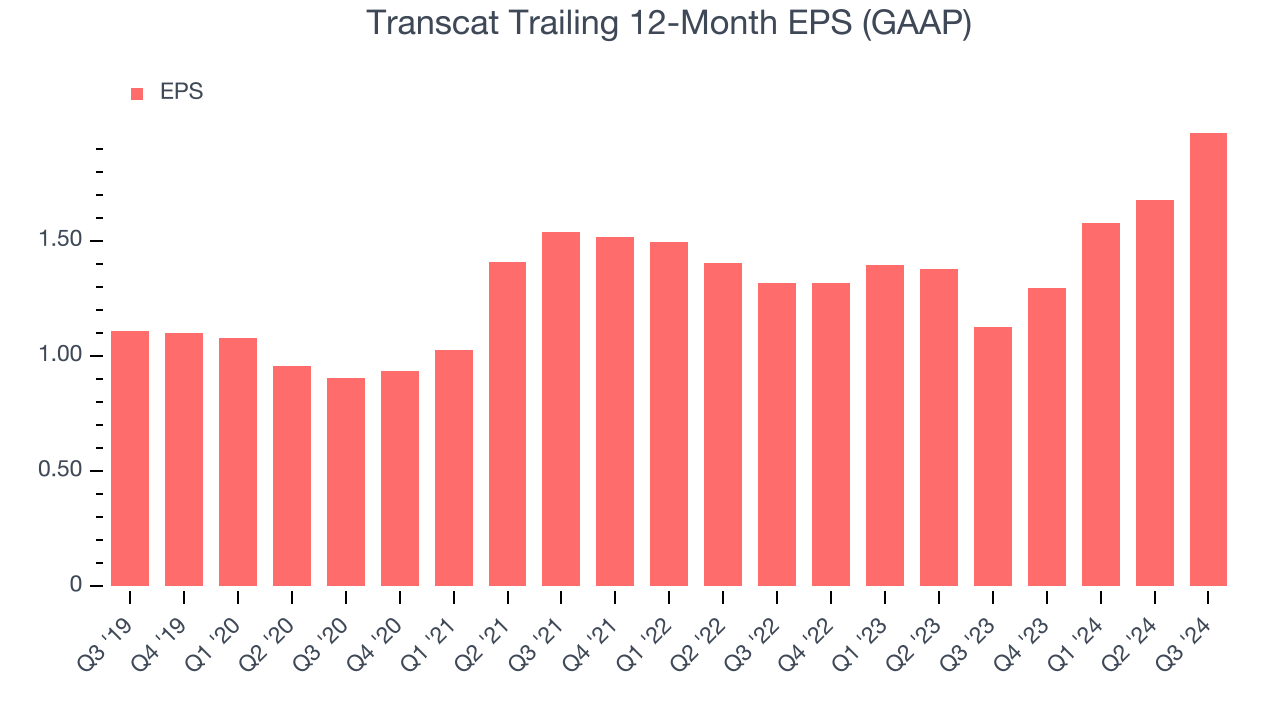
Transcat’s EPS grew at a remarkable 12.2% compounded annual growth rate over the last five years, higher than its 9.8% annualized revenue growth. This tells us the company became more profitable as it expanded.
We can take a deeper look into Transcat’s earnings quality to better understand the drivers of its performance. As we mentioned earlier, Transcat’s operating margin declined this quarter but expanded by 1.7 percentage points over the last five years. This was the most relevant factor (aside from the revenue impact) behind its higher earnings; taxes and interest expenses can also affect EPS but don’t tell us as much about a company’s fundamentals.
Like with revenue, we analyze EPS over a shorter period to see if we are missing a change in the business. For Transcat, its two-year annual EPS growth of 22.3% was higher than its five-year trend. We love it when earnings growth accelerates, especially when it accelerates off an already high base.
In Q3, Transcat reported EPS at $0.35, up from $0.06 in the same quarter last year. Despite growing year on year, this print missed analysts’ estimates, but we care more about long-term EPS growth than short-term movements. Over the next 12 months, Wall Street expects Transcat’s full-year EPS of $1.97 to grow by 11.4%.
Key Takeaways from Transcat’s Q3 Results
We struggled to find many strong positives in these results as its revenue, EBITDA, and EPS missed Wall Street’s estimates. Overall, this was a softer quarter. The stock traded down 3.4% to $115.15 immediately following the results.
Transcat underperformed this quarter, but does that create an opportunity to invest right now?The latest quarter does matter, but not nearly as much as longer-term fundamentals and valuation, when deciding if the stock is a buy. We cover that in our actionable full research report which you can read here, it’s free.