Freight delivery company Landstar (NASDAQ: LSTR) met Wall Street’s revenue expectations in Q3 CY2025, but sales fell by 1% year on year to $1.21 billion. Its non-GAAP profit of $1.22 per share was in line with analysts’ consensus estimates.
Is now the time to buy Landstar? Find out by accessing our full research report, it’s free for active Edge members.
Landstar (LSTR) Q3 CY2025 Highlights:
- Revenue: $1.21 billion vs analyst estimates of $1.21 billion (1% year-on-year decline, in line)
- Adjusted EPS: $1.22 vs analyst estimates of $1.23 (in line)
- Operating Margin: 2.2%, down from 5.2% in the same quarter last year
- Market Capitalization: $4.49 billion
“The Landstar team of independent business owners and employees executed admirably during the 2025 third quarter despite continued challenges in the overall economic environment for truck transportation services,” said Landstar President and Chief Executive Officer Frank Lonegro.
Company Overview
Covering billions of miles throughout North America, Landstar (NASDAQ: LSTR) is a transportation company specializing in freight and last-mile delivery services.
Revenue Growth
A company’s long-term sales performance can indicate its overall quality. Any business can experience short-term success, but top-performing ones enjoy sustained growth for years. Regrettably, Landstar’s sales grew at a tepid 4.5% compounded annual growth rate over the last five years. This fell short of our benchmark for the industrials sector and is a tough starting point for our analysis.
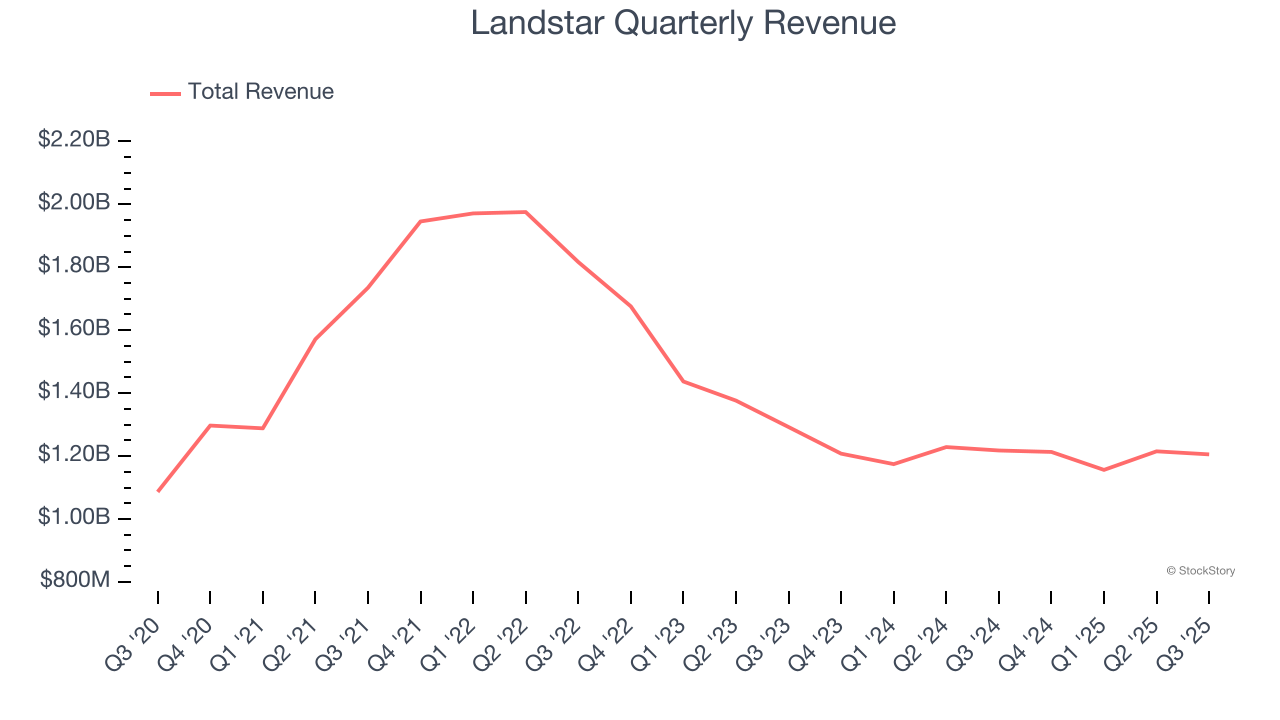
We at StockStory place the most emphasis on long-term growth, but within industrials, a half-decade historical view may miss cycles, industry trends, or a company capitalizing on catalysts such as a new contract win or a successful product line. Landstar’s performance shows it grew in the past but relinquished its gains over the last two years, as its revenue fell by 9% annually. Landstar isn’t alone in its struggles as the Ground Transportation industry experienced a cyclical downturn, with many similar businesses observing lower sales at this time. 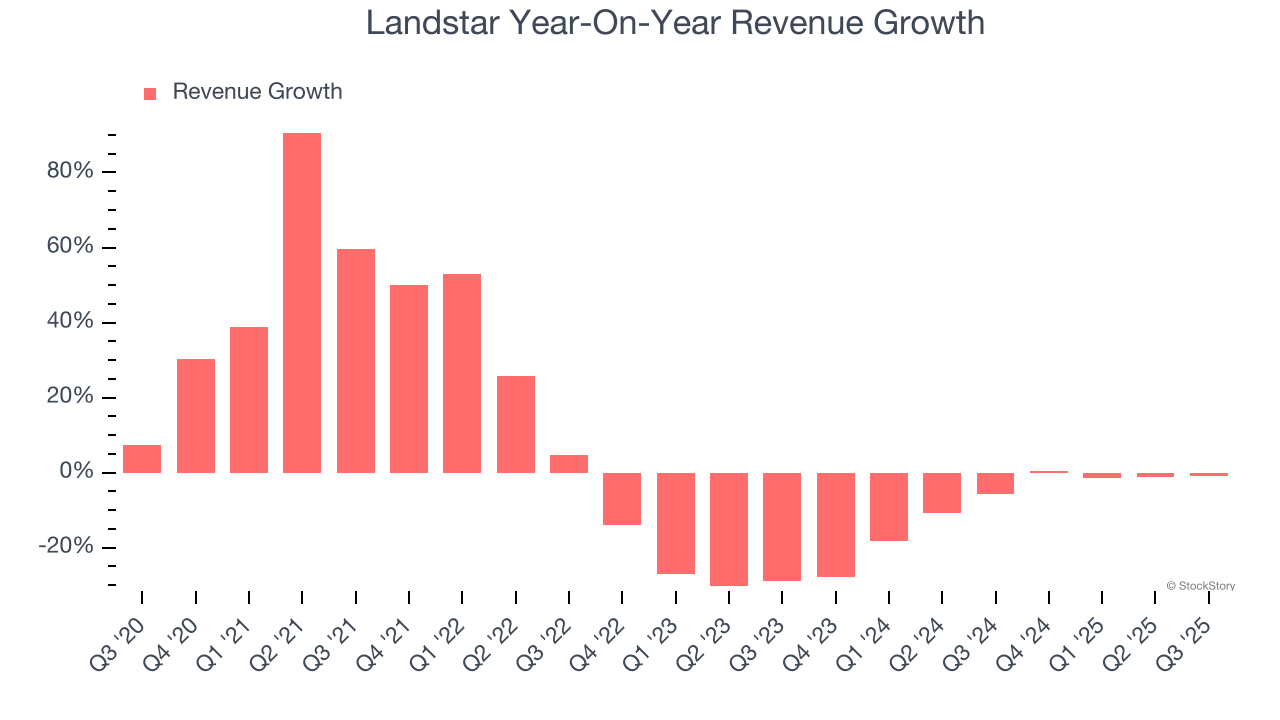
We can dig further into the company’s revenue dynamics by analyzing its most important segments, Van Equipment and Platform Equipment, which are 48.4% and 32% of revenue. Over the last two years, Landstar’s Van Equipment revenue (full truckload van transportation) averaged 10.5% year-on-year declines while its Platform Equipment revenue (full truckload trailer transportation) averaged 2.4% declines. 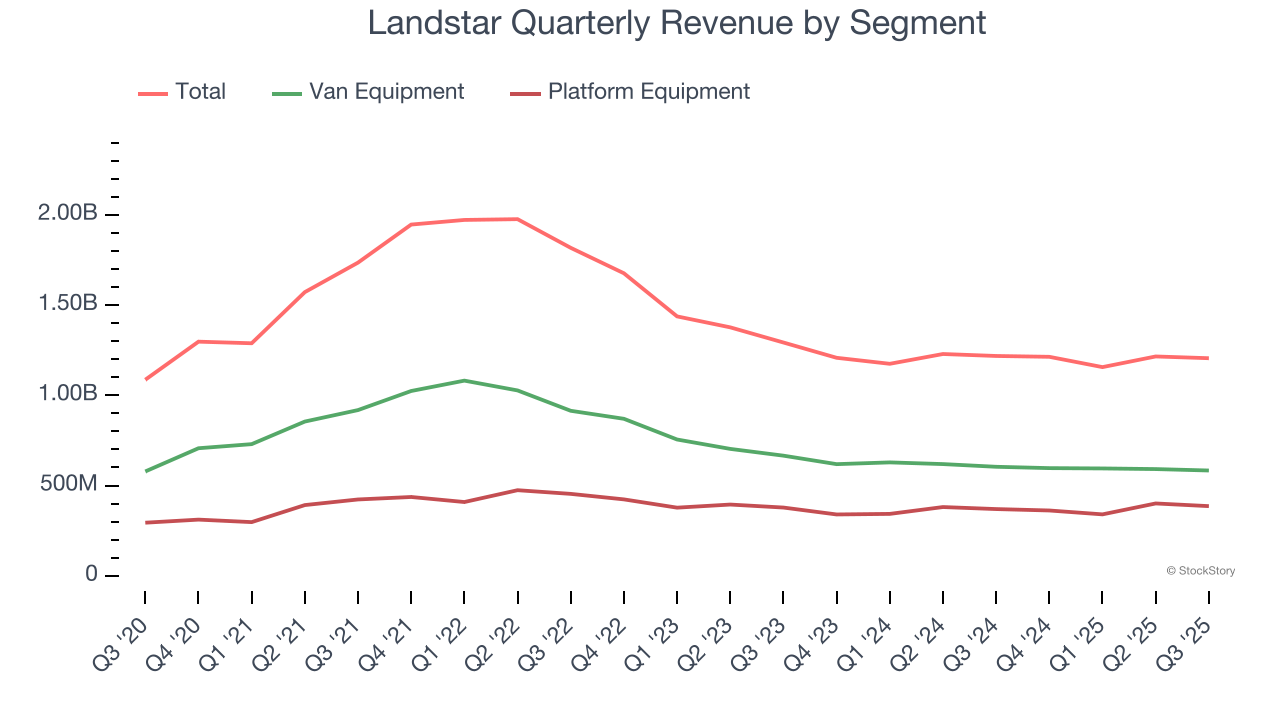
This quarter, Landstar reported a rather uninspiring 1% year-on-year revenue decline to $1.21 billion of revenue, in line with Wall Street’s estimates.
Looking ahead, sell-side analysts expect revenue to grow 5.1% over the next 12 months. Although this projection suggests its newer products and services will catalyze better top-line performance, it is still below average for the sector.
Unless you’ve been living under a rock, it should be obvious by now that generative AI is going to have a huge impact on how large corporations do business. While Nvidia and AMD are trading close to all-time highs, we prefer a lesser-known (but still profitable) stock benefiting from the rise of AI. Click here to access our free report one of our favorites growth stories.
Operating Margin
Landstar was profitable over the last five years but held back by its large cost base. Its average operating margin of 6.5% was weak for an industrials business. This result isn’t too surprising given its low gross margin as a starting point.
Looking at the trend in its profitability, Landstar’s operating margin decreased by 3.7 percentage points over the last five years. This raises questions about the company’s expense base because its revenue growth should have given it leverage on its fixed costs, resulting in better economies of scale and profitability. We’ve noticed many Ground Transportation companies also saw their margins fall (along with revenue, as mentioned above) because the cycle turned in the wrong direction, but Landstar’s performance was poor no matter how you look at it. It shows that costs were rising and it couldn’t pass them onto its customers.
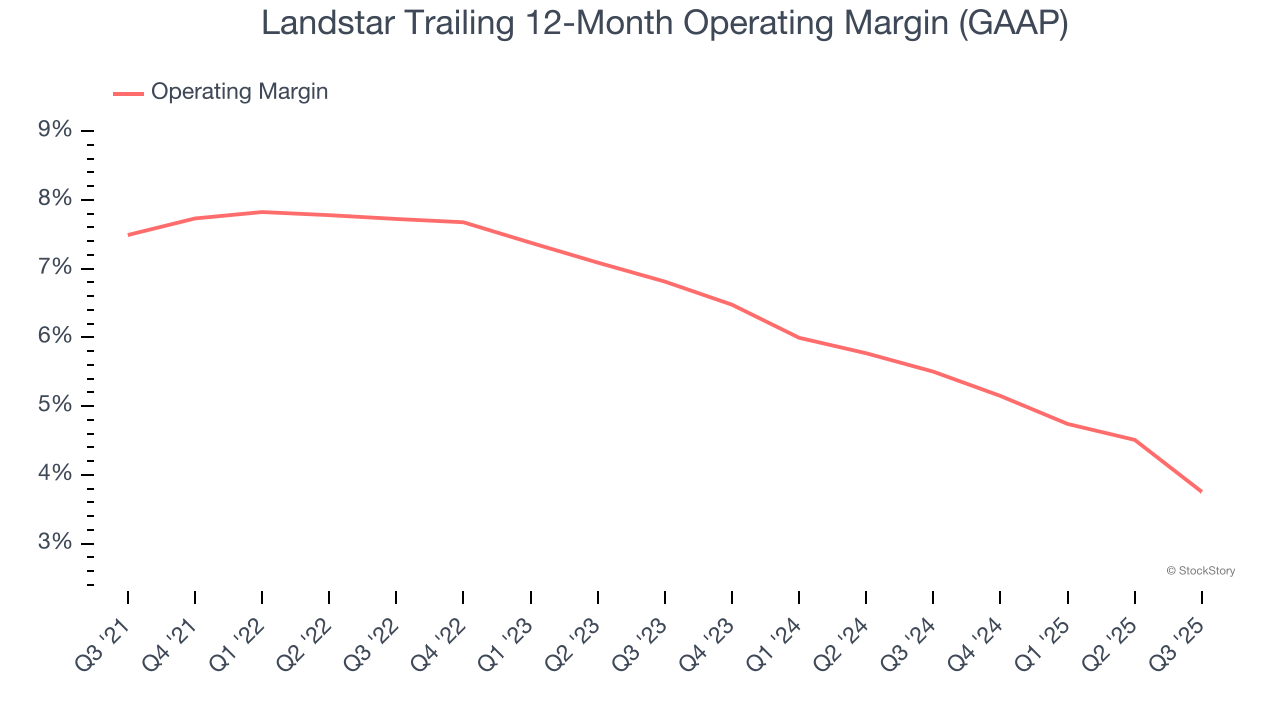
This quarter, Landstar generated an operating margin profit margin of 2.2%, down 3 percentage points year on year. Since Landstar’s gross margin decreased more than its operating margin, we can assume its recent inefficiencies were driven more by weaker leverage on its cost of sales rather than increased marketing, R&D, and administrative overhead expenses.
Earnings Per Share
Revenue trends explain a company’s historical growth, but the long-term change in earnings per share (EPS) points to the profitability of that growth – for example, a company could inflate its sales through excessive spending on advertising and promotions.
Landstar’s flat EPS over the last five years was below its 4.5% annualized revenue growth. This tells us the company became less profitable on a per-share basis as it expanded due to non-fundamental factors such as interest expenses and taxes.
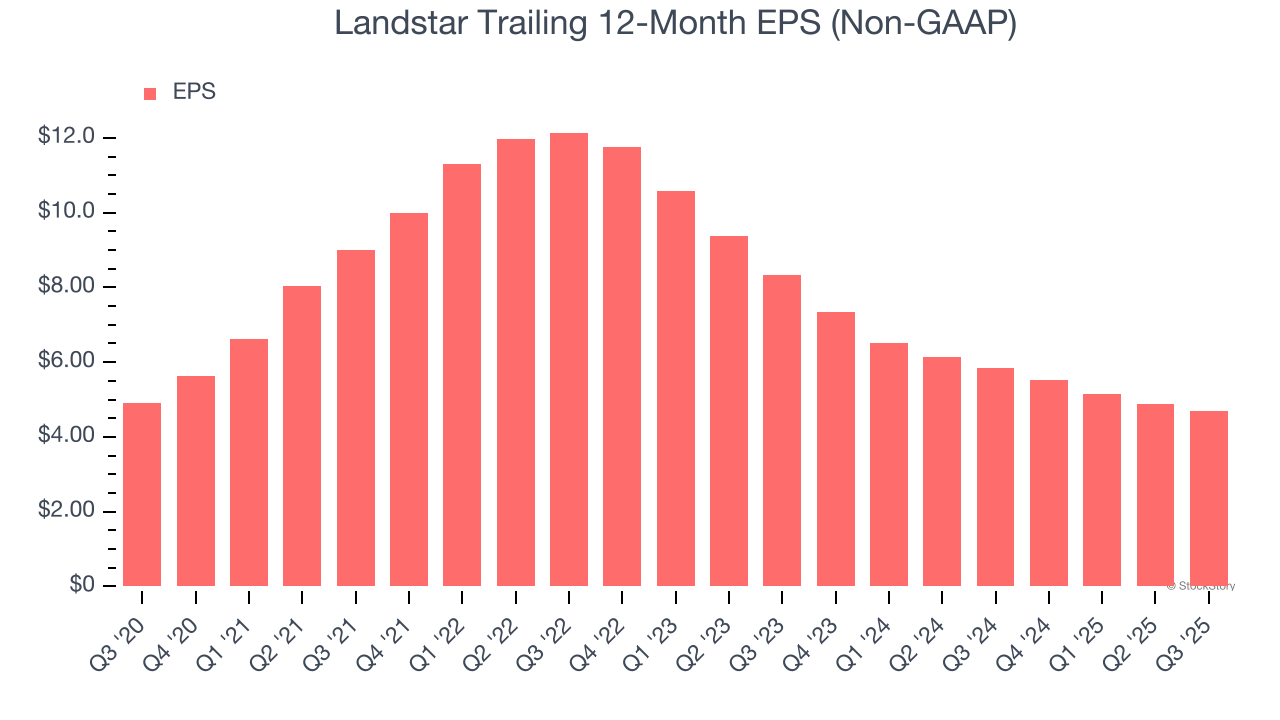
We can take a deeper look into Landstar’s earnings to better understand the drivers of its performance. As we mentioned earlier, Landstar’s operating margin declined by 3.7 percentage points over the last five years. This was the most relevant factor (aside from the revenue impact) behind its lower earnings; interest expenses and taxes can also affect EPS but don’t tell us as much about a company’s fundamentals.
Like with revenue, we analyze EPS over a shorter period to see if we are missing a change in the business.
For Landstar, its two-year annual EPS declines of 25% show its recent history was to blame for its underperformance over the last five years. These results were bad no matter how you slice the data.
In Q3, Landstar reported adjusted EPS of $1.22, down from $1.41 in the same quarter last year. This print was close to analysts’ estimates. Over the next 12 months, Wall Street expects Landstar’s full-year EPS of $4.68 to grow 18.2%.
Key Takeaways from Landstar’s Q3 Results
Revenue and EPS were in line with expectations. This quarter didn't have many resounding positives or negatives. The stock traded down 1% to $127.99 immediately after reporting.
Landstar’s earnings report left more to be desired. Let’s look forward to see if this quarter has created an opportunity to buy the stock. We think that the latest quarter is only one piece of the longer-term business quality puzzle. Quality, when combined with valuation, can help determine if the stock is a buy. We cover that in our actionable full research report which you can read here, it’s free for active Edge members.