EV charging infrastructure provider Blink Charging (NASDAQ: BLNK) fell short of the markets revenue expectations in Q3 CY2025, but sales rose 7.3% year on year to $27.03 million. Its non-GAAP loss of $0.10 per share was in line with analysts’ consensus estimates.
Is now the time to buy Blink Charging? Find out by accessing our full research report, it’s free for active Edge members.
Blink Charging (BLNK) Q3 CY2025 Highlights:
- Revenue: $27.03 million vs analyst estimates of $29.88 million (7.3% year-on-year growth, 9.6% miss)
- Adjusted EPS: -$0.10 vs analyst estimates of -$0.11 (in line)
- Adjusted EBITDA: -$8.87 million vs analyst estimates of -$9.15 million (-32.8% margin, 3% beat)
- Operating Margin: -0.8%, up from -350% in the same quarter last year
- Free Cash Flow was -$3.70 million compared to -$10.09 million in the same quarter last year
- Market Capitalization: $171.7 million
Company Overview
One of the first EV charging companies to go public, Blink Charging (NASDAQ: BLNK) is a manufacturer, owner, operator, and provider of electric vehicle charging equipment and networked EV charging services.
Revenue Growth
Reviewing a company’s long-term sales performance reveals insights into its quality. Any business can put up a good quarter or two, but many enduring ones grow for years. Thankfully, Blink Charging’s 88.5% annualized revenue growth over the last five years was incredible. Its growth beat the average industrials company and shows its offerings resonate with customers.
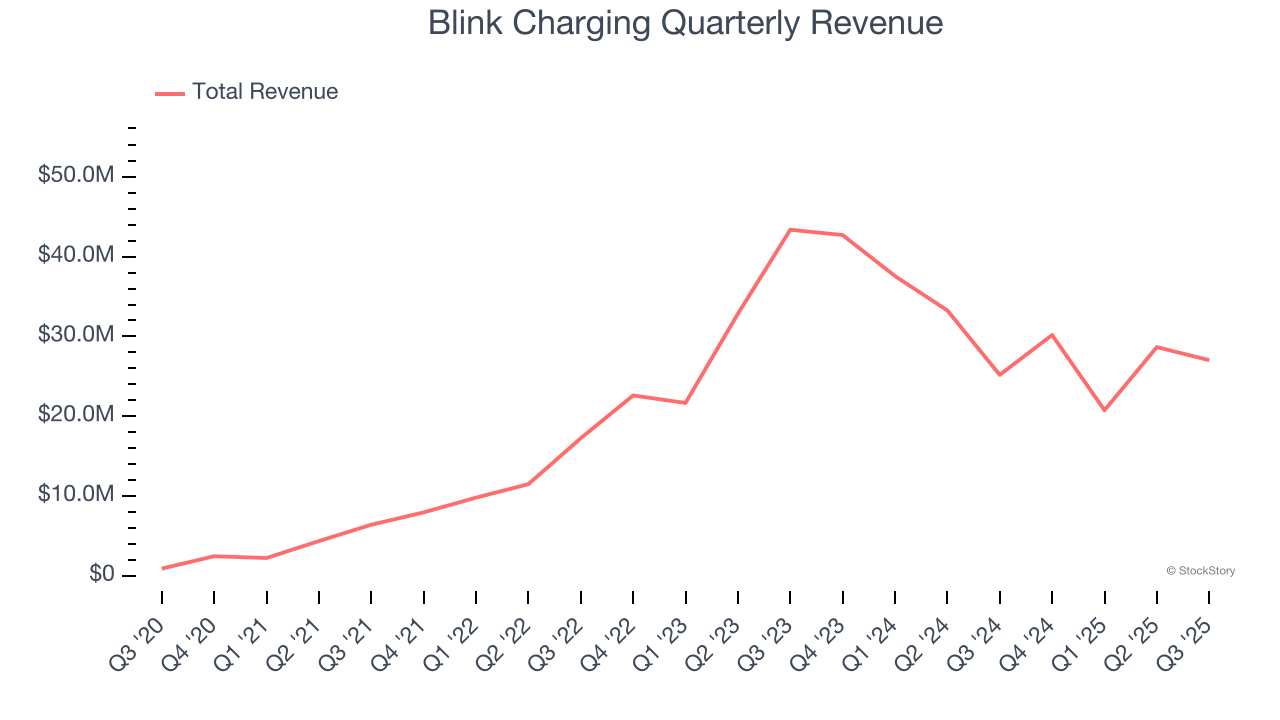
Long-term growth is the most important, but within industrials, a half-decade historical view may miss new industry trends or demand cycles. Blink Charging’s recent performance marks a sharp pivot from its five-year trend as its revenue has shown annualized declines of 5.9% over the last two years. 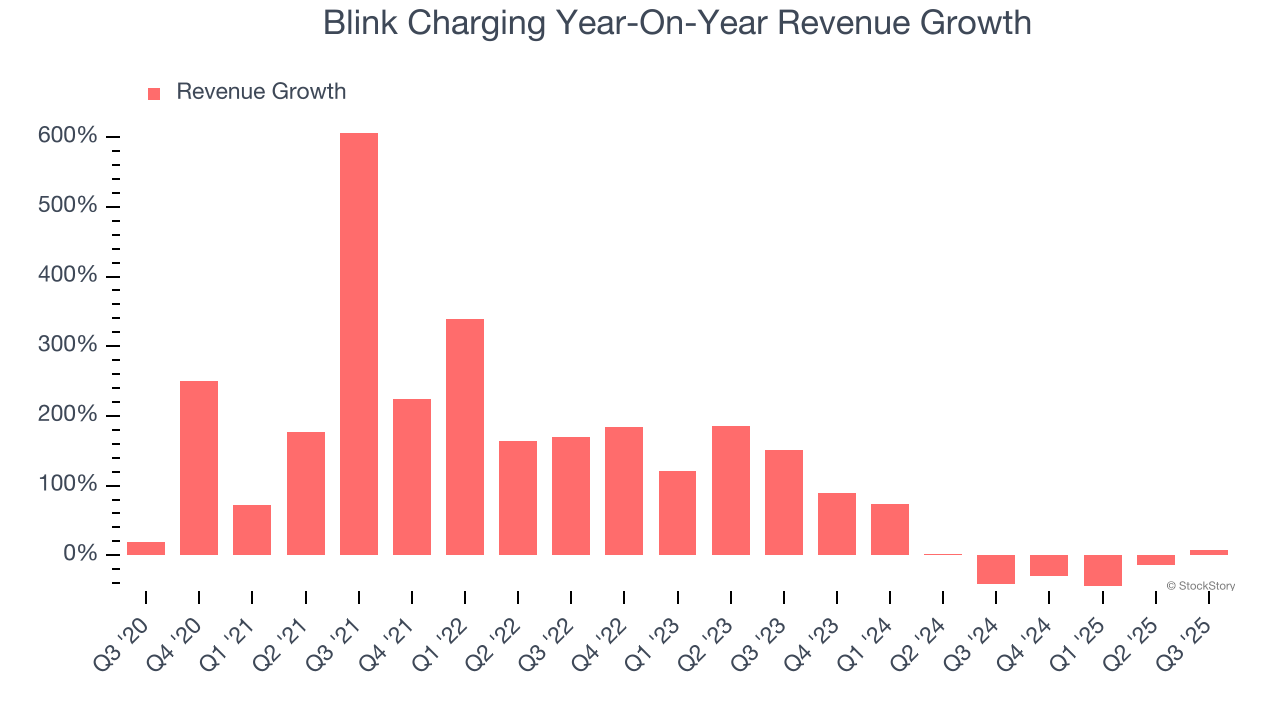
This quarter, Blink Charging’s revenue grew by 7.3% year on year to $27.03 million, missing Wall Street’s estimates.
Looking ahead, sell-side analysts expect revenue to grow 17.6% over the next 12 months, an improvement versus the last two years. This projection is eye-popping and indicates its newer products and services will catalyze better top-line performance.
Software is eating the world and there is virtually no industry left that has been untouched by it. That drives increasing demand for tools helping software developers do their jobs, whether it be monitoring critical cloud infrastructure, integrating audio and video functionality, or ensuring smooth content streaming. Click here to access a free report on our 3 favorite stocks to play this generational megatrend.
Operating Margin
Operating margin is one of the best measures of profitability because it tells us how much money a company takes home after procuring and manufacturing its products, marketing and selling those products, and most importantly, keeping them relevant through research and development.
Although Blink Charging broke even this quarter from an operational perspective, it’s generally struggled over a longer time period. Its expensive cost structure has contributed to an average operating margin of negative 142% over the last five years. Unprofitable industrials companies require extra attention because they could get caught swimming naked when the tide goes out. It’s hard to trust that the business can endure a full cycle.
On the plus side, Blink Charging’s operating margin rose over the last five years, as its sales growth gave it operating leverage. Still, it will take much more for the company to reach long-term profitability.
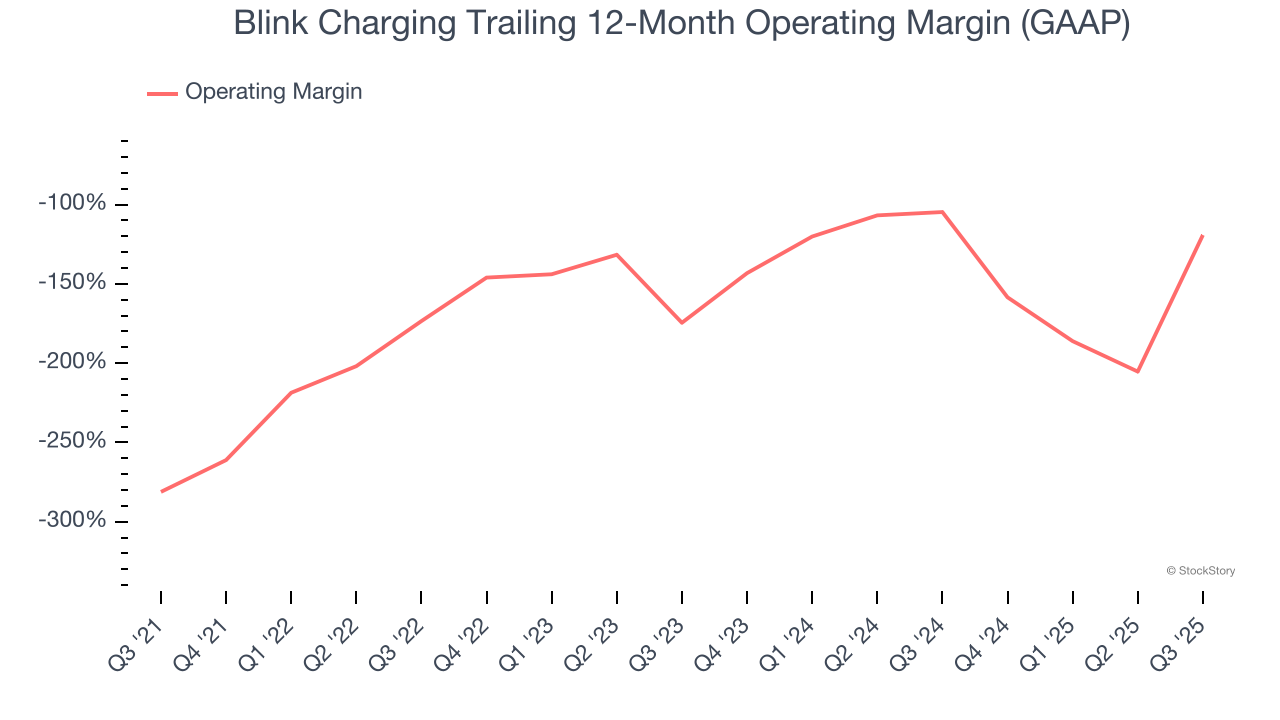
This quarter, Blink Charging generated a negative 0.8% operating margin.
Earnings Per Share
We track the long-term change in earnings per share (EPS) for the same reason as long-term revenue growth. Compared to revenue, however, EPS highlights whether a company’s growth is profitable.
Blink Charging’s earnings losses deepened over the last five years as its EPS dropped 8.9% annually. We’ll keep a close eye on the company as diminishing earnings could imply changing secular trends and preferences.
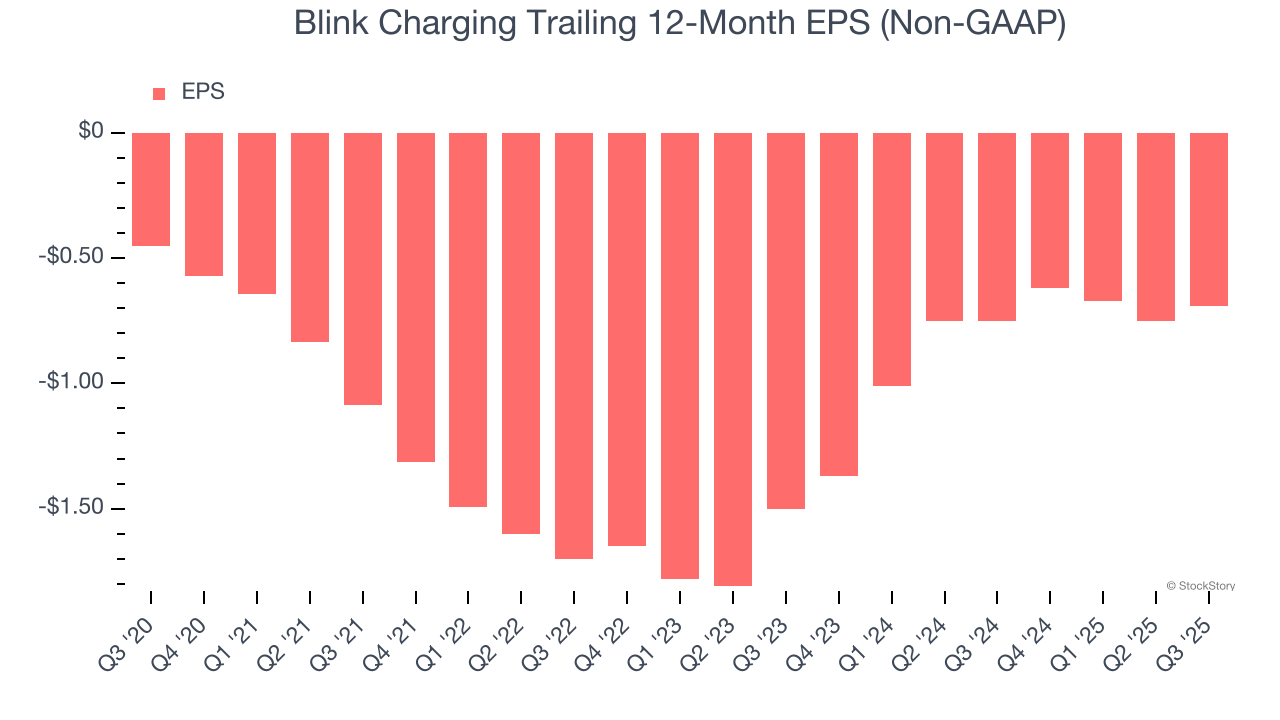
Like with revenue, we analyze EPS over a more recent period because it can provide insight into an emerging theme or development for the business.
For Blink Charging, its two-year annual EPS growth of 32.2% was higher than its five-year trend. Its improving earnings is an encouraging data point, but a caveat is that its EPS is still in the red.
In Q3, Blink Charging reported adjusted EPS of negative $0.10, up from negative $0.16 in the same quarter last year. This print beat analysts’ estimates by 9.1%. Over the next 12 months, Wall Street expects Blink Charging to improve its earnings losses. Analysts forecast its full-year EPS of negative $0.69 will advance to negative $0.47.
Key Takeaways from Blink Charging’s Q3 Results
It was encouraging to see Blink Charging beat analysts’ EBITDA expectations this quarter. We were also glad its EPS was in line with Wall Street’s estimates. On the other hand, its revenue missed. Overall, this quarter could have been better. The stock remained flat at $1.52 immediately after reporting.
Is Blink Charging an attractive investment opportunity right now? We think that the latest quarter is only one piece of the longer-term business quality puzzle. Quality, when combined with valuation, can help determine if the stock is a buy. We cover that in our actionable full research report which you can read here, it’s free for active Edge members.