CHARLOTTE, N.C. – In a year when every major AI lab seems to be promising a “developer copilot,” one of the most intriguing software-engineering startups isn’t coming out of San Francisco or Seattle. It’s a three-person, bootstrapped team in Charlotte building Tesslate, an open-source, infrastructure-first platform that wants to reinvent how software gets written.
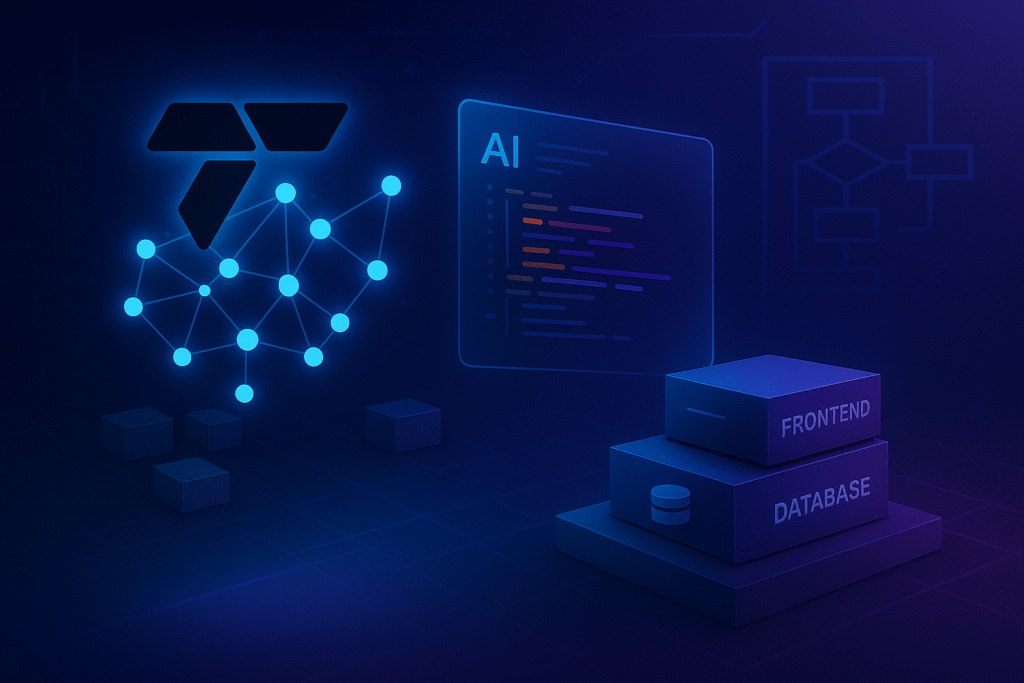
At the center of that ambition is Tesslate Studio, a self-hosted AI development environment that lets users describe an application in natural language and watch a swarm of AI agents generate a full-stack web app—frontend, backend, and database—on their own machines.(Tesslate)
For a crowded AI SWE (software engineering) space, Tesslate is carving out a distinct lane: AI as a local, composable development OS, not just a cloud tool that spits out snippets of code.
From Viral Side Project to Full-Stack Platform
Tesslate’s origin story hits all the classic startup beats. In early 2025, founder Manav Majumdar and a few friends built an AI model to help with UI development, posted the open-source code on Reddit and Hugging Face, and woke up to find it had gone viral.
Within five months, that model became the foundation of Tesslate, now positioned as an AI-native ecosystem for full-stack, no-code/low-code software development.
Rather than abandoning open source as momentum grows, Majumdar has publicly committed to keeping Tesslate’s core features free and open-source, while layering paid, enterprise-focused capabilities on top.
Studio: “Lovable, But Local”
The GitHub description for Tesslate Studio calls it an “open-source locally hosted Lovable with full stack support,” a direct nod to popular AI dev tools like Lovable.ai—but with a radically different deployment model.(GitHub)
Out of the box, Studio offers:
- AI full-stack generation (FE + BE + DB) – Prompt once and get React/TypeScript frontends, backend services, and database schemas wired together.(Tesslate)
- High-fidelity UI from prompts or Figma – The same UI models that went viral are now deeply integrated into the platform.(Tesslate)
- Self-hosted architecture – Everything runs in Docker: each project in its own container, routed to clean subdomains like project.studio.localhost, with code and data staying entirely on the user’s infrastructure.(GitHub)
This “infrastructure-first” stance is central to the pitch. The team is explicitly targeting regulated industries—finance, healthcare, government—where shipping proprietary code and data to a third-party cloud tool is a non-starter.(GitHub)
Agents, Not Just Autocomplete
What really sets Tesslate apart in the AI SWE landscape is its focus on agentic workflows, not just better autocomplete.
According to the Studio README and main site, Tesslate is built on TframeX, an agent architecture where each agent is a modular, swappable component—specialized for UI, logic, data, or infrastructure.(Tesslate)
Inside Studio, that shows up as:
- Iterative “think–act–reflect” agents that can research, write code, refactor, and debug autonomously in loops.(GitHub)
- A tool registry that gives agents controlled access to file edits, shell commands, web fetches, and planning tools.(GitHub)
- A growing agent marketplace with about ten pre-built agents that can be forked, re-prompted, and wired to different model providers—including OpenAI, Anthropic, Google models, and local LLMs via tools like Ollama or LM Studio.(GitHub)
In other words, Tesslate isn’t just “ask the model for code.” It’s more like spinning up a small team of AI junior engineers and giving them a controlled environment to work in.
A Full Product Family for AI SWE
While Studio is the flagship, Tesslate has quietly assembled a broader product suite aimed squarely at AI-powered software engineering:(Tesslate)
- Tesslate Studio – “Your instant dev environment” for full-stack app generation.
- Tesslate Agent Builder – A visual workflow builder that lets users connect agents into end-to-end flows and deploy them as web apps.
- Tesslate Designer – A canvas environment where AI agents generate decks, wireframes, and prototypes, exporting to production-ready code.
- Tesslate Wise – A “realtime context engine for LLM coding agents,” designed to understand live codebases and feed the right context back into agents (listed as “coming soon”).
- Tesslate Late – A training and batch scheduling library built on pytorch and unlsoth for ROCM and CUDA devices.
- TframeX Agents Library – The open-source backbone of Tesslate’s agent architecture, positioned as a general platform for building modular agents across UI, data, and infra.
Underpinning this is a research and model layer: Tesslate highlights models like Tessa-T1 (React) and an UIGen series that have generated over 50,000 downloads, along with a public UIGenEval benchmark for evaluating AI-generated UIs.(Tesslate)
For a startup founded this year, it’s an unusually broad platform play—aimed squarely at the emerging market for AI-native dev environments and code agents.
Traction Beyond the Hype
Early traction suggests Tesslate is more than just a flashy demo.
Tesslate has been featured in North Carolina startup media as a promising player in the no-code and AI tooling market, with coverage emphasizing its open-source roots, full-stack capabilities, and focus on local, IP-safe deployment.
In July, a detailed profile highlighted Tesslate’s partnership with REACH, a creator-economy startup whose ecosystem includes Tesslate Studio and related tools. The partnership is positioned to power not only REACH’s own stack but also software for roughly 100 companies in its orbit.
The company also showcases participation in major startup ecosystems from NVIDIA, Google, AWS, Microsoft, and IBM, signaling early validation from big-cloud partner programs—even as Tesslate leans into self-hosting and small, efficient models rather than giant proprietary ones.(Tesslate)
And despite being bootstrapped, Tesslate is now recruiting a founding engineer to work on its orchestration layer, reasoning systems, and developer interfaces across products like Studio and TframeX—another sign that the team is gearing up for the next stage of growth.(LinkedIn)
Why Tesslate Stands Out in the AI SWE Crowd
The AI SWE tooling space is noisy: from general-purpose dev copilots to ambitious open-source agents like OpenHands, developers have no shortage of options.(arXiv)
Tesslate’s pitch stands out on a few key fronts:
- Infrastructure-first, not SaaS-first
Studio runs on your machine, your cloud, or your datacenter. Container isolation, subdomain routing, and explicit data sovereignty are part of the core value proposition—not an afterthought.(GitHub) - Focused models, not model maximalism
Instead of trying to build a “do-everything” foundation model, Tesslate is doubling down on small, domain-specific models that specialize in coding and UI generation—making them cheaper to run locally and easier to optimize. - Agent-based workflows as a first-class concept
TframeX and the agent marketplace reflect a philosophy that future software teams will be part-human, part-agent—where agents aren’t just autocomplete, but durable, composable units of work that can be wired into pipelines, workflows, and entire applications.(Tesslate) - Open-source core with enterprise on-ramps
Tesslate has been explicit: the foundational tools are open-source and free to use, with monetization focused on the more specialized needs of enterprise teams—governance, advanced training, and deep integration.
In a $40 billion no-code tools market that founder Majumdar expects could grow to $1 trillion by 2035, that approach gives Tesslate a distinct narrative: an AI-native dev platform that doesn’t ask teams to sacrifice control, security, or ownership.
The Road Ahead
For now, Tesslate is still early: a small team, a bootstrapped balance sheet, and a product suite that’s evolving almost in real time. But that’s also what makes it one of the most closely watched new players in the AI SWE space.
With Studio giving developers a self-hosted “instant dev environment,” Agent Builder and Designer expanding the canvas to workflows and UX, and TframeX opening the door for third-party agents, Tesslate is positioning itself less as a point solution and more as an AI operating system for software creation.
If the team can maintain its open-source ethos while scaling into larger enterprise deals—and continue to prove that small, targeted models plus strong agent architecture can compete with much larger systems—Tesslate has a credible shot at being one of the breakout AI SWE stories of the next few years.