The WSPnext initiative provides thought leadership on advances in computational design to improve efficiency and provide quality engineering solutions for WSP projects globally.
SOURCE: WSP
DESCRIPTION:
By Elliot Glassman, Senior Associate & Senior Technical Principal, Built Ecology
We are entering a new stage of digital advancement for engineering design, where custom algorithms and automation not only aid in the efficient production of models and drawings but also enhance the design process and help produce data-driven solutions.
Welcome to the era of computational design.
For more than a decade, engineers at WSP have used computational design on their projects, leveraging custom scripts for increased efficiency in multiple disciplines to provide sound engineering solutions.
To ensure that WSP designers are engaged in the proactive sharing of information and best practices related to computational design technology, several of the firm’s computational designers collaborated to create WSPnext. This grassroots internal global network provides thought leadership on the rapidly advancing field of computational design and seeks to help promote computational design workflows in order to more readily bring the many benefits of these practices to clients worldwide.
WSPnext participants are located in North America, Europe, Asia and Australia and represent diverse practice areas including building structures, building performance, bridge structures and enclosures.
The tools developed are either written using programming languages such as C# and Python or defined visually in environments such as Grasshopper and Dynamo.
Dawn of Computational Design
The next phase in the evolution from computer-assisted design (CAD) to building information modeling (BIM), computational design relies on the scripted definition of dynamic relationships between elements and the input of parameters to generate a model. Any redefinition of the relationships or the input parameters produces another solution.
This refinement can continue until the outcome is satisfactory; the process is not linear and additive, but rather iterative and integrative.
The concept is simple, but the implications are profound. A single generative algorithm can lend itself to a thousand different possible design solutions. Automation allows us to explore the alternatives and evaluate the impacts of a wide range of design possibilities faster and more consistently than a handful of options could be generated and studied manually.
Computational design is flexible and open source, with the potential to connect multiple external data sets and software platforms into a single, nearly seamless workflow. Therefore, each iteration of a parametric model could be simulated by an energy modeling program, have its structural members optimized, or have its construction costs calculated within a singular software environment.
With these tools, designers are empowered to explore more ideas in a shorter time frame, provides meaningful and data-based feedback on which to confidently base choices and automate menial tasks, allowing for more time to be spent on other elements that add higher value to the project.
Additionally, computational design can help manage the process at a meta-level, checking model geometry for errors, cleaning up gaps in data and automatically adjusting parametric ranges based on other calculations.
Global Reach
Computational design has made a difference on multiple global WSP projects.
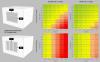
For example, the South Bell residential towers in Arlington, Virginia required a study of various energy efficiency measures (EEMs) in the context of electrification and net zero carbon. The two buildings had to be modelled separately but the EEMs would be identical, so consistency between the models was critical. The parameters to be studied included the HVAC system, lighting and the envelope properties.
Computational design created 64 possible EEM combinations for each building. Both buildings were managed in a central script, providing for enhanced consistency and quality control between the options. The process of studying multiple alternatives highlighted priorities for the design to incorporate to save energy.
Two Metrolinx Transit Stations in Toronto, Canada had to meet environmental performance requirements, including a minimum 50 percent daylight illumination threshold, but without experiencing direct sun that could cause visual discomfort.
Using computational design, the team used one central model for each station based on the original design model. In one case of an underlit station, the script found the minimum skylight area that would meet the daylight criteria. In the other case, the station had too much glare, so the script parametrized different glass areas and exterior shading to reduce glare while maintaining daylight
WSP Next
In June, WSP designers came together for the WSPnext virtual summit to share best practices and skillset advances that bring the best of what WSP has to offer in computational design to clients around the world.
Over the course of two days, participants discussed means of using computational design to better optimize energy and thermal comfort in buildings, inform metrics on health and wellness in the built environment and leverage digital twins in making design decisions.
Topics discussed included:
- a generative design process that was used to optimize the design of an educational campus;
- how complex analytic and numerical form-finding of minimal surfaces provided strong, resilient structures with minimal use of materials;
- the new features of the recently released Rhino 7 software;
- a showcase of developed apps for exploring the digital twins of building facades;
- the introduction of SME22, a WSP initiative focused on digitizing structural, mechanical and electrical practices and integrating design practices;
- a case study showing how parametric daylight analysis was used to make glazing recommendations for an energy retrofit of a historic building;
- how digital scripting facilitated the design and construction of a complex underground rail network;
- the use of parametric analysis of modular precast products to optimize bridge design;
- the use of digital tools to solve cable connection design problems for a pedestrian bridge; and
- a custom tool to automate the documentation of reinforcement for structural walls and columns.
Staying Competitive
Computational design is evolving quickly and is rapidly becoming critical for design and engineering. It is far more than a design tool. When used effectively, it improves decision making, helps with communicating ideas, fosters closer relationships with clients, and demonstrates leadership and innovation.
Investment in training and developing the tools necessary to facilitate computational design ensures designer can remain competitive in a market where this technology is fast becoming no only the standard, but a client expectation.
Elliot Glassman is a senior associate and technical principal with WSP USA’s Built Ecology team. He is also the national leader of computational design for building systems and a charter member of WSPnext, the firm’s global computational design group.
KEYWORDS: WSP, Computational Design, WSPnext, TSX:WSP