Today’s Date: April 9, 2026
Introduction
For over a decade, the story of BlackBerry (NYSE: BB) was one of survival. The company that once defined the smartphone era became a cautionary tale of disruption, followed by a long, arduous trek through the wilderness of corporate restructuring. However, as we move through the second quarter of 2026, the narrative has shifted. The "software turnaround" that began under former CEO John Chen and was accelerated by his successor, John Giamatteo, is officially complete. BlackBerry is no longer a "handset company trying to pivot"; it is a lean, cash-flow-positive entity split into two distinct, high-tech engines: the Internet of Things (IoT) and Cybersecurity. While its share price remains a fraction of its 2008 peak, the company's foundational role in the software-defined vehicle (SDV) revolution and sovereign security has made it a subject of renewed interest for institutional investors looking for undervalued infrastructure plays.
Historical Background
Founded in 1984 as Research In Motion (RIM) by Mike Lazaridis and Douglas Fregin in Waterloo, Ontario, BlackBerry pioneered the mobile email industry. The 1999 launch of the BlackBerry 850 pager and the subsequent "CrackBerry" craze of the mid-2000s saw the company capture over 50% of the U.S. smartphone market. However, the 2007 debut of the iPhone and the rise of Android-powered devices shattered RIM’s dominance. By 2013, the company was in freefall.
The appointment of John Chen in 2013 marked the beginning of a decade-long transformation. Chen aggressively exited the hardware business, outsourcing phone manufacturing to focus on the QNX operating system (acquired from Harman International in 2010) and cybersecurity. The path was not linear—marked by heavy impairment charges, stagnant revenue growth, and identity crises—but it laid the groundwork for the modern, software-centric BlackBerry we see in 2026.
Business Model
BlackBerry’s current business model is bifurcated into two independent business units, a result of the "Project Imperium" strategy finalized in 2025.
- IoT (Internet of Things): Centered around the QNX operating system, this segment generates revenue through a combination of developer licenses and per-unit royalties. It is high-margin (80%+) and integrated into mission-critical systems where failure is not an option.
- Cybersecurity: This division focuses on "High Assurance" security for regulated industries. While it divested its mass-market Cylance endpoint business in 2025 to focus on profitability, it remains a dominant provider for G7 governments through products like SecuSUITE and AtHoc.
The company earns approximately 80% of its revenue from recurring software and services, providing a predictability that was absent during its hardware era.
Stock Performance Overview
The performance of BB stock reflects its tumultuous journey:
- 10-Year Horizon: The stock is down approximately 68% over the last decade. It struggled to break out of the $5–$12 range for years before the "meme stock" era.
- 5-Year Horizon: This period was defined by the massive 2021 volatility, where retail investors drove the price to over $25.00 briefly before a long, painful decline as the company failed to meet high growth expectations.
- 1-Year Horizon: Over the past twelve months (April 2025–April 2026), the stock has stabilized. After hitting a floor near $2.50 in late 2024, it has climbed back to the $3.50 range. The stabilization is largely attributed to the company finally achieving consistent positive cash flow and clearing the uncertainty surrounding its business split.
Financial Performance
In the fiscal year 2025 (ended February 2025), BlackBerry reported revenue of $535 million. While this is lower than the $853 million reported in FY2024 (which included a massive one-time patent sale), the core metrics are healthier.
- IoT Revenue: Grew 10% YoY to $236 million, driven by the rollout of QNX 8.0.
- Cybersecurity Revenue: Normalized at $273 million with a sharpened focus on government contracts.
- Profitability: For the first time in the modern era, the company achieved non-GAAP profitability and positive free cash flow for the full fiscal year.
- Balance Sheet: BlackBerry ended the last quarter with a net cash position of approximately $200 million, providing a buffer against macro headwinds.
Leadership and Management
CEO John Giamatteo took the helm in late 2023 with a mandate to deliver "Project Imperium." His leadership has been defined by pragmatism rather than the high-flying promises of the past. Giamatteo oversaw the operational separation of the IoT and Cyber units, allowing each to have its own dedicated sales and R&D teams. This "back-to-basics" approach has improved internal accountability and significantly reduced annualized corporate overhead by over $150 million. The board, chaired by Richard Lynch, has been praised for finally following through on a structure that allows the high-growth IoT division to be valued independently from the more mature Cyber division.
Products, Services, and Innovations
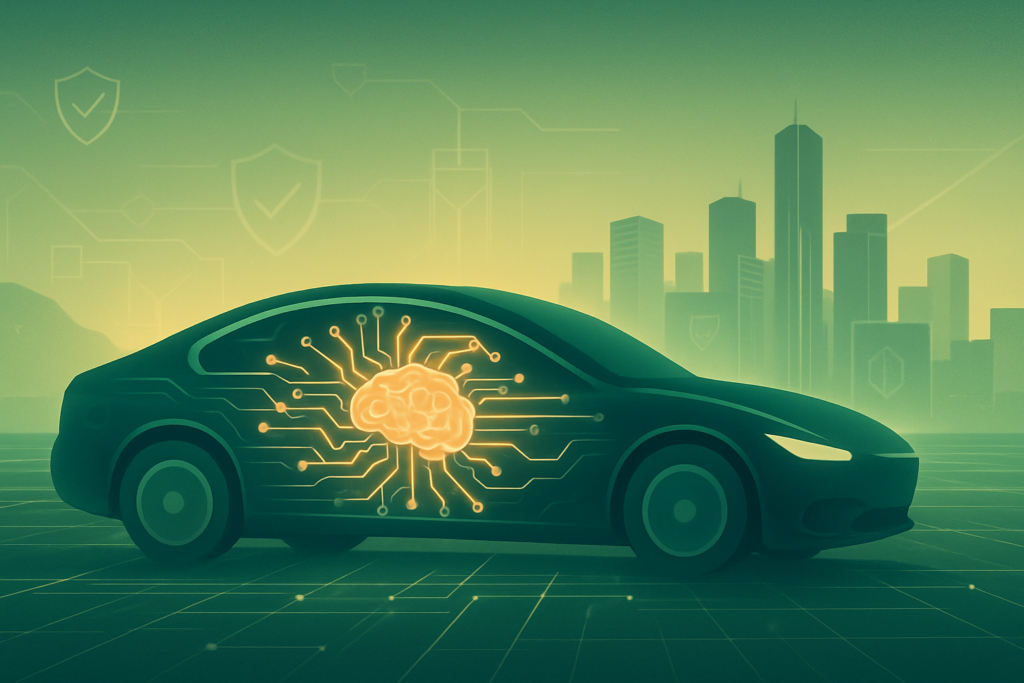
BlackBerry's "crown jewel" is QNX 8.0 (SDP 8.0). Released in 2024, this high-performance microkernel is designed for the next generation of multi-core processors in vehicles and robotics. It is currently embedded in 275 million vehicles, and the royalty backlog stands at a record $865 million.
The other major innovation is BlackBerry IVY, an edge-to-cloud data platform developed with Amazon (NASDAQ: AMZN) Web Services (AWS). While IVY had a slow start, by early 2026 it has found its niche in fleet management and autonomous vehicle payments (e.g., Car IQ), enabling vehicles to interact directly with fuel stations and toll systems.
Competitive Landscape
In the IoT and Automotive space, BlackBerry is a titan but faces rising competition. Its primary rivals are Green Hills Software and Wind River, along with the growing trend of "in-house" OS development by companies like Tesla (NASDAQ: TSLA). However, QNX remains the "gold standard" for functional safety (ASIL D certification), a hurdle that open-source alternatives like Automotive Grade Linux (AGL) struggle to clear for safety-critical systems like braking and steering.
In Cybersecurity, BlackBerry is now a niche player. It does not compete directly for the enterprise desktop with giants like CrowdStrike (NASDAQ: CRWD) or Microsoft (NASDAQ: MSFT). Instead, it dominates the "sovereign" market—providing encrypted communications for heads of state and the Department of Defense.
Industry and Market Trends
The move toward Software-Defined Vehicles (SDVs) is the primary tailwind for BlackBerry. As cars transition from hardware-centric machines to computers on wheels, the need for a secure, real-time operating system becomes paramount. Furthermore, the global surge in cyber-warfare has increased the budgets of BlackBerry’s core government clients, who prioritize "High Assurance" and non-adversarial (Canadian-made) software origins.
Risks and Challenges
Despite the turnaround, significant risks remain:
- Revenue Growth: While cash flow is positive, total revenue remains modest (~$500M–$600M range). To achieve a higher valuation, BlackBerry must prove it can grow the top line significantly beyond its current niche.
- Competitive Erosion: If Android Automotive or Linux becomes "safe enough" for mission-critical tasks, BlackBerry’s moat in the auto sector could shrink.
- Execution Risk: The separation into two units is complete, but if one unit begins to significantly outperform the other, it could lead to further pressure for a complete divestiture or a hostile takeover.
Opportunities and Catalysts
- QNX Backlog Conversion: The $865 million royalty backlog represents "guaranteed" revenue that will hit the books as vehicles are produced over the next 3–5 years. Any uptick in global auto production is a direct catalyst.
- General Embedded Markets (GEM): BlackBerry is expanding QNX into medical robotics and industrial automation, markets that could eventually rival the automotive sector in size.
- M&A Potential: With a clean balance sheet and separate business units, BlackBerry is a prime target for a private equity "buy and build" strategy or a strategic acquisition by a semiconductor giant like NVIDIA (NASDAQ: NVDA) looking to own the software layer of the car.
Investor Sentiment and Analyst Coverage
Wall Street sentiment remains "cautiously optimistic" but largely sidelined. Most analysts maintain a "Hold" rating, with a consensus price target of $4.50. Hedge fund interest has shifted from speculative "meme" trading to value-oriented positions. Institutional ownership has stabilized around 45%, with investors waiting for a breakout quarter where IoT growth offsets any remaining legacy declines.
Regulatory, Policy, and Geopolitical Factors
BlackBerry benefits from its Canadian headquarters and its long history of trust with Western intelligence agencies. In an era of heightened geopolitical tension between the West and China, BlackBerry's "neutrality" and adherence to the highest security standards (FIPS 140-2, NIAP) make it a preferred vendor for G7 governments. Regulatory shifts in the EU and North America requiring stricter cybersecurity standards for connected vehicles also play directly into BlackBerry’s strengths.
Conclusion
The BlackBerry of 2026 is a vastly different company than the one that dominated the 2000s or the one that struggled through the 2010s. The software turnaround is complete; the company is lean, profitable, and focused. While it is no longer a high-growth tech darling, it has successfully transitioned into a vital piece of the world’s industrial and automotive infrastructure. For investors, the question is no longer whether BlackBerry will survive, but how fast its $865 million backlog will turn into real growth. In a world increasingly defined by the intersection of security and mobility, BlackBerry has finally found its new home.
This content is intended for informational purposes only and is not financial advice.