
As fraud tactics evolve and compliance requirements tighten, organizations are discovering that the greatest vulnerability in payment environments is not technology. It is human interaction.
Toronto, Canada / Miami, FL (PRUnderground) June 2nd, 2026
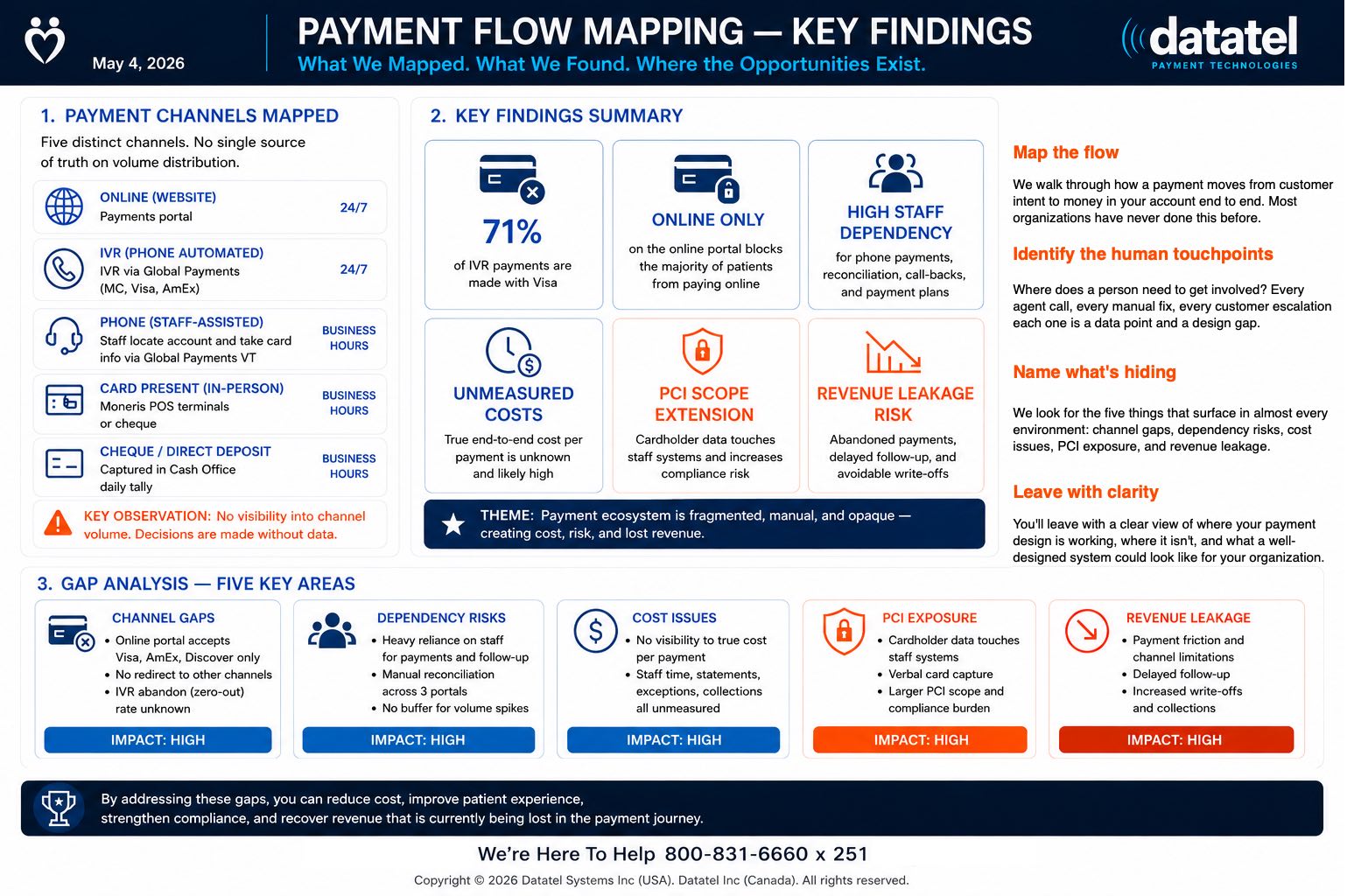
Organizations across the healthcare, utilities, financial services, and the public sectors continue to invest in new payment technologies to improve customer experience and operational efficiency.
Yet despite these investments, a critical risk layer remains largely unaddressed, and that’s human involvement in payment processing.
In many environments, live agents still play a central role in accepting payments over the phone. While this approach may feel familiar, it introduces exposure points that are difficult to control. Card data can be overheard, repeated, written down, or accessed outside intended systems. Even with strong policies, the variability of human interaction creates risk that technology cannot fully mitigate when people remain in the loop.
At the same time, PCI DSS v4.0.1 is placing increased pressure on organizations to control how payment data is accessed and handled. The more humans interact with cardholder data, the larger the compliance scope becomes. That drives higher audit complexity, increased cost, and greater operational burden.
This is where a shift in design is taking place.
Organizations are moving toward payment architectures that deliberately remove staff from interacting with sensitive payment data. Not to eliminate people from the customer experience, but to isolate them from the most sensitive part of it.
Technologies such as IVR Payments are central to this shift.
Instead of a customer reading card details to a live agent, the call is securely redirected to an automated IVR payment environment at the point of payment. The customer enters their card information using their phone keypad. The data is captured directly by a secure payment system and transmitted to the payment gateway without ever being heard, seen, or handled by staff.
The result is a clean separation between customer service and payment processing.
This design delivers several immediate advantages:
- Eliminates human exposure to cardholder data, reducing the risk of accidental or intentional misuse
- Reduces PCI scope, as agents and call center environments are no longer handling sensitive payment information
- Creates a controlled and consistent payment experience, removing variability introduced by human interaction
- Improves security posture, by ensuring payment data flows only through secure, purpose-built systems
- Frees up staff, allowing them to focus on higher-value customer interactions rather than routine payment collection
In more advanced environments, this approach is extended across channels. Online payments, IVR, mobile, and even emerging AI-driven interactions are designed so that sensitive payment capture is always isolated within a secure payment layer.
However, implementing IVR Payments or similar technologies alone does not automatically solve the problem.
Many organizations introduce automation without rethinking the underlying payment flow. As a result, inefficiencies, gaps, and risks are simply carried forward into a new channel.
The real opportunity lies in understanding how money actually moves through the business.
From the moment a customer decides to make a payment, through authorization, settlement, and reconciliation, every step introduces design decisions that impact risk, cost, and performance.
To help organizations gain this visibility, Datatel offers a short working session called “How Money Flows.” (https://www.datatel-systems.com/money-flow-session/)
This 20–30 minute session is not a product demonstration. It is a structured diagnostic designed to help organizations:
- Map how payments move across all channels
- Identify where human interaction is introducing risk or inefficiency
- Evaluate where technologies like IVR Payments can safely remove staff from handling card data
- Highlight gaps in control, visibility, and compliance
- Uncover potential areas of revenue leakage and operational friction
- Receive a structured report outlining findings and recommended next steps
The outcome provides a clear view of how the current payment environment is operating, and where changes can meaningfully reduce risk while improving performance.
As payment environments continue to evolve, organizations that separate human interaction from payment capture will be better positioned to reduce exposure, simplify compliance, and build more resilient operations.
For more information or to schedule a “How Money Flows” session, visit:
https://www.datatel-systems.com/money-flow-session/
About Datatel Communications Inc
Datatel is a global provider of secure payment solutions, AI payment isolation technology, PCI-focused services, and executive advisory solutions that help organizations reduce risk, simplify compliance, and modernize payment environments with confidence.
For more than 30 years, Datatel has delivered enterprise-grade IVR Payment and transaction automation solutions designed to remove sensitive cardholder data from business environments and streamline workflows. Today, Datatel enables secure payments across voice, web, AI-driven customer interactions, and integrated software platforms while advising executive teams on payment modernization, risk reduction, and the evolving implications of AI-driven commerce.
Trusted by healthcare providers, financial institutions, government agencies, software companies, and enterprises worldwide, Datatel helps organizations minimize exposure to payment data, reduce PCI scope, and align modernization initiatives across people, processes, and platforms. The result is lower operational risk, a stronger security posture, and improved efficiency.
Through structured advisory , Datatel provides leadership teams with clear visibility into their payment ecosystems identifying risk gaps, hidden vulnerabilities, operational inefficiencies, and modernization opportunities to ensure today’s decisions remain resilient as commerce evolves.
As a PCI Level 1 Service Provider and PCI SSC Associate Participating Organization, Datatel maintains the highest standards of payment security and actively contributes to advancing global compliance frameworks.
Datatel remains focused on delivering secure, scalable payment infrastructure and executive advisory services that support long-term operational resilience, responsible growth, and the future of AI enabled digital commerce.
At Datatel, we are also actively engaged in our communities. Webelieve that a society that shortchanges its youngest and most vulnerable members forfeits its own future, and as part ofthis core belief, we work as a team to support those in need and help them overcome challenges, contributing to a brighter future for all for generations to come.
The post Datatel Examines Why Human Reduction in Payment Flows Is Emerging as a Security Imperative first appeared on
Original Press Release.