Markets feel unstable right now. Prices are reacting sharply to relatively small pieces of information. A smallish earnings miss leads to a selloff that feels disproportionate. A decent result sparks a rally that fades just as quickly. Investors look at the tape and reach for the same explanation. Volatility.
But volatility isn’t the story. It’s the symptom. What’s happening is repricing. And that distinction matters, because it changes how you interpret what you’re seeing and how you position what comes next. The market today is resting on three fragile pillars, and most investors are still approaching it as if the situation were a normal cycle. It isn’t. That mismatch is what is creating the friction people are feeling. Start with expectations.
For years, markets rewarded consistency and, increasingly, perfection. Models were built on assumptions of steady growth, expanding margins, and clean execution. Over time, those assumptions stopped feeling optimistic and started feeling standard. Investors started to view peak performance as a sustainable achievement. It rarely is.
Most businesses do not maintain peak margins indefinitely. Growth is never linear for long. But expectations were set as if both were normal. When those expectations begin to break, prices do not adjust gradually. They reset. That reset is what investors are experiencing. It feels like volatility because the move is sharp and uncomfortable. It is the market correcting assumptions that should not have been embedded in the first place.
Layer on ownership, and the moves start to make more sense. The composition of the market has changed materially. More capital today is short-term, more of it is leveraged, and a significant portion is structurally forced to act. When positioning becomes crowded, new information no longer solely drives price. It is driven by how that information interacts with positioning.
A small disappointment doesn’t just alter a valuation model. It triggers selling from participants who need to reduce exposure quickly. That selling cascades because others are positioned similarly. The move looks disproportionate, but it isn’t. The positioning was. This is where many investors misread the environment. They interpret sharp moves as evidence that the market is becoming irrational. The market is behaving exactly as it should when ownership is misaligned and capital is forced to move.
The third area is less visible but more important. A structural shift in the economy is underway, and it has not yet been fully priced. For much of the past decade, capital-light, high-margin businesses dominated market leadership. Investors paid for scalability, predictability, and the ability to grow without heavy reinvestment. Multiples expanded because the underlying assumption was that these characteristics would persist. That assumption is now being tested.
Artificial intelligence is often framed as an accelerant for these businesses, but in many cases, it is beginning to compress advantage rather than expand it. What was once differentiated is becoming easier to replicate. Margins that looked solid are starting to look a lot more vulnerable. At the same time, a quieter re-rating is taking place elsewhere. High capital-intensive businesses tied to infrastructure, energy, and supply chains are being analyzed, reassessed, and revaluated. These were not broken businesses. This is where to look as an investor. They were simply out of favor in a market that preferred asset-light growth. As conditions shift, they are being priced differently. This is not rotation driven by sentiment. It is a repricing driven by reality.
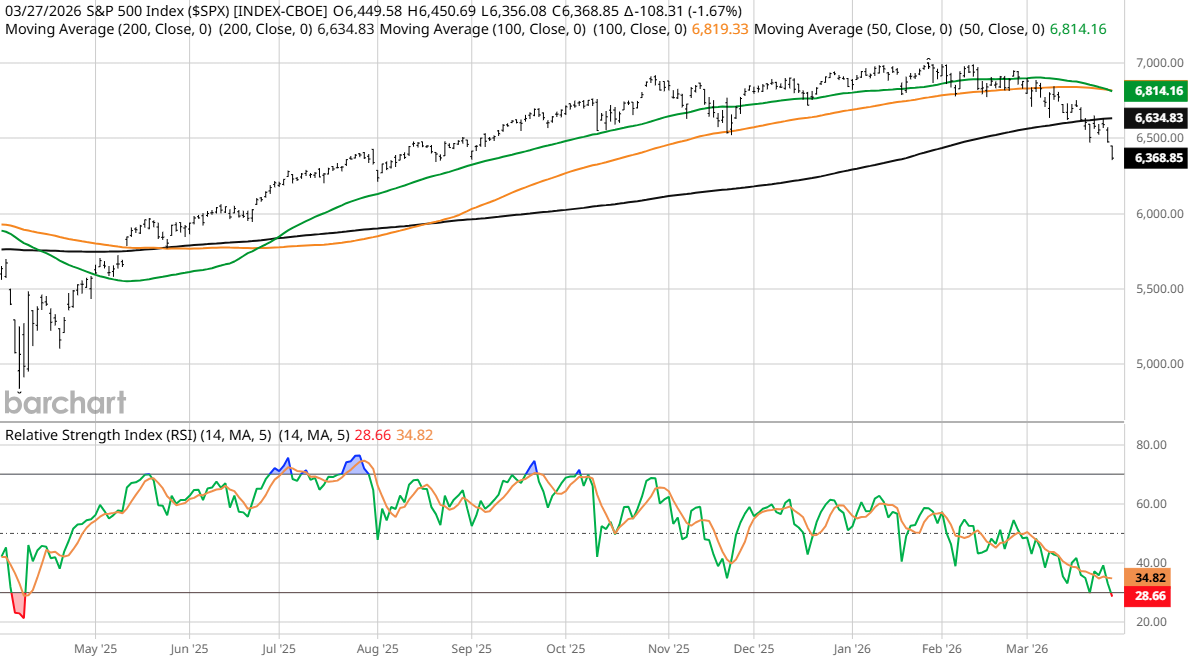
Overall, there is a layer of uncertainty that feels different from what investors are used to. This is not just cyclical uncertainty around growth or inflation. It is structural uncertainty. The rules themselves are changing, and they are changing faster than most models can adapt. That is why the market feels inconsistent. You have expectations that are resetting, ownership that is amplifying moves, and a shift in what deserves a premium. Those forces do not produce smooth outcomes. They produce friction, and that friction shows up as volatility.
Most investors respond to this environment by trying to predict the next move. They look for signals in data releases, central bank commentary, and headlines. They try to anticipate how the market will react next. That is the mistake. Prediction feels like control, but it places you in the most crowded part of the market. You are competing with every participant who has access to the same information, many of whom have more resources and faster execution. The edge is not in predicting what might happen. It is about understanding what must happen. That shift in perspective is critical.
When you focus on structure, you move away from opinion and toward inevitability. Spinoffs create forced sellers because shareholders of the parent company often receive shares in a business they never intended to own. Many of them sell, not because of valuation, but because of mandate or preference.
Balance sheets create pressure that forces companies to act. Debt needs to be refinanced, capital needs to be allocated, and decisions cannot be deferred indefinitely. Corporate change, whether through leadership transitions, asset sales, or restructurings, introduces catalysts that unfold over time.
In each of these cases, the outcome is not a matter of opinion. It is driven by structure. That is where the opportunity sits, particularly in a market that feels uncertain.
Instead of predicting macro-outcomes, you can concentrate on scenarios with a clearer path, shaped by incentives and constraints. You do not need to know where the market will be in six months. You need to identify where capital is forced to move and where that movement creates a gap between price and value. That approach requires patience.
When you operate in this part of the market, the timing is not always immediate. The dislocation exists because the structure is temporarily distorting prices. Your job is not to force the market to recognize it on your timeline. Your job is to wait for the structure to be resolved. That is uncomfortable, especially in an environment that rewards activity and constant engagement. I've been around a while and it's important to remember that activity is not the same as progress.
Volatility will continue to dominate the narrative because it is visible and easy to explain. It gives investors something to point to. But focusing on volatility alone misses the point. The real question is not why prices are moving day to day. It is why the conditions underneath them are changing. Once you understand that, the market stops looking chaotic. It becomes something you can navigate with more vision clarity and ultimately forward thinking. Not by predicting the next move, but by positioning around the forces that make certain outcomes far more likely.
That is where the edge has always been.
On the date of publication, Jim Osman did not have (either directly or indirectly) positions in any of the securities mentioned in this article. All information and data in this article is solely for informational purposes. For more information please view the Barchart Disclosure Policy here.
More news from Barchart