A new study published in the journal Brain Stimulation shows that high electrical frequency stimulation can activate specific nerve fibers in the body
Electrically stimulating the vagus nerve has shown potential to treat inflammatory diseases, including rheumatoid arthritis, lupus and diabetes. Now, a team of bioelectronic medicine scientists at The Feinstein Institutes for Medical Research is one step closer to developing more precise, selective neuromodulation techniques. A new paper published in Brain Stimulation showed that delivering high-frequency electrical stimulation activates specific sensory nerve fibers of the vagus nerve and could be the key to better targeting and treating inflammation and disease.
This press release features multimedia. View the full release here: https://www.businesswire.com/news/home/20221104005611/en/
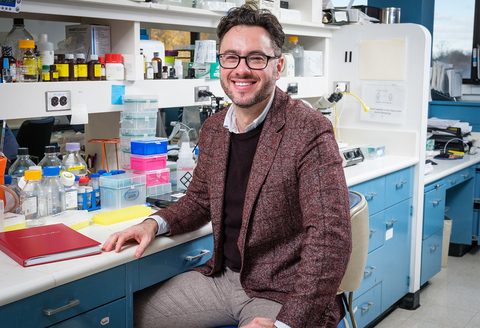
Dr. Stavros Zanos recently led the study, which targets specific fibers in the vagus nerve for more precise electrical stimulation. (Credit: Feinstein Institutes)
The research study, led by Stavros Zanos, MD, PhD, associate professor at the Feinstein Institutes Institute of Bioelectronic Medicine, measured how vagus nerve stimulation (VNS) using kHz stimulation – an electrical stimulus that is commonly used to block nerve conduction at over 1,000 pulses per second affects the activity of different types of vagal fibers. Previous VNS therapies would stimulate the whole nerve bluntly, without targeting specific fibers, which could cause adverse effects and less effective therapy. For example, in past clinical trials, side effects from the vocal cords and from coughing reflex prevented clinicians from delivering the full dose of VNS, and thus limited the therapeutic effect.
“The vagus nerve is one of the most important nerves in our body, which helps us maintain our daily functions like breathing and our heart rate. Being able to target certain nerve fibers is a huge step for precision stimulation,” said Dr. Zanos, senior author of the paper. “This selective stimulation in the vagus nerve has not been achieved until now and our results will help researchers find new therapies to treat diseases.”
The vagus nerve is made up of 100,000 individual fibers. It acts as an information pipeline in the body, stretching from the brain to the organs helping to maintain bodily functions and immune response. If the vagus nerve is overactive or underactive inflammatory diseases can arise. The field of bioelectronic medicine combines molecular medicine, neuroscience and biomedical engineering to develop innovative therapies using computer chips and devices instead of drugs to treat those diseases.
By stimulating the vagus nerve with high frequency, Dr. Zanos and his team were able to consistently activate the small unmyelinated nerve fibers while at the same time bypassing the activation of larger fibers in the nerve – which are usually the first to be activated by VNS and are responsible for most unwanted side-effects. The study was done in two animal models (mice and rats) and if validated in humans, could be leveraged in novel bioelectronic therapies.
“Dr. Zanos discovered how to selectively activate nerve fibers traveling in the vagus nerve by manipulating the electric frequency,” said Kevin J. Tracey, MD, president and CEO of the Feinstein Institutes and Karches Family Distinguished Chair in Medical Research. “This work significantly advances the field of bioelectronic medicine and opens new pathways to explore experimental therapeutics.”
The Feinstein Institutes for Medical Research was recently awarded $6.7 million from the National Institutes of Health (NIH). The funding will help Dr. Zanos and his lab create a detailed map of the anatomy of the human vagus nerve. The funding is part of the NIH Common Fund’s Stimulating Peripheral Activity to Relieve Conditions (SPARC) program.
About the Feinstein Institutes
The Feinstein Institutes for Medical Research is the home of the research institutes of Northwell Health, the largest health care provider and private employer in New York State. Encompassing 50 research labs, 3,000 clinical research studies and 5,000 researchers and staff, the Feinstein Institutes raises the standard of medical innovation through its five institutes of behavioral science, bioelectronic medicine, cancer, health system science, and molecular medicine. We make breakthroughs in genetics, oncology, brain research, mental health, autoimmunity, and are the global scientific leader in bioelectronic medicine – a new field of science that has the potential to revolutionize medicine. For more information about how we produce knowledge to cure disease, visit http://feinstein.northwell.edu and follow us on LinkedIn.
View source version on businesswire.com: https://www.businesswire.com/news/home/20221104005611/en/
Contacts
Julianne Mosher Allen
516-880-4824
jmosherallen@northwell.edu