Each year, more than 48 million cases of sepsis are diagnosed and account for 11 million deaths annually. Current sepsis treatment is limited; to address this clinical need researchers from the Feinstein Institutes for Medical Research and Northwell Health’s Department of Pediatrics and Cohen Children’s Medical Center published new research in the journal Proceedings of the National Academy of Sciences of the United States of America (PNAS) indicating that stimulating the molecular target of a different blood pressure drug enhanced the immune response to sepsis.
This press release features multimedia. View the full release here: https://www.businesswire.com/news/home/20220829005673/en/
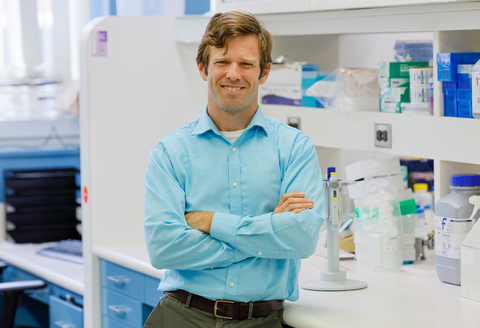
Dr. Matthew D. Taylor, instructor in the Institute of Molecular Medicine at the Feinstein Institutes is co-principal investigator of the study. (Credit: Feinstein Institutes)
Sepsis is a common and fatal condition when the body’s regulatory control of the immune response to an infection is lost. As a result, the organ systems fail to function correctly, resulting in death. Current treatment relies on supporting the organs, for example, using drugs to correct low blood pressure and devices like mechanical ventilators. However, recent studies have shown that ventilators can damage the lungs and that norepinephrine, the standard of care medication used to treat blood pressure, may compromise the immune system, weakening the body’s response.
The new research, led by the Feinstein Institutes’ Matthew D. Taylor, MD, and Mass General’s Daniel E. Leisman, MD, examined the effects of angiotensin-II, a peptide hormone.
“There are no specific drugs available to treat sepsis, and it turns out that the blood pressure drug of choice may interfere with the body’s natural ability to contain infection,” said Dr. Taylor, instructor in the Institute of Molecular Medicine at the Feinstein Institutes, assistant professor of the Pediatrics Division of Pediatric Critical Care Medicine at Zucker School of Medicine at Hofstra/Northwell and co-principal investigator of the study. “Our research demonstrates that angiotensin-II enhances some immune responses, improving bacterial clearance and suggests the need for future research to determine if the drug has similar effects in patients with sepsis and to compare angiotensin-II directly with standard care.”
The results show that angiotensin-II, which increases blood pressure via a molecular pathway not affected by norepinephrine, directly stimulated immune responses and reduced bacteria counts in animal models. In contrast, the bacterial load increased when the septic mice received norepinephrine.
“Sepsis is a deadly disorder whose underlying biology is poorly understood,” said Clifford S. Deutschman, MD, professor in the Institute of Molecular Medicine at the Feinstein Institutes and an internationally recognized expert on the disorder. “The work done by Drs. Taylor and Leisman is exciting and identifies a potential therapeutic option that should be explored further to improve care.”
Angiotensin-II is already Food and Drug Administration (FDA) approved for treating hypotension in shock and sepsis. This paves the way for future research, including clinical trials to study the effects of angiotensin-II.
“Unfortunately, current sepsis treatments, like norepinephrine and mechanical ventilation, have a downside,” said Charles L. Schleien, MD, senior vice president and chair of pediatric services at Northwell Health and professor in the Institute of Molecular Medicine at the Feinstein Institutes. “This new study will help guide future research in and out of the lab to help develop effective treatments against this frequently fatal condition.”
Additional findings from the PNAS report show that angiotensin-II alters the system’s inflammatory response limiting systemic inflammation, promoting bacterial defense and reducing organ dysfunction.
“Researchers worldwide are beginning to unravel the underlying mechanisms of sepsis,” said Kevin J. Tracey, MD, president and CEO of the Feinstein Institutes. “Drs. Taylor and Leisman’s work contributes to our understanding of this deadly condition and opens up new avenues of research in the lab and clinical trials.”
About the Feinstein Institutes
The Feinstein Institutes for Medical Research is the home of the research institutes of Northwell Health, the largest health care provider and private employer in New York State. Encompassing 50 research labs, 3,000 clinical research studies and 5,000 researchers and staff, the Feinstein Institutes raises the standard of medical innovation through its five institutes of behavioral science, bioelectronic medicine, cancer, health system science, and molecular medicine. We make breakthroughs in genetics, oncology, brain research, mental health, autoimmunity, and are the global scientific leader in bioelectronic medicine – a new field of science that has the potential to revolutionize medicine. For more information about how we produce knowledge to cure disease, visit http://feinstein.northwell.edu and follow us on LinkedIn.
View source version on businesswire.com: https://www.businesswire.com/news/home/20220829005673/en/
Contacts
Matthew Libassi
631-793-5325
mlibassi@northwell.edu