The perspective piece was published in ‘Nature Neuroscience’
For years, The Feinstein Institutes for Medical Research has been calling attention to the historical lack of diversity and inclusion in medical and scientific research. Now, a new perspective piece published today Nature Neuroscience underscores this urgent need, specifically highlighting the critical importance of inclusivity in human neuroscience studies.
This press release features multimedia. View the full release here: https://www.businesswire.com/news/home/20241227014566/en/
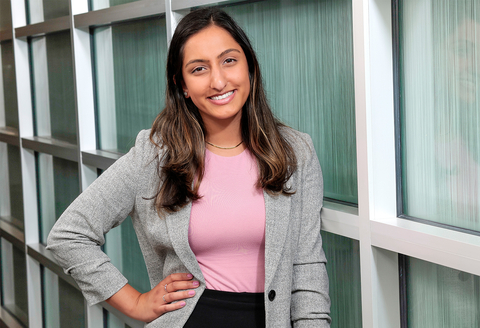
Dr. Elvisha Dhamala is the perspective’s corresponding author. (Credit: Feinstein Institutes)
Corresponding author, Elvisha Dhamala, PhD, assistant professor in the Institute of Behavioral Sciences at the Feinstein Institutes, explains how factors like sex, gender, race, ethnicity and economic status can impact brain biology and behavior. Currently, many studies primarily include participants who are western, educated, industrialized, rich and democratic but the impact of this is that research findings may not apply to everyone. For example, mental illnesses can show up differently across various groups, and current research may not capture these differences. This paper argues that ignoring these differences can lead to inaccurate diagnoses and treatments. It also points out that excluding certain groups from research can worsen existing health disparities.
“Without diverse representation in human neuroscience research, we risk developing a skewed understanding of the brain and behavior,” said Dr. Dhamala. “This can lead to misdiagnosis, ineffective treatments, and ultimately, exacerbate health disparities for those already marginalized.”
The authors offer several recommendations for making scientific research more inclusive, including the following:
- Recruitment: Researchers should recruit participants from diverse communities and avoid relying solely on university students. They should also work with community leaders and build diverse research teams.
- Data Collection: Researchers need to collect information about participants' backgrounds using validated questionnaires and ensure that data collection methods are accessible to everyone. They should also provide support like transportation and childcare to make participation easier.
- Data Analysis: Researchers should analyze data in ways that consider the impact of sociodemographic factors. They should also be careful not to oversimplify findings or make harmful generalizations about specific groups.
In the perspective, they stress that inclusive research is not optional and call on fellow researchers, institutions, and funding agencies to prioritize diversity and inclusion in all aspects of human biomedical research.
“As Dr. Dhamala's work shows, inclusive research is essential for understanding the human brain and building an equitable healthcare system,” said Anil K. Malhotra, MD, co-director of the Institute of Behavioral Science at the Feinstein Institutes. “We must prioritize diversity in biomedical research to ensure accurate diagnoses, personalized treatments, and health equity for all.”
Recent research from Dr. Dhamala also showed that sex and gender identity impact neurobiology. Using MRI scans to observe brain activity, they examined how sex and gender were linked to brain networks. The findings showed distinct patterns of brain activity were associated with sex assigned at birth and gender identity, particularly in brain regions associated with social cognition and emotional processing.
About the Feinstein Institutes
The Feinstein Institutes for Medical Research is the home of the research institutes of Northwell Health, the largest health care provider and private employer in New York State. Encompassing 50 research labs, 3,000 clinical research studies and 5,000 researchers and staff, the Feinstein Institutes raises the standard of medical innovation through its five institutes of behavioral science, bioelectronic medicine, cancer, health system science, and molecular medicine. We make breakthroughs in genetics, oncology, brain research, mental health, autoimmunity, and are the global scientific leader in bioelectronic medicine – a new field of science that has the potential to revolutionize medicine. For more information about how we produce knowledge to cure disease, visit http://feinstein.northwell.edu and follow us on LinkedIn.
View source version on businesswire.com: https://www.businesswire.com/news/home/20241227014566/en/
Contacts
Julianne Mosher Allen
516-880-4824
jmosherallen@northwell.edu