By [Your Name/Journalist Persona]
Published: February 9, 2026
Introduction
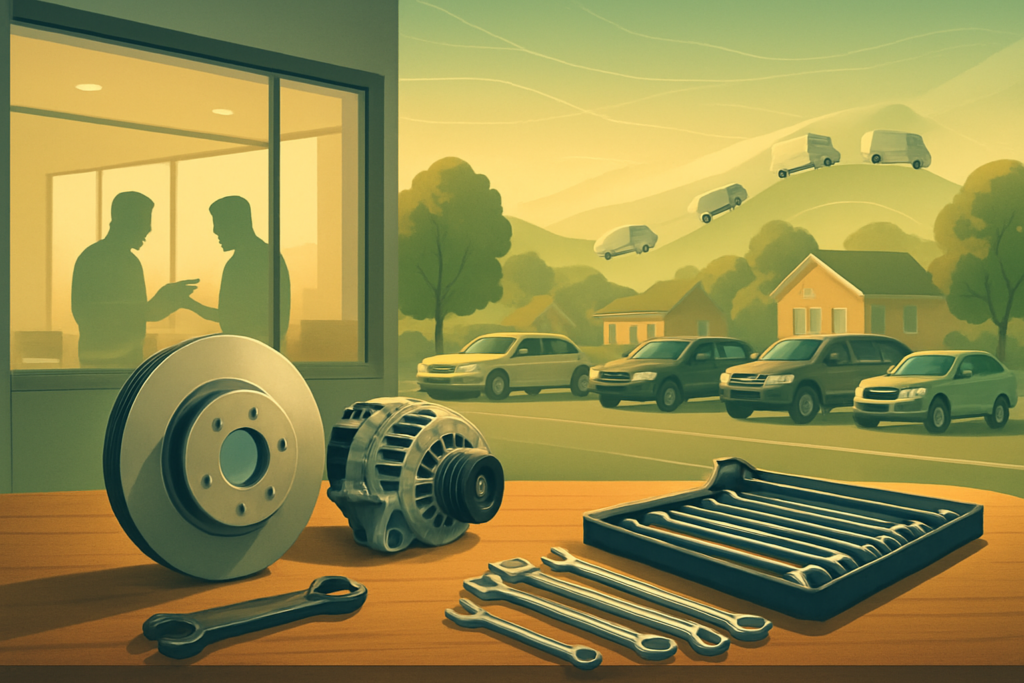
As we move into the first quarter of 2026, the American automotive landscape is defined by a paradox: while technology inside vehicles has never been more advanced, the vehicles themselves have never been older. For AutoZone, Inc. (NYSE: AZO), this trend has transformed from a post-pandemic quirk into a structural goldmine. With the average age of light vehicles in the United States officially crossing the 13-year threshold this year, AutoZone finds itself at the epicenter of a "repair-not-replace" economy. This deep-dive analyzes how the Memphis-based retail giant is leveraging the oldest fleet in history to cement its dominance in the DIY and professional repair markets.
Historical Background
AutoZone’s journey began in 1979 when J.R. "Pitt" Hyde III opened the first "Auto Shack" in Forrest City, Arkansas. Hyde, a visionary who saw that the grocery store model of clean, organized retail could be applied to the often-grimy world of auto parts, laid the foundation for what would become a retail powerhouse.
By 1987, the company changed its name to AutoZone and began its relentless expansion across the United States. A pivotal moment occurred in 1991 when the company went public on the New York Stock Exchange. However, the most defining transformation in its history was not a merger or a product launch, but the 1998 implementation of its share repurchase program. This signaled a shift toward a "share cannibal" strategy, where the company prioritizes using free cash flow to buy back its own stock over paying dividends, a move that has fundamentally shaped its stock price trajectory for over 25 years.
Business Model
AutoZone operates under a high-efficiency retail and distribution model designed to serve two distinct customer bases:
- Do-It-Yourself (DIY): Accounting for approximately 75% of sales, this segment caters to car owners who perform their own maintenance. This is AutoZone's traditional bread and butter, driven by high-margin private labels like Duralast.
- Commercial (DIFM – Do-It-For-Me): This is the company’s primary growth engine in 2026. Through its commercial programs, AutoZone delivers parts to professional garages and dealerships.
The backbone of this model is the "Hub and Spoke" distribution system. AutoZone utilizes a network of "Mega-Hubs"—massive stores that carry up to 100,000 unique SKUs—to provide rapid delivery to smaller satellite stores. This ensures that even rare parts for 15-year-old vehicles are available within hours, a critical competitive advantage when a mechanic's bay is tied up.
Stock Performance Overview
AutoZone’s stock performance is a masterclass in long-term value creation through share count reduction.
- 1-Year Performance: In the past 12 months, AZO has outperformed the S&P 500, buoyed by consistent quarterly earnings beats and the realization that the "aging fleet" tailwind is persistent.
- 5-Year Performance: Since 2021, the stock has more than doubled. While other retailers struggled with the shift to e-commerce, AutoZone's "need-it-now" inventory kept it insulated from the Amazon effect.
- 10-Year Performance: Looking back a decade, AZO has been a top-tier performer in the retail sector, driven by a share count that has shrunk by nearly 30% over that period.
The stock often carries a high nominal price tag (regularly trading in the thousands of dollars), as management has historically resisted stock splits, preferring to maintain a focus on institutional and long-term investors.
Financial Performance
In the 2025 fiscal year, AutoZone reported net sales of approximately $18.94 billion. Despite the inflationary pressures that squeezed consumer wallets over the last 24 months, the company maintained an enviable operating margin of 19.6%.
A key metric for 2026 is the company’s inventory turnover. By optimizing its supply chain through its 100+ Mega-Hubs, AutoZone has kept inventory levels lean while increasing availability. The company’s cash flow remains robust; in FY 2025, it utilized roughly $1.58 billion for share repurchases. Its debt-to-equity ratio is high by traditional standards, but because the company’s cash flow is so predictable and its interest coverage so strong, the credit markets continue to view AZO as a "blue-chip" borrower.
Leadership and Management
In January 2024, the torch was passed to Phil Daniele, who took over as CEO from long-time leader Bill Rhodes. Daniele, a 30-year veteran of the firm, has focused his first two years on "velocity." His strategy emphasizes getting parts from hubs to shops faster than O'Reilly or Advance.
The management team is known for its "AutoZoner" culture—a disciplined, almost frugal approach to operations that prioritizes store-level execution. Under Daniele’s leadership, the company has also seen a push into digital modernization, improving the omnichannel experience so DIYers can "buy online, pick up in-store" (BOPIS) with zero friction.
Products, Services, and Innovations
AutoZone’s competitive edge lies in its Private Label Strategy. Brands like Duralast, Valucraft, and ProEligible offer higher margins for the company while providing value to the consumer. In 2026, the innovation focus has shifted toward:
- ADAS Calibration Tools: As older cars with early Advanced Driver Assistance Systems (like lane-keep assist) enter the repair "sweet spot," AutoZone is providing the complex sensors and calibration tools required for these repairs.
- Duralast Gold and Elite: Premium tiers that cater to the increasingly sophisticated components of late-model internal combustion engine (ICE) vehicles.
- Enhanced Commercial Tech: A proprietary ordering platform for professional shops that integrates directly with shop management software.
Competitive Landscape
AutoZone exists in a "Big Three" oligopoly alongside O'Reilly Automotive (NASDAQ: ORLY) and Advance Auto Parts (NYSE: AAP).
- O'Reilly (ORLY): Generally considered the strongest competitor, O'Reilly has historically had a stronger foothold in the dual-market (DIY and Commercial). In 2026, the gap between AZO and ORLY has narrowed as AZO's Mega-Hub strategy catches up.
- Advance Auto Parts (AAP): Currently the "laggard," AAP spent much of 2025 restructuring and selling off assets (like Worldpac) to stabilize its balance sheet. This has allowed AutoZone to aggressively poach market share in the Northeast and Midwest.
- E-commerce (Amazon/eBay): While a threat for simple parts (wipers, floor mats), they cannot compete with AutoZone’s 30-minute delivery to commercial shops for mission-critical parts like water pumps.
Industry and Market Trends
The most significant macro driver for 2026 is the Vehicle Sweet Spot. Vehicles enter their most profitable stage for AutoZone when they are between 6 and 14 years old.
- New Car Prices: With the average new car still costing over $45,000 in early 2026, consumers are choosing to spend $1,500 on a major transmission or brake overhaul rather than taking on a 7% interest rate auto loan.
- Complexity: Modern cars are more complex, which is a double-edged sword. It drives DIYers to seek more advice from "AutoZoners" in-store and pushes more complex work to professional shops, where AutoZone's commercial business thrives.
Risks and Challenges
Despite the tailwinds, 2026 is not without hurdles:
- Currency Volatility: With a massive footprint in Mexico (880+ stores) and a growing presence in Brazil, fluctuations in the Peso and Real can impact reported earnings.
- The EV Transition: While Battery Electric Vehicles (BEVs) have fewer moving parts to break, the transition is slower than predicted in 2020. However, the long-term risk remains that EVs require less traditional maintenance (no oil changes, spark plugs, or mufflers).
- Labor Costs: Maintaining a knowledgeable workforce in 6,600+ U.S. stores remains expensive in a tight labor market.
Opportunities and Catalysts
- Brazil Expansion: Brazil represents a massive, fragmented market with a vehicle fleet even older than that of the U.S. If AutoZone can replicate its Mexico success there, it provides a decade-long growth runway.
- Mega-Hub Rollout: The company is on track to reach 200 Mega-Hubs. Each new hub significantly boosts the same-store sales of all satellite stores in its radius.
- Failure of Smaller Chains: High interest rates are squeezing "mom-and-pop" auto parts stores, allowing AutoZone to gain market share through attrition.
Investor Sentiment and Analyst Coverage
Wall Street remains broadly "Bullish" on AZO. Institutional ownership remains high (over 90%), as the company is a favorite for "quality" and "value" factor funds. Analysts frequently cite the company’s "recession-resistant" nature; when the economy dips, people stop buying new cars and start fixing old ones, making AutoZone a classic defensive play.
Regulatory, Policy, and Geopolitical Factors
In 2026, trade policy is a focal point. With a significant portion of aftermarket parts manufactured in Asia and Mexico, any changes in tariffs or the USMCA (United States-Mexico-Canada Agreement) could impact input costs. Additionally, "Right to Repair" legislation continues to be a tailwind, as it ensures that third-party shops (AutoZone's customers) can access the diagnostic data needed to fix modern vehicles.
Conclusion
As of February 9, 2026, AutoZone stands as a beneficiary of an American consumer who is holding onto their vehicle longer than ever before. The "13-year fleet" is not just a statistic; it is a fundamental shift in consumer behavior driven by vehicle durability and economic necessity. While the eventual rise of EVs poses a distant threat, the next five years for AutoZone look remarkably robust. Investors should keep a close eye on the pace of the Brazil expansion and the continued success of the Mega-Hub rollout as the primary indicators of whether this "share cannibal" can continue its decades-long feast.
This content is intended for informational purposes only and is not financial advice.