Today’s Date: March 6, 2026
Introduction
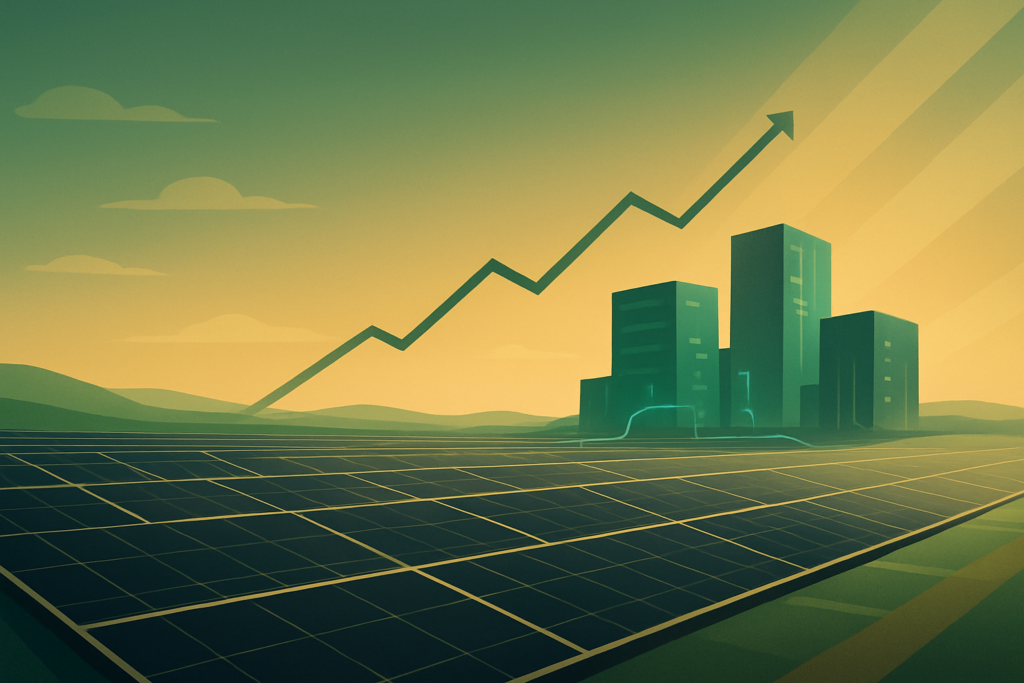
In the volatile world of renewable energy, few names command the same level of institutional respect and strategic intrigue as First Solar (NASDAQ: FSLR). Long regarded as a "policy play" due to its heavy reliance on domestic manufacturing incentives, the company underwent a radical re-rating in mid-2024 that forever changed its market narrative. On May 22, 2024, the stock experienced a historic 19% single-day surge, a move that signaled First Solar’s emergence not just as a green energy provider, but as a critical infrastructure backbone for the Artificial Intelligence (AI) revolution. As we stand in early 2026, First Solar remains the largest solar manufacturer in the Western Hemisphere, leveraging a unique technological moat and a sold-out order book to navigate a complex macroeconomic and geopolitical landscape.
Historical Background
First Solar’s journey began not in a Silicon Valley garage, but in the glass-manufacturing hub of Toledo, Ohio. Founded in 1990 by physicist Harold McMaster as Solar Cells, Inc., the company’s foundational bet was on Cadmium Telluride (CdTe) thin-film technology. McMaster, a pioneer in tempered glass, believed that solar panels could be manufactured using a continuous, high-speed process similar to flat glass production, rather than the batch-processing required for traditional crystalline silicon.
The company took a decisive turn in 1999 when it was acquired by True North Partners, an investment firm led by the Walton family of Walmart (NYSE: WMT). Rebranded as First Solar, the firm went public in 2006 (NASDAQ: FSLR). Over the next two decades, First Solar survived the "Solar Winter" of the early 2010s—a period that saw dozens of U.S. solar firms go bankrupt due to a flood of cheap, subsidized silicon panels from China. First Solar survived by pivoting away from the residential rooftop market to focus exclusively on utility-scale projects and by relentlessly refining its proprietary CdTe technology.
Business Model
First Solar’s business model is characterized by deep vertical integration and a niche focus on utility-scale solar. Unlike most competitors who assemble modules from third-party cells and polysilicon, First Solar controls its entire production process—from raw materials to finished panels—under one roof, typically in less than four hours.
Revenue Sources:
- Module Sales: The vast majority of revenue comes from the sale of its Series 6 and Series 7 thin-film modules to utility-scale project developers and independent power producers (IPPs).
- Sustainability & Recycling: A secondary but growing segment involves end-of-life panel recycling, a key requirement for many ESG-focused corporate buyers.
By exiting the Engineering, Procurement, and Construction (EPC) business in 2019, the company streamlined its operations to become a pure-play manufacturer, resulting in higher margins and a cleaner balance sheet.
Stock Performance Overview
First Solar has been a storied performer, though its path has been anything but linear.
- 1-Year Performance (2025–2026): The stock has traded in a wide range, stabilizing after the massive 2024 "AI-hype" run-up. While it faced volatility in late 2025 due to grid interconnection delays, it has outperformed the broader Invesco Solar ETF (NYSEARCA: TAN).
- 5-Year Performance: FSLR has been one of the top performers in the clean energy space, significantly outstripping residential-focused peers like Enphase Energy (NASDAQ: ENPH) and SolarEdge (NASDAQ: SEDG), largely due to its insulation from the high-interest-rate environment that crushed the residential sector.
- 10-Year Performance: Long-term shareholders have seen the stock evolve from a $40 range-bound entity into a triple-digit powerhouse, fueled by the passing of the Inflation Reduction Act (IRA) in 2022.
Financial Performance
For the fiscal year 2025, First Solar solidified its position as a cash-flow machine.
- Revenue & Earnings: 2025 revenue reached approximately $5.1 billion, with net income surging to $1.65 billion. This translated to a diluted EPS of roughly $15.40, a significant jump from 2023 levels.
- The 45X Factor: A critical component of this profitability is the Section 45X Advanced Manufacturing Production Credit. In 2025 alone, First Solar accrued nearly $1.5 billion in tax credits. Critics argue these credits mask underlying manufacturing costs, but for investors, they represent a guaranteed, multi-year cash tailwind.
- Balance Sheet: The company ended 2025 with a net cash position of approximately $2.4 billion, providing ample liquidity to fund its multi-billion dollar expansion projects in Alabama and Louisiana.
Leadership and Management
CEO Mark Widmar, who took the helm in 2016, is widely credited with First Solar’s modern success. His strategy of "fortifying the moat" involved making the difficult decision to scrap the Series 4 production lines in favor of the larger Series 6 format, a move that initially hurt earnings but ultimately saved the company.
Under Widmar’s leadership, the management team has focused on transparency and "under-promising and over-delivering." The board of directors maintains a strong emphasis on governance, particularly in light of the Walton family’s significant historical ownership, ensuring that the company’s long-term capital allocation remains disciplined.
Products, Services, and Innovations
First Solar’s primary product is the Series 7 module, designed specifically for the U.S. market.
- CdTe Advantage: Unlike crystalline silicon (c-Si) panels, First Solar’s thin-film modules have a superior temperature coefficient, meaning they lose less efficiency as they get hotter—a major advantage in desert utility sites.
- Innovation Pipeline: The company is currently investing heavily in Perovskite tandem cells. By layering Perovskite (a high-efficiency material) onto their existing CdTe technology, First Solar aims to break the 25% efficiency barrier, which would bring thin-film performance into direct competition with the highest-grade silicon panels.
- Low Carbon Footprint: Because their manufacturing is less energy-intensive than refining polysilicon, First Solar modules have the lowest carbon footprint and water usage in the industry.
Competitive Landscape
The solar industry is a battlefield between First Solar’s thin-film and the global dominance of crystalline silicon.
- The Chinese Giants: Companies like JinkoSolar (NYSE: JKS), LONGi, and Trina Solar dominate global market share. However, they face significant hurdles in the U.S. market due to the Uyghur Forced Labor Prevention Act (UFLPA) and high anti-dumping duties.
- Competitive Edge: First Solar’s edge is not necessarily price, but "bankability" and supply chain security. U.S. developers like NextEra Energy (NYSE: NEE) often pay a premium for FSLR panels to avoid the risk of their shipments being seized at the border or being subject to retroactive tariffs.
Industry and Market Trends
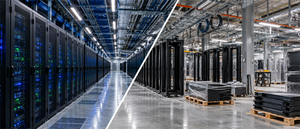
The most significant trend of the last two years has been the AI-Solar Nexus. As tech giants like Alphabet (NASDAQ: GOOGL) and Microsoft (NASDAQ: MSFT) build out massive AI data centers, their power requirements have skyrocketed. Because these "hyperscalers" have 24/7 carbon-neutral goals, they are contracting for solar power at an unprecedented scale.
Furthermore, "Domestic Content" has become the industry's buzzword. Federal incentives now reward developers for using components made in America, a trend that has funneled almost all high-margin demand directly to First Solar's doorstep.
Risks and Challenges
Despite its strengths, First Solar is not without significant risks:
- Policy Dependency: The IRA’s 45X credits are the company's lifeblood. Any legislative shift or successful legal challenge to these subsidies could slash First Solar's profitability overnight.
- Grid Bottlenecks: While demand for panels is high, the "interconnection queue"—the time it takes to connect a solar farm to the power grid—has stretched to over five years in some regions. This prevents developers from deploying the panels they have already ordered.
- Technology Risk: If silicon-based manufacturers achieve a massive breakthrough in efficiency or cost reduction, First Solar’s CdTe technology could become obsolete.
Opportunities and Catalysts
- The AI Data Center Boom: As of 2026, the demand from data centers is projected to grow by 15% CAGR. First Solar’s ability to provide high-volume, domestic modules makes it the preferred partner for "Big Tech" energy infrastructure.
- Expansion in India: First Solar’s 3.3 GW facility in Tamil Nadu, India, is a key growth lever, allowing the company to tap into one of the world’s fastest-growing energy markets while diversifying away from U.S. policy risk.
- M&A Potential: With a massive cash pile, First Solar is well-positioned to acquire smaller technology firms in the Perovskite or energy storage space.
Investor Sentiment and Analyst Coverage
Current investor sentiment is "cautiously bullish." The 19% surge in May 2024, triggered by optimistic notes from UBS and Piper Sandler, set a high bar. As of early 2026, the consensus rating is a Moderate Buy, with a median price target of $256.
While hedge funds have largely maintained their positions, retail sentiment has cooled slightly from the 2024 peaks as investors grapple with the reality of grid delays. However, institutional ownership remains high, as FSLR is seen as a necessary "anchor tenant" in any ESG or infrastructure-themed portfolio.
Regulatory, Policy, and Geopolitical Factors
First Solar sits at the heart of the U.S.-China trade war.
- Tariffs: The company benefits from Section 301 and 201 tariffs that protect domestic manufacturers from subsidized imports.
- AD/CVD Rulings: In late 2025, the U.S. Department of Commerce upheld new anti-dumping duties against solar cells from Southeast Asia, further tightening the supply of cheap alternatives and boosting First Solar’s pricing power.
- Geopolitics: As a U.S.-based company with almost no reliance on Chinese polysilicon, First Solar is the primary beneficiary of the "de-risking" trend in global energy supply chains.
Conclusion
First Solar has evolved from a niche solar manufacturer into a strategic national asset. The May 2024 surge was more than a fluke; it was the market’s realization that the transition to an AI-driven economy requires a massive, reliable, and domestic energy supply chain.
For investors, First Solar offers a unique profile: a high-margin manufacturer with a multi-year backlog and a fortified technological moat. However, the heavy reliance on government subsidies (IRA) and the looming threat of grid interconnection delays require a disciplined approach. As we move further into 2026, the key for First Solar will be its ability to convert its massive backlog into operational reality while maintaining its technological lead through the next generation of Perovskite innovation.
This content is intended for informational purposes only and is not financial advice.