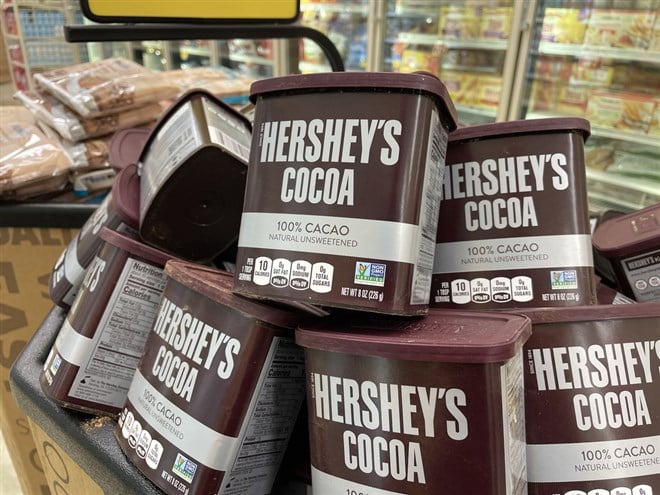
With the country bracing for a potential recession, it may be time for investors to crave The Hershey Company (NYSE: HSY). Over the last 15 years, two significant recessions have occurred: The Great Recession of late 2007 to 2009 and the Covid-19 recession. During this time, Hershey's stock has advanced at a 14% annualized rate compared to 9% for the broader U.S. market. In 2008, when the S&P 500 plunged -38%, Hershey fell just -11%.
Beyond the historical precedents, Hershey makes sense as a core portfolio holding for tough times because of its portfolio. The leading U.S. confectioner owns Hersey's Kisses, Reese's Cups, Kit Kat, York and other popular chocolate brands. In addition, pirate's Booty, Skinny Pop and Dot's Pretzels (the nation's fastest-growing pretzel) lead a lesser-known snack lineup.
One thing that doesn't change through the ups and downs of the economic cycle is people's desire to snack. Sure, they may pare back or switch to generic brands, but when the desire for a quality snack comes, the old reliables find their way into the shopping cart.
This is what defines Hershey as a consumer-defensive name. It makes up for what it lacks in economically sensitive growth, with products always in demand.
Hungry for more insight?
Why Did Hershey Stock Melt Down in November?
On November 4th, Hershey reported better-than-expected third-quarter revenue and profits. Management sweetened the pot by raising its full-year outlook by citing "resilient consumer demand" and easing supply chain issues. It didn't satisfy the market's sweet tooth, however. UBS called the revised guidance "conservative," and the stock sank below $225.
A week later, Hershey announced a plan to build a new chocolate factory in its hometown of Hershey, PA, as part of its ongoing supply chain investments. The $1 billion investment will add 13 production lines and target Willy Wonka-like production to meet "all-time high" consumer demand.
A significant rally should've greeted the news, but the stock fell to a five-month low. There was another force at play here (and it wasn't the Oompa Loompas).
On November 14th, Hershey CEO Michele Buck sold $3.1 million of Hershey's stock as part of an automated trading plan. The trades were executed in 10 different lots, which caused the stock to trade in an unusually wide range. When the dust settled, Hershey was below $220.
It didn't take long for opportunists to swoop in. By December 9th, buyers bid Hershey's back up to a record intraday high of $242.63.
What Are Hershey's Growth Drivers?
Even for defensive stocks, equity investors need to see some growth. For Hershey, that has historically come from expansion into new snack categories, mainly via acquisition. The recent buyouts of Dot's Pretzels, Pretzels Inc and Lily's confections stand to keep the growth fresh.
Expansion into new geographies has also been a critical component of the growth strategy and will remain so, given the universal appeal of Hershey's brands.
More recently, Hershey has been benefitting from post-pandemic snacking trends. As people return to the office and social activities, sitting down for breakfast, lunch and dinner have become more challenging. Snacks fill the void and help to get us to our next meal.
Since we are always looking for ways to cram more into a day, our propensity for stuffing more candy bars and cheese curls into our mouths seems unlikely to change.
What Makes Hershey a Shareholder Friendly Stock?
In conjunction with the raised 2022 guidance, management signaled confidence in Hershey's business by increasing its dividend by 15%. This brought the annual payout to $4.14 and the dividend yield on par with the consumer staples sector average. More importantly, it marked the 13th year of dividend hikes, solidifying Hershey's spot in the Dividend Contenders.
Hershey's steady cash flow generation and financial strength also support a stock buyback program. Although it didn't repurchase any shares in the third quarter, $110 million remains on the current buyback authorization. Buybacks are valuable because 1) they allow a company to express confidence in the long-term when the stock price falls, and 2) they reduce the number of shares outstanding, thereby increasing earnings per share (EPS).
Now trading about 7% off the all-time high, technical indicators point to oversold conditions on Hershey. The last time the stock dipped below 30 on the Relative Strength Indicator (RSI) reading, it set new highs.
Shareholders anticipating a sticky economic environment may want to grab 's'more' shares.