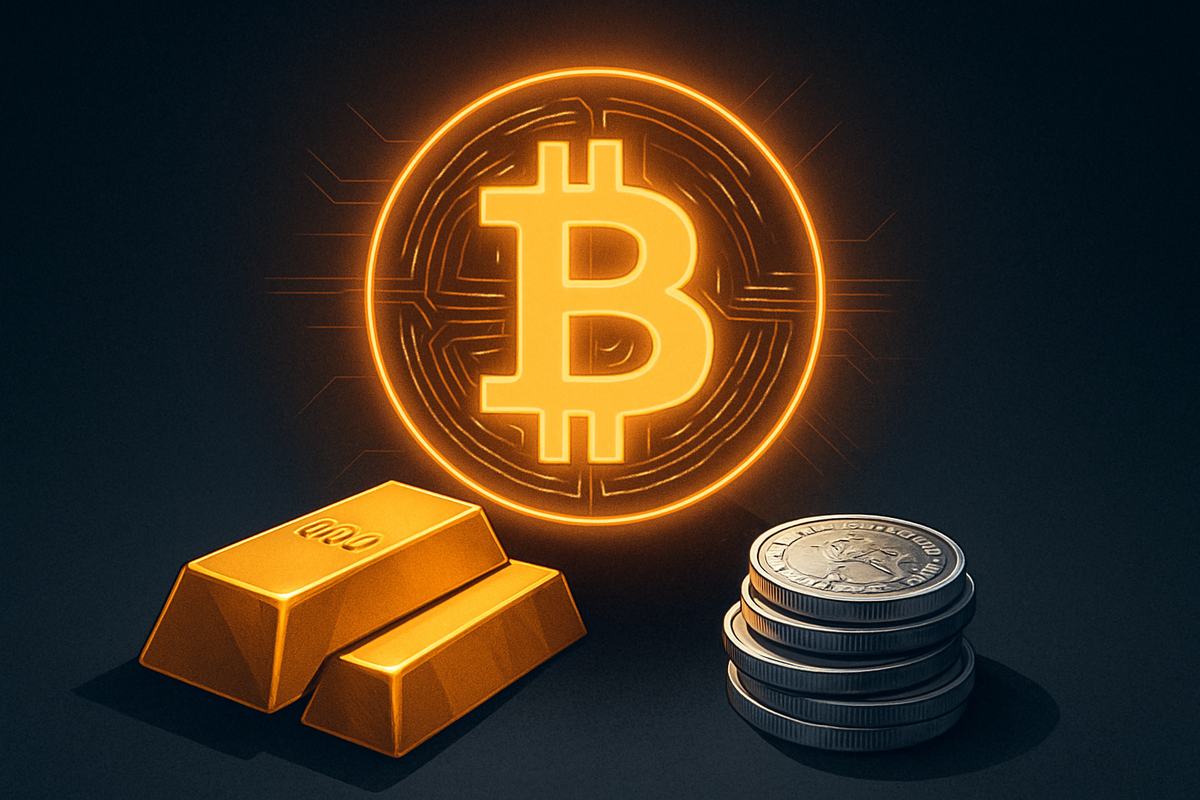
As the financial world navigates the turbulent waters of late 2025, a bold prediction from artificial intelligence has taken center stage: Bitcoin (CRYPTO: BTC) could outshine traditional safe-haven assets like gold and silver by the end of the year. This AI-driven forecast, frequently reiterated by advanced models like ChatGPT-5 throughout the year, posited a scenario where the digital asset's unique characteristics and growing institutional embrace would propel it past its ancient counterparts. Now, with October 22, 2025, upon us, the market is intensely scrutinizing whether this audacious prediction is indeed materializing amidst unprecedented volatility in both the crypto and precious metals markets.
The immediate implications are profound, challenging long-held investment philosophies and sparking a fierce debate among analysts and investors. While Bitcoin has demonstrated remarkable resilience and growth, gold and silver have also experienced a rollercoaster year, hitting record highs only to face sharp corrections. This dynamic interplay sets the stage for a dramatic conclusion to 2025, with the performance of these assets potentially redefining wealth preservation and growth strategies for a new era.
The AI's Rationale Meets Market Reality
ChatGPT's prediction, which gained significant traction throughout 2025, was not without its foundational arguments. The AI model consistently pointed to several macroeconomic and structural factors favoring Bitcoin's ascent. Foremost among these was the expectation of continued loose liquidity and potential central bank easing policies globally, creating an environment ripe for risk-on assets. Bitcoin's inherently fixed supply, a stark contrast to the potentially infinite printing of fiat currencies, was also highlighted as a critical driver, appealing to investors concerned about inflation and currency debasement.
Furthermore, the AI emphasized the accelerating institutional demand for Bitcoin. The proliferation of spot Bitcoin ETFs, the increasing allocation by corporate treasuries, and growing interest from sovereign wealth funds were cited as providing robust structural support and continuous inflows into the digital asset. ChatGPT also posited that Bitcoin "thrives on frustration with outdated systems that no longer serve the digital economy," positioning it as a modern hedge against economic uncertainties. It has matured from a speculative experiment into a recognized macro asset, attracting younger investors and institutions with its "inflation hedge narrative."
However, the journey to outshine gold and silver has been anything but linear for Bitcoin, particularly when viewed against the backdrop of the precious metals' own tumultuous year. MarketMinute reports painted a picture of extreme volatility for gold and silver in 2025. Gold surged past an unprecedented $4,300 per ounce, and silver breached the $50 mark, reaching an all-time high above $54 by early October. This rally was fueled by a flight to safe-haven assets amidst geopolitical tensions, persistent inflation, and a remarkable central bank gold acquisition spree, with over 1,000 tonnes purchased annually for three consecutive years (2022-2024). Yet, just as these metals reached dizzying heights, a dramatic "plunge" occurred around October 21st, with gold suffering its largest single-day percentage decline in over a decade (6.3%) and silver dropping up to 8.7%. This downturn was attributed to profit-taking, a strengthening U.S. dollar, and a perceived reduction in safe-haven demand, raising questions about market manipulation. This recent correction in precious metals provides a critical window for Bitcoin to potentially close the performance gap by year-end, validating the AI's foresight.
Companies on the Front Lines: Winners and Losers
The battle for investment dominance between Bitcoin and precious metals has significant implications for a diverse range of public companies. On the cryptocurrency front, companies deeply invested in the Bitcoin ecosystem stand to gain substantially if ChatGPT's prediction holds true. MicroStrategy (NASDAQ: MSTR), a software company that has famously adopted Bitcoin as its primary treasury reserve asset, would see a dramatic appreciation in its balance sheet, further validating its aggressive crypto strategy. Similarly, cryptocurrency exchanges like Coinbase Global, Inc. (NASDAQ: COIN) would benefit from increased trading volumes and greater institutional adoption, boosting their revenue streams. Other companies providing infrastructure for the digital asset space, such as blockchain technology providers and mining operations, would also experience a surge in demand and profitability.
Conversely, a sustained outperformance by Bitcoin could pose challenges for traditional precious metals miners and refiners. Major gold producers like Barrick Gold Corporation (NYSE: GOLD) and Newmont Corporation (NYSE: NEM), along with silver miners such as Pan American Silver Corp. (NASDAQ: PAAS), might face reduced investor interest if capital flows increasingly gravitate towards digital alternatives. While these companies have benefited from the recent surge in gold and silver prices, a long-term shift in investor preference could pressure their stock valuations and future growth prospects. However, it's crucial to note that many precious metals companies are diversifying, and the robust industrial demand for silver, in particular, provides a fundamental floor for its value, irrespective of its safe-haven status. The recent volatility underscores that both traditional and digital assets carry risks, and diversification remains a key strategy for institutional and retail investors alike.
Wider Significance and Market Evolution
The potential for Bitcoin to outshine gold and silver by 2025 is more than just a market statistic; it represents a pivotal moment in the evolution of financial markets and investment philosophy. This event underscores a broader industry trend towards the digitalization of assets and the increasing influence of artificial intelligence in market analysis. The debate pits a centuries-old store of value against a nascent, technologically driven asset, forcing a re-evaluation of what constitutes a "safe haven" in the 21st century.
Regulatory bodies worldwide are closely watching these developments. Increased institutional adoption of Bitcoin, driven by its perceived outperformance, could accelerate the push for clearer regulatory frameworks for cryptocurrencies. This might involve more stringent consumer protections, clearer tax guidelines, and potentially even the integration of digital assets into traditional financial systems in novel ways. The regulatory landscape remains fragmented, but a decisive shift in Bitcoin's market standing could act as a catalyst for global harmonization. Historically, gold has been the ultimate hedge against inflation and geopolitical instability. Bitcoin's emergence as a contender for this role draws parallels to the introduction of fiat currencies challenging commodity-backed money, albeit with a digital, decentralized twist. The "Debasement Trade," as described by MarketMinute, where investors flock to both precious metals and cryptocurrencies amid rising global government debt, highlights a shared concern about currency devaluation, yet their solutions diverge. The ongoing performance test between these assets will offer invaluable insights into how investors perceive and mitigate risk in an increasingly complex global economy.
What Comes Next: Navigating the Digital vs. Traditional Divide
Looking ahead, the short-term and long-term possibilities stemming from this dynamic are multifaceted. In the immediate future, the remaining weeks of 2025 will be critical for determining whether Bitcoin definitively closes the year ahead of gold and silver in terms of performance. The recent correction in precious metals provides an opportunity for Bitcoin to solidify its gains, but its own inherent volatility means that rapid price swings are always a possibility. Short-term market opportunities may arise for agile traders who can capitalize on these fluctuations, while long-term investors will be closely watching for sustained trends in institutional adoption and regulatory clarity.
Potential strategic pivots will be required across the financial industry. Traditional asset managers may need to further integrate digital assets into their portfolios, offering diversified exposure to both precious metals and cryptocurrencies. Similarly, precious metals companies might explore technological innovations or partnerships to remain competitive in a landscape increasingly influenced by digital finance. The emergence of Bitcoin as a serious contender for wealth preservation could lead to a re-evaluation of national reserve strategies, with some nations potentially considering allocations to digital assets alongside gold. Challenges will undoubtedly emerge, including continued regulatory uncertainties, cybersecurity risks associated with digital assets, and the ongoing debate about Bitcoin's true "intrinsic value" compared to the tangible nature of gold and silver. Potential scenarios range from Bitcoin cementing its status as a premier macro asset, leading to a "flippening" where its market cap consistently surpasses that of gold, to a more balanced outcome where both asset classes continue to serve distinct, yet complementary, roles in a diversified portfolio.
A New Dawn for Investment: Key Takeaways
The year 2025 has been a crucible for both Bitcoin and precious metals, testing their resilience and challenging conventional wisdom. ChatGPT's prediction that Bitcoin could outshine gold and silver has forced a critical examination of investment strategies in an era marked by digital transformation and macroeconomic uncertainty. The key takeaway is the undeniable maturation of Bitcoin as a legitimate macro asset, attracting significant institutional interest and solidifying its position beyond mere speculative novelty. While gold and silver have demonstrated their enduring appeal as safe havens, particularly during periods of high inflation and geopolitical strife, their recent volatility underscores that no asset is immune to market forces.
Moving forward, investors should anticipate continued innovation in both the digital asset and traditional commodity markets. The market will likely remain dynamic, with periods where one asset class outperforms the other, driven by evolving economic conditions, technological advancements, and shifts in investor sentiment. For investors, the coming months will be crucial for observing sustained trends in institutional capital flows into Bitcoin, any further regulatory developments, and the broader macroeconomic environment that influences both risk-on and safe-haven assets. The ultimate significance of this period lies in its potential to usher in a new paradigm of investment, where digital and traditional assets coexist, each playing a vital role in diversified portfolios, rather than one completely supplanting the other. The AI's bold forecast serves as a powerful reminder that the financial landscape is continuously evolving, demanding adaptability and a forward-thinking approach from all market participants.
This content is intended for informational purposes only and is not financial advice