Introduction
In the world of precision motion control, the stepper motor is a marvel of engineering, transforming digital pulses into precise mechanical movement. However, the performance of any stepper motor is only as good as the brain that controls it: the stepper motor driver. This critical component is the unsung hero of countless applications, from the silent operation of a modern 3D printer to the relentless accuracy of a CNC router.
Choosing the wrong stepper motor driver can lead to a host of problems—audible noise, missed steps, overheating, and sluggish performance. Conversely, the right driver can unlock silent, smooth, and powerful operation you didn’t know your motor was capable of. This guide will demystify the selection process, providing a technical framework to help you specify the perfect stepper motor driver for your next project.
Understanding the Core Function: What is a Stepper Motor Driver?
At its most fundamental, a stepper motor driver is a specialized current amplifier. It sits between a low-power microcontroller (like an Arduino or Raspberry Pi) and the high-power demands of a stepper motor. The microcontroller sends simple “Step” and “Direction” signals, but it cannot supply the significant current required by the motor’s coils.
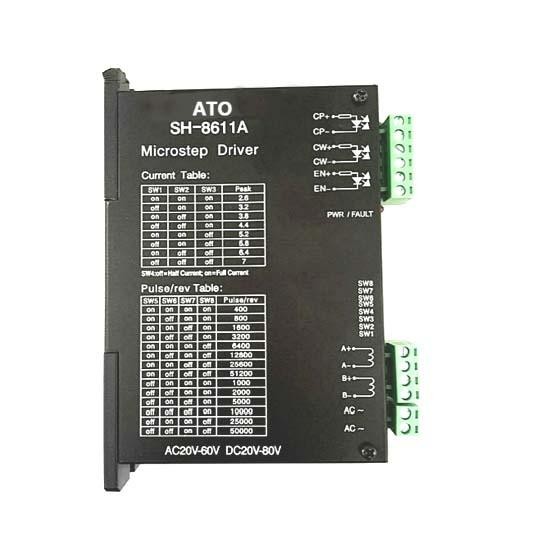
The stepper motor driver takes these logic-level commands and translates them into the precise sequence of high-current pulses needed to energize the motor phases and create rotation. Without a driver, a stepper motor is unusable. The driver is responsible for:
- Current Control: Regulating the amount of current sent to the motor.
- Phase Sequencing: Energizing the coils in the correct order to create rotation.
- Pulse Interpretation: Converting step pulses into coil energization.
Key Selection Criteria for Stepper Motor Drivers
Selecting the right driver involves balancing electrical specifications, performance features, and physical constraints. Here are the critical parameters to evaluate.
1. Current Rating and Control: The Heart of the Matter
The current rating is arguably the most important specification. The driver must be capable of delivering the peak current your stepper motor requires.
- Matching Current: Check your stepper motor’s datasheet for its rated current per phase. Your chosen stepper motor driver must have a maximum current output at or above this value. For example, a motor rated for 2.0A per phase requires a driver that can handle at least 2.0A.
- Current Regulation: Drivers use a technique called chopping to limit the current flowing to the motor. The two primary chopping modes are:
- Constant Voltage (Slow Decay): Simpler but less efficient.
- Constant Current (Mixed/Fast Decay): The modern standard, providing more consistent torque across speeds.
- Adjustability: Most hobbyist modules (like those based on the A4988 or DRV8825) feature a small potentiometer to set the current limit (often called VREF). More advanced drivers use digital communication (UART, SPI) for software-based current control.
Best Practice: Always set the driver’s current limit to match your motor’s rated current. Running a motor below its rating sacrifices torque, while exceeding it risks overheating and damage.
2. Supply Voltage Range: Powering Performance
The supply voltage you provide to the stepper motor driver has a direct impact on the motor’s high-speed performance.
- The Theory: A stepper motor’s windings are inductive. A higher supply voltage forces current through the coils more quickly, allowing the motor to maintain torque at higher rotational speeds.
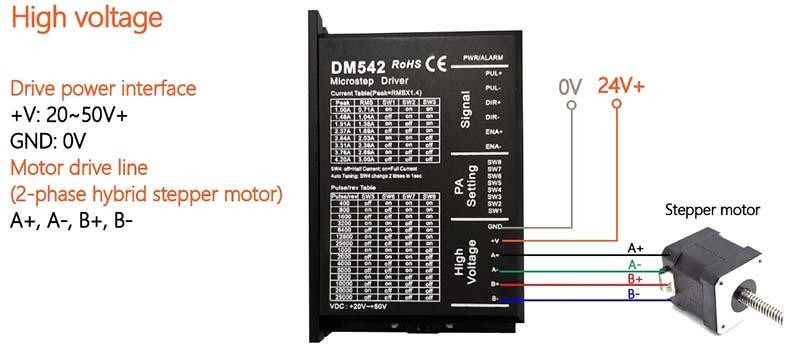
- The Rule of Thumb: To achieve good high-speed performance, it is common practice to use a power supply voltage that is 5 to 20 times the motor’s rated voltage. For instance, a motor with a rated voltage of 2.5V can be effectively driven with a 24V or 36V supply, as the stepper motor driver DC 24V-50V will chop the current to maintain the correct average.
- Driver Limits: Crucially, you must ensure your chosen stepper motor driver can handle your chosen supply voltage. Exceeding the driver’s maximum supply voltage will destroy it.
3. Microstepping: Smoothing the Ride
A standard 1.8° stepper motor has 200 full steps per revolution. Microstepping is an advanced drive technique that electronically interpolates between these full steps, creating a much smoother motion.
- How it Works: By proportionally controlling the current in the two motor phases, the driver can position the rotor between the main step positions. Common microstepping resolutions are 1/2, 1/4, 1/8, 1/16, and 1/32.
- Benefits:
- Smoother Operation: Drastically reduces low-speed vibration and audible noise.
- Higher Effective Resolution: A 1/16 microstep driver provides 3,200 microsteps per revolution, allowing for finer control.
- Reduced Resonance: Helps the motor pass through problematic mid-range resonant frequencies without losing steps.
- Consideration: While microstepping improves smoothness, it does not significantly increase the motor’s holding torque. The perceived resolution gain at very high microstepping levels (e.g., 1/256) may be less than the theoretical value due to magnetic nonlinearities.
4. Step/Dir vs. Advanced Communication Interfaces
Most basic stepper motor drivers operate with simple Step and Direction pins. However, more sophisticated drivers offer additional communication protocols:
- Step/Direction (Step/Dir): The universal standard. Simple to implement with any microcontroller.
- UART/Serial: Allows for sending high-level commands (e.g., “move 1000 steps”). Enables advanced features like changing current on the fly and reading diagnostics.
- SPI: Similar to UART but offers faster, more robust communication, allowing for real-time control and configuration of multiple drivers on a single bus.
For most applications, Step/Dir is sufficient. If you require features like sensorless stall detection or dynamic current control, a driver with UART or SPI is necessary.
5. Key Features for Performance and Protection
Modern stepper motor drivers pack intelligent features that enhance reliability and performance.
- Thermal Protection: An internal shutdown circuit that disables the driver if its temperature becomes critical.
- Overcurrent Protection: Protects the driver and motor from short circuits or excessive current draw.
- StealthChop / Silent Driving: A proprietary technology from Trinamic (and similar in other brands) that provides absolutely silent motor operation at low speeds—a must-have for consumer-facing products like 3D printers.
- SpreadCycle: A chopper algorithm from Trinamic that optimizes motor performance for high-speed operation and dynamic load changes.
- StallGuard / Sensorless Homing: A revolutionary feature that allows the driver to detect a motor stall (like a 3D printer nozzle hitting the bed) without a physical endstop switch.
A Practical Selection Workflow
Follow this step-by-step process to narrow down your choices:
- Identify Your Motor’s Specs: Note the rated current per phase and the winding inductance from its datasheet.
- Define Performance Needs:
- Is silence a priority? (Choose a driver with StealthChop or equivalent).
- Do you need high-speed torque? (Prioritize a high-voltage driver and the SpreadCycle algorithm).
- Do you need anti-stall features? (Look for StallGuard or closed-loop systems).
- Match the Current and Voltage: Select a driver whose current and voltage ratings encompass your motor’s needs and your power supply.
- Choose a Form Factor: Decide between a compact breakout board (for prototyping) or a more robust integrated module (for final products).
- Set Your Budget: Driver costs range from a few dollars for basic chips to over $50 for advanced, feature-rich modules.
Conclusion: Driving Your Project to Success
The stepper motor drivers are not merely an accessory; they are the intelligence that breathes life into your motors. By carefully considering current, voltage, microstepping, and advanced features, you can move beyond simply making a motor spin and instead create a motion control system that is silent, powerful, reliable, and precise.
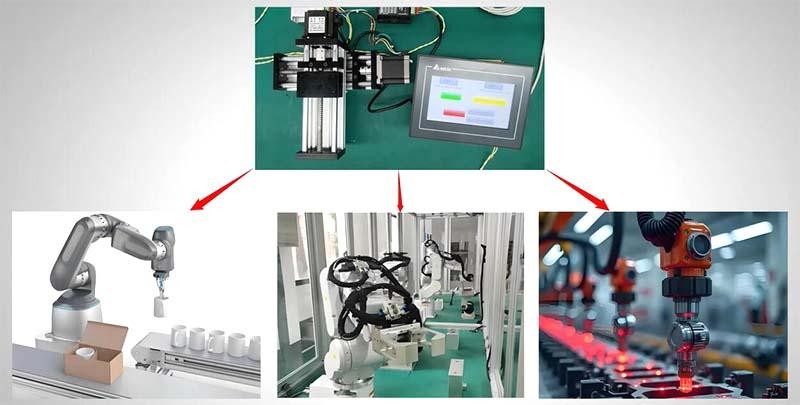
Investing time in selecting the right stepper motor drivers pays dividends in the final performance of your project. Whether you’re building a whisper-quiet 3D printer or a high-throughput automation cell, the right driver is the key to unlocking the full potential of your stepper motor system.