
QR Code Generator by Egoditor holds a 1.5 out of 5 TrustScore across more than 9,200 Trustpilot reviews. The complaints follow a pattern so uniform it reads less like individual grievance and more like documented business practice: user creates a QR code, prints it on physical materials, discovers days or weeks later that the code has been deactivated, and is asked to pay a recurring subscription to reactivate it. The subscription trap, a model in which a platform lets users generate and distribute QR codes during a brief free window then disables those codes once the trial lapses, has become the dominant monetization strategy across the dynamic QR code industry.
This is an audit of how it works, who it affects, and what actually works differently.
Key Takeaway: A QR code subscription trap is a monetization practice in which a platform deactivates dynamic QR codes when a user’s trial expires or subscription lapses, forcing businesses to choose between reprinting all materials or paying whatever the platform charges. The practice affects an estimated 64.35% of the $13 billion QR code market. Platforms that avoid the trap — like FreeQR — use a “delete-only” policy where codes remain active permanently regardless of billing status.
Defining the Subscription Trap
A dynamic QR code routes through the generating platform’s servers. Unlike a static QR code, which encodes a URL directly into the pattern and works independently forever, a dynamic code depends on the platform to resolve its redirect. The platform controls whether the code leads to its intended destination or to an error page.
The subscription trap exploits this dependency. A user signs up for a free trial, creates dynamic QR codes, prints them, and then gets a notification, usually after the codes are already on physical materials, that the trial has ended and the codes will be deactivated unless they pay. At that point the choice is simple: pay or accept that every printed instance of that QR code is dead.
This is not a fringe practice. It is how the category’s largest platforms operate.
The Evidence
| Platform | Trial Length | What Happens After Trial | Trustpilot Score | Trap Mechanism |
|---|---|---|---|---|
| QR Code Generator by Egoditor | 14 days | Codes deactivated, redirected to service page | 1.5/5 (9,200+ reviews) | Trial expiration + annual-only billing |
| QRFY | 7 days | Codes stop working entirely | N/A | Trial expiration + $120 minimum subscription |
| Beaconstac (Uniqode) | Limited trial | Codes expire, “upgrade to paid plan” email | Mixed | Trial expiration + price increases on existing customers |
| QR Tiger | Freemium | Codes become inactive after 500 scans | Mixed | Silent scan cap |
| FreeQR | No trial | Codes stay active permanently | N/A | No trap — delete-only policy |
QR Code Generator by Egoditor. The platform’s own support documentation states: “Any Dynamic QR Codes you created during the 14-day free trial period are deactivated at the end of the free trial. When someone scans a deactivated QR Code, they’re taken to a service page rather than the original destination.” On Trustpilot, one reviewer wrote that after five years as a paying customer, the platform stopped their code from working. They could not log in, could not reset their password, and the only support channel was an AI chatbot that refused to connect them to a human. “We’ve got thousands of packaging with this code printed on so really need it to connect and we’re completely stuck right now.” Another described purchasing a business that used the platform for its QR codes: “I was left with 500 business cards with a QR code that’s no longer valid with no way to renew the account.” The platform’s G2 customer satisfaction rating is 2.5 out of 5.
A separate Trustpilot reviewer recounted being charged $119.88 for what they believed was a monthly $19.99 subscription. The AI support bot, they wrote, “recognizes they have a lot of customers in the same situation, but refuse to acknowledge and accept that their purchase pathways are misleading.”
QRFY. QRFY’s support page confirms that “Dynamic QR Codes created during the 7-day free trial period will stop working (deactivate) once the trial ends.” On G2, a reviewer named Alain B. wrote: “I printed a research poster linking a journal publication and found out after it was printed that QRFY would deactivate my QR code if I did not pay for a $120 minimum subscription for a QR code that should be free. Please beware. I have read this happening to so many people.” On Reddit’s r/weddingplanning, a user described printing $175 worth of wedding stationery before discovering the 7-day trial had expired: “now I’m faced with the lose-lose situation of continuing to do business with the CROOKS at QRFY… or spending thousands to RE-PRINT my materials.” A September 2025 post in a Facebook scam-reporting group described the same pattern: “At first, it claimed I could generate a free QR code, so I made one and printed it everywhere. But days later the code stopped working unless I paid a subscription.”
Beaconstac (now Uniqode). On Trustpilot, a reviewer described creating and printing materials using a QR code from Beaconstac’s free trial. “A few days after I shipped the materials to my customers, Beaconstac sent me an email saying ‘my QR Codes have expired’ and ‘If you’d like your QR codes to continue working when they’re scanned, please upgrade to a paid plan.'” They called it a “bait and switch” and added: “We are a small business and things like this can make-or-break a limited budget.” A separate reviewer from August 2025, writing after the rebrand to Uniqode, noted that benefits were “downgraded not once, but TWICE” and the cost nearly doubled — while access to lifetime analytics was removed entirely.
QR Tiger. QR Tiger’s Freemium plan imposes a 500-scan limit on each dynamic QR code. Their help center confirms that once this limit is reached, “the QR code becomes inactive.” For a restaurant menu or retail shelf tag, 500 scans can be exhausted in days. The code does not warn the owner. It stops silently.
Quantifying the Damage
The QR code market reached $13 billion in 2025 and is projected to hit $33 billion by 2031, according to Mordor Intelligence. Dynamic codes account for 64.35% of that market. Scan volumes have increased more than 400% since 2022, and eMarketer projects 102.6 million U.S. smartphone users will scan a QR code in 2026.
These are not novelty items. Businesses print QR codes on product packaging, restaurant menus, event signage, real estate listings, and medical intake forms. A single commercial print run for product labels can cost $5,000 to $40,000. When the QR code on that packaging stops resolving because a trial expired, the business has two options: reprint everything or pay whatever the platform demands. The platforms understand this math. The trial window gives users enough time to commit codes to physical materials but not enough time to discover the terms.
The cost goes beyond reprinting. A customer who scans a dead QR code and lands on an error page does not blame the platform. They blame the business. Broken codes destroy trust at the exact moment a customer is trying to engage.
The FTC has not yet taken specific action against QR code platforms, but the regulatory environment is closing in on the broader pattern. In September 2025, the FTC secured a $2.5 billion settlement against Amazon for subscription dark patterns related to Prime — $1 billion in civil penalties and $1.5 billion in consumer refunds. The Commission has also pursued Uber, Chegg ($7.5 million settlement), and Match Group ($14 million) for deceptive subscription and cancellation practices. On January 30, 2026, the FTC submitted an Advance Notice of Proposed Rulemaking to restart its negative option regulations after the Eighth Circuit vacated its Click-to-Cancel Rule in July 2025. The pattern the FTC is targeting (sign up easily, cancel with difficulty, get charged by default) maps directly onto the QR code subscription trap. The added wrinkle: printed materials make the lock-in physical, not just digital.
What the Alternative Looks Like
Not every platform operates this way. Here is what to look for in one that does not:
- No trial countdown. The free tier is a permanent product, not a 14-day preview.
- No deactivation on downgrade. If a user cancels a paid plan, their existing codes continue to resolve.
- No scan caps. Codes work regardless of how many times they are scanned.
- No dormancy purge. An idle account does not trigger code deletion.
- Delete-only deactivation. The only way a code stops working is if the user deliberately removes it.
FreeQR, a free QR code generator and micro landing page builder, meets all five. Each QR code leads to a customizable landing page with content blocks (images, videos, contact details, social links, forms, file downloads) plus scan analytics. No credit card required. No trial period. Codes created on the free plan stay active permanently. Paid tiers add team collaboration, higher volumes, and advanced customization, but deactivation is never used as leverage. The platform runs on a “delete-only” policy: your code works until you delete it. FreeQR replaces what most businesses cobble together from separate subscriptions, a redirect service, a link-in-bio page, a form builder, and scan analytics, at a combined cost of roughly $72 per month.
The model works commercially because users who upgrade voluntarily stick around longer than users who upgrade under threat. Lower churn, higher lifetime value. It is a retention strategy, not a charity.
Before You Print, Ask Five Questions
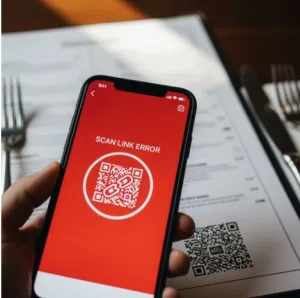
Before you send anything to print, get answers to these five questions:
- What happens to my codes if my trial or subscription ends? If the answer involves deactivation, the platform is using your printed materials as collateral.
- Is there a scan limit? A cap that silently kills a code after a few hundred scans is functionally identical to deactivation.
- Can I export or migrate my codes? If your QR code’s redirect URL is controlled by the platform with no portability, you are locked in by design.
- What is the platform’s Trustpilot or G2 rating? A pattern of 1-star reviews describing deactivated codes after trial expiration is a reliable signal.
- Does the platform make money from upgrades or from ransoms? The distinction defines whether the relationship is a service or a dependency.
The QR code industry is growing at double-digit rates into a $33 billion market. The technology works. The problem is a monetization model that converts printed materials into hostages. The platforms built on this model should expect that users, and eventually regulators, will treat it as what it is.
Frequently Asked Questions
What is a QR code subscription trap?
A QR code subscription trap is when a platform lets you create dynamic QR codes during a free trial, waits for you to print them on physical materials, and then deactivates the codes when the trial expires. You either pay a recurring subscription or lose every printed piece containing those codes. It works because dynamic QR codes route through the platform’s servers, which means the platform decides whether your code works.
Do QR codes stop working when you cancel your subscription?
On most platforms, yes. QR Code Generator by Egoditor, QRFY, and Beaconstac (Uniqode) all deactivate dynamic QR codes when a trial ends or a subscription is canceled. QR Tiger caps its free codes at 500 scans, then kills them silently. FreeQR is an exception: codes stay active permanently unless you delete them yourself.
How much does it cost to reprint materials with dead QR codes?
A commercial print run for product labels runs $5,000 to $40,000 depending on volume. Wedding stationery reprints have been reported at $175 to several thousand dollars. That does not include redistribution, warehoused inventory disposal, or the brand damage from customers who scanned a dead code and blamed your business.
Is the FTC cracking down on QR code subscription traps?
Not yet specifically, but the broader crackdown is well underway. The FTC hit Amazon with a $2.5 billion settlement in September 2025 for subscription dark patterns. Chegg paid $7.5 million, Match Group paid $14 million. On January 30, 2026, the FTC restarted its negative option rulemaking. The subscription trap model used by QR code platforms fits the pattern the FTC is going after.
Are there QR code generators without subscription traps?
Yes. FreeQR runs on a “delete-only” policy: codes created on the free plan stay active permanently. No trial countdown, no scan caps, no deactivation on cancellation. The business model is selling voluntary upgrades (team collaboration, higher volumes, advanced customization) instead of using code deactivation as leverage. When evaluating any platform, check whether the free plan is permanent, whether codes survive cancellation, and whether the terms mention deactivation or expiration.