As of March 17, 2026, the global industrial landscape is undergoing a profound transformation, and few companies sit at the epicenter of this shift as strategically as CF Industries Holdings, Inc. (NYSE: CF). Long regarded as a "boring" cyclical fertilizer play, CF has recently emerged as a high-octane performer in the S&P 500. This metamorphosis is driven by a convergence of factors: a structural "nitrogen scarcity" in global markets, geopolitical instability in the Middle East, and the company’s aggressive pivot toward becoming a primary supplier of clean energy via blue ammonia. With the stock hitting all-time highs above $135 this month, investors are increasingly viewing CF not just as a crop nutrient provider, but as a critical infrastructure play for the 21st-century energy transition.
Historical Background
CF Industries' journey began in 1946 as the Central Farmers Fertilizer Company, a cooperative owned by regional agricultural organizations. For decades, it operated under a mission to provide stable, low-cost nutrients to North American farmers. This cooperative roots system instilled a culture of operational efficiency and logistical prowess.
The company transitioned into a public corporation in 2005, a move that allowed it to tap capital markets and aggressively consolidate. The most significant milestone in its modern history occurred in 2010 with the acquisition of Terra Industries, followed by a massive capacity expansion program in 2013-2016. These moves solidified CF’s position as the largest nitrogen producer in the world. By 2020, CF had shifted its focus from volume growth to value optimization, setting the stage for its current dominance in the low-carbon hydrogen economy.
Business Model
CF Industries operates on a deceptively simple but powerful economic engine: the "Gas Spread." The company converts natural gas—its primary feedstock—into nitrogen-based products. Because CF’s manufacturing footprint is concentrated in North America, it enjoys access to cheap, abundant natural gas from the Henry Hub.
Conversely, the global price of nitrogen is typically set by the marginal producers in Europe and Asia, who face significantly higher energy costs. This disparity allows CF to generate massive margins when global energy prices are high.
- Revenue Segments: The company produces anhydrous ammonia, granular urea, urea ammonium nitrate (UAN), and ammonium nitrate (AN).
- Distribution: Its sophisticated network of pipelines, barges, and rail cars allows it to deliver product more efficiently than any domestic rival, providing a "moat" of logistics that is difficult to replicate.
Stock Performance Overview
The performance of CF stock over the last decade illustrates its transition from a cyclical laggard to a growth leader:
- 1-Year (Mar 2025 – Mar 2026): The stock has surged approximately 72%. This rally was fueled by a rotation into "hard assets" and fears of supply disruptions in the Middle East, which sent nitrogen prices to multi-year highs.
- 5-Year: Up ~120%. The 2022 energy crisis served as a permanent reset for the stock's valuation, as investors realized the long-term structural advantage of North American production.
- 10-Year: CF has outpaced many of its peers with an average annual EPS growth of 11.7%, driven by disciplined capital allocation and aggressive share buybacks.
Financial Performance
CF’s full-year 2025 results, reported in February 2026, were nothing short of stellar.
- Revenue: Reached $7.08 billion, a 22.8% year-over-year increase.
- Profitability: Adjusted EBITDA stood at $2.89 billion, with gross margins hovering near 40%.
- Balance Sheet: The company has used its windfall profits to de-lever significantly. Debt currently stands at $3.2 billion against $2.0 billion in cash, resulting in a healthy Debt-to-Equity ratio of 0.41.
- Shareholder Returns: In 2025, CF retired approximately 10% of its outstanding shares through a $1.34 billion buyback program, a move that has provided a massive tailwind to Earnings Per Share (EPS).
Leadership and Management
On January 4, 2026, the company entered a new era with Christopher D. Bohn taking the helm as President and CEO, succeeding long-time leader Tony Will. Bohn, who previously served as both CFO and COO, is widely viewed by Wall Street as a "safe pair of hands" with a deep understanding of the company’s capital structure. His strategy, dubbed "Clean Energy 2.0," focuses on capital discipline while navigating the high-stakes transition to blue ammonia. Under Bohn, the management team has maintained a reputation for transparency and aggressive return of capital to shareholders.
Products, Services, and Innovations
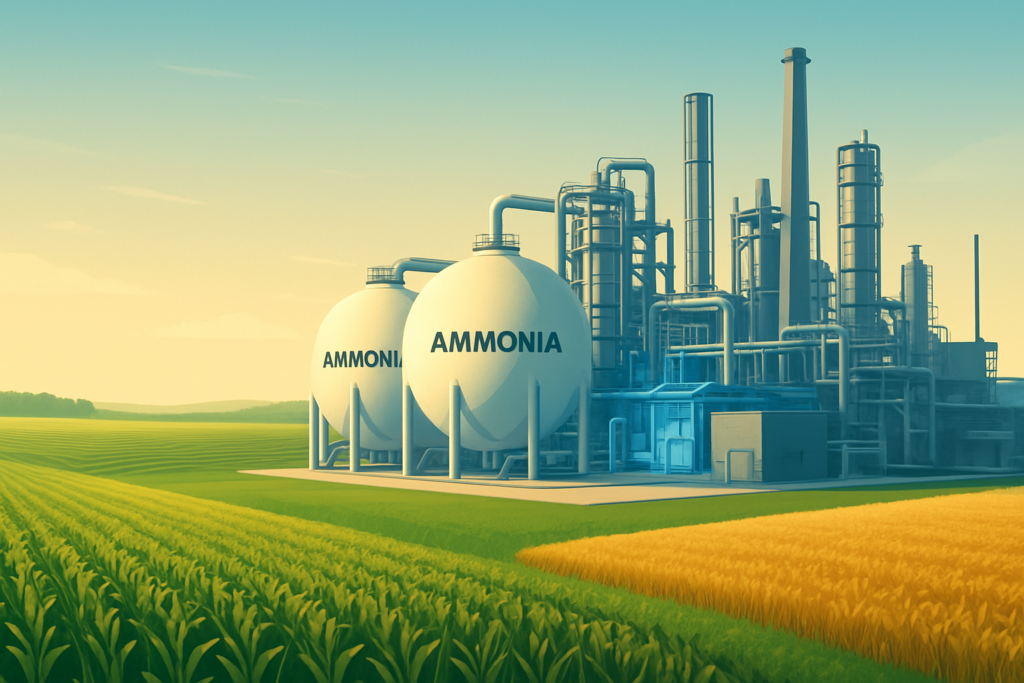
The jewel in CF’s crown is its focus on Blue Ammonia. Unlike traditional ammonia, blue ammonia is produced using carbon capture and sequestration (CCS) to mitigate its environmental impact.
- The Blue Point Complex: A $4 billion joint venture in Louisiana received its final investment decision in 2025. This facility is expected to be a cornerstone of global clean energy exports to Japan and Korea.
- Innovation Pivot: Interestingly, in February 2026, CF announced it would scrap its 20 MW "Green Hydrogen" (electrolysis-based) project in Donaldsonville, taking a $51 million write-down. This move signals a pragmatic shift: management believes blue ammonia (using natural gas + CCS) is currently the only commercially viable path for the industry.
Competitive Landscape
CF competes in a global market, but its primary rivals face distinct challenges:
- Nutrien (NYSE: NTR): While larger by revenue, Nutrien’s margins are often diluted by its massive retail operations. CF remains a "purer" play on nitrogen production.
- Yara International: The European giant is perpetually handicapped by high EU natural gas costs and the increasing burden of carbon taxes.
- The "North American Moat": CF’s proximity to Henry Hub gas and the U.S. Gulf Coast export terminals gives it a $100-$200 per ton cost advantage over international competitors during periods of energy volatility.
Industry and Market Trends
The nitrogen market in early 2026 is defined by "The New Normal" of volatility.
- Geopolitical Risk: Potential closures or disruptions in the Strait of Hormuz have put a premium on North American supply.
- Decarbonization Demand: Beyond agriculture, ammonia is emerging as a leading candidate for zero-carbon shipping fuel (IMO 2030) and coal co-firing in Asian power plants.
- Natural Gas Trends: While U.S. gas prices are projected to rise to the $4.00–$4.30/MMBtu range in 2026, the global spread remains wide enough to sustain CF’s profitability.
Risks and Challenges
Despite the bullish narrative, CF faces significant headwinds:
- Antitrust Scrutiny: The U.S. Department of Justice (DOJ) initiated a probe into the fertilizer industry in late 2025, investigating potential price-fixing. This remains a significant valuation overhang.
- Operational Outages: The Yazoo City complex is currently facing a major outage, with production not expected to resume until Q4 2026. This reduces volume in a high-price environment.
- Feedstock Volatility: Any unforeseen spike in U.S. natural gas prices toward the $6.00 mark would sharply compress margins.
Opportunities and Catalysts
- 45Q Tax Credits: Under the Inflation Reduction Act, CF is poised to receive $85 per ton for sequestered carbon. Analysts expect these credits to become a massive EBITDA driver by 2027.
- Low-Carbon Premium: Japanese and European buyers are already showing a willingness to pay a premium for certified low-carbon ammonia to meet their own ESG mandates.
- M&A Potential: With a massive cash pile, CF remains a potential acquirer of smaller, distressed nitrogen assets in South America or Europe.
Investor Sentiment and Analyst Coverage
Wall Street remains somewhat divided. While some analysts maintain a "Hold" rating due to the stock's rapid run-up, others argue that CF is a "Physically-Backed Nvidia"—a company producing an essential, high-demand commodity with a structural technological and geographic advantage.
- Price Targets: Range from a conservative $72 to bullish calls exceeding $125.
- Institutional Support: High levels of institutional ownership suggest that the "smart money" views CF as a long-term core holding in the energy transition space.
Regulatory, Policy, and Geopolitical Factors
Geopolitics is a double-edged sword for CF. While global instability drives up prices, it also complicates supply chains. On the policy front, the U.S. government's commitment to the 45Q tax credit is the single most important factor for CF's "Blue" strategy. Additionally, the EU's Carbon Border Adjustment Mechanism (CBAM) could eventually act as a tariff on high-carbon competitors, further benefiting CF's cleaner production profile.
Conclusion
CF Industries (NYSE: CF) has evolved from a cyclical agricultural supplier into a dominant global energy and nutrient platform. By leveraging the lowest-cost feedstock in the world and pivoting toward the burgeoning blue ammonia market, the company has created a formidable "moat." While risks like the DOJ probe and rising domestic gas prices deserve attention, the company’s massive free cash flow and aggressive share buybacks provide a significant cushion. For investors, CF represents a rare hybrid: a high-yield, value-priced entity with the growth catalysts of a green energy innovator.
This content is intended for informational purposes only and is not financial advice.