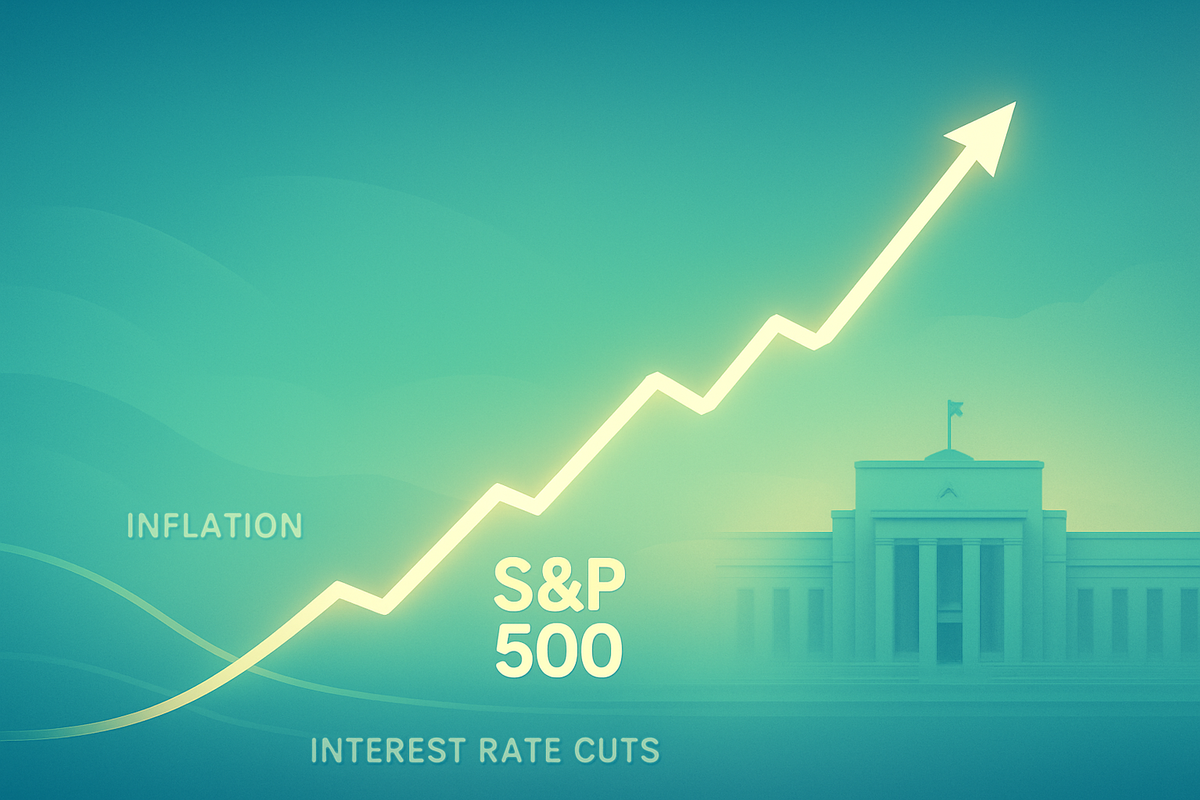
The S&P 500 is currently making a strong ascent towards uncharted territory, hovering just shy of its all-time record highs. This bullish momentum is largely attributed to recent "light inflation readings" that have reassured markets, coupled with intense anticipation surrounding the upcoming Personal Consumption Expenditures (PCE) report. Investors are increasingly optimistic that the Federal Reserve will respond to these disinflationary signals with a series of interest rate cuts, thereby stimulating economic activity and boosting corporate profitability.
As of December 5, 2025, the benchmark index is less than 1% away from its previous closing high of 6890.89, achieved in October 2025. This upward trajectory reflects a prevailing market sentiment that the U.S. economy is on track for a "soft landing"—a scenario where inflation cools without triggering a severe recession. The prospect of cheaper borrowing costs has made equities more attractive, driving capital into the market and setting the stage for what many hope will be a robust year-end rally and sustained growth into 2026.
Detailed Coverage: The Disinflationary Tailwind and Market's Response
The current market rally is a direct consequence of several key economic data releases that have painted a picture of moderating inflation, leading to a significant shift in Federal Reserve policy expectations.
A pivotal "light inflation reading" came from the November 2024 Personal Consumption Expenditures (PCE) report, released on December 20, 2024. This report, which is the Federal Reserve's preferred measure of inflation, showed softer-than-expected figures. The headline PCE increased 2.3% year-over-year, below the 2.4% estimate, while the core PCE (excluding volatile food and energy prices) rose by a mere 0.1% month-over-month, better than the 0.2% forecast. This data provided critical evidence that inflationary pressures were easing.
Further bolstering this narrative was the December 2024 Consumer Price Index (CPI) report, released on January 15, 2025. The core CPI rose 3.2% annually, less than the 3.3% expected, marking the smallest increase since July 2024. This consistent trend of cooling inflation has been instrumental in shaping the market's current optimistic outlook. Later, the August 2025 Producer Price Index (PPI) report, released on September 10, 2025, showed the first drop in producer prices in four months, further fueling rate cut expectations.
The timeline of events leading to this moment began with the Federal Reserve initiating interest rate cuts in September 2024, followed by additional reductions in November and December of the same year, bringing the federal funds rate to a target range of 4.25%-4.5%. While the Fed paused its rate-cutting cycle in January and March 2025, citing a "wait-and-see" approach, the subsequent "light inflation readings" and a moderating labor market have rekindled strong expectations for further easing. Traders are now pricing in an 87% probability of a 25-basis-point rate cut by the Federal Reserve at its upcoming meeting on December 9-10, 2025.
The market's initial reactions to these developments extended beyond just the S&P 500. Following the November 2024 PCE report, the S&P 500 jumped 1.58%, and after the December 2024 CPI report, it gained 1.8%. The tech-heavy Nasdaq Composite soared 2.5% after the December CPI report, and small-cap futures also reacted strongly, rising around 2.5%. Bond yields, particularly for the 10-year and two-year Treasuries, generally fell in response to the inflation data, signaling a re-pricing of future rate cuts. The US Dollar also experienced bearish pressure. Sector-wise, while technology (especially AI-driven companies) has been a primary driver of S&P 500 returns, there have been periods of rotation, with defensive sectors outperforming during market stumbles, and more recently, healthcare leading gains in November 2025.
Corporate Landscape: Winners and Losers in a Lower Rate Environment
The prospect of sustained light inflation and impending interest rate cuts creates a distinct landscape of winners and losers across various sectors and public companies. Lower borrowing costs and an invigorated economy generally favor growth-oriented and capital-intensive businesses, while some sectors might face narrower margins or increased competition.
Companies and Sectors Poised to Win:
- Technology and Consumer Discretionary: These sectors are highly sensitive to interest rates. Lower rates reduce the cost of capital, making future earnings more valuable and debt-fueled expansion cheaper. This particularly benefits growth stocks and small-cap companies. Consumer discretionary firms thrive as consumers have more disposable income and access to cheaper credit. Companies involved in innovation, often relying on debt, are set to benefit.
- Real Estate and Home Construction: Cheaper mortgage rates directly stimulate housing demand, benefiting homebuilders like D.R. Horton (NYSE: DHI), Pultegroup (NYSE: PHM), and Lennar (NYSE: LEN). Construction equipment makers such as Caterpillar (NYSE: CAT) and building material suppliers like Builders FirstSource (NYSE: BLDR) and Mohawk Industries (NYSE: MHK) also stand to gain from increased construction activity. Real estate investment trusts (REITs) like Digital Realty Trust (NYSE: DLR) also see reduced borrowing costs and enhanced dividend appeal.
- Financials (Regional Banks & Investment Banks): While large banks can be mixed, regional banks may see increased loan demand and reduced loan defaults. Investment banks like Goldman Sachs (NYSE: GS) could benefit from stimulated capital markets activity, including IPOs and M&A.
- Industrials: Capital-intensive industrial projects become more economically viable with lower borrowing costs.
- Small-Cap Stocks: Historically, small-caps are highly responsive to rate cuts, which improve liquidity and reduce their cost of capital, enhancing growth prospects.
- Utilities and Telecommunications: These dividend-paying sectors become more attractive as bond yields fall. Companies with substantial debt, such as AT&T (NYSE: T), could see lower refinancing costs.
Companies and Sectors That Might Face Challenges or Losses:
- Financial Institutions (Nuance): While benefiting from increased lending, prolonged periods of very low interest rates could eventually squeeze net interest margins for some banks, although the immediate impact of initial cuts is often positive.
- Sectors Highly Sensitive to Rising Input Costs (if inflation picks up unexpectedly): Although the current environment is "light inflation," if unexpected commodity or labor price increases occur, companies unable to pass these costs to consumers could face margin compression. Historically, consumer staples and utilities have shown negative correlations with high inflation due to increased input prices, though they also benefit from lower rates.
- Emerging Market Sectors (with high leverage/trade tensions): Some emerging market sectors, particularly smaller, unrated entities in industries like automotives, metals and mining, and textiles, may struggle if they have high leverage and debt-rollover needs, especially amid global trade tensions and high U.S. tariffs.
- Small Businesses (Persistent Credit Challenges): Despite the overall economic optimism, some small businesses, particularly in manufacturing, still face challenges like soaring raw material costs and elevated delinquency rates on financial trades.
Wider Significance: A Pivotal Shift in Economic Tides
The S&P 500's current trajectory, fueled by disinflation and anticipated rate cuts, marks a significant moment in the broader economic and financial landscape. It represents a pivotal shift from a period of aggressive monetary tightening to one of easing, with profound implications for industry trends, policy, and historical comparisons.
This event fits into broader industry trends by potentially signaling a shift in market leadership. While the "Magnificent Seven" mega-cap tech stocks have disproportionately driven the S&P 500's gains for years, their elevated valuations are under scrutiny. There are nascent signs of a rotation towards other sectors, including healthcare and biotech, suggesting a broadening market rally. This could mean a potential comeback for value stocks, which have lagged growth stocks for over a decade and are currently trading at a discount. In the bond market, the anticipation of rate cuts typically leads to lower bond yields, making existing bonds with higher yields more attractive and potentially sparking a rally in fixed-income assets. Expectations are for government bonds, particularly in the U.S., to rally in early 2026.
The ripple effects on competitors and partners are manifold. Businesses that focused on cost-cutting during high-interest periods may now pivot to growth initiatives and increased capital expenditures, taking advantage of cheaper borrowing. Supply chain partners could see increased demand. However, companies with already elevated valuations, especially those where future growth is largely priced in, face correction risks if earnings disappoint. The high concentration of the S&P 500 in a few mega-cap tech stocks also presents a concentration risk, where a significant correction in these leaders could have a cascading impact across the broader market, affecting numerous smaller companies reliant on their innovation and spending.
From a regulatory and policy perspective, the Federal Reserve faces a delicate balancing act. Its dual mandate of maximum employment and price stability guides its actions. A series of rate cuts would signify a major policy shift, moving from tightening to easing, which could influence broader fiscal policy and international trade. Divisions within the Fed regarding the timing and pace of cuts, alongside potential leadership changes (e.g., Kevin Hassett possibly replacing Jerome Powell), could add complexity. The Fed must carefully monitor for any resurgence of "sticky" inflation, even as it supports the labor market.
Historical precedents show that periods of low inflation and anticipated rate cuts have often spurred market rallies. Since 1980, when the Fed initiated rate cuts with the S&P 500 near all-time highs, the index averaged a 9.8% gain over the subsequent 12 months, with positive returns in every instance. However, outcomes can vary; some cycles saw significant declines following initial cuts (e.g., 1973, 2001, 2007), often in the context of broader economic distress. Conversely, cycles like 1982 and 2019 witnessed substantial market surges. Analysts suggest that positive earnings growth, rather than just rate cuts, is a more reliable predictor of S&P 500 performance. While some draw parallels between the current AI-driven market concentration and the dot-com bubble, proponents argue that strong corporate earnings currently support valuations, distinguishing it from an "irrational" bubble.
What Comes Next: Navigating the Path Ahead
The coming months and years present a nuanced outlook for the S&P 500 and the broader economy, balancing the optimism of disinflation and rate cuts with inherent risks and evolving global dynamics.
In the short-term (late 2025 - early 2026), the S&P 500 is likely to experience continued upward pressure, potentially culminating in a year-end "Santa rally" driven by the high probability of a December 2025 rate cut. However, this bullish sentiment is tempered by a lack of strong momentum and lingering concerns over elevated valuations in mega-cap tech stocks.
The long-term outlook (2026 and beyond) remains generally constructive. S&P 500 earnings growth is projected at 10-15% in 2025 and 7-10% in 2026, with some analysts forecasting the index could reach 7,500 by the end of 2026, or even surpass 8,000 with more aggressive Fed easing. Fidelity anticipates broad-based earnings growth in 2026, extending beyond the "Magnificent 7" to include non-tech and smaller firms. However, high forward P/E ratios, significantly above historical averages, remain a key concern that could limit further appreciation.
For the broader economy, the "soft landing" scenario remains the base case, where growth decelerates without entering a recession. This hinges on the Federal Reserve's adept management of interest rates, the continued boost from AI-driven productivity gains, and resilient consumer spending. Real GDP growth for the U.S. is forecasted at 1.8% in 2026, potentially experiencing a "tale of two halves" with stronger growth in the first half fueled by tax refunds and AI investment, moderating later.
Potential scenarios and outcomes include:
- Soft Landing (Base Case): Economic growth slows but avoids recession, supported by central bank policies and AI innovation.
- Mild Recession (Downside Risk): If the economy slows more than anticipated due to lagged monetary policy effects, tariffs, or immigration restrictions, a mild recession could occur, leading to negative GDP growth and rising unemployment.
- Continued Growth (Upside Scenario): Stronger-than-expected consumer demand, business investment, and accelerated AI adoption could drive U.S. real GDP above 3% in 2026, especially if inflation eases faster and the Fed cuts rates more aggressively.
Strategic pivots and adaptations will be crucial for businesses and investors. Businesses must prioritize supply chain resilience, diversify sourcing, and consider reshoring production. Financial prudence, robust scenario planning, and exploring diverse funding channels are essential. Rapid AI integration is critical for operational efficiency, requiring significant investment (3-7% of revenue) and workforce reskilling. Investors should consider maintaining exposure to high-quality U.S. large-cap equities, looking beyond mega-cap tech for broader earnings growth. As cash yields fall, a shift into targeted bonds (short-to-intermediate duration, high-quality credit) and alternative investments for diversification is advisable.
Emerging market opportunities are significant, with EMs projected to outpace advanced economies, growing by 3.9-4.1% in 2026. India, ASEAN countries, Mexico, and Vietnam are identified as key growth hubs, benefiting from domestic demand, near-shoring, and tech leadership. However, challenges include global trade tensions, tariffs, geopolitical instability, and China's moderating growth.
Comprehensive Wrap-up: A Market in Transition
The S&P 500's current flirtation with record highs is a testament to the market's resilience and its forward-looking nature, largely driven by the hopeful narrative of a "soft landing" facilitated by easing inflation and anticipated Federal Reserve interest rate cuts. This period marks a critical transition, moving from an era of monetary tightening to one of easing, with profound implications for investors and the broader economy.
Key Takeaways: The market is now looking past short-term volatility, focusing on the Fed's pivot towards an easing monetary policy. While mega-cap tech stocks have been dominant, there are encouraging signs of a broadening market rally, with earnings growth expected to extend to non-tech and smaller companies in 2026. Despite persistent "bubble chatter" due to elevated valuations, robust corporate earnings and the transformative potential of AI provide a fundamental underpinning. The U.S. economy, supported by consumption, fiscal stimulus, and AI investment, appears resilient.
Assessing the Market Moving Forward: The outlook for 2026 remains cautiously constructive, with analysts forecasting further market gains, potentially reaching 7,300 for the S&P 500 by mid-2026, contingent on avoiding a recession and the continued positive unfolding of the AI story. Continued rate cuts are expected to bolster interest-rate-sensitive sectors and small companies. However, investors should be prepared for potential choppiness, particularly around Fed announcements, and remain vigilant against unexpected shifts in economic data or geopolitical developments.
Significance and Lasting Impact: This period will be a crucial case study in the effectiveness of monetary policy in navigating inflation while supporting employment. The sustained AI-driven transformation is expected to reshape industries and drive long-term productivity gains. A broadening of market leadership could lead to a more diversified investment landscape. The interplay of monetary policy, fiscal stimulus (e.g., corporate tax breaks enacted in 2025), and technological advancements could define a new economic paradigm for years to come.
What Investors Should Watch For in Coming Months: Vigilance is key. Investors should closely monitor:
- Specific Economic Indicators: The Personal Consumption Expenditures (PCE) price index, especially core PCE, for sustained disinflation. Labor market data (jobless claims, unemployment rates) for signs of a healthy but cooling market. GDP growth to ensure the economy avoids recession. Consumer sentiment and spending as key drivers of corporate profits. Manufacturing data for industrial health. Treasury yields for market expectations on inflation and growth.
- Central Bank Communications: The Federal Reserve's (FOMC) December 2025 meeting and subsequent forward guidance will be critical for the pace of future rate cuts. Speeches from Fed officials and the "Dot Plot" will offer insights into policy direction. Watch for any potential changes in Fed leadership. Also, keep an eye on other major central banks like the European Central Bank (ECB) and the Bank of Japan (BoJ), as their policies can have global ripple effects.
- Geopolitical Developments: Evolving trade policies (e.g., U.S.-China rivalry, tariffs), ongoing conflicts, and elections in major economies can introduce policy uncertainty and market volatility. Global competition in AI and semiconductors, fiscal sustainability, and climate risks also warrant close attention.
By carefully observing these multifaceted factors, investors can better understand the evolving market landscape and make informed decisions as the economy transitions into a new phase of growth and monetary policy.
This content is intended for informational purposes only and is not financial advice