1. Introduction
Amazon (AMZN/NASDAQ) remains a formidable entity in the global economic landscape, constantly evolving beyond its foundational e-commerce roots into a diversified technology behemoth. As of December 11, 2025, the company continues to command significant attention from financial journalists and equity analysts due to its strategic positioning across multiple high-growth sectors, innovative investments, and ongoing efforts to enhance profitability.
At its core, Amazon.com, Inc. is recognized as the world's largest online retailer, a position it has maintained and expanded since its inception. The company's operations are broadly categorized into three primary segments: North America retail, International retail, and Amazon Web Services (AWS). Its revenue streams are impressively diverse, with online stores still forming the largest component, complemented by substantial contributions from third-party seller services, subscription offerings like Amazon Prime, physical retail outlets, and a rapidly growing digital advertising business. Beyond retail, Amazon's ecosystem encompasses a range of consumer electronics such as Alexa, Kindle, and Fire TV, alongside extensive digital media content through Prime Video. Notably, Amazon Web Services (AWS) stands out as the company's most profitable division, consistently generating the majority of Amazon's operating income despite representing a smaller percentage of overall sales. Amazon's enduring market leadership in both e-commerce and cloud services is underpinned by its relentless focus on technological innovation and operational efficiencies, particularly in its sophisticated logistics and fulfillment networks.
Amazon is currently a focal point for several compelling reasons:
- Aggressive AI Investments and Growth: The company is making substantial investments in artificial intelligence, developing custom AI chips such as Trainium, Inferentia, and Graviton5, and expanding its Bedrock platform to support enterprise-level generative AI applications. This strategic focus is designed to drive internal efficiencies, monetize AI capabilities for third-party developers, and significantly bolster AWS's growth, which recently reaccelerated to 20% in the third quarter. A notable development in November 2025 was a $38 billion deal with OpenAI to provide cloud-computing services, underscoring Amazon's deepening commitment to AI infrastructure.
- Reacceleration of AWS and Cloud Dominance: AWS continues to be a critical growth engine, with analysts projecting sustained revenue expansion driven by increasing demand for both core cloud services and AI workloads. Its substantial backlog, reported at $200 billion excluding the OpenAI deal, provides strong visibility into future revenue streams.
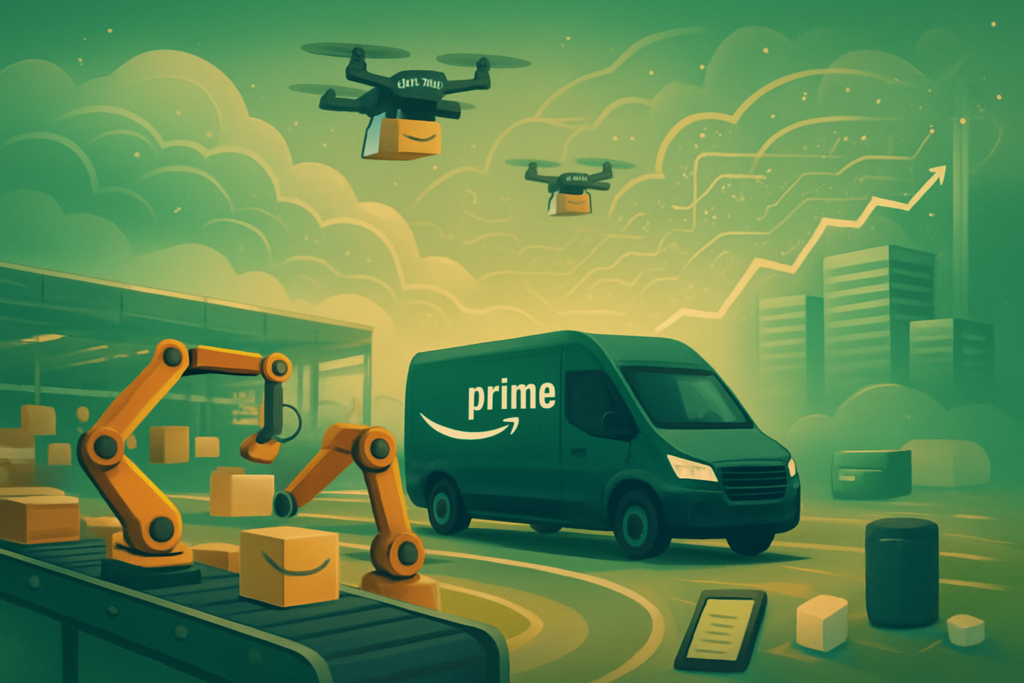
- Enhanced E-commerce Profitability and Efficiency: Amazon is actively working to improve the profitability of its e-commerce segment through significant investments in automation, robotics, and advanced logistics to optimize delivery speeds and inventory placement. These efforts are expected to lower operating costs and expand margins.
- Underappreciated Advertising Business: Amazon's advertising division is emerging as a powerful, high-margin growth driver, achieving over 20% annual growth since 2019. Its low operating costs make it a significant contributor to the company's overall operating income, often viewed as an "underappreciated" aspect by the market.
- Global Expansion and Strategic Capital Allocation: The company is committing substantial capital to international markets, exemplified by a recent announcement of a $35 billion investment in India by 2030, targeting AI-driven digitization, export growth, and job creation. This demonstrates Amazon's commitment to long-term global market penetration.
For financial journalists and equity analysts, Amazon presents a complex yet highly compelling research subject, especially in the current market climate of December 2025. Amazon's trajectory in late 2025 is not just about its scale, but about its strategic agility in leveraging its diverse portfolio and aggressive innovation, particularly in AI, to sustain long-term growth and enhance shareholder value in an increasingly complex global economy. These dynamics make AMZN an indispensable subject for in-depth financial scrutiny.
2. Historical Background
Amazon (AMZN) has transformed from a modest online bookstore into a global technology and retail powerhouse, a journey marked by relentless innovation, strategic diversification, and a deep-seated customer-centric philosophy. For a financial journalist and equity analyst, understanding these foundational elements and pivotal transformations is crucial to grasping Amazon's enduring market position and future trajectory.
Amazon's Founding Story
Amazon was founded by Jeff Bezos on July 5, 1994, from his garage in Bellevue, Washington. Initially named "Cadabra," a play on "abracadabra," the name was quickly changed to Amazon in November 1994 after a lawyer misheard it as "cadaver." Bezos chose "Amazon" to evoke the vastness of the Amazon River, symbolizing his ambition to build the world's largest bookstore.
Bezos's entrepreneurial drive stemmed from a "regret minimization framework," aiming to avoid regretting not participating in the burgeoning internet economy, which he observed was growing at an astonishing rate of 2,300% per year in early 1994. He identified books as the ideal initial product due to their low cost, universal demand, and the absence of a comprehensive online catalog at the time. The company also benefited from its strategic proximity to a major book distribution warehouse.
The initial capital for Amazon largely came from Bezos's parents. The Amazon.com website officially launched for public sales on July 16, 1995. Within just two months of its launch, Amazon was selling books to customers in all 50 U.S. states and over 45 countries, generating weekly sales of up to $20,000.
Early Milestones
Amazon's early years were characterized by rapid growth and strategic expansion that laid the groundwork for its future dominance:
- Reincorporation and IPO (1996-1997): The company was reincorporated in Delaware in 1996. A pivotal moment arrived on May 15, 1997, when Amazon went public with an Initial Public Offering (IPO) on the NASDAQ under the ticker symbol AMZN, pricing at $18.00 per share and raising $54 million. This capital infusion was crucial for fueling further expansion and infrastructure development.
- Product Diversification Begins (1998-2000): Although initially focused on books, Bezos always envisioned Amazon as an "everything store." This vision began to materialize in 1998 with the expansion into music and video sales, alongside the acquisition of the Internet Movie Database (IMDb). By 1999, Amazon had added home-improvement products, software, video games, and gift items. A significant shift occurred in 2000 when Amazon opened its platform to third-party sellers through the Amazon Marketplace, dramatically expanding product selection without requiring Amazon to hold additional inventory.
- First Profitability (2001-2003): After years of prioritizing growth and reinvesting profits, Amazon achieved its first profitable quarter in Q4 2001. The company recorded its first full year of net profit in 2003, reporting $35 million, a notable turnaround from previous losses. This demonstrated the viability of its long-term growth strategy.
Key Transformations Over Time
Amazon's trajectory since its early days has been characterized by bold strategic shifts and the creation of entirely new business lines, fundamentally transforming not only its own operations but also entire industries.
- The Genesis of Amazon Web Services (AWS) (early 2000s – 2006): One of Amazon's most impactful transformations began internally. In the early 2000s, Amazon developed sophisticated internal tools to manage and scale its rapidly growing e-commerce infrastructure. By 2003, Amazon recognized the potential to offer this scalable infrastructure as a service to external customers. This led to the launch of Amazon Simple Queue Service (SQS) in November 2004, its first public infrastructure service. The full launch of Amazon S3 (Simple Storage Service) followed in March 2006, and Amazon EC2 (Elastic Compute Cloud) in August 2006, laying the foundation for Amazon Web Services. AWS has since become a dominant force in cloud computing, consistently contributing a significant majority of Amazon's operating profits. By 2024, its service businesses, including AWS and advertising, represented nearly 60% of Amazon's income, surpassing traditional retail sales.
- The Launch of Amazon Prime (2005): In February 2005, Amazon introduced Amazon Prime, a groundbreaking subscription service offering unlimited two-day shipping on eligible items for an annual fee of $79. This initiative revolutionized customer expectations for online shopping, prioritizing speed and convenience, and significantly boosted customer loyalty and purchase frequency. Over time, Prime's benefits expanded far beyond shipping to include digital streaming services like Prime Video (initially Amazon Unbox in 2006, then Amazon Instant Video in 2011, and integrated into Prime Video by 2011-2014), music, unlimited photo storage, and access to e-books. The annual Prime Day sales event, celebrating the company's 20th anniversary, was first launched in 2015.
- Pioneering Devices and AI (2007 – present): Amazon's innovation extended into hardware. In 2007, the company launched the Kindle e-reader, fundamentally transforming the publishing industry and how people consume books. This was followed by the introduction of the Amazon Echo, featuring the AI assistant Alexa, in 2014, marking Amazon's significant entry into the smart home market and the broader field of artificial intelligence. Subsequent acquisitions like Ring (2018) further cemented its presence in smart home security.
- Expansion into New Sectors and Strategic Acquisitions: Amazon continued its aggressive diversification through acquisitions and new ventures. The company launched Fulfilled by Amazon (FBA) in 2006, allowing third-party sellers to leverage Amazon's logistics infrastructure. Notable acquisitions include Audible (2008), Zappos (2009), and Twitch (2014), expanding its footprint in audio content, online retail, and live streaming, respectively. A landmark acquisition was Whole Foods Market in 2017 for $13.7 billion, signaling Amazon's deep dive into the physical grocery sector and integrating digital technology into traditional retail. Amazon has also ventured into autonomous vehicles with the acquisition of Zoox in 2020 and is developing Project Kuiper, a low Earth orbit satellite internet constellation, with initial launches planned for early 2026.
- Evolving Business Model and Leadership (present day): As of late 2025, Amazon's business model has significantly evolved, with a pronounced shift towards high-margin services such as advertising, AWS, and logistics, rather than solely traditional retail. Third-party sellers now account for over 60% of sales on Amazon's platform. In a significant leadership transition, Jeff Bezos stepped down as CEO in 2021 to become executive chairman, with Andy Jassy taking over as CEO.
Amazon's history is a testament to its ability to continuously innovate, adapt, and expand into new markets, leveraging its core strengths in technology, logistics, and customer focus to maintain its position as a global leader.
3. Business Model
Amazon (AMZN) continues to evolve its expansive business model, demonstrating diversified revenue streams, a vast array of product lines and services, distinct operational segments, and a broad, deeply engaged customer base as of late 2024 and projected through 2025. The company's strategic investments in cloud computing, artificial intelligence (AI), and logistics continue to solidify its market leadership across multiple sectors.
Revenue Sources
Amazon's revenue streams are highly diversified, reflecting its multi-faceted business model. In fiscal year 2024, the company generated $638 billion in revenue, growing 11% year-over-year. For the twelve months ending September 30, 2025, Amazon's revenue reached $691.33 billion, an 11.48% increase year-over-year.
Key revenue sources and their respective contributions in 2024 include:
- Online Stores: Representing direct product sales to consumers, this remains the largest segment, accounting for 38.72% of total revenue ($247.03 billion) in 2024.
- Third-Party Seller Services: This includes commissions, fulfillment fees (Fulfillment by Amazon – FBA), and other services for independent sellers on its marketplace. This segment generated $156.15 billion, or 24.5% of total revenue in 2024.
- Amazon Web Services (AWS): A significant profit driver, AWS offers cloud computing services. It contributed $107.56 billion to revenue in 2024, representing 16.86% of the total and growing 18.51% year-over-year from 2023. In Q3 2025, AWS revenue growth was 20.2% year-over-year.
- Advertising Services: Revenue from sponsored product ads, display, and video advertising is a rapidly growing segment, reaching $56.21 billion (8.81% of total revenue) in 2024, an increase of 19.84% from 2023. This segment saw 24% year-over-year growth in Q3 2025.
- Subscription Services: Primarily driven by Amazon Prime memberships, this segment accounted for $44.37 billion (7.0% of total revenue) in 2024, up 10.36% from 2023.
- Physical Stores: This includes sales from Whole Foods Market, Amazon Go, and Amazon Fresh, contributing $21.22 billion (3.33% of total revenue) in 2024.
- Other Services: This category made up 0.85% of total revenue in 2024, generating $5.43 billion.
Amazon's total revenue grew 11% in 2024 to $638 billion, with operating income improving 86% year-over-year to $68.6 billion. Projections for 2025 indicate a full-year revenue of approximately $700 billion.
Product Lines
Amazon offers an extensive and continually expanding array of product lines, catering to diverse consumer needs:
- Consumer Electronics: This includes Amazon's proprietary devices such as Echo smart speakers (including new Echo Show 8, Echo Show 11, Echo Dot 2025, Echo Studio 2025), Kindle e-readers (including new color versions and Kindle Scribe), Fire TV devices (Fire TV Stick 4K Select, Fire TV OMNI QLED Series), Ring smart home security products (new Ring 4K lineup, Ring Wire Doorbell Pro 4K), and Blink cameras (Blink Outdoor 2K Plus, Blink Mini 2K Plus, Blink Arc).
- Books and Media: Physical and digital books, audiobooks (Audible), music (Amazon Music), and video content (Prime Video). New Kindle devices, including a color version and a larger Scribe option, were launched in 2024.
- Apparel and Accessories: A wide selection of clothing, shoes, and jewelry.
- Home and Kitchen Goods: Products for home improvement, decor, appliances, and kitchen essentials, including trending items like insulated tumblers, Instant Pots, and air fryers.
- Groceries: Offered through Amazon Fresh and its acquisition, Whole Foods Market.
- Health and Personal Care: Includes offerings from Amazon Pharmacy, beauty products (e.g., CeraVe Daily Moisturizing Lotion, The Ordinary Hyaluronic Acid), and wellness items.
- Toys and Games: Children's toys and video games, with writing tablets being a high-demand product in 2025.
- Other Categories: Amazon's catalog comprises well over 350 million products, with some estimates exceeding 600 million when accounting for all global and third-party listings.
Services
Beyond physical products, Amazon provides a robust ecosystem of services:
- Amazon Web Services (AWS): The leading global cloud computing service, holding an estimated 31% of the total cloud market in 2024. AWS offers over 200 computing capabilities, including AI/Machine Learning, storage, databases, networking, analytics, and more. AWS is a key driver of Amazon's overall growth and profitability. Amazon is also heavily investing in new infrastructure and AI services, including custom AI silicon (Trainium2) and frontier foundation models like Amazon Nova, as well as generative AI (GenAI) services like Amazon SageMaker and Amazon Bedrock.
- Amazon Prime: A subscription service offering benefits such as free and fast shipping (including same-day and next-day delivery), access to Prime Video (original shows, movies, live sports including NBA and NASCAR coming in 2025), Amazon Music, Kindle Unlimited, and Prime Gaming.
- Advertising Services: Digital advertising solutions for brands and sellers on its platform, a high-margin business line that saw 24% year-over-year growth in Q3 2025.
- Fulfillment by Amazon (FBA): Provides storage, packaging, and shipping services for third-party sellers, enabling them to offer Prime-eligible items.
- Digital Content and Streaming: Encompasses Prime Video, Amazon Music, and Audible (audiobooks).
- Artificial Intelligence (AI) and Voice Assistants: Alexa, integrated into Echo devices, has an estimated 66% market share in the U.S. and is evolving with generative AI features under "Alexa+".
- Logistics and Delivery: Amazon continues to invest in and optimize its fulfillment networks, regionalization strategies, and same-day delivery capabilities, expanding sites to cover 140 metropolitan areas and enabling over 9 billion same or next-day deliveries globally.
- Project Kuiper: A low Earth orbit satellite network aiming to provide internet access to underserved rural markets globally, with initial production satellites launching in 2024 and over 3,200 satellites planned over the next few years.
Segments
Amazon organizes its operations into three primary reportable segments:
- North America: Encompasses retail sales of products and services, including third-party seller services, subscription services, and advertising services, to customers located in the United States, Canada, and Mexico. This segment saw an 11% year-over-year increase in Q3 2025. In 2024, North America revenue increased 10% year-over-year to $387 billion.
- International: Includes retail sales of products and services, along with third-party seller services, subscription services, and advertising services, to customers located outside North America. This segment experienced a 10% year-over-year increase in Q3 2025 (excluding foreign exchange). In 2024, International revenue grew 9% year-over-year to $143 billion.
- Amazon Web Services (AWS): This segment provides global cloud computing, storage, database, and other service offerings to customers worldwide. AWS revenue increased 19% year-over-year in 2024, reaching $108 billion. In Q3 2025, AWS revenue grew 20.2% year-over-year.
Customer Base
Amazon serves a vast and diverse global customer base:
- Individual Consumers: Amazon has over 310-315 million active users worldwide, with over 200 million in the U.S. alone. A large percentage of these customers (89%) exhibit loyalty to Amazon, with an 84% customer satisfaction score.
- Prime Members: The company boasts over 200 million Prime members globally, with approximately 180 million in the U.S. as of 2024. Prime members demonstrate high retention rates (93% after one year, 98% after two years) and increased spending (averaging $1,400 per year in the U.S.) compared to non-members.
- Third-Party Sellers: Millions of small and medium-sized businesses globally utilize Amazon's marketplace to sell their products. In 2024, independent sellers in the US averaged over $290,000 in annual sales on Amazon. As of early 2025, there are approximately 9.7 million sellers globally, with over 1.9 million in the U.S.
- Businesses and Enterprises (AWS): AWS caters to a wide spectrum of clients, ranging from startups to large enterprises, government agencies, and educational institutions worldwide. AWS maintains a strong competitive position in the global cloud market, commanding 30% market share as of Q4 2024.
- Developers and Content Creators: This group leverages AWS tools and services, Kindle Direct Publishing for authors, and Amazon Music for artists, forming an integral part of Amazon's ecosystem.
4. Stock Performance Overview
Amazon (AMZN) Stock: A Decade of Transformation and Volatility (2015-2025)
For Immediate Release – December 11, 2025
SEATTLE, WA – Amazon.com, Inc. (NASDAQ: AMZN) has demonstrated a remarkable journey of growth, innovation, and strategic diversification over the past decade, solidifying its position as a global technology and e-commerce behemoth. A detailed analysis of its stock performance from December 2015 to December 2025 reveals periods of explosive growth driven by its cloud computing arm, e-commerce dominance, and burgeoning advertising business, interspersed with significant volatility influenced by macroeconomic shifts, competitive pressures, and substantial strategic investments.
As of December 10, 2025, AMZN's closing price stood at approximately $231.78.
10-Year Performance (December 2015 – December 2025): A Diversified Conglomerate's Ascent
Over the long term, Amazon's stock has delivered an impressive narrative of wealth creation, generating a staggering return of 579.1% with an average annual return (CAGR) of 21.07% between December 5, 2015, and December 5, 2025. This decade marks Amazon's profound transformation from primarily an online retailer into a diversified technology conglomerate.
Key Growth Drivers:
- Explosive AWS Growth: Amazon Web Services (AWS) emerged as a cornerstone of the company's growth and profitability, becoming its highest-margin business segment. AWS cemented Amazon's leadership in cloud computing, holding a dominant 30% market share in cloud infrastructure globally as of 2025. Its robust and highly profitable nature has historically subsidized investments in other parts of the business.
- Global E-commerce Dominance: The relentless expansion of Amazon's e-commerce operations continued to capture market share from traditional brick-and-mortar retailers. The company's U.S. e-commerce market share is projected to exceed 40% in 2025. Critical growth drivers included continuous investments in logistics and fulfillment, enhancing customer experience with faster delivery speeds.
- Diversification into High-Margin Segments: Amazon strategically expanded into new, high-margin areas, notably digital advertising and streaming services (Prime Video). The advertising business grew rapidly, projected to exceed $60 billion in retail media ad revenue in 2025 and contributing significantly to overall profits.
- Continuous Innovation and AI Investments: Throughout the decade, Amazon consistently invested in technological advancements, including artificial intelligence (AI) and machine learning (ML), integrating them across its services from cloud capabilities to personalized shopping experiences. This innovation has been pivotal in maintaining its competitive edge.
Notable Moves:
This period saw consistent revenue growth, from $89 billion in 2014 to $638 billion in 2024, an increase of over 616%. The strong operational performance, particularly from AWS, led to significant improvements in overall profitability, which is a fundamental driver of its stock price.
5-Year Performance (December 2020 – December 2025): Pandemic Surge and Post-Peak Realignment
Over the past five years, from December 10, 2020, to December 10, 2025, Amazon's stock returned 50.1%, experiencing a more volatile trajectory despite solid overall gains. Another estimate shows an 81% gain, averaging 16.2% annually, with a 5-year compound annual growth rate (CAGR) of 7.75% between December 5, 2020, and December 5, 2025.
Notable Moves:
- COVID-19 Pandemic Surge (2020-2021): The initial phase of this period was characterized by an unprecedented surge in e-commerce demand due to global lockdowns, causing Amazon's shares to "rocket to all-time highs." The stock bottomed out around $1,600 in mid-March 2020 and roared back, closing above $3,000 for the first time on July 6, 2020. Net sales in Q1 2020 rose 26% to $75.5 billion. However, this period also saw significant operational challenges and increased costs for the company, with CEO Jeff Bezos cautioning investors about aggressive spending on COVID-19 related expenses that could wipe out expected operating profits in Q2 2020.
- Post-Pandemic Normalization and Tech Sell-off (2022): 2022 marked a "negative year" for AMZN stock. Following the pandemic-fueled boom, the stock experienced a significant pullback as online spending normalized, and the broader tech sector faced intense pressure from rising inflation and interest rates. Amazon struggled to contain costs, leading to shrinking profit margins, slowing new facility builds, and a hiring freeze in some business segments. AMZN shed value, walking back approximately two years of gains, and dipped to nearly $80 by December 2022.
- 2022 Stock Split: On June 6, 2022, Amazon executed a 20-for-1 stock split, its first since 1999. While the announcement initially boosted the stock by about 5%, the shares "foundered" afterward amidst the challenging market environment. The split aimed to make the stock more accessible to a broader range of investors, though it did not immediately reverse the negative market sentiment.
- Recovery and Growth (2023-2024): The stock rebounded with two strong growth years in 2023 and 2024. In 2024, AMZN's shares were up 44%, significantly outpacing the S&P 500. This recovery was supported by improving operational efficiency, reacceleration of AWS growth, and strong performance in the advertising business.
Factors Influencing Performance:
- Macroeconomic Environment: The rapid shifts from a low-interest-rate, high-liquidity environment during the pandemic to a period of rising inflation and interest rates significantly impacted Amazon's cost structure and consumer spending patterns.
- AWS Profitability: The sustained growth and high profitability of AWS remained a crucial factor, helping to offset fluctuations in the retail segment.
1-Year Performance (December 2024 – December 2025): AI Momentum and Market Headwinds
Amazon's stock performance in 2025, as of December 11, shows a more nuanced picture. While 2024 saw AMZN up 44%, 2025 has seen more modest gains of about 6.8% as of December 2, lagging the S&P 500's 16.1% and Nasdaq-100's 21.6% gains in the same period. The closing price for AMZN on December 5, 2025, was around $229.53.
Notable Moves:
- Early 2025 Volatility: Amazon began 2025 strong, but saw a decline of approximately 20% since February 1, attributed to tariff announcements from the U.S. government and subsequent global economic fallout. The stock hit a 52-week low of $161.38 on April 7, 2025, before a considerable rebound.
- Q2 2025 Earnings Reaction (August 2025): Despite strong headline Q2 2025 financial results (revenue up 13% year-over-year to $167.7 billion, net income up over a third to $18.2 billion), shares slumped around 8%. Investors focused on a "slowing momentum" in AWS growth (17.5% year-over-year) and concerns about the impact of massive AI investments on cash flows and future profitability outlook, especially as rivals like Microsoft Azure and Google Cloud showed aggressive competition.
- Q3 2025 Earnings Beat (October 2025): Amazon's stock jumped over 13% in extended trading on October 31, 2025, after delivering stronger-than-expected Q3 2025 earnings of $1.95 per share (beating estimates by 23.42%) on net sales of $180.1 billion. This positive movement was largely driven by a reacceleration of AWS growth (20% year-over-year) and a significant $9.5 billion pre-tax gain from its investment in Anthropic. The advertising business also showed robust momentum, growing 24% year-over-year in Q3 2025 to $17.7 billion.
- AI Innovations (December 2025): In early December 2025, Amazon's stock saw another jump after AWS unveiled its new in-house AI chip, Trainium3, claiming it to be significantly faster, more efficient, and up to 50% cheaper for AI training compared to Nvidia's GPUs. This development signaled Amazon's strong commitment to AI leadership and vertical integration in cloud AI infrastructure.
- AI-Driven E-commerce Engagement (December 2025): Amazon's new generative AI-powered shopping assistant, Rufus, launched in the U.S. and parts of Europe, showed a 75% day-over-day increase in sessions leading to a purchase, highlighting the immediate positive impact of AI on customer engagement and sales.
Factors Influencing Performance:
- AWS and AI as Profit Engines: AWS remains the primary profit driver, contributing approximately 66% of Amazon's operating income in Q3 2025, despite making up only 18% of sales. The boom in AI workloads continues to fuel cloud computing demand. Strategic investments in AI infrastructure are seen as critical for long-term growth, even if they impact short-term cash flows.
- E-commerce Evolution: While e-commerce growth normalized post-pandemic, Amazon is adapting by focusing on enhanced customer service, AI-driven personalization, and expanding into new areas like online grocery. Cuts in seller referral fees for European fashion sellers are aimed at boosting listings and competing with fast-growing rivals.
- Macroeconomic Headwinds: Global economic uncertainty, including the threat of a global recession, potential tariffs, and wary consumers, continues to pose risks.
- Regulatory Scrutiny: Regulatory risks, including potential antitrust actions in the U.S. and Europe, remain a factor that could influence market sentiment and the company's operational flexibility.
- Operational Efficiency: Improved profit margins stemmed from substantial infrastructure investments and optimization of its logistics network, which positioned Amazon against growing competition.
Conclusion
Amazon's stock performance over the past decade has been characterized by phenomenal growth, primarily fueled by the sustained expansion and increasing profitability of Amazon Web Services, coupled with its enduring dominance and strategic evolution in e-commerce. While the COVID-19 pandemic provided an initial unprecedented boost, the subsequent years have seen the company navigate macroeconomic headwinds, intense competition, and the significant costs associated with its aggressive investments in AI and new growth areas.
For financial journalists and equity analysts, understanding Amazon's trajectory requires a nuanced view that balances its diversified revenue streams, particularly the high-margin contributions from AWS and advertising, against ongoing heavy capital expenditures, regulatory risks, and the ever-present influence of global economic conditions. The company's future stock performance is highly contingent on its ability to effectively monetize its AI investments, maintain its competitive edge in cloud computing, and continue innovating within its vast e-commerce ecosystem. Despite periods of volatility, Amazon's long-term growth story, driven by strategic diversification and technological leadership, remains compelling.
5. Financial Performance
Amazon (AMZN) has demonstrated robust financial performance in its latest reported quarter, Q3 2025, exceeding analyst expectations across key metrics. The company's strategic investments in its high-margin segments, particularly Amazon Web Services (AWS) and advertising, are driving growth, while it navigates significant capital expenditures and maintains a manageable debt profile.
Here's a detailed breakdown for financial journalists and equity analysts:
Latest Earnings (Q3 2025, Reported October 30, 2025)
Amazon reported strong third-quarter 2025 results, with net sales and net income surpassing estimates.
- Net Sales: Increased by 13% year-over-year to $180.2 billion, compared to $158.9 billion in Q3 2024. Excluding a $1.5 billion favorable impact from foreign exchange rates, net sales grew by 12% year-over-year.
- Net Income: Surged to $21.2 billion, or $1.95 per diluted share, significantly up from $15.3 billion, or $1.43 per diluted share, in Q3 2024. This includes a pre-tax gain of $9.5 billion from investments in Anthropic, PBC.
- Operating Income: Stood at $17.4 billion, unchanged from Q3 2024. However, this figure includes two special charges: a $2.5 billion related to a legal settlement with the Federal Trade Commission and $1.8 billion in estimated severance costs. Without these charges, operating income would have been $21.7 billion.
Revenue Growth
Amazon's revenue growth in Q3 2025 was broad-based, with significant contributions from its key segments.
- Total Net Sales: $180.2 billion, a 13% increase year-over-year.
- North America Segment Sales: Grew 11% year-over-year to $106.3 billion.
- International Segment Sales: Increased 14% year-over-year to $40.9 billion, or 10% excluding foreign exchange impacts.
- Amazon Web Services (AWS): Revenue re-accelerated to a 20.2% year-over-year growth, reaching $33 billion, marking its strongest pace since 2022. AWS now has an annualized revenue run rate of $132 billion, with a backlog of approximately $200 billion.
- Advertising Services: Continued its strong performance, growing 24% year-over-year to $17.7 billion.
For the trailing twelve months (TTM) ending Q3 2025, Amazon's net sales climbed 11.5% to $691.3 billion.
Margins
While revenue growth was robust, operating margins experienced some pressure due to special charges.
- Gross Profit: $91.50 billion, resulting in a gross profit margin of 50.79% in Q3 2025.
- Operating Margin: The reported operating margin for Q3 2025 was 9.67%, a decrease of 130 basis points from the prior year. Excluding the $4.3 billion in special charges (FTC settlement and severance costs), the adjusted operating income would have yielded a higher margin.
- North America Segment Operating Margin: Declined to 4.5% compared to 5.7% in Q3 2024. Excluding the FTC settlement charge, North America operating income would have been $7.3 billion, leading to a 6.9% margin.
- AWS Segment Operating Income: Was $11.4 billion, reflecting a margin of approximately 34.6% (calculated from $11.4 billion OI on $33 billion revenue).
- Net Income Margin: Stood at 11.76% for Q3 2025.
- Forward Operating Margin: Amazon's operating margin is expected to improve from 2.4% in FY2022 to an anticipated 11.3% in FY2025.
Debt
Amazon maintains a manageable debt profile and strong liquidity.
- Long-Term Debt: $50.742 billion as of September 30, 2025, representing a 7.56% decline year-over-year.
- Total Debt: Approximately $135.42 billion, with net debt at $68.50 billion after accounting for cash and cash equivalents.
- Debt-to-Equity Ratio: Stood at 0.37, a reduction from 40.8% over the past five years.
Cash Flow
Amazon's operating cash flow remains strong, though free cash flow has been impacted by substantial capital expenditures.
- Operating Cash Flow (TTM): Increased 16% to $130.7 billion for the trailing twelve months ended September 30, 2025, compared to $112.7 billion for the same period in 2024. The operating cash flow margin on TTM revenue was 19%.
- Free Cash Flow (TTM): Decreased to $14.8 billion for the trailing twelve months, a significant drop from $47.7 billion in the prior-year period. This reduction is primarily driven by a substantial $50.9 billion year-over-year increase in purchases of property and equipment, reflecting heavy investments in AI-driven projects and data centers.
- Capital Expenditures (Capex): Cash capex was $34.2 billion in Q3 2025, with a projected full-year 2025 capex of approximately $125 billion, and expectations for this amount to increase further in 2026, primarily for AWS GenAI capacity expansion.
Valuation Metrics (as of December 2025)
Amazon's valuation metrics reflect its status as a growth stock with strong future expectations, particularly in its cloud and advertising segments.
- Market Capitalization: Approximately $2.48 trillion.
- P/E Ratio (TTM): Ranged from 31.61 to 32.75 as of early December 2025.
- Forward P/E Ratio: Approximately 31.17.
- EV/EBITDA: Ranged from 16.01 to 17.05 as of December 2025. The 1-year forward EV/EBITDA is projected at 14.1, with a 5-year average expected around 10.3x.
- PEG Ratio: 1.71.
Analysts currently have an average 12-month price target of $295.11 for AMZN, suggesting a potential upside of 27.33% from the current price of around $231.78. The consensus recommendation from 72 brokerage firms is "Outperform".
6. Leadership and Management
Amazon (AMZN) continues to evolve its leadership, refine its strategic focus, and navigate a complex landscape of governance and reputation in 2025, under the direction of CEO Andy Jassy. The company's multifaceted approach emphasizes aggressive innovation, particularly in artificial intelligence and cloud computing, alongside a drive for operational efficiency and a commitment to customer-centricity.
CEO: Andy Jassy's Vision and Leadership
Andy Jassy, who succeeded founder Jeff Bezos as President and Chief Executive Officer in July 2021, is leading Amazon through its next phase of growth and efficiency. Bezos remains involved as Executive Chairman, focusing on long-term vision and innovation.
Jassy, a Harvard MBA graduate, has a deep history with Amazon, having joined in 1997. He is credited with founding Amazon Web Services (AWS) in 2003 and leading it to become Amazon's most profitable division and the world's largest cloud platform. Under his tenure as CEO of Amazon, Jassy has emphasized a strategic focus on artificial intelligence (AI), profitability, efficiency, and innovation across logistics and advertising. In his 2025 annual letter to shareholders, Jassy reiterated Amazon's core mission to be "Earth's most customer-centric company," constantly questioning existing norms to make customers' lives "better and easier."
His leadership style has also brought significant organizational changes aimed at streamlining operations and fostering a more connected culture. Starting January 2025, Amazon mandated a full return to the office five days a week for most employees, departing from its previous hybrid model. Furthermore, Jassy initiated efforts to reduce bureaucracy and management layers, aiming to increase the ratio of individual contributors to managers by 15% by the end of Q1 2025—a goal reportedly achieved by March 2025. This restructuring seeks to enhance collaboration, speed up decision-making, and promote a culture where leaders "get the most done with the least amount of resources." In 2024, Jassy's total compensation was reported at $40.1 million.
Leadership Team: The S-Team and Key Executives
Amazon's senior leadership team, often referred to as the "S-team," comprises 29 executives who drive the company's diverse global operations. Key members, working alongside Jassy, include:
- Jeff Bezos: Executive Chairman, focusing on long-term vision.
- Brian Olsavsky: Senior Vice President and Chief Financial Officer, overseeing financial planning and investor relations.
- Douglas J. Herrington: CEO, Worldwide Amazon Stores, leading global retail operations.
- Matt Garman: CEO, Amazon Web Services, appointed in 2023, responsible for Amazon's cloud and AI platform.
- David Zapolsky: Senior Vice President, Chief Global Affairs & Legal Officer, managing legal affairs and global policy.
- Beth Galetti: Senior Vice President, People eXperience and Technology, overseeing global HR and workforce development.
- Panos Panay: Senior Vice President, Devices & Services, leading Alexa, Echo, and hardware teams.
- Rohit Prasad: Senior Vice President and Head Scientist, Artificial General Intelligence, directing AGI and machine learning innovations.
- Swami Sivasubramanian: Vice President, AWS Data & AI, developing AI tools and data services for AWS.
- Aicha Evans: CEO, Zoox, leading Amazon's autonomous vehicle division.
- Amit Agarwal: Senior Vice President, India and Emerging Markets, shaping strategy for key international markets.
The management team demonstrates an experienced profile with an average tenure of 10.4 to 10.5 years.
Board of Directors: Composition and Oversight
Amazon's Board of Directors consists of 12 elected directors, operating with a declassified structure where all directors are elected annually. The board maintains a single class of common stock with equal voting rights.
Key governance features include:
- Lead Independent Director: Jamie Gorelick serves as the Lead Independent Director, appointed by the independent directors to ensure independent leadership.
- Director Composition: The board aims for a balanced approach to director tenure, combining the experience of long-serving members with fresh perspectives from newer directors. The average tenure for board members is 8 years.
- Oversight: The board actively oversees sustainability, corporate governance policies, enterprise risk assessments, and regulatory compliance. It also conducts annual reviews of executive succession planning.
- Shareholder Engagement: Amazon engages year-round with shareholders, with the lead director and other independent directors meeting periodically with large and long-term shareholders.
At the May 2025 annual meeting, shareholders re-elected all 12 board nominees. However, independent shareholder proposals seeking increased oversight on climate risks, AI practices, and warehouse working conditions were rejected, with the board opposing proposals that mandated a separation of the CEO and Board Chair roles. The board's stance is that its governance guidelines allow it to determine the optimal leadership structure. Directors identified include Keith Alexander, Edith Cooper, Daniel Huttenlocher, Andrew Ng, Indra Nooyi, Jonathan Rubinstein, Brad Smith, and Patricia Stonesifer.
Strategy: Innovation, Efficiency, and Diversification
Amazon's strategy in 2025 is characterized by significant investments in future growth areas, particularly AI, while simultaneously enhancing efficiency across its established businesses.
- Artificial Intelligence (AI) and Generative AI: AI is Amazon's paramount strategic priority. The company plans to spend over $75 billion on capital expenditures in 2025, with the majority directed towards AWS and generative AI. Amazon unveiled its Nova AI models in December 2024, available through Amazon Bedrock, offering advanced solutions for generative AI tasks. The company is heavily investing in custom AI silicon, such as its Trainium series chips, with Trainium2 already generating multi-billion-dollar revenue and a faster Trainium3 expected. CEO Andy Jassy affirmed in May 2025 that Amazon has "no plans to reduce its AI investment." Initiatives like Alexa+ aim to deepen engagement with Prime members through advanced AI assistance.
- Cloud Computing (AWS): AWS continues to be Amazon's most important profit engine, experiencing reaccelerated growth (20% year-over-year in Q3 2025), fueled by massive demand from AI workloads. AWS is focusing on powering the backend of AI adoption, deepening customer stickiness with offerings like Bedrock, which allows companies to build generative AI applications.
- E-commerce and Logistics: Amazon remains committed to elevating delivery expectations, with a focus on same-day and next-day delivery, especially for Prime users. Efficiency in retail operations is a key focus, involving increased automation in warehouses, faster delivery hubs, and AI-driven personalization.
- Advertising: Amazon's advertising business is its fastest-growing segment, projected to exceed $60 billion in retail media ad revenue in 2025. This growth is driven by Amazon's unique position at the intersection of shopping intent, first-party data, and media consumption, including the shift of Prime Video to an ad-supported tier.
- New Ventures: Project Kuiper, Amazon's low-orbit satellite network, represents a significant long-term bet with over $10 billion invested to date, targeting rural markets for internet access.
- Operational Efficiency: Beyond AI, Amazon is actively reducing bureaucracy and streamlining its organizational structure. The move to a five-day in-office work week and the 15% increase in the individual contributor to manager ratio reflect a broader push for efficiency and faster decision-making.
Governance: Transparency, Shareholder Rights, and Executive Compensation
Amazon's corporate governance framework includes several mechanisms aimed at transparency and accountability:
- Shareholder Rights: The company operates with a single class of common stock, ensuring "one share, one vote." Its board is declassified, meaning all directors are elected annually by a majority vote.
- Lead Independent Director: The presence of a lead independent director is intended to promote independent board leadership.
- Executive Compensation: Shareholder advisory votes to approve executive compensation are held annually. The board and its Leadership Development and Compensation Committee annually review executive succession planning. Jassy's 2024 compensation was $40.1 million, largely in stock vesting over 10 years.
- Shareholder Proposals: While Amazon engages with its shareholders, the board has consistently opposed shareholder proposals seeking prescriptive changes to its governance, such as mandating the separation of CEO and Board Chair roles, preferring to maintain flexibility in leadership structure. In the May 2025 annual meeting, proposals related to climate risks, AI practices, and warehouse conditions were rejected.
- Internal Initiatives: Efforts like the "Bureaucracy Mailbox" demonstrate Jassy's commitment to internal transparency and efficiency, allowing employees to report unnecessary processes and leading to policy changes.
Reputation: Navigating Scrutiny and Enhancing Trust
Amazon's immense market presence and aggressive growth strategies continue to draw significant scrutiny, impacting its reputation across several fronts in 2025.
- Antitrust Concerns: Amazon faces intensifying antitrust scrutiny globally. The European Union is investigating potential Digital Markets Act (DMA) violations concerning self-preferencing. In the U.S., a major consumer class-action antitrust lawsuit challenging alleged "price-parity" policies was certified in August 2025, and the FTC has filed its own antitrust case alleging monopolistic practices.
- Labor Relations: Employee relations remain contentious. The company has faced criticism and shareholder proposals regarding warehouse working conditions and safety. The mandatory five-day return-to-office policy and past workforce reductions have also been subjects of employee discussion and media attention.
- Product Safety and Consumer Trust: A lawsuit in 2025 regarding heavy metal contamination in rice products sold on its platform has raised questions about Amazon's liability as a "seller" versus a "platform" for third-party vendors. In response to increased pressure from regulators and consumer complaints, Amazon has also significantly heightened its enforcement against fake reviews in 2025, suspending numerous seller accounts and removing product catalogs.
- Political Engagements: Amazon's political spending and alliances have drawn criticism, with advocacy groups accusing the company of prioritizing political influence over democratic values due to its financial backing of certain PACs and politicians.
- Environmental Impact: Environmental concerns, including shareholder calls for expanded climate disclosures and the impact of data centers, continue to be part of the public discourse, despite Amazon's efforts to reduce single-use plastics in packaging.
Despite these challenges, Amazon's reputation is also shaped by its ongoing innovation, customer obsession, and powerful brand image, particularly through AWS, which powers much of the internet's backend operations. The company's ability to navigate these complex issues will be crucial for its sustained long-term success and market perception.
7. Products, Services, and Innovations
Amazon (AMZN) continues to solidify its position as a global technology and retail leader through aggressive innovation, strategic R&D, and a diverse portfolio of products and services. As of late 2025, the company's competitive edge is deeply rooted in its comprehensive ecosystem, particularly its dominance in cloud computing, extensive e-commerce infrastructure, and rapidly expanding AI and robotics capabilities.
Current Offerings
Amazon's current offerings span several key sectors:
- E-commerce and Retail: Amazon maintains its core online retail business, characterized by a vast product range exceeding 350 million items and a significant network of third-party sellers. The company continues to prioritize customer experience through features like AI Shopping Guides and fast shipping, with an increasing focus on same-day and next-day delivery options globally. Its grocery presence includes Amazon Fresh for same-day delivery, the premium organic offerings of Whole Foods Market, and the cashier-less Amazon Go stores. Amazon is also expanding its global marketplace footprint, with a new marketplace launching in Ireland in 2025.
- Amazon Web Services (AWS): AWS remains the leading cloud computing platform, holding an estimated 30-33% market share. It offers over 200 products and services, including core computing (Amazon EC2), storage (Amazon S3), databases (Amazon RDS, Amazon DynamoDB), analytics, and an extensive suite of machine learning tools (Amazon SageMaker, Amazon Bedrock). AWS is crucial for businesses ranging from startups to large enterprises like Netflix and Salesforce.
- Devices and Entertainment: Amazon's device ecosystem includes the next-generation Echo lineup, designed for "Alexa+ Ambient AI," and an updated Kindle Scribe that now features color and AI-powered notebook search. Its home security offerings have expanded with new 4K cameras and advanced AI features from Ring, and 2K cameras with 180° dual-camera designs from Blink. The Fire TV lineup has also seen refreshes, boasting improved speed, intelligence, and Alexa integration. Prime Video is expanding its advertising opportunities as part of a broader monetization strategy.
- Advertising: Leveraging its vast user data and platform reach, Amazon's advertising services are becoming increasingly sophisticated. The company has introduced AI Shopping Guides and interactive ad formats. At its unBoxed 2025 conference, Amazon unveiled AI-powered tools such as "Ads Agent" for automated campaign management and "Campaign Manager" to centralize planning, buying, and measurement across its ad products, aiming to transform retail media, especially for the holiday shopping season.
- Logistics and Fulfillment: Amazon's advanced logistics network is continuously optimized for speed and efficiency. Innovations include Vision-Assisted Package Retrieval (VAPR) for delivery drivers, the "Relay" trucking app to streamline warehouse arrivals, and an expanding internal delivery fleet. The "Supply Chain by Amazon" initiative offers end-to-end logistics services to other brands. The company is also significantly investing in its rural delivery network, planning to triple it by 2026, and is making substantial investments in its air hub infrastructure.
- Sustainability: Amazon is deeply committed to its "Climate Pledge" to achieve net-zero carbon emissions by 2040 and is on track to power all its global electricity use with 100% renewable energy by 2025. Initiatives include "Climate Pledge Friendly" product labels, eco-friendly packaging mandates, a growing fleet of electric delivery vehicles, and investments in reforestation projects.
Innovation Pipelines & R&D
Amazon's innovation pipeline is heavily concentrated on Artificial Intelligence (AI), Machine Learning (ML), robotics, and advanced logistics, underpinned by substantial R&D investments.
- AI and Machine Learning:
- AWS AI: AWS is a hotbed of AI innovation. Amazon Bedrock, a fully managed service for building generative AI applications, now offers over 100 foundational models. Amazon SageMaker AI continues to be refined with new HyperPod capabilities and third-party integrations, streamlining the AI development lifecycle. A major announcement in late 2024 was "Amazon Nova," a new family of foundation models designed for diverse tasks, including content generation and video understanding, available through Bedrock. AWS also introduced "Project Rainier" as a machine to usher in the next generation of AI and "Amazon Q" for conversational AI.
- Retail and Operations AI: Amazon integrates AI across its retail operations to enhance customer experience and operational efficiency. This includes AI Shopping Guides, "Rufus" (an AI-powered conversational shopping assistant trained on Amazon's product catalog), and AI-powered delivery tools like VAPR. Within fulfillment centers, new AI and robotics systems such as "Blue Jay" and "Project Eluna" are empowering employees by reducing repetitive tasks, improving safety, and boosting productivity. AI-driven analytics are also being used to improve building energy efficiency. Amazon deployed over 21,000 AI agents in its stores, achieving $2 billion in cost savings and a 4.5x increase in developer velocity.
- Custom AI Chips: Amazon is investing heavily in its own custom AI chips, including Trainium and Inferentia, for training and deploying AI models efficiently. At re:Invent 2025, AWS announced Graviton5, its most powerful and efficient CPU, and Trainium3 UltraServers, aiming to revolutionize AI cost structures with 40-50% lower prices compared to conventional GPU instances.
- Robotics and Automation: Amazon operates a "silent army" of over 750,000 robots and employs 16,000 robotics engineers, indicative of its significant investment in this area. Innovations like "Blue Jay" and "Project Eluna" are examples of the company's commitment to enhancing safety and efficiency in its fulfillment centers. The company is also collaborating with MIT on a fellowship program in 2025 to identify best practices for scaling automation in its operations.
- Logistics Innovation: Beyond current offerings, Amazon's logistics pipeline includes the expansion of its Prime Air drone delivery service to Italy and the UK in 2025, featuring the MK30 delivery drone capable of longer distances and diverse weather conditions. The company is trialing bio-based delivery bags and investing in electric delivery vehicles through partnerships, such as with Rivian, aiming for 100,000 electric vans on the road within seven years.
- Project Kuiper: A significant long-term bet is Project Kuiper, a $10 billion initiative to build a constellation of internet satellites to provide global broadband internet access.
- Physical Retail Technology: Amazon's "Just Walk Out" cashier-less technology, initially developed for its own Go and Fresh stores, is now being offered to other retailers and is seeing increased adoption in various venues globally.
- Sustainability R&D: Amazon is investing in research and development for sustainable materials, such as lower-carbon concrete and steel, and in "building electrification" and microgrid solutions to reduce its carbon footprint in real estate.
R&D Spending and Patents
Amazon's R&D expenditure is substantial, though not explicitly itemized in its financial reports. It falls under a broader "Technology and Content" category. Estimates suggest Amazon invested around $61 billion in R&D in 2024, with a projected capital expenditure potentially exceeding $100 billion in 2025, a "vast majority" of which is dedicated to AI for AWS. This spending is allocated across AWS and cloud infrastructure (estimated 35% of R&D funds), robotics and automation (16%), e-commerce platform enhancements (12%), hardware for devices like Alexa and Fire TV (8%), and emerging technologies such as healthcare and Project Kuiper (4%).
Amazon holds a vast patent portfolio, with a total of 34,908 patents globally and a high grant rate of 97.12% in the U.S. Recent patent filings and grants in late 2024 and 2025 indicate a strong focus on:
- AI and Machine Learning: Patents related to natural language processing, configurable interactive components for query results, performance characteristic transfer for localized content (audio/video), resource-efficient hyper-parameter optimization, and dynamic object detection using posture data. Machine learning and cybersecurity are leading patent areas.
- Robotics and Logistics: Robot-assisted direct-to-pack sortation systems.
- Hardware and Devices: Design patents for video doorbells and range extender devices.
- Cloud Infrastructure: Reservation persistence in distributed block storage systems and processing DNS queries to identify pre-processing information.
- Emerging Areas: Vehicle data jurisdiction management.
Competitive Edge
Amazon's competitive edge is multifaceted and constantly reinforced by its innovation and R&D:
- Dominant Market Position and Scale: Amazon's sheer scale in e-commerce, with its vast product selection and third-party marketplace, creates a powerful network effect. This scale, combined with its efficient fulfillment network, makes it difficult for competitors to match its reach and speed.
- AWS Leadership: AWS's market dominance, extensive service catalog, global infrastructure (80+ data centers), and continuous innovation in cloud computing and AI provide a stable, high-margin revenue stream and a platform for internal and external innovation. Its focus on security and operational excellence further strengthens its position.
- AI-First Strategy: Amazon's aggressive investment in AI, from developing its own chips and foundation models (Nova) to integrating AI across retail, logistics, advertising, and devices, is a critical differentiator. This "AI-first" approach is enhancing efficiency, personalizing customer experiences, and creating new service capabilities that are difficult for competitors to replicate quickly.
- Logistics and Operational Excellence: Amazon's unparalleled investments in logistics, automation, and robotics give it a significant advantage in delivery speed and cost efficiency. Its ability to offer services like "Supply Chain by Amazon" further monetizes this core competency.
- Customer Centricity and Brand Trust: Amazon's relentless focus on the customer experience, including low prices, wide selection, fast shipping, and responsive customer service, fosters strong brand loyalty and enables easier adoption of new products and services.
- Sustainability Initiatives: The company's commitment to sustainability, evidenced by its Climate Pledge and eco-friendly initiatives, resonates with increasingly eco-conscious consumers and can provide a competitive advantage in attracting and retaining customers.
- Integrated Ecosystem: The synergistic relationship between Amazon's various segments – e-commerce, AWS, devices, and logistics – creates a powerful, self-reinforcing ecosystem. Innovations in one area, such as AI in AWS, can rapidly be deployed across others, reinforcing the company's overall competitive moat.
8. Competitive Landscape
Amazon (AMZN) continues to be a dominant force across multiple industries, but faces an increasingly competitive landscape in 2025. The company's main business segments—e-commerce, cloud computing (AWS), advertising, and devices—each contend with a diverse array of rivals, dynamic market shares, and distinct competitive strengths and weaknesses.
Overall Competitive Landscape
Amazon operates a vast ecosystem, positioning it as a major player in e-commerce, cloud services, advertising, streaming, and consumer electronics. Its primary competitors range from traditional retail giants to specialized tech companies. Key cross-segment rivals include Walmart, eBay, Alibaba, Microsoft, and Google. The company's total net sales reached $167.7 billion in Q2 2025, marking a 13% year-over-year growth.
E-commerce Segment
Industry Rivals: Amazon's e-commerce segment faces significant competition from traditional retailers with strong online presences, such as Walmart and Target, as well as global e-commerce powerhouses like Alibaba (with AliExpress, Taobao, and Tmall) and JD.com. Emerging ultra-low-price platforms like Temu and Shein have also captured substantial market share, particularly among budget-conscious consumers. Other notable competitors include eBay (for auctions and unique items), Flipkart (dominant in India), Rakuten, Otto, and specialized marketplaces like Etsy. Direct-to-consumer (DTC) brands and other online stores also pose a challenge by offering unique products and tailored experiences.
Market Share: Amazon remains the leading e-commerce retailer in the U.S., holding a 37.6% market share as of Q2 2024. This share is projected to grow to 40.9% of the total U.S. retail e-commerce market by 2025. Globally, Amazon holds about a 12% share of the e-commerce market by gross merchandise volume (GMV), ranking second behind Alibaba (23%).
Competitive Strengths:
- Dominant U.S. Presence: Amazon maintains its position as the leading e-commerce platform in the United States, attracting over 310 million active customers worldwide and 2.56 billion website visits monthly.
- Prime Ecosystem and Loyalty: The Prime membership program fosters strong customer loyalty by offering benefits such as free and fast shipping, streaming services, and exclusive deals. Amazon has over 250 million Prime members globally as of 2025.
- Extensive Selection and Third-Party Sellers: Amazon offers a massive product selection with over 353 million products listed, supported by more than 9 million sellers globally, with third-party sellers accounting for 61% of paid units in Q2 2024.
- Advanced Logistics and Delivery Network: Its superior logistics infrastructure, including a vast fulfillment network, enables rapid delivery services, a key differentiator.
- Customer-Centric Approach: Amazon's focus on customer satisfaction and convenience, including easy returns, enhances its market appeal.
- AI and Personalization: The company is leveraging AI tools like "Rufus" to refine search, recommendations, and customer interactions, leading to personalized product discovery and dynamic pricing.
Competitive Weaknesses:
- Intense Price Competition: The rise of ultra-low-price platforms like Temu and Shein, which ship directly from Chinese manufacturers, directly challenges Amazon on pricing, particularly in fashion and home goods. Amazon's own "Amazon Haul" discount storefront, launched in late 2024, has struggled to gain significant traction.
- Slowing Growth Momentum: While still growing, Amazon's e-commerce growth momentum has moderated in 2025 compared to previous years, with traditional retailers like Walmart growing their e-commerce sales faster in some areas, such as digital grocery.
- Increasing Seller Fees and Competition: Rising fees, growing competition among sellers, and policy changes on the marketplace can make selling harder and more expensive for third-party merchants. Sellers also face risks of listing suppression and account suspension.
- Omnichannel Integration: While Amazon is strong online, rivals like Walmart leverage their vast physical store networks to offer convenient options like in-store pickup and easy returns, creating an omnichannel advantage.
Cloud Computing (AWS) Segment
Industry Rivals: Amazon Web Services (AWS) primarily competes with Microsoft Azure and Google Cloud Platform (GCP). Other competitors include Oracle Cloud, Salesforce Cloud, IBM, and Alibaba Cloud.
Market Share: AWS maintains its position as the global market leader in cloud infrastructure services, holding approximately 30% of the market share as of Q2 2025. Some reports indicate a 31% share. Microsoft Azure follows with 20-26%, and Google Cloud with 11-13%. The "Big Three" (AWS, Azure, and Google Cloud) collectively control over 60% of the global cloud infrastructure market.
Competitive Strengths:
- Market Leadership and Maturity: AWS is the most mature and established cloud provider, offering the broadest and deepest range of services (over 200 fully-featured services).
- Robust Global Infrastructure and Scalability: Its expansive global infrastructure with multiple availability zones ensures high reliability, redundancy, and seamless scalability to handle fluctuating workloads.
- Continuous Innovation (especially AI): AWS continuously invests in cutting-edge technologies, including advanced AI, machine learning, serverless computing, and quantum computing. It has strong momentum driven by generative AI workloads, focusing on powering the back-end of AI adoption with custom silicon (Trainium and Inferentia) and services like Bedrock.
- Extensive Ecosystem: AWS benefits from a massive ecosystem of partners and third-party software marketplaces.
- Profit Engine: AWS remains Amazon's most important profit engine, with revenue growth hitting 20% in Q3 2025 and an annualized run rate of $130 billion.
- Government Contracts: AWS has secured significant government contracts, including a $50 billion commitment to expand AI and supercomputing infrastructure for U.S. government agencies, further solidifying its public sector market share.
Competitive Weaknesses:
- Intense Competition from Rivals: Microsoft Azure and Google Cloud are rapidly closing the gap, with Azure showing strong growth, especially in the enterprise segment due to its deep integration with the Microsoft ecosystem and hybrid cloud solutions. Google Cloud excels in data analytics, AI, and machine learning, and boasts a superior global private fiber optic network.
- Complexity of Services: The sheer breadth and depth of AWS's services can lead to complexity for some users, requiring specialized skills.
- Capacity Constraints for AI Workloads: AWS has faced some infrastructure capacity limits for AI workloads, although it's actively addressing this through significant capital expenditures.
- High Capital Expenditures: Heavy capital expenditures, which surged from $55 billion in the first nine months of 2024 to $92 billion in the same period in 2025, weigh on short-term profitability.
Advertising Segment
Industry Rivals: Amazon's advertising business primarily competes with digital advertising giants such as Alphabet (Google Search, YouTube), Meta Platforms (Facebook/Instagram), and TikTok.
Market Share: Amazon's advertising business hit a milestone in Q2 2025, capturing 9.36% of the company's total revenue, reaching $15.69 billion quarterly. It is Amazon's fastest-growing segment. Annualized ad revenue exceeded $60 billion in 2025, outpacing retail and AWS growth. Amazon is projected to capture 39.8% of all retail media ad spend in 2025. Combined with Alphabet and Meta, these three companies accounted for over half (53.6%) of global ad spend outside China in 2024.
Competitive Strengths:
- Retail Media Dominance: Amazon is the leading platform for retail media, leveraging its proprietary shopping data to offer highly targeted advertising. Sponsored products remain one of the highest-converting ad formats.
- First-Party Data Advantage: Its vast first-party user data provides a unique advantage for precise targeting and attribution, unmatched by many traditional ad platforms.
- High-Margin Business: Advertising is a high-margin business for Amazon, significantly contributing to its overall profitability. Operating margins are thought to be upwards of 50%.
- Expanding Reach and Inventory: Amazon's ad network reaches over 300 million ad-supported users across its own properties in the U.S. (Prime Video, Twitch, Fire TV). The shift of Prime Video to an ad-supported tier provides immediate scale in streaming ads.
- Off-Platform Growth and Partnerships: Amazon's demand-side platform (DSP) has expanded partnerships to include Roku and Disney's real-time ad exchange, allowing it to sell targeted ads beyond its own properties and access larger audiences.
- AI-Powered Optimization: Amazon leverages AI for campaign optimization, offering enhanced data analytics and AI-powered tools that provide deeper insights into consumer behavior and enable precise targeting.
Competitive Weaknesses:
- Smaller Share of Total Revenue: Despite rapid growth, advertising still constitutes a smaller portion of Amazon's total earnings compared to its e-commerce and cloud segments.
- Established Rivals: Google and Meta still command larger absolute advertising revenues and have strong brand equity and advanced AI for targeting and monetization.
- Increasing Costs for Advertisers: The competitive nature of Amazon's ad platform leads to rising cost-per-click (CPC) and tighter margins for sellers, making it an increasingly "pay-to-play" environment.
- Marketer Perception: Historically, Amazon has not always been ranked among the top five preferred digital media brands by global marketers, though this is changing.
Devices Segment
Industry Rivals: In the devices segment, Amazon faces competition from major tech companies such as Apple (for smart home and streaming devices), Google (with Google Assistant and Nest devices), Samsung, LG (for connected TV devices), and Roku (for streaming devices).
Market Share: Amazon leads the smart speaker market with approximately 30% market share in 2024, primarily due to the widespread adoption of Alexa-enabled Echo devices. Google follows closely with a 25% market share. In connected TV devices, Amazon holds about 15% market share in the U.S. in 2024, behind Roku (37%) and Samsung (17%).
Competitive Strengths:
- First-Mover Advantage in Smart Speakers: Amazon pioneered the smart speaker market with its Echo devices and Alexa virtual assistant, building a significant lead.
- Extensive Alexa Ecosystem: Alexa boasts an extensive skills library with over 130,000 capabilities and deep integration with smart home platforms. Amazon Echo devices are estimated to sell 130 million globally by 2025.
- Innovation in Consumer Electronics: Amazon continues to innovate in consumer electronics with devices like Kindle e-readers, Fire tablets, Fire TV streaming devices, Echo smart speakers, and Ring smart home security devices. These devices also serve as channels for Amazon's content and services.
- Synergy with E-commerce: Amazon devices often facilitate easier shopping on its e-commerce platform; Echo owners, for instance, spend 10% more on Amazon.
Competitive Weaknesses:
- Fragmented Market: The smart home and connected device markets are highly competitive and fragmented, with many players offering similar functionalities.
- Past Hardware Failures: Not all of Amazon's hardware ventures have been successful (e.g., the Fire Phone).
- Reliance on Ecosystem Integration: While a strength, reliance on the Amazon ecosystem can also be a limitation for users invested in other platforms (e.g., Apple HomeKit, Google Home).
- Privacy Concerns: Amazon, like other tech giants, faces scrutiny and potential consumer apprehension regarding data privacy related to its connected devices and voice assistants.
9. Industry and Market Trends
Amazon (AMZN) continues to navigate a dynamic global landscape in 2025, characterized by significant shifts in consumer behavior, technological advancements, and persistent macroeconomic pressures. For financial journalists and equity analysts, understanding these multifaceted trends—from sector-level transformations and macro drivers to supply chain resilience and cyclical effects—is crucial for a comprehensive valuation and outlook of the e-commerce and cloud giant.
Sector-Level Trends
Amazon's diverse business segments, primarily e-commerce, cloud computing (Amazon Web Services – AWS), and digital advertising, are each experiencing distinct, yet often interconnected, trends.
E-commerce Evolution:
The e-commerce sector in 2025 is increasingly shaped by artificial intelligence (AI), personalization, and evolving consumer expectations. AI-driven personalization is foundational, impacting everything from product search to marketing, and consumers expect fluid digital and physical shopping experiences. Social commerce is a major trend, projected to generate approximately $1.69 trillion in revenue by 2024 and potentially reach $6.2 trillion by 2030, with platforms like Instagram and TikTok integrating direct purchasing capabilities. Augmented reality (AR) is also revolutionizing online shopping, allowing customers to visualize products in real-world environments, with an estimated 1.7 billion AR devices expected worldwide by 2024. Mobile shopping continues to dominate, accounting for over 50% of e-commerce sales, a figure expected to grow further into 2025. Subscription e-commerce models are becoming more flexible, offering personalized and convenient options, with the global market projected to reach $904.28 billion by 2026.
Amazon itself is prioritizing profitability and data-driven decision-making within its vendor management. Competition from aggressive low-cost players like Temu and Shein, along with Amazon's own generic brands, has raised the stakes for vendors. Omnichannel integration and direct-to-consumer (DTC) expansion are also key trends, as more vendors move beyond Amazon's platform. Amazon's online stores accounted for 38.7% of its total revenue in fiscal year 2024, maintaining its position as a leading online retailer.
Cloud Computing (AWS) Dominance and AI-Driven Growth:
Amazon Web Services (AWS) remains the undisputed leader in the global cloud infrastructure market, holding a 30% share in Q1 2025, surpassing Microsoft's 20% and Google's 12%. AWS is forecasted to generate $126.5 billion in revenue in 2025, growing at 18.3% compared to 2024. This growth is largely driven by the increasing demand for cloud computing, particularly for AI-related workloads. AWS is aggressively expanding its infrastructure, planning new data centers in the U.S. with components optimized for energy efficiency and AI. The company's strategy in 2025 includes bringing millions of companies into its ecosystem while improving its own AI models and chips to increase market share. AWS's growth reaccelerated to 20.2% year-over-year in Q3 2025, and AI workloads are expected to represent a larger share of its revenue mix by 2026. Despite its leadership, AWS faces dynamic competition from Microsoft Azure and Google Cloud Platform, which are also investing heavily in AI.
Digital Advertising Boom:
The digital advertising market is experiencing rapid growth, with global spending reaching nearly $1.1 trillion in 2024 and projected to grow from $843.48 billion in 2025 to $1.42 trillion by 2029, at a compound annual growth rate (CAGR) of 14%. AI-driven innovation, purposeful storytelling, and efficiency are shaping this sector. Programmatic advertising continues to gain momentum, accounting for 82.4% of ad spend in 2024. Social media ad spending increased by 15% in 2024, making up over 30% of digital advertising expenditures. Amazon's advertising services, including sponsored products, display, and video ads, are a significant and high-margin revenue stream, showing 24% year-over-year growth in Q3 2025. Amazon's advertising business is expected to remain a dependable growth lever in 2026, expanding across retail media, connected TV, and off-Amazon ad-tech.
Macro Drivers
Amazon's performance is significantly influenced by broader macroeconomic factors, including inflation, interest rates, and overall economic growth.
Inflationary Pressures:
Persistent inflation remains a significant concern. The PCE inflation has stayed above the Fed's 2.0% target for over four years, potentially limiting consumer discretionary spending. For Amazon, inflation erodes purchasing power and increases operational costs, affecting profitability, particularly in its energy-intensive data centers (AWS) and due to rising labor costs. Amazon's fees for sellers have also increased, contributing to higher prices on the marketplace. This can lead price-conscious consumers to shift away from premium offerings. Amazon has responded by revamping its cost structure, cutting jobs, and streamlining its fulfillment network, including transitioning to a regional fulfillment model to reduce costs.
Interest Rate Environment:
Higher interest rates, such as the Bank of England's increase to 5.25% in 2023, directly impact borrowing costs for both Amazon and its clients. This can deter AWS clients from investing in new cloud infrastructure or expanding their use of AWS services, especially for businesses heavily reliant on debt financing. Higher interest rates also affect Amazon's corporate borrowing costs and consumer spending patterns, as consumers have less disposable income.
Economic Growth and Recessionary Concerns:
The overall economic outlook for 2025 remains uncertain, with a significant percentage of chief economists expecting weaker global economic conditions. Historically, Amazon has shown resilience during recessions. During the 2007-2009 Great Recession, Amazon's stock declined only about 8% compared to a 36% drop in the S&P 500, due to its vast sales of low-cost goods and its nascent logistics business (Fulfillment by Amazon). While e-commerce growth may slow during a downturn, Amazon's focus on low prices and subscription services like Prime could help it outperform peers. However, some analysts suggest that Amazon's reliance on AWS and its e-commerce segments could face risks from pullbacks in business and consumer spending if a recession hits. Despite these concerns, Amazon's strong financial standing and strategic shifts towards efficiency are expected to help it weather potential storms.
Supply Chains
Amazon's global supply chain is a critical component of its operations, facing both ongoing challenges and significant advancements, particularly through AI and automation.
Key Trends and Optimization:
Supply chain leaders are shifting from reactive to proactive strategies, aiming for resilience. AI and automation are pivotal in transforming supply chains, enabling predictive planning, improving demand forecasting, logistics, and inventory management. Amazon has integrated AI throughout its supply chain to analyze sales trends, social media activity, economic indicators, and weather patterns for dynamic inventory adjustments and cost-effective deliveries. Distributed warehousing, where sellers diversify storage locations, is gaining traction to reduce delivery times and mitigate logistics disruptions. Sustainability initiatives, such as reducing excess inventory and using eco-friendly packaging, are also becoming consumer expectations.
Persistent Challenges:
Amazon sellers continue to face global supply chain challenges in 2025, including shipping delays, rising costs, inventory issues, and supplier unreliability. Geopolitical tensions, such as the U.S.-China rivalry, import taxes, and climate change, are expected to cause fluctuations and disruptions. Economic instability and labor shortages further exacerbate these issues. Amazon implemented significant changes to its FBA (Fulfillment by Amazon) fee structures and logistics systems in 2024, including increased inbound placement fees and stricter inventory limits based on seller performance metrics (Inventory Performance Index – IPI). Managing excess inventory effectively, potentially through Amazon Outlet or strategic promotions, is crucial to avoid storage costs and maintain cash flow.
Cyclical Effects
Amazon's performance across its various segments exhibits different sensitivities to economic cycles.
E-commerce Sensitivity:
While Amazon's e-commerce segment proved relatively resilient during past economic downturns by offering low-cost goods, sustained high inflation and reduced consumer discretionary spending can lead to slower growth rates. In 2025, Amazon's U.S. e-commerce growth has moderated due to increased competitive pressure. However, a shift towards efficiency, with more automation in warehouses and improved personalization through AI, aims to lift retail margins even with modest growth.
AWS and Advertising Resilience (with caveats):
AWS, as a critical infrastructure service, has shown resilience. During the 2022 economic uncertainties, AWS remained strong. However, in a severe recession, businesses might pull back on spending, potentially impacting cloud and advertising revenues, which are often tied to business and consumer spending. Nevertheless, the ongoing digital transformation and the imperative for AI adoption mean that cloud spending, especially for AI projects, is likely to remain robust. Amazon's advertising business, being high-margin, is also a strong performer, but could be vulnerable to overall advertising expenditure pullbacks during prolonged economic contractions.
Overall, Amazon is strategically focused on enhancing profitability and leveraging technological advancements, especially in AI, to sustain its growth trajectory across its diversified business model. The company's heavy capital expenditures in 2025, surging to $92 billion in the first nine months, indicate significant investments in AI and infrastructure, with the expectation of accelerating financial returns in 2026. While economic uncertainty persists, Amazon's ability to adapt its cost structure, optimize its supply chain with AI, and continue innovating in cloud and advertising positions it as a company with considerable recession-resistant potential.
10. Risks and Challenges
Amazon (AMZN), a global behemoth in e-commerce, cloud computing, and artificial intelligence, faces a multifaceted landscape of risks and challenges as of December 2025. For financial journalists and equity analysts, understanding these potential headwinds across operational, regulatory, controversial, and market domains is crucial for a comprehensive valuation and outlook.
Operational Risks
Amazon's vast and complex operations expose it to several inherent vulnerabilities:
- Supply Chain Disruptions: Global supply chain challenges persist, encompassing shipping delays, rising costs, inventory management issues, and supplier unreliability. Amazon is actively diversifying its sourcing and employing machine learning for dynamic shipment rerouting and has expanded its logistics offerings with "Supply Chain by Amazon" to mitigate these issues. Geopolitical risks and potential new U.S. tariffs, particularly on goods from China, threaten to increase landed costs and reduce profit margins. The company's significant reliance on its third-party marketplace (accounting for 62% of units sold in Q4 2024) also introduces vulnerabilities related to compliance and the reliability of its diverse supplier base.
- Labor Issues and Workforce Management: Amazon continues to grapple with significant labor challenges. These include mounting unionization efforts, worker strikes (e.g., in Germany and potential strikes in the U.S.), and intense scrutiny over worker treatment and safety. Recent rulings by the National Labor Relations Board (NLRB) are challenging Amazon's established labor model, with potential implications for supply chain efficiency and profitability. Lawsuits filed in 2025 allege punitive attendance policies and discrimination against workers with disabilities, citing the company's minute-by-minute attendance tracking system. There are ongoing concerns about unfair performance reviews, unrealistic workloads, insufficient mental health support, and allegations that Amazon uses illegal tactics to discourage unionization. Injury rates in Amazon warehouses have been reported to be significantly higher than the industry average.
- Cybersecurity and Data Breaches: Amazon faces a high and escalating risk of cyberattacks and data breaches. This includes malware infections, Distributed Denial of Service (DDoS) attacks that disrupt services, and the compromise of sensitive customer and seller data. Phishing campaigns are a constant threat, and supply chain attacks exploiting vulnerabilities in third-party vendors can compromise the broader Amazon ecosystem. The company's cyber chief noted in 2024 that Amazon confronts over a billion cyberattack attempts daily, a sharp increase attributed to AI-fueled cybercrime.
- Delivery and Logistics Infrastructure: While Amazon invests heavily in automation, robotics, and re-architecting its U.S. network into regional clusters for faster and cheaper shipping, it faces operational friction. This includes the challenges of shifting from established carriers like UPS to in-house logistics, uncertainties surrounding USPS restructuring, and substantial capital expenditures for expanding rural delivery networks, which have already strained resources. Past incidents have also raised liability questions related to Amazon delivery drivers.
Regulatory Risks
Amazon's scale and market dominance have placed it under intense regulatory scrutiny globally:
- Antitrust Scrutiny: Amazon is facing extensive antitrust investigations and lawsuits from multiple fronts. In the U.S., the Federal Trade Commission (FTC) and 17 state attorneys general filed a significant lawsuit in September 2023, accusing Amazon of illegally maintaining a monopoly in online retail and marketplace services, inflating prices, overcharging sellers, and stifling competition. This lawsuit is scheduled for trial in October 2026. Separately, a class-action lawsuit from consumers mirroring the FTC's complaints also proceeds. In the EU, regulators are expected to investigate Amazon's marketplace in 2025 for potentially favoring its own products over third-party sellers, a practice barred by the EU's Digital Markets Act (DMA), which went into effect in 2023. Violations of the DMA could result in fines of up to 10% of Amazon's annual turnover (approximately $34 billion based on 2024 earnings). Allegations also include manipulating the "Buy Box" allocation and coercing sellers to use its Fulfillment by Amazon (FBA) service, making it more expensive for them to offer products on other platforms.
- Data Privacy Regulations: As a global technology giant, Amazon is exposed to ongoing lawsuits and government investigations related to data protection and privacy regulations, such as GDPR and CCPA.
- Taxation and Government Incentives: The complexity of global operations means Amazon consistently faces risks related to taxation and evolving government incentive structures in various jurisdictions.
- Product Safety and Liability: The U.S. Consumer Product Safety Commission (CPSC) has ordered Amazon to recall hundreds of thousands of hazardous products sold by third-party sellers on its platform, deeming Amazon legally responsible as a "distributor." Amazon has sued the CPSC over this directive, arguing it is a third-party logistics provider and not a distributor. This legal battle highlights the ongoing challenges of platform liability.
- Unclear Laws for Online Service Providers: The ambiguity of laws concerning the liability of online service providers for fraudulent or unlawful activities by third-party sellers on their platforms presents an ongoing legal and reputational risk.
Controversies
Beyond direct regulatory and operational risks, Amazon frequently finds itself at the center of public and media controversies:
- Worker Treatment and Safety: This remains a persistent and highly visible controversy. Reports and Senate probes in late 2024 highlighted "uniquely dangerous" warehouse environments, high injury rates, alleged manipulation of data to downplay injuries, and obstruction of workers' access to medical care. Allegations of poor working conditions, unrealistic targets, insufficient breaks, and a high annual turnover rate for warehouse workers further fuel this narrative.
- Anti-competitive Practices: Public and congressional scrutiny often mirrors the regulatory concerns regarding Amazon's alleged anti-competitive behavior. This includes accusations of leveraging its marketplace dominance to favor its own retail business and private-label products, using third-party seller data to gain an unfair advantage, and pressuring sellers into costly services like FBA.
- Environmental Impact: In 2025, a class-action lawsuit accused Amazon of "greenwashing" its "Amazon Basics" paper products, alleging their production contributed to deforestation in Canada's boreal forest. This highlights increasing scrutiny on the environmental footprint of Amazon's vast logistics and product offerings.
- Consumer Fraud Allegations: The FTC filed a lawsuit against Amazon's "Click Profit" program in 2024, alleging it defrauded customers by promising unrealistic returns on investments.
- Political Entanglements: Amazon's political spending and lobbying activities have drawn criticism. In 2025, reports highlighted the company's financial backing of certain political action committees (PACs) and individuals, including those who have been labeled "election deniers," leading to concerns about reputational damage and undue influence in policymaking.
- Product Safety Concerns: Long before recent CPSC actions, Amazon faced criticism for allowing the sale of thousands of potentially unsafe or illegal products by third-party sellers on its platform, with regulators accusing the company of "widespread deception" and prioritizing profit over safety.
Market Risks
Amazon's market position, while strong, is subject to significant competitive and economic pressures:
- Intense Competition: Amazon faces fierce and growing competition across all its core segments. In e-commerce, it contends with established players like Walmart, Costco, and Target, as well as digital rivals such as Shopify and increasingly aggressive Chinese companies like Temu and Alibaba, which offer competitive pricing and improving shipping times. In cloud computing, Amazon Web Services (AWS) faces strong competition from Microsoft Azure and Google Cloud.
- Economic Downturns and Consumer Behavior: Amazon's retail business is highly cyclical and sensitive to broader economic conditions. Factors such as economic downturns, inflationary pressures, interest rate volatility, and shifts in consumer spending habits can significantly impact its revenue and profitability. Changes in consumer behavior, including a potential "natural ceiling" for online-only retail without a physical presence, could also impair its potential upside.
- AWS Growth and AI Investment Outlook: While AWS remains a key growth engine, there are concerns about "elevated expectations and possible margin pressure." Amazon's substantial capital expenditures, particularly massive investments in AI infrastructure (expected to be over $100 billion in 2025), could strain free cash flow and impact growth sustainability if returns do not meet expectations.
- Foreign Exchange Risks: Given its extensive global operations and international revenue streams, Amazon is exposed to foreign exchange rate fluctuations, which can impact its financial performance.
- Slowing Revenue Growth and Profit Uncertainty: While Amazon has historically delivered strong revenue growth, there is increasing uncertainty about its ability to maintain consistently high growth rates and generate sustained net profits. If the market's bullish growth expectations are not met, the company's speculative valuation could lead to stock price depreciation and increased volatility.
In conclusion, Amazon's continued dominance hinges on its ability to effectively navigate this complex web of operational inefficiencies, escalating regulatory pressures, persistent public controversies, and intense market competition. For a financial journalist and equity analyst, monitoring these risks, particularly the outcomes of major antitrust litigation and the impact of labor relations and substantial AI investments on profitability, will be paramount in assessing Amazon's long-term financial trajectory and shareholder value.
11. Opportunities and Catalysts
Amazon (AMZN) is poised for continued robust growth in the near and medium term, driven by its diversified business segments and strategic investments in high-growth areas. For financial journalists and equity analysts, key catalysts and opportunities lie in the accelerating performance of Amazon Web Services (AWS), the booming advertising business, targeted international expansion, advancements in healthcare, and the rollout of ambitious new technologies like Project Kuiper.
Growth Levers
Amazon's growth strategy for 2025 and 2026 is anchored in several powerful levers:
- Amazon Web Services (AWS): The AI Engine. AWS continues to be Amazon's primary profit driver and a significant growth engine, re-accelerating to 20.2% year-over-year revenue growth in Q3 2025, reaching $33 billion in quarterly revenue and an annualized run rate of $132 billion. This growth is largely fueled by strong demand for core cloud services and an explosion in AI workloads. Amazon is making substantial investments in capacity and technology, including custom silicon chips like Trainium and Inferentia, which offer cost-efficient options for AI training and inference. Strategic partnerships, such as a reported $38 billion deal with OpenAI to provide cloud-computing services, underscore AWS's pivotal role in the AI ecosystem. Analysts project AWS growth could accelerate beyond 20% in 2026 as these AI backlogs convert into billed revenue and capacity constraints are addressed. Furthermore, Amazon has pledged up to $50 billion to expand AI and supercomputing infrastructure for U.S. government agencies, with ground-breaking expected in 2026, significantly boosting its public sector cloud market share.
- Advertising Services: The High-Margin Powerhouse. Amazon's advertising business has emerged as its fastest-growing segment, with annualized revenue exceeding $60 billion in 2025 and projected to reach nearly $70 billion in 2026. In Q3 2025, advertising revenue surged 22-24% year-over-year to $17.7 billion. This high-margin business capitalizes on Amazon's unique position at the intersection of shopping intent, first-party data, and media consumption. The shift of Prime Video to an ad-supported tier and the integration with Fire TV have provided immediate scale in streaming ads, while sponsored products remain highly converting formats across e-commerce. Amazon's demand-side platform (DSP) is also expanding partnerships with external publishers like Netflix, Roku, Spotify, and SiriusXM, positioning Amazon as a broader adtech player.
- E-commerce (Retail) Optimization and Speed: While retail growth has moderated due to increased competition, it remains strategically vital. The focus has shifted from pure volume to efficiency, automation, and enhanced customer experience. Amazon is dramatically expanding its same-day and one-day delivery capabilities by building smaller, localized fulfillment centers in urban areas. This logistics advantage aims to improve customer loyalty and insulate against competition. North America retail revenue increased 11% year-over-year in Q3 2025, with international segments growing 10-14% (excluding foreign exchange impact). Efforts to expand same-day grocery delivery are targeting 2,300 U.S. locations by the end of 2025. AI is also being leveraged for improved personalization and optimized inventory management, further enhancing efficiency and profitability.
- Healthcare Expansion and Streamlining: Amazon continues its ambitious push into healthcare. In 2024 and 2025, it consolidated Amazon Clinic into One Medical, leveraging the 2023 acquisition to offer a blend of virtual and in-person primary care. The company also announced a partnership with Cleveland Clinic and is working to open new One Medical clinics in various states. In June 2025, Amazon Health Services underwent a restructuring into six new units to streamline operations and accelerate innovation, with a renewed focus on One Medical and its pharmacy services (built on the 2018 PillPack acquisition). While facing regulatory hurdles and competition, Amazon's established infrastructure and technological capabilities provide a competitive edge in this multi-trillion-dollar industry.
- Subscription Services (Prime): Amazon Prime continues to drive customer loyalty and offers a growing suite of benefits. Subscription revenue grew 11% year-over-year in Q3 2025, accounting for 7% of total revenue. The integration of Prime Video's ad-supported tier is a notable development that also supports the advertising growth lever.
New Markets
Amazon is actively cultivating new market opportunities, particularly through technological innovation and geographical expansion:
- Generative AI Across the Ecosystem: Beyond AWS, generative AI is a fundamental new market for Amazon, permeating its entire ecosystem. New AI tools are being developed for sellers to accelerate product listings and improve sales conversion. Amazon is focusing on powering the backend of AI adoption through AWS, offering platforms like Bedrock and SageMaker, and recently introducing AgentCore for building and deploying AI agents.
- Satellite Internet (Amazon Leo, formerly Project Kuiper): Amazon's low Earth orbit satellite internet constellation began deployment in April 2025, with over 150 satellites in orbit by October 2025, and another 27 scheduled for launch on December 15, 2025, bringing the total to 180. The goal is to deploy over 3,000 spacecraft, with half expected to be in orbit by mid-2026. Residential customer service is anticipated to roll out in 2026, and JetBlue is slated to use Amazon Leo for in-flight Wi-Fi starting in 2027. This venture positions Amazon to compete in the global satellite broadband market, challenging existing players like Starlink.
- International Expansion (Deepening India Presence): India represents a priority growth market. Amazon announced in December 2025 a new commitment of over $35 billion by 2030, on top of its existing $40 billion, to support AI development, export growth, and expanded operational infrastructure. This strategic investment aims to accelerate AI-led digitization, expand export volumes to $80 billion by 2030, and create 1 million additional jobs. AWS is also actively expanding its cloud regions across Asia-Pacific and Latin America to capture growing demand.
- Robotics and Autonomous Driving (Zoox): Amazon continues to invest in robotics for its fulfillment centers to improve efficiency and also has a long-term play in autonomous driving through Zoox. Zoox is exploring self-driving cars and leveraging AI foundation models for its robotic fleet, indicating future potential in logistics and mobility.
M&A Potential
While specific M&A targets are not explicitly detailed in recent reports, Amazon's strategic focus areas provide clear indications of potential acquisition interests:
- AI Startups and Technologies: To further enhance AWS's AI capabilities, Amazon is likely to consider acquiring specialized AI companies or startups with advanced models, talent, or unique technologies that complement its Bedrock, SageMaker, and AgentCore offerings.
- Healthcare Technology and Niche Providers: Building on the One Medical acquisition, Amazon could look for further M&A in healthcare tech, specialty clinics, or digital health solutions that integrate with its existing primary care and pharmacy services, especially those that enhance data privacy or patient engagement.
- Logistics and Supply Chain Innovation: To maintain its competitive edge in delivery speed and efficiency, Amazon may pursue companies developing cutting-edge logistics, fulfillment automation, or last-mile delivery technologies.
- International E-commerce and Logistics Players: In high-growth international markets, strategic acquisitions of local e-commerce platforms or logistics providers could accelerate Amazon's market penetration and reinforce its global footprint.
Near-term Events (Earnings, Launches)
For financial journalists and equity analysts, several near-term events will be critical to monitor:
- Q4 2025 Earnings Release: Amazon is projected to release its Q4 2025 earnings report on January 28, 2026, or February 5, 2026. This report will provide crucial insights into holiday season performance, updated guidance for 2026, and further details on the momentum of AWS, advertising, and retail.
- Project Kuiper/Amazon Leo Launches: Continued satellite deployments for Amazon Leo are anticipated. The LA-04 mission is scheduled for December 15, 2025, which will add another 27 satellites to the constellation, bringing the total to 180. Subsequent launches will be keenly watched as Amazon works towards deploying half of its 3,232-satellite constellation by mid-2026. The initial rollout of residential services in 2026 will be a key milestone.
- AWS re:Invent 2025 Key Takeaways: The annual AWS re:Invent conference, typically held in late November/early December (and thus recently concluded), is a platform for significant announcements regarding new cloud services, AI tools, and strategic partnerships. While the general themes of AI and custom silicon are known, specific new product and service launches from this event will be analyzed for their potential impact on AWS's future growth and competitive positioning.
- "Project Rainier" Operationalization: The operationalization of "Project Rainier" in early 2026, which involves building large compute capacity for AI, will be a significant event indicating further scaling of Amazon's AI infrastructure.
- International Investment Progress: Updates on the deployment and impact of the $35 billion investment in India and other international AWS region expansions will be important indicators of global growth strategies.
Amazon enters 2026 in a strong and diversified position. While retail may not drive headline growth numbers as it once did, its enhanced efficiency, combined with the accelerating performance of AWS and the booming advertising business, all underpinned by significant AI integration, positions Amazon for a potentially more profitable chapter. The company's heavy capital expenditures in 2025 (approximately $125 billion) and planned increases for 2026, primarily aimed at supporting AI and core AWS services, are foundational to sustaining this long-term growth trajectory.
12. Investor Sentiment and Analyst Coverage
As of December 11, 2025, Amazon (AMZN) exhibits a largely bullish sentiment among Wall Street analysts, a mixed but active landscape of hedge fund positioning, significant institutional ownership, and varied retail investor chatter, all against a backdrop of the company's strong performance in cloud services and advertising.
Wall Street Ratings and Price Targets
Amazon currently holds a consensus "Strong Buy" or "Moderate Buy" rating from Wall Street analysts. Out of 44 analysts covering AMZN, 43 have assigned a "Buy" rating, one a "Hold" rating, and none a "Sell" rating, indicating overwhelming positive sentiment. MarketBeat reports a consensus rating of "Moderate Buy" from 61 analysts, with two "Strong Buy," 56 "Buy," and three "Hold" ratings.
The median one-year price target for Amazon stands at approximately $295.63, representing a potential upside of around 29% from current prices. Other sources cite a median target of $284.19 from 47 analysts, projecting a 22.61% increase. The average price target from 71 analysts is $290.36, with a high estimate of $360.00 and a low of $227.10, implying an upside of 25.27% from the current price of $231.78.
Recent analyst activity in December 2025 further reinforces this positive outlook:
- Guggenheim initiated coverage with a "Strong Buy" rating and a $300 price target on December 10, citing holiday sales cheer, manageable tariffs, and robust cloud growth.
- TD Cowen reiterated its "Buy" rating with a $300 price target on December 11, reflecting confidence in the company's financial outlook.
- Rosenblatt maintained a "Buy" rating with a $305 price target on December 4.
- BofA Securities maintained a "Buy" rating and raised its price target to $303 from $272 on December 3, an 11.40% increase.
- Wedbush reiterated an "Outperform" rating with a maintained price target of $340 on December 3.
- Citizens reiterated a "Market Outperform" rating with a $300 price target on December 3.
- Piper Sandler gave an "Overweight" grade with a "hold" action on December 3.
Analysts are particularly bullish on the growth potential of Amazon Web Services (AWS), driven by the broader AI boom and recent announcements at the AWS re:Invent conference (December 1-5, 2025), including new Nova GenAI models and Trainium 3 UltraServers. Concerns remain regarding the company's substantial AI Capital Expenditure (CapEx).
Hedge Fund Moves
Hedge fund activity in Amazon (AMZN) during Q3 2025 showed a mixed, albeit active, picture. While some major hedge funds trimmed their positions, others made significant additions.
- Overall Trend: Wall Street's biggest hedge funds reduced their holdings in some "Magnificent Seven" tech stocks, including Amazon, during Q3 2025, amidst rising markets and declining bond yields. This suggests a strategic pivot towards diversified market exposure.
- Notable Decreases:
- Ken Griffin's Citadel hedge fund sold 2.1 million shares of Amazon in Q3, reducing its stake by 39%. This was a notable exception, as Citadel significantly added to six other "Magnificent Seven" stocks. Griffin's move is speculated to be portfolio rebalancing.
- Point72, Steve Cohen's hedge fund, trimmed its AMZN position in Q3 2025, although Amazon remains a large holding at $685 million. The fund, however, increased exposure to NVIDIA and Meta, indicating selective stock picking within the large-cap tech space.
- KINGSTONE CAPITAL PARTNERS TEXAS, LLC removed 132,610,792 shares (-100%) in Q3 2025.
- PRICE T ROWE ASSOCIATES INC /MD/ removed 15,198,274 shares (-9.6%) in Q3 2025.
- FMR LLC removed 15,193,151 shares (-4.4%) in Q3 2025.
- JPMORGAN CHASE & CO removed 10,138,990 shares (-5.3%) in Q3 2025.
- Notable Increases:
- UBS AM, A DISTINCT BUSINESS UNIT OF UBS ASSET MANAGEMENT AMERICAS LLC added 60,576,391 shares (+77.7%) in Q3 2025. (Note: An earlier Q2 2025 report showed a larger increase from UBS AM).
- BLACKROCK, INC. added 9,522,155 shares (+1.3%) in Q3 2025.
- CAPITAL RESEARCH GLOBAL INVESTORS added 9,583,217 shares (+11.3%) in Q3 2025.
- During Q3, Duquesne Family Office (Stanley Druckenmiller) made Amazon (AMZN) one of its top buys.
- Overall Holdings: As of Q3 2025, 2,953 institutional investors added Amazon stock to their portfolios, while 2,172 decreased their positions. Quiver Quantitative noted 2,998 institutional investors adding shares and 2,107 decreasing positions in their most recent quarter (Q3 2025). Another report states 2,937 institutional investors added and 2,286 decreased positions.
Institutional Investors
Institutional investors hold a significant portion of Amazon's outstanding shares, with approximately 64.99% to 72.20% held by these entities. This high level of ownership underscores its popularity among large asset management firms.
- Key Holders: The three largest asset management companies – Vanguard, BlackRock, and State Street – hold notable stakes in Amazon. Other top institutional investors include Fidelity and Geode Capital Management.
- Vanguard Group: Owns 828,158,026 Amazon shares (7.80% of outstanding shares) worth approximately $188.4 billion (as of July 2025 data), increasing its position by 1.08% recently.
- BlackRock: Owns 439,316,149 Amazon shares (4.14% of outstanding shares) worth approximately $99.9 billion (as of July 2025 data), with a recent increase of 1.38%.
- Activity: Institutional holdings of Amazon have seen a net increase, with 3,046 position increases versus 2,282 position decreases over the past year. In Q2 2025, firms like Maryland Capital Advisors Inc. and Access Investment Management LLC increased their stakes or purchased new positions. Norges Bank and Northern Trust Corp. also reported substantial holdings as of Q3 2025.
Retail Chatter
Retail investor sentiment for Amazon in December 2025 is described as mixed to slightly constructive or neutral-to-slightly-negative across social media platforms like X (Twitter) and Reddit.
- Positive Drivers: Retail investors remain bullish due to Amazon's advancements in AI through AWS and the unveiling of its Trainium3 AI chip, which is seen as a challenger to NVIDIA. AWS revenue growth reaccelerated to 20.2% in Q3 2025, with AI chip adoption up 150% quarter-over-quarter, fueling positive sentiment. Discussions on Reddit mention Amazon in broader market talk, with some calls for buybacks and debates on the high-margin AWS/ads business versus lower-margin retail. Online shopping festival results, including Black Friday and Cyber Monday, exceeding expectations also contribute to positive retail sentiment, indicating resilient consumer online spending.
- Cautionary Notes: X (Twitter) chatter is "muted to slightly cautious," with traders citing "Fed week" and broad mega-cap drift. Concerns about the company's "enormous AI CapEx" also exist. Some retail investors express caution due to macro risks, such as interest rates, and potential execution or logistical shifts, like Amazon exploring alternatives to its USPS partnership.
- Trading Signals: Some Reddit communities have highlighted quantitative trading signals for AMZN in December 2025, such as volatility contraction, RSI divergence, and unusual institutional accumulation patterns, suggesting potential for significant price movements. Despite a 9% drop in Amazon shares over the past month (early November to early December 2025), retail sentiment on Reddit remained consistently bullish, with sentiment scores holding between 62 and 75 on a 100-point scale.
Overall, while there are some headwinds and cautious notes, the general investor sentiment around Amazon remains strong, particularly driven by its performance in AWS and promising AI initiatives, reflected in consistently high analyst ratings and significant institutional backing.
13. Regulatory, Policy, and Geopolitical Factors
As of December 11, 2025, Amazon (AMZN) navigates a complex global landscape of regulatory scrutiny, evolving laws, varying government incentives, and significant geopolitical risks and opportunities. These factors are crucial for financial journalists and equity analysts to consider for a comprehensive long-form article on the company's financial outlook and operational resilience.
Regulatory Landscape & Laws
Amazon faces extensive regulatory scrutiny across several key areas:
- Antitrust and Competition Law: Amazon is embroiled in major antitrust battles globally. The U.S. Federal Trade Commission (FTC) filed an antitrust lawsuit in September 2023, alleging Amazon penalizes sellers offering lower prices elsewhere and forces sellers to use its fulfillment services for better visibility, harming competition and consumers. A trial in this case is set for October 2025. Separately, a class-action lawsuit from consumers mirroring the FTC's complaints also proceeds. In the EU, regulators are expected to investigate Amazon's marketplace in 2025 for potentially favoring its own branded products, a practice barred by the EU's Digital Markets Act (DMA), which went into effect in 2023. Violations of the DMA could result in fines of up to 10% of Amazon's annual turnover. Amazon has stated it complies with the DMA.
- Data Privacy Regulations: The company operates under an increasingly stringent global data privacy regime. This includes the EU's General Data Protection Regulation (GDPR) and California's Consumer Privacy Act (CCPA), both requiring clear privacy policies, secure customer data handling, and transparency in data collection. Amazon is expected to increase monitoring of seller compliance with these requirements in 2025, with potential consequences for non-compliance including account restrictions or suspensions. Amazon has implemented consent prompts for personalized experiences in its EU store and other services under the DMA.
- Labor Laws and Worker Rights: Amazon continues to face challenges regarding labor practices and unionization efforts. In January 2025, Amazon announced the closure of all seven facilities in Quebec following a successful union vote in 2024, which the union argues is directly linked to Amazon's anti-union stance. The National Labor Relations Board (NLRB) has ruled that Amazon violated federal laws by interfering with unionization efforts, including illegally interrogating employees, altering work assignments of pro-union employees, and prohibiting the distribution of union literature. In November 2024, the NLRB banned "captive audience meetings" where employers express views on unionization under threat of discipline, a decision stemming from Amazon's conduct during unionization efforts in Staten Island in 2022. Amazon plans to appeal this decision. Workers nationwide, including Teamsters and independent unions, are escalating demands for fair treatment, better wages, and safer working conditions, with some authorizing strikes.
- Consumer Protection Laws: Amazon has faced significant penalties and regulatory action concerning consumer protection. In September 2025, the U.S. Federal Trade Commission (FTC) secured a historic $2.5 billion settlement with Amazon, comprising a $1 billion civil penalty and $1.5 billion in customer refunds. This settlement addressed allegations that Amazon enrolled millions of consumers in Prime subscriptions without consent and made cancellations exceedingly difficult, violating the FTC Act and the Restore Online Shoppers' Confidence Act (ROSCA). Amazon is required to cease unlawful enrollment and cancellation practices and ensure express consumer consent for subscriptions.
Separately, in January 2025, the U.S. Consumer Product Safety Commission (CPSC) issued a final order outlining remediation plans for hazardous products sold on Amazon.com. The CPSC determined in July 2024 that Amazon was a "distributor" of defective or non-compliant products sold by third-party sellers using its Fulfilled by Amazon program, thus bearing legal responsibility for their recall. This order affects over 400,000 products, including faulty carbon monoxide detectors, hairdryers without electrocution protection, and children's sleepwear violating flammability standards. Amazon must notify purchasers and the public about these hazards and provide refunds upon proof of destruction or disposal. Amazon has challenged the CPSC's authority, filing a lawsuit in March 2025 arguing the agency is unconstitutionally structured and that Amazon should not be considered a "distributor" for third-party goods it merely ships. - Environmental Regulations: Amazon has implemented significant sustainability policies that all merchants must adhere to by 2025. These include Climate Pledge-Friendly labels for products meeting sustainability requirements (e.g., Energy Star, FSC certifications), new packaging mandates (recyclable/compostable materials, no excess packaging, ban on non-recyclable single-use plastics), and environmental impact assessments. Amazon's Climate Pledge aims for net-zero carbon emissions by 2040. In 2024, Amazon removed all plastic air pillows globally, replacing them with recyclable paper fillers, contributing to a 16.4% reduction in single-use plastic packaging. The company achieved 100% renewable energy for its global operations in 2023 and 2024, ahead of its 2025 target. Starting in 2024, Amazon also requires suppliers to share carbon emissions data and set mitigation goals to continue working with the company.
- Digital Services Taxes (DST) and Other Tax Regulations: Several countries, including Canada, the UK, France, Italy, and Spain, have introduced Digital Services Taxes (DSTs) to generate revenue from large tech companies. In response, Amazon introduced a new digital services fee (DSF) for international sellers starting October 1, 2024, which appears as a separate line item on invoices. This fixed fee is based on the seller's country of establishment and the Amazon store where products are sold, aiming to create a predictable fee structure. For example, Canadian sellers face a 3% fee on Selling on Amazon fees when selling in the US store, while UK sellers face a 2% fee on both Selling on Amazon and FBA fees.
Amazon also faces tax investigations and settlements. As of December 2025, Amazon agreed to pay €510 million (US$582 million) to settle a tax dispute with Italy's tax authorities, though prosecutors are continuing investigations into alleged tax evasion from 2019-2021 and 2021-2024, as well as customs and tax fraud related to Chinese imports.
Compliance
Amazon's compliance efforts are increasingly critical given the breadth of global regulations. The company faces ongoing challenges in ensuring adherence to diverse laws, resulting in significant penalties and necessitating robust internal controls.
- Historical Compliance Issues and Penalties: Amazon's history includes substantial penalties, most notably the $2.5 billion FTC settlement for deceptive Prime enrollment practices. The company has also been found by the NLRB to have violated labor laws in multiple instances regarding unionization efforts.
- Current Efforts and Investments: Amazon is intensifying its focus on data privacy and consumer protection, requiring sellers to update privacy policies, secure customer data, and implement robust security measures. The company's crackdown on counterfeit and unsafe products is intensifying in 2025, demanding rigorous quality control and detailed sourcing documentation from sellers. Amazon also requires suppliers to set carbon mitigation goals as of 2024.
- Challenges in Compliance: The sheer scale of Amazon's global operations makes compliance challenging. The company faces a complex landscape of varying privacy laws, product safety standards, and competition rules across jurisdictions. Its strategy of being a "third-party logistics provider" for marketplace sellers has been challenged by regulators like the CPSC, highlighting the evolving legal interpretations of platform liability. Non-compliance can lead to product delisting, account suspension, and significant financial penalties.
Government Incentives
Amazon benefits from various government incentives, particularly for its infrastructure development.
- Tax Breaks and Subsidies: Amazon has received nearly $12 billion in state and local tax breaks and subsidies across the U.S. since 2000 for its warehouses, data centers, and other facilities. Oregon taxpayers, for example, have subsidized Amazon with over $1.5 billion. In 2023, Morrow County, Oregon, approved an estimated $1 billion in tax breaks for five new AWS cloud-computing data centers. In February 2024, Madison County, Mississippi, approved an incentive package over $259 million for two AWS data centers, including infrastructure improvements and a 100% corporate income tax exemption. Seattle, Amazon's hometown, has granted over $600 million in tax breaks for its corporate offices over the last decade.
- R&D Tax Credits and Other Federal Incentives: Under the U.S. "One Big Beautiful Bill Act of 2025," Amazon's cash tax bill has dropped sharply due to policies allowing immediate deduction of equipment and research costs. This includes 100% "bonus depreciation" for new equipment (like servers for AWS/AI and warehouse robotics) and immediate expensing of domestic R&D costs. Amazon is also in line to receive an estimated $15.7 billion tax break in 2025 from this act and already receives billions in federal contracts. Critics argue that these subsidies often yield a poor return on investment for local economies, especially as Amazon automates jobs.
- Government Contracts (AWS): While not detailed in the provided snippets, AWS is a major provider of cloud services to government agencies globally, representing a significant revenue stream and an opportunity for growth.
Geopolitical Risks & Opportunities
Geopolitical factors are significantly reshaping Amazon's operations, particularly its supply chain and global market strategy.
- Risks:
- Trade Wars and Tariffs: The U.S.-China trade war continues to be a defining force, with the U.S. imposing high duties on Chinese imports (e.g., a 145% tariff in April 2025, temporarily reduced to 30% for 90 days in May 2025). These tariffs have led Amazon to accelerate its pivot away from China-centric manufacturing in 2025, shifting sourcing for private-label products to countries like Vietnam, India, and Mexico. Amazon's stock underperformed the S&P 500 by 15% year-to-date in May 2025, partly due to concerns over trade disputes. Tariff-driven price hikes account for 25% of Amazon's average price increases.
- Supply Chain Disruptions: Geopolitical issues, political instability, trade wars, and global events can disrupt sourcing, shipping routes, and logistics, leading to stockouts, increased costs, and delayed deliveries. Global retail giants, including Amazon, reported disruptions in product deliveries and operational delays in early 2024 due to conflicts like the Red Sea. Amazon's reliance on stable international supply chains makes FBA sellers particularly vulnerable, as they have limited flexibility to adapt quickly to changes, often resulting in higher costs.
- Cybersecurity Threats & Data Localization: While not explicitly detailed in the provided snippets for AMZN's geopolitical risks, the general tightening of data privacy regulations (GDPR, CCPA) and potential for data localization requirements in various countries (e.g., Italy's DAC7 push) could impose compliance burdens and potentially increase operational costs for AWS, especially in the context of geopolitical tensions.
- Increased Protectionism: The political narrative in the U.S. increasingly centers on protecting American jobs and re-shoring industries, potentially leading to further tariffs and "buy local" movements that could impact Amazon's global sourcing and sales strategies.
- Opportunities:
- Supply Chain Agility and Diversification: Amazon's vertical integration in logistics, including owning air, ocean, and trucking fleets, provides unparalleled agility. Its global freight network allows real-time rerouting of shipments to avoid high-tariff regions. The Cross-Border Fulfillment (CBP) program dynamically shifts inventory to lowest-cost, lowest-tariff locations. This strategic reconfiguration of its supply chain in response to trade wars could solidify its dominance.
- Market Share Gains in Uncertain Environments: CEO Andy Jassy believes that Amazon could gain market share during uncertain geopolitical environments, similar to its performance during the pandemic. He noted that consumers tend to choose trusted providers with broad selection, low pricing, and speedy delivery during such times.
- Leveraging Cloud Services (AWS): AWS, Amazon's cloud division, is largely insulated from trade tensions and provides financial stability. Increased global demand for secure cloud services amidst geopolitical tensions could also present an opportunity for AWS.
- Expansion into Emerging Markets: While not directly mentioned as a geopolitical opportunity in the snippets, diversifying supply chains to countries like Vietnam, India, and Mexico (to mitigate China tariffs) could naturally lead to expansion of market presence and deeper engagement in these emerging economies.
In conclusion, Amazon faces a dynamic and often challenging interplay of regulatory, policy, and geopolitical factors. While significant compliance costs and potential penalties are ongoing concerns, particularly in antitrust, consumer protection, and labor, the company is also strategically adapting its operations and leveraging its scale and integrated logistics to navigate global trade tensions and potentially capitalize on shifts in consumer behavior and supply chain dynamics. Investors and analysts must closely monitor these evolving landscapes to assess Amazon's long-term growth and profitability.
14. Outlook and Scenarios
Amazon (AMZN) is navigating a complex yet opportunity-rich landscape as of late 2025, characterized by aggressive strategic pivots, particularly in artificial intelligence (AI) and cloud computing, amidst persistent competitive pressures and evolving macroeconomic conditions. Analysts generally maintain a "Strong Buy" consensus, projecting significant upside, though some caution remains regarding valuation and capital expenditure.
Amazon (AMZN) Outlook and Scenarios
Bull Case
The bullish outlook for Amazon hinges on several core strengths and strategic initiatives:
- AWS Dominance and AI Integration: Amazon Web Services (AWS) remains the primary profit engine and a robust growth driver, with Q3 2025 revenue growing 20% year-over-year, expected to accelerate to 22.9% in 2026 and 23.9% in 2027. Major catalysts include substantial AI infrastructure investments, a $38 billion, seven-year partnership with OpenAI, and a commitment to doubling AWS capacity by the end of 2027. AWS is strategically positioning itself for dominance in enterprise AI workloads through in-house chips like Trainium3, Inferentia2, and Graviton5.
- High-Margin Advertising Business: Amazon's advertising segment continues to be a high-margin business, reporting a 24% year-over-year gain in Q3 2025 with $17.7 billion in revenue. Analysts project a sustained "high teens" annual growth rate for this segment.
- E-commerce Profitability Improvements: While e-commerce growth rates face increasing competition, Amazon is improving profitability in its core retail segment. This is attributed to maturing past infrastructure investments, optimizing its logistics network, and significant automation efforts, including the deployment of robots with an aim to reduce costs by 30 cents per item by 2027. The company may also reduce its reliance on the U.S. Postal Service by expanding its own delivery network.
- Global Expansion: Aggressive international investments, exemplified by a $35 billion commitment to India by 2030 and new AWS cloud regions across Asia-Pacific and Latin America, position Amazon to capture significant market share in emerging economies.
- Diversification Beyond Core: Project Kuiper, Amazon's satellite constellation for global internet connectivity, is on track to launch services by the end of 2025, diversifying the company's technology portfolio.
Bear Case
Despite the bullish sentiment, several challenges and risks constitute the bear case for Amazon:
- Intensifying Competition: Amazon faces fierce competition across all its segments, particularly in cloud computing (Microsoft Azure, Google Cloud) and e-commerce, where achieving past growth rates will be more difficult.
- High Capital Expenditures (CapEx): Record CapEx, totaling $125 billion in FY2025 and expected to increase further in 2026, primarily for AI infrastructure and AWS expansion, could strain free cash flow and potentially unnerve investors.
- Macroeconomic Headwinds: A weak consumer sentiment and potential slowdown in U.S. consumer spending pose risks to Amazon's North American retail segment, which accounts for 59% of total sales. Increased tariff barriers on Chinese goods have also impacted e-commerce margins.
- Valuation Concerns: Some analysts suggest that high expectations are already factored into Amazon's stock price, trading at a 34x forward P/E multiple as of September 2025, implying that the company needs "near-flawless execution" to deliver on projected upside.
- Stock Underperformance: Amazon's stock underperformed the S&P 500 and Nasdaq 100 in 2025, gaining only 3.50% year-to-date as of November 2025. Some short-term technical indicators suggest potential dips.
- Regulatory and Labor Issues: The potential for increased regulatory scrutiny and labor disputes remains an ongoing risk.
Short-Term Projections (2025-2026)
For the immediate future, market sentiment is largely positive:
- Analyst Price Targets: Wall Street analysts have a consensus "Strong Buy" rating on AMZN. The median one-year price target is $295.63, with an average of $284.19, suggesting a potential upside of 22-29% from current levels. Individual targets range from $195 to $340.
- Financial Performance: In Q3 2025, Amazon reported revenue of $180.17 billion, with AWS growing 20% and advertising revenue up 24%. Full-year 2025 revenue projections range from approximately $638 billion to $727 billion, with net income estimates around $76.4 billion.
- AWS Acceleration: AWS growth is expected to continue its acceleration, driven by significant data center capacity additions (3.8 GW in 2025, with another 1 GW in Q4 2025) and the integration of AI workloads.
- Macroeconomic Influences: While consumer sentiment is currently weak, anticipated Federal Reserve interest rate cuts in early 2026 could bolster consumer liquidity and tech multiples, potentially benefiting Amazon.
- CapEx Impact: The aggressive CapEx for 2025 ($125 billion) and 2026 may weigh on free cash flow in the short term, a factor investors will be closely monitoring.
Long-Term Projections (2027 and Beyond)
Amazon's long-term outlook is characterized by sustained growth driven by its key segments and strategic investments:
- Continued AWS Dominance: AWS is projected to reach $348.5 billion in revenue by 2030, maintaining a compound annual growth rate of 22% from 2025-2030. The doubling of AWS capacity by 2027, along with vertical integration of compute and software with in-house chips, aims to secure long-term market leadership in AI infrastructure.
- E-commerce Profitability Maturation: By 2027, the retail segment is expected to contribute more significantly to annual earnings as the intensive spending on fulfillment infrastructure from prior years stabilizes. Automation and robotics will continue to drive efficiency and margin expansion.
- Advertising as a Key Profit Driver: The high-margin advertising business is anticipated to maintain a strong growth trajectory, becoming an increasingly important component of Amazon's overall profitability.
- Strategic Diversification Payoffs: Projects like Kuiper are expected to begin contributing to revenue and market reach in the long term, offering new avenues for growth and connectivity services.
- International Market Growth: Continued investments in high-growth international markets, such as India, are poised to yield substantial returns and expand Amazon's global footprint and long-term value.
- Analyst Targets for 2030: Price targets for Amazon's stock by 2030 range from approximately $266 to $525 per share, reflecting diverse growth assumptions but generally indicating significant long-term appreciation. Some analysts project the stock could reach $327 per share by 2027.
Strategic Pivots
Amazon is actively implementing several strategic pivots to secure its future growth and profitability:
- Aggressive AI and Cloud Investment: The company is making record capital expenditures, primarily focused on AI development and expanding AWS capabilities to enhance its competitive edge against rivals. This includes significant investments in proprietary AI chips (Trainium3, Inferentia2, Graviton5) and doubling data center capacity.
- Optimizing Core Retail Profitability: A key pivot is the focus on driving margin expansion in the core retail business, shifting from extensive reinvestment to "reaping profits" through operational efficiencies and advanced automation in logistics. The reported consideration of ending its partnership with USPS to further leverage its own delivery network is another aspect of this pivot.
- Diversification of Revenue Streams: While AWS and advertising are established, Amazon continues to invest in new ventures like Project Kuiper to broaden its technology ecosystem and create new long-term revenue sources.
- Global Market Penetration: Strategic investments in rapidly growing international markets, particularly India, are central to Amazon's long-term growth strategy, emphasizing localized language support, AI-powered logistics, and enabling exports.
- Vertical Integration in Cloud and AI: AWS is increasingly focused on vertically integrating compute, software, and networking using its own hardware architecture to control costs and enhance scalability for AI workloads.
In conclusion, Amazon's outlook is largely bullish, underpinned by the accelerating growth of AWS, a burgeoning advertising business, and improving profitability in its mature e-commerce segment. Strategic pivots toward aggressive AI integration, continued cloud infrastructure expansion, and international market penetration are expected to drive long-term value. While high CapEx and macroeconomic uncertainties present short-term challenges, the consensus among analysts points to a robust growth trajectory for AMZN in the coming years.
15. Conclusion
As of December 11, 2025, Amazon (AMZN) presents a complex yet compelling investment profile, characterized by robust growth in its high-margin segments and aggressive strategic investments, balanced against escalating regulatory scrutiny and significant capital outlays. While the stock's performance in 2025 has been described as "sluggish" compared to broader market indices, analysts largely view the year as foundational, setting the stage for potential acceleration in 2026.
Summary of Key Findings
Amazon's Q3 2025 earnings demonstrated stronger-than-expected performance, with revenue reaching $180.2 billion, a 12% year-over-year increase (13% excluding foreign exchange impacts), and diluted EPS of $1.95, significantly surpassing forecasts. Operating income for the quarter stood at $17.4 billion, though it would have been $21.7 billion excluding one-time charges of a $2.5 billion FTC settlement and $1.8 billion in severance costs. Net income was further bolstered by a $9.5 billion pre-tax gain from Amazon's investment in Anthropic.
Key Growth Drivers:
- Amazon Web Services (AWS): AWS continues to be Amazon's primary profit engine, demonstrating a significant reacceleration in growth, with Q3 2025 revenue increasing by 20.2% year-over-year to $33 billion, marking its fastest pace since 2022. This surge is largely attributed to massive demand from AI workloads and heavy investments in AI infrastructure, including custom silicon like Trainium and Inferentia. AWS's backlog expanded to $200 billion.
- Advertising Business: This segment is Amazon's fastest-growing, projected to exceed $60 billion in retail media ad revenue in 2025, and reached $17.7 billion in Q3 2025, up 22% year-over-year. Its high-margin nature makes it a significant contributor to overall profitability.
- E-commerce and Logistics: While retail growth has moderated, the focus has shifted to efficiency, enhanced customer service, and AI-driven personalization. North America e-commerce revenue rose 11% in Q3 2025, with international up 14%, showing improved operating income. Amazon is expanding its same-day delivery services and aiming for 2,300 U.S. locations by year-end 2025.
Strategic AI Investments:
Amazon is making substantial investments in AI, positioning itself as a key player in the generative AI space. This includes a $38 billion deal with OpenAI for cloud-computing services, a planned $50 billion investment for U.S. federal agencies to expand AI and supercomputing infrastructure, and the rollout of new Nova GenAI models and custom Trainium 3 UltraServers. The company's strategy focuses on powering the back-end of AI adoption rather than direct consumer-facing AI competition.
Capital Expenditures and Free Cash Flow:
Amazon's capital expenditures have surged, reaching $89.9 billion for the year to date and a forecast of $125 billion for the full year 2025, with further increases expected in 2026, primarily for AI and cloud infrastructure. This aggressive spending has significantly constrained free cash flow (FCF), which was $14.8 billion on a trailing twelve-month basis for Q3 2025, down from historical levels. Notably, quarterly operating cash flows were negative in Q2 2025 (-$6.1 billion) and Q3 2025 (-$4.8 billion).
Balanced Perspective
Bull Case:
- Cloud Dominance and AI Tailwinds: AWS maintains a leading 30% market share in cloud infrastructure and is poised for sustained acceleration due to the booming demand for AI workloads. Its focus on custom silicon (Trainium, Inferentia) and generative AI offerings like Amazon Bedrock and SageMaker enhances its competitive edge and customer stickiness. Analysts project AWS revenue growth to exceed 20% in 2026 and beyond.
- High-Margin Advertising Growth: The advertising segment continues its rapid expansion, leveraging Amazon's unique position at the intersection of shopping intent and first-party data. This segment's low operating costs can significantly boost overall profit margins.
- E-commerce Efficiency and Innovation: Despite moderating growth, Amazon's e-commerce operations are becoming more efficient through automation, faster delivery, and AI-driven personalization, contributing to improved retail margins. The expansion of same-day grocery delivery also supports growth.
- Strong Analyst Sentiment: Wall Street analysts overwhelmingly rate AMZN as a "Strong Buy" or "Buy," with an average price target indicating a potential upside of approximately 23-30% from current levels.
- Diversified Business Model: Amazon's diversified revenue streams across cloud, e-commerce, and advertising provide resilience against economic fluctuations in any single segment.
Bear Case:
- Intensifying Regulatory Scrutiny: Amazon faces significant and escalating regulatory risks globally, including antitrust investigations in the EU (Digital Markets Act) and the US (FTC lawsuit alleging monopolistic practices), data privacy concerns (GDPR, CCPA), and labor law compliance issues. A consumer class-action lawsuit challenging its "price-parity" policy was certified in August 2025.
- High Capital Expenditures and FCF Pressure: The substantial and increasing capital expenditures, particularly for AI infrastructure, are weighing on near-term profitability and have led to a significant decline in free cash flow. Some analysts question the long-term profitability of these aggressive AI investments, suggesting they may require significantly more capital than traditional cloud services.
- Competition: Amazon faces strong competition across all its segments, including from Walmart, Temu, and Shein in e-commerce, and from Microsoft Azure and Google Cloud in the cloud computing space.
- Labor and Public Perception Issues: Ongoing controversies regarding worker treatment, high injury rates, demanding productivity quotas, and unionization efforts pose reputational and operational risks.
- Macroeconomic Headwinds: General macroeconomic slowdowns or shifts in consumer spending could impact e-commerce sales.
What Investors Should Watch For
For financial journalists and equity analysts, several key areas warrant close attention when assessing Amazon's future performance:
-
AWS Growth and Profitability:
- Acceleration of AI Workloads: Monitor the continued growth rate of AWS, especially how much of it is driven by AI workloads and the adoption of Amazon's custom AI chips (Trainium, Inferentia) and generative AI services (Bedrock, Nova GenAI models).
- Capital Efficiency: Track whether the massive capital expenditures for AI infrastructure translate into improved operating leverage and sustained profitability for AWS, particularly the utilization rates of new data centers.
- Backlog Conversion: Watch the conversion of AWS's substantial backlog ($200 billion) into recognized revenue, as well as new significant cloud deals, such as the OpenAI partnership.
-
E-commerce Profitability and Efficiency:
- Margin Expansion: Evaluate if the shift towards operational efficiency, automation in warehouses, faster delivery, and AI-driven personalization translates into tangible improvements in North American and International retail margins.
- Competitive Landscape: Monitor competitive pressures from rivals like Walmart, Temu, and Shein, and Amazon's strategies to maintain or grow market share.
- New Ventures Impact: Assess the performance and profitability of initiatives like expanded grocery delivery and other new e-commerce offerings.
-
Advertising Business Expansion:
- Revenue Growth Rates: Continue to track the advertising segment's growth, especially its expansion into retail media, connected TV (e.g., Prime Video ads), and off-Amazon ad tech via its demand-side platform (DSP).
- Contribution to Operating Income: Analyze how this high-margin business contributes to Amazon's overall operating income, offsetting more capital-intensive segments.
-
Capital Expenditures and Free Cash Flow (FCF):
- Capex Trends: Closely monitor the trajectory of capital expenditures. While high spending on AI is strategic, analysts should assess its impact on free cash flow and the company's ability to fund this expansion internally.
- FCF Recovery: Look for signs of FCF stabilization or recovery as AI infrastructure comes online and generates returns. The significant decline in FCF in 2025 is a critical point to watch.
-
Regulatory and Legal Developments:
- Antitrust Outcomes: Pay close attention to developments in ongoing antitrust investigations and lawsuits in the EU and US, as these could lead to substantial fines, business model changes, or restrictions on acquisitions.
- Compliance Costs: Monitor the financial impact of new compliance burdens related to data privacy, consumer protection, and seller liability insurance.
-
AI Strategy and Monetization:
- ROI of AI Investments: Evaluate how Amazon's massive AI infrastructure investments translate into concrete monetization opportunities and long-term competitive advantages, beyond just supporting AWS growth.
- Device Ecosystem Integration: Observe how Amazon's ambient AI strategy is transforming its device ecosystem (e.g., Alexa interface, Fire TV) and whether this deepens customer engagement and creates new revenue streams.
-
Labor Relations and ESG Factors:
- Unionization Efforts and Worker Treatment: Assess any material impacts from ongoing labor disputes, unionization efforts, or controversies surrounding worker conditions, which could affect operational costs and public perception.
- Environmental Impact: Monitor the company's efforts and progress regarding the energy and water consumption of its data centers and its sustainability goals.
In conclusion, Amazon is navigating a period of intense investment, particularly in AI and cloud computing, which analysts believe will yield significant returns in 2026 and beyond. While the high capital expenditures are currently suppressing free cash flow and regulatory challenges persist, the strength and diversification of its core businesses, especially AWS and advertising, position it favorably for long-term growth. Investors should closely scrutinize the execution of its AI strategy, the efficiency of its e-commerce operations, and the evolving regulatory landscape.
This content is intended for informational purposes only and is not financial advice