 It usually starts the same way.
One morning, the water looks slightly dull. By the weekend, it’s green.
During peak summer weeks, algae blooms can escalate quickly, turning what should be a routine maintenance task into a full-scale recovery effort. What appears at first to be a minor imbalance often spreads across surfaces, clouding visibility and overwhelming traditional cleaning systems.
This is where conventional approaches tend to break down.
When Pool Cleaning Systems Stop Responding During Algae Blooms
Heavy algae growth is not simply a cleaning issue—it is a systems problem.
Standard pool maintenance relies on stable conditions: predictable debris levels, consistent circulation, and manageable chemical balance. Algae blooms disrupt all of these simultaneously. Organic buildup accelerates, filtration becomes less effective, and chemical adjustments shift from preventative to reactive.
Traditional cleaning devices struggle under this pressure. Random navigation misses high-density contamination zones. Filters clog faster. Manual intervention becomes constant.
At this point, the pool is no longer being maintained—it is being recovered.
For most homeowners, this is where frustration sets in. Cleaning stops feeling routine, and starts feeling like damage control.
Why Traditional Pool Cleaning Logic Fails Under Pressure
This is usually the point where traditional routines stop working—no matter how many times you repeat them.
Most older pool cleaning systems were designed for light maintenance, not environmental overload. Their logic assumes relatively clean water and evenly distributed debris.
During an algae bloom, however, conditions shift dramatically:
- Biofilm increases surface adhesion
- Reduced visibility impacts detection
- Debris density overwhelms filtration cycles
Randomized movement patterns cannot adapt to these changes. They continue operating as if nothing has changed, repeatedly covering already-clean zones while missing areas that require the most attention.
This mismatch is what leads to repeated cleaning attempts with limited results.
Adaptive Navigation in Robotic Pool Cleaners for Heavy Algae
Addressing algae at scale requires systems that respond dynamically rather than follow fixed patterns.
Modern robotic pool cleaners for inground pools are designed to adjust to environmental resistance, debris concentration, and structural variation in real time.
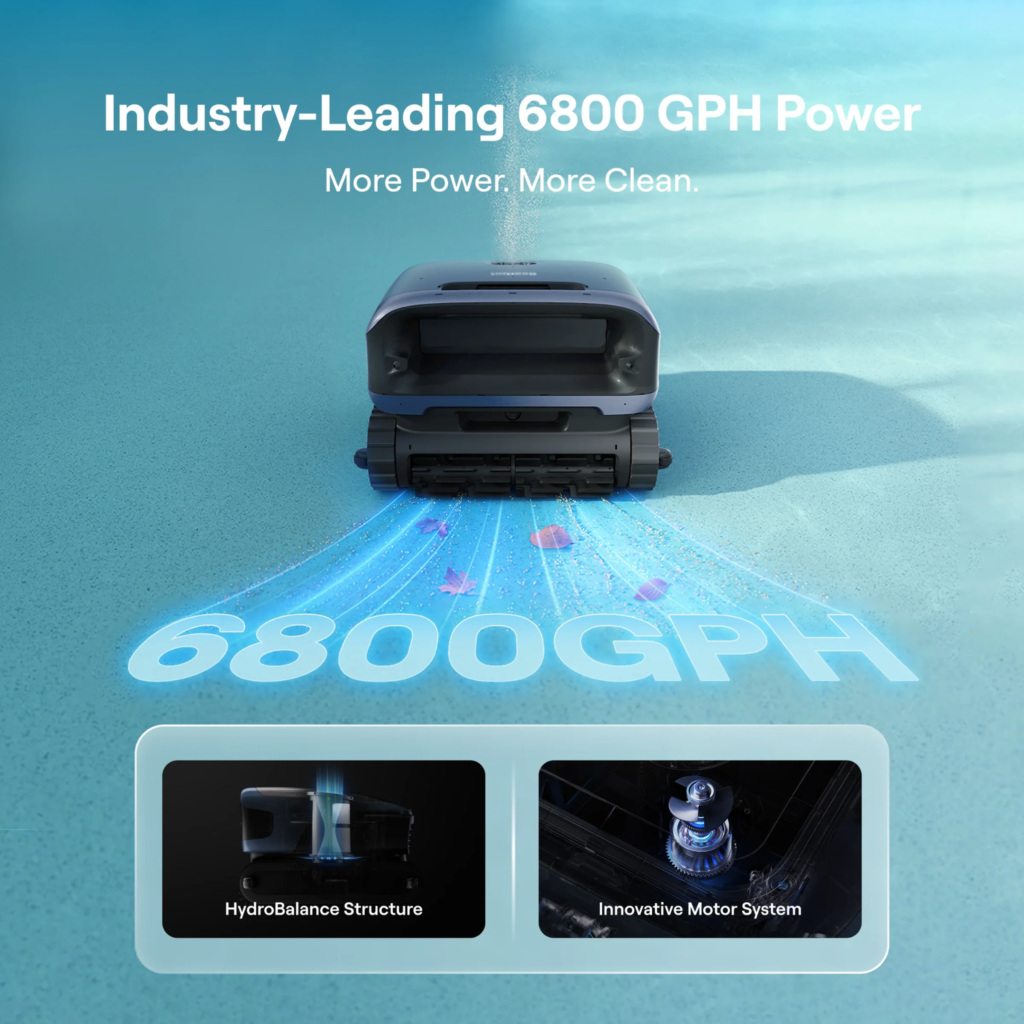
In real-world scenarios, systems like the Beatbot Sora 70 are designed to handle exactly this kind of heavy-load condition. By continuously adapting propulsion and movement based on water resistance and surface interaction, they maintain stable coverage across floors, walls, and deep sections where algae tends to accumulate.
Instead of relying on chance, the system works through the pool with consistent, structured intent—even when conditions are far from ideal.
This is where robotic pool cleaners for inground pools begin to outperform traditional systems under pressure.
AI as a Control Layer, Not Just a Feature
Cleaning performance in complex environments depends on coordination between sensing, decision-making, and execution.
An advanced ai pool cleaner introduces a control layer that processes multiple data inputs simultaneously, building a real-time model of the environment.
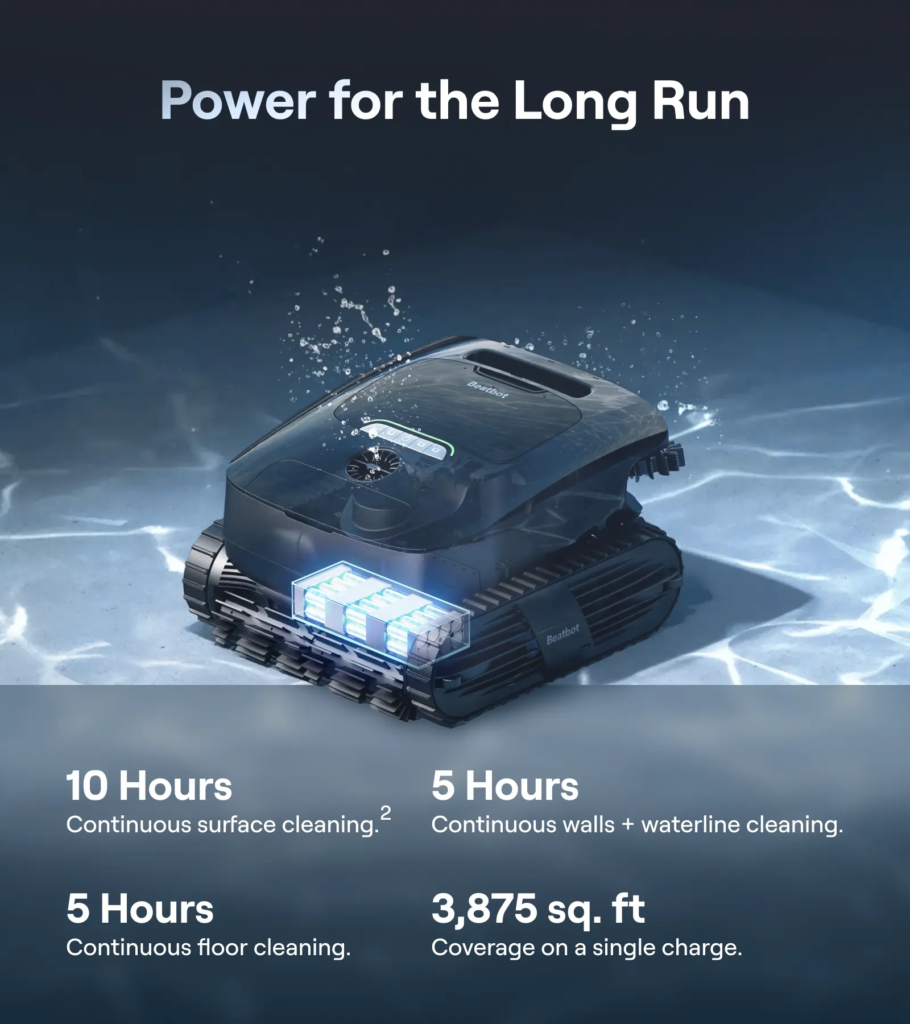
In practical use, systems like the Beatbot AquaSense X analyze movement resistance, spatial layout, and contamination density to determine where effort should be focused. This allows the system to:
- Prioritize high-density algae zones
- Avoid redundant cleaning paths
- Maintain consistent waterline coverage
The result is not just movement—but decision-making.
In this context, an ai pool cleaner is no longer a convenience tool, but a system-level solution.
Managing the Waterline and Vertical Surfaces
One of the most persistent challenges during algae blooms is the waterline.
This area collects organic buildup faster than most surfaces due to its exposure to light and air. Once established, algae along the waterline can spread quickly if not addressed.
Advanced systems approach this with targeted cleaning modes and stable vertical traction. By maintaining consistent contact with surfaces and applying controlled pressure, they remove buildup before it expands further.
This is especially important in inground pools with varied materials, where different surfaces respond differently to contamination.
Stability Over Time, Not Just Immediate Results
Recovering from an algae bloom is only part of the process. Maintaining stability afterward is equally critical.
High-density contamination events place additional strain on internal systems. Devices that cannot adapt often lose efficiency after initial recovery.
Adaptive systems continue adjusting even as conditions improve. As debris levels decrease, they recalibrate movement patterns and workload distribution to ensure no residual buildup remains.
This continuity is what prevents relapse.
From Reactive Cleaning to Autonomous Recovery
The transition from traditional cleaning to adaptive systems reflects a broader shift in consumer technology.
Instead of reacting to problems, systems are now expected to manage them proactively. They operate continuously, adjust dynamically, and maintain performance without requiring constant oversight.
For families dealing with this mid-season, the difference is immediate—either you fight the problem daily, or the system starts handling it for you.
Conclusion
Algae blooms expose the limitations of static cleaning systems.
They reveal where fixed logic fails, where manual intervention becomes unsustainable, and where traditional approaches lose effectiveness. Addressing these challenges requires systems capable of understanding and adapting to changing conditions.
Adaptive aquatic AI technology represents that shift.
By combining intelligent navigation, real-time environmental response, and targeted cleaning strategies, modern systems move beyond maintenance into true autonomous recovery. In doing so, they redefine not just how pools are cleaned—but how resilient they can be under pressure.
This is exactly why modern systems like the Beatbot Sora 70 and AquaSense X are designed not just to clean, but to stabilize the entire pool environment.