Patients who undergo cardiac surgery are at higher risk for developing postoperative atrial fibrillation (POAF) and current POAF drug therapies used to prevent it are not fully effective. A new report from The Feinstein Institutes for Medical Research provides clinical evidence that a new class of bioelectronic medicine that targets the autonomic nervous system, called autonomic neuromodulation therapies (ANMTs), may offer additional protection.
This press release features multimedia. View the full release here: https://www.businesswire.com/news/home/20220214005791/en/
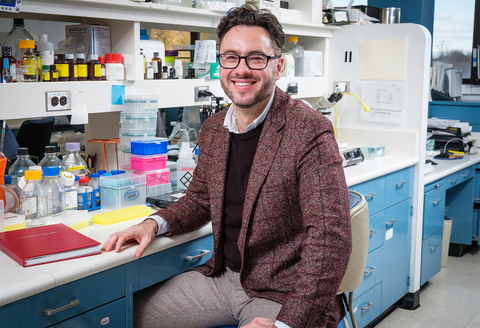
Stavros Zanos, MD, PhD, assistant professor in the Institute of Bioelectronic Medicine at the Feinstein Institutes for Medical Research. (Credit: Feinstein Institutes)
Feinstein Institutes researchers conducted a systematic review of 922 published clinical studies, including seven randomized controlled trials, that used ANMTs for the prevention of POAF and published their conclusions today in the Journal of the American College of Cardiology. POAF is irregular and often rapid heart rhythm that can lead to a longer hospital stay, formation of blood clots, stroke and increased risk of death. Their findings show that ANMTs significantly reduced the frequency and severity of POAF, length of hospital stay, and levels of interleukin-6, a cytokine protein that promotes inflammation when present in high levels. Notably, out of all ANMTs, vagus nerve stimulation (VNS) and epicardial injections showed the most promise in lowering POAF incidence.
“Bioelectronic medicine therapies can reduce inflammation, potentially treating chronic conditions like Crohn’s disease and rheumatoid arthritis, among others,” said Stavros Zanos, MD, PhD, assistant professor in the Institute of Bioelectronic Medicine at the Feinstein Institutes and senior author on the JACC paper. “This study shows VNS and other autonomic neuromodulation techniques may help patients recover more quickly and avoid potential complications after heart surgery.”
This is the first systematic review and meta-analysis addressing the overall efficacy of autonomic neuromodulation for POAF prevention. Dr. Zanos, along with Stefanos Zafeiropoulos, MD, an Elmezzi Graduate School of Molecular Medicine scholar and lead author of the study, and collaborators looked at several therapies, including VNS, ganglionated plexuses ablation, epicardial injections, stellate ganglion block, baroreceptor stimulation, spinal cord stimulation and renal nerve denervation, among others. The results of this research support the need for larger randomized controlled trials to confirm that ANMTs are a clinically feasible therapeutic option in this patient population.
The Feinstein Institutes is the global scientific home of bioelectronic medicine. Researchers in the emerging field aim to diagnose and treat disease and injury using device technology to modulate the electrical activity within the body's nervous system. The vagus is a major nerve that runs throughout the body and controls crucial functions like heart function and blood pressure, digestion, breathing, and immune response.
“Dr. Zanos’ research shows promising ways bioelectronic medicine could treat serious conditions like heart arrhythmias,” said Kevin J. Tracey, MD, president and CEO of the Feinstein Institutes. “With further investigation and clinical trials, new therapies may one day be available to aid patients recovering from cardiac surgery.”
Recently, Dr. Zanos and his team published results in the Journal of Neural Engineering, which looked at the minimal dose of vagal stimulation needed to deliver safe and effective therapies. In April 2021, the team unveiled the first long-term chronic mouse vagal nerve implant for bioelectronic research.
About the Feinstein Institutes
The Feinstein Institutes for Medical Research is the home of the research institutes of Northwell Health, the largest health care provider and private employer in New York State. Encompassing 50 research labs, 3,000 clinical research studies and 5,000 researchers and staff, the Feinstein Institutes raises the standard of medical innovation through its five institutes of behavioral science, bioelectronic medicine, cancer, health system science, and molecular medicine. We make breakthroughs in genetics, oncology, brain research, mental health, autoimmunity, and are the global scientific leader in bioelectronic medicine – a new field of science that has the potential to revolutionize medicine. For more information about how we produce knowledge to cure disease, visit http://feinstein.northwell.edu and follow us on LinkedIn.
View source version on businesswire.com: https://www.businesswire.com/news/home/20220214005791/en/
Contacts
Matthew Libassi
631-793-5325
mlibassi@northwell.edu