Effective mechanical seal maintenance, especially when utilizing GW SEAL services, significantly enhances equipment reliability and extends MTBF. Statistics show that conventional seals have an MTBF of 18-24 months, while advanced options like dry seals can reach 48-60 months. Regular maintenance practices, such as upgrading seal support systems and improving cooling capacity, help prevent failures and reduce downtime.
Key Takeaways
- Regular maintenance of mechanical seals can significantly extend their lifespan and improve equipment reliability.
- Identifying early signs of mechanical seal failure, such as leaks and misalignment, can prevent costly downtime.
- Implementing daily and weekly maintenance tasks, like visual inspections and leak monitoring, helps catch issues before they escalate.
Understanding the Signs of Mechanical Seal Failure

Recognizing the early warning signs of mechanical seal failure is crucial for maintaining equipment reliability. Identifying these signs can prevent costly downtime and extend the lifespan of seals. Here are some common indicators that suggest a mechanical seal may be failing:
- Dry Running: A lack of fluid film between seal faces can lead to rapid overheating and damage.
- Improper Installation: Incorrect alignment or excessive force during fitting can compromise seal integrity.
- Shaft Misalignment: This condition causes uneven loading on seal faces, accelerating wear.
- Inadequate Lubrication: Insufficient or incorrect lubrication drastically reduces seal life.
- Excessive Vibration: Often caused by imbalance or bearing issues, this can lead to premature failure.
- Excessive Pressure: Operating beyond design limits can damage seal faces and elastomers.
- Chemical Incompatibility: Reactions between seal materials and process fluids can cause swelling or cracking.
- Abrasive Particles: Solid particles in the fluid can erode seal faces and secondary sealing elements.
- Improper Flush or Cooling: Poor heat removal can result in thermal distortion and failure.
- Bearing Failure: Worn bearings can cause shaft movement that compromises seal integrity.
To effectively monitor these signs, employing diagnostic tools can be beneficial. The following table outlines some effective tools for detecting mechanical seal issues before catastrophic failure occurs:
| Diagnostic Tools | Purpose |
|---|---|
| Marking tools | Reference points for inspections |
| Documentation materials | Record observations and findings |
| Contact thermometer | Measure temperature of seals |
| Timing devices | Assess leak rates |
| Inspection mirrors | Provide visual access to hard-to-reach areas |
| Precision wrenches and tools | Ensure proper assembly and adjustments |
| Magnifying equipment | Conduct detailed inspections |
Utilizing these tools can help maintenance teams identify potential issues early, allowing for timely interventions.
Environmental factors also play a significant role in the performance of mechanical seals. For instance:
- High temperatures can cause seals to harden and crack, reducing performance.
- Low temperatures may make seals brittle, increasing the risk of fractures under stress.
- Humidity affects elastomeric components, leading to degradation and impacting seal integrity.
- Proper storage conditions, ideally between 10°C and 25°C with humidity below 65%, are crucial for maintaining seal performance.
By understanding these signs and utilizing appropriate diagnostic tools, maintenance teams can enhance their mechanical seal maintenance practices, ultimately extending equipment MTBF.
Daily & Weekly Mechanical Seal Maintenance Best Practices
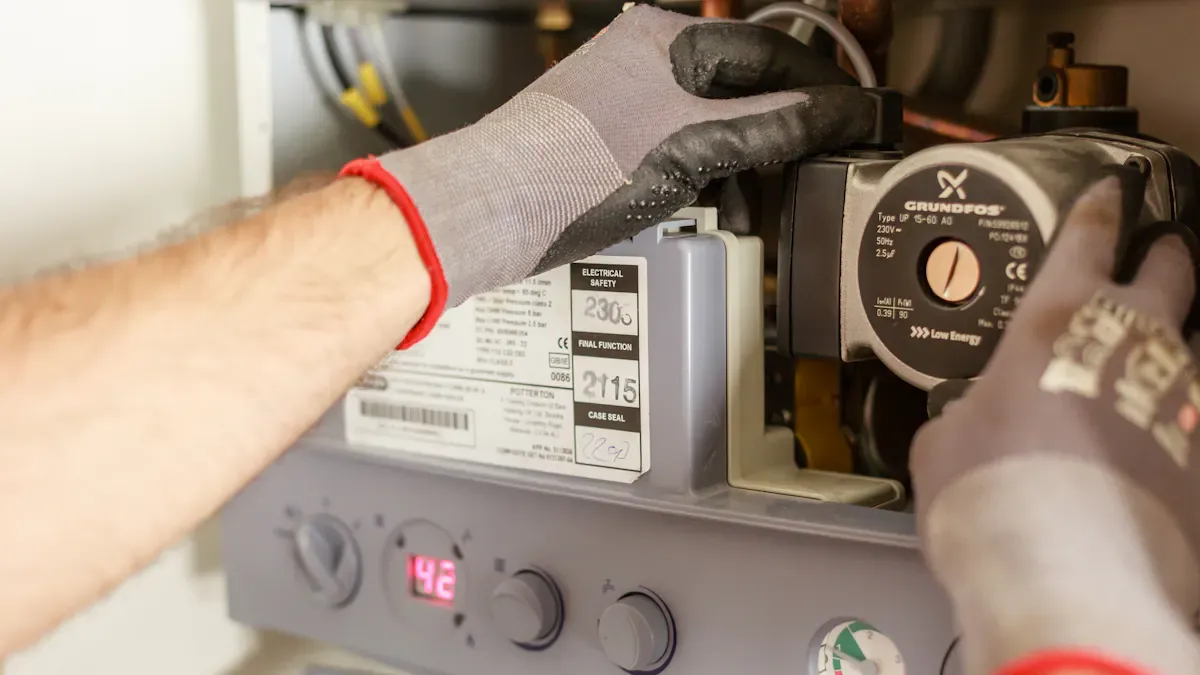
Implementing effective daily and weekly maintenance practices for mechanical seals can significantly enhance equipment reliability and reduce unplanned downtime. Regular inspections and proactive measures help identify potential issues before they escalate into costly failures. Here are some best practices to follow:
Daily Maintenance Tasks
-
Visual Inspections:
- Inspect the area around the pump for any signs of leaks.
- Check the condition of the shaft seal; mechanical seals should not leak.
- Monitor for excessive vibration and bearing temperature.
-
Leak Monitoring:
- Continuous leakage indicates potential issues. Address leaks immediately to prevent further damage.
- Verify flush flow to ensure proper lubrication and cooling.
-
Temperature Checks:
- Measure the temperature of the pump casing, bearing housing, mechanical seal, and motor.
- Record and trend vibration readings, flow rate, and suction and discharge pressure.
-
Noise and Vibration Assessment:
- Perform daily visual inspections for unusual noises, excessive vibrations, corrosion, overheating, or clogging.
Weekly Maintenance Tasks
-
Preventative Maintenance Planning:
- Create a preventative maintenance plan to monitor machine conditions and upkeep.
- Follow a regular inspection schedule to check for potential leaks, wear, dirt, vibration, and other hidden defects.
-
Data Tracking:
- Track manufacturing downtime to identify common causes and implement solutions to eliminate them in the future.
- Integrate third-party software for root cause analysis (RCA) to identify which asset issues led to underproduction or unplanned downtime.
-
Operator Training:
- Ensure that maintenance teams receive proper training on installation practices and seal care. This training can significantly reduce mechanical seal failures and extend MTBF.
-
Common Challenges:
- Be aware of common challenges faced by maintenance teams, such as incorrect installation practices, operating condition mismatches, and inadequate maintenance practices. Addressing these challenges proactively can enhance seal longevity.
By adhering to these daily and weekly maintenance best practices, organizations can optimize their mechanical seal maintenance efforts. This proactive approach not only extends the lifespan of seals but also contributes to overall equipment reliability.
Monthly & Quarterly Preventive Maintenance Tasks
Regular monthly and quarterly maintenance tasks play a vital role in ensuring the longevity and reliability of mechanical seals. These tasks help identify potential issues before they escalate into costly failures.
Seal Face Inspection Techniques
Effective inspection techniques are essential for detecting early-stage wear or damage on mechanical seal faces. Here are some proven methods:
| Inspection Technique | Description |
|---|---|
| Visual Inspection | Examine the mechanical seal for visible signs of damage, such as cracks, wear, or misalignment. |
| Pressure and Leakage Testing | Conduct tests to check the integrity of the mechanical seal, following specified procedures. |
Additionally, using sensors to monitor temperature, pressure, and vibration can provide early warning signals of potential issues.
Key Overhaul Considerations
During a mechanical seal overhaul, several critical considerations can prevent premature failure:
| Critical Consideration | Description |
|---|---|
| Proper Installation | Precise installation procedures are essential to avoid immediate or premature seal degradation. |
| Common Installation Mistakes | Includes forgetting to tighten set screws, damaging seal faces, and uneven tightening of gland bolts. |
| Seal Selection | Requires understanding of operating conditions, fluid properties, and system requirements. |
| Monitoring and Inspection | Regular checks and performance assessments help identify degradation trends and extend seal lifespan. |
| Consequences of Installation Errors | Can lead to motor tripping, shaft twisting, and immediate seal failure. |
| Cleaning Procedures | Must consider chemical compatibility and operational conditions during cleaning. |
By adhering to these inspection techniques and considerations, maintenance teams can significantly enhance mechanical seal maintenance, ultimately extending equipment MTBF.
Installation Errors Impacting Seal LifeCommon Mistakes to Avoid
Proper installation of mechanical seals is crucial for their longevity and performance. However, several common mistakes can lead to premature seal failure. Maintenance teams should be aware of these pitfalls to enhance reliability and reduce downtime.
- Improper Installation: Incorrect alignment of seal components can lead to significant wear and leakage. Even slight misalignment causes vibration, which is a primary cause of seal failure.
- Dry Running: Operating without sufficient lubrication quickly degrades seal performance. Ensure that seals are adequately lubricated before startup.
- Contaminants: Dirt or fingerprints on sealing faces can compromise the fluid film. This contamination leads to rapid wear and potential leaks.
- Insufficient Lubrication: Failing to apply adequate lubrication during installation increases friction and heat generation, resulting in quick wear and immediate leaks.
- Incorrect Torque Application: Under-torquing results in a loose fit, while over-torquing can damage seal faces. Both scenarios lead to leaks and reduced seal life.
| Mistake Description | Impact on Seal Performance |
|---|---|
| Improper handling of the mechanical seal | Can damage seal faces, compromising integrity and causing leaks. |
| Inadequate training of personnel | Lack of skills can result in installation errors, causing leaks. |
To mitigate these issues, organizations should invest in training programs. Programs like "Mechanical Seal Basics" and "Mechanical Skills Training" provide essential knowledge on installation and maintenance. Proper training enhances the competencies of maintenance teams, significantly improving installation success rates and extending seal service life.
By avoiding these common mistakes, maintenance teams can ensure optimal performance and longevity of mechanical seals, ultimately extending equipment MTBF.
Optimizing Lubrication and Flush Systems
Effective lubrication and flush systems are vital for enhancing the longevity of mechanical seals. Proper management of these systems prevents overheating and reduces wear. Here are some best practices for optimizing lubrication:
- Avoid letting the seal run dry: Always maintain a liquid film between the seal faces. This practice prevents overheating and potential failure.
- Minimize excessive vibration: Operating outside the Best Efficiency Point can cause vibrations that damage seals. Regular monitoring can help maintain optimal operating conditions.
- Use correct lubrication: Selecting the right lubricants is essential. Proper lubricants maintain a cooling fluid film and reduce wear on seal faces.
- Ensure proper installation: Correct installation is crucial for seal longevity. Misalignment can lead to premature failure.
In high-demand environments, flush systems play a critical role in cooling and cleaning mechanical seals. The following table outlines various flush plans and their descriptions:
| Flush Plan | Description |
|---|---|
| Plan 11 | A clean, pressurized flush from the pump discharge or an external source. |
| Plan 21 | External flush with cooler fluid for temperature control. |
| Plan 32 | External circulation to remove solids and heat. |
| Plan 53A/B | Pressurized barrier systems for hazardous or high-temperature fluids. |
Mechanical seals in demanding environments require a robust seal support system. External flush systems inject clean, cool fluid to maintain optimal conditions. Proper selection and maintenance of these systems are crucial for preventing seal failure. Utilizing a clean, re-circulated water system enhances the lifespan of mechanical seals by effectively flushing away debris and cooling the seal faces.
By implementing these strategies, maintenance teams can significantly improve the performance and reliability of mechanical seals, ultimately extending equipment MTBF.
Reducing Maintenance Costs with GW SEAL's Service Programs
GW SEAL's service programs offer a strategic approach to reducing maintenance costs while enhancing equipment reliability. By implementing these programs, organizations can significantly improve their equipment's Mean Time Between Failures (MTBF). Traditional maintenance approaches often lead to unexpected downtime and higher operational expenses. In contrast, GW SEAL's proactive strategies ensure that maintenance occurs before issues escalate.
Key features of GW SEAL's service programs contribute to cost savings and improved performance. The following table outlines these features:
| Feature | Description |
|---|---|
| Real-time monitoring | Enables proactive maintenance scheduling, reducing unexpected downtime and operational expenses. |
| Predictive maintenance | Employs data analytics and machine learning to optimize maintenance schedules, minimizing unnecessary activities and preventing failures, leading to cost savings. |
| Modular design | Facilitates easier maintenance through quick component replacement and improved accessibility, lowering labor time and costs. |
| Corrosion prevention systems | Reduces maintenance frequency and extends equipment lifespan by preventing degradation, thus minimizing repair needs and costs. |
By leveraging these features, organizations can achieve a more efficient maintenance process. GW SEAL not only provides high-quality sealing products but also offers comprehensive lifecycle support. This support includes installation guidance, parts supply, failure analysis, and maintenance training.
Investing in GW SEAL's service programs leads to extended MTBF, resulting in higher production efficiency, lower operating costs, and fewer unexpected downtimes.
Small maintenance efforts yield significant gains in reliability. GW SEAL's proactive strategies lead to impressive results, such as:
- Doubling MTBF (Mean Time Between Failures) through failure elimination methods.
- Halving MTTR (Mean Time To Repair) with improved planning and skills.
- Recovering 3.8 weeks of lost time, boosting equipment availability from 90% to over 97%.
Investing in maintenance not only reduces costs by 20-35% but also enhances overall performance.
FAQ
What is the primary purpose of mechanical seals?
Mechanical seals prevent fluid leakage between rotating and stationary parts, ensuring efficient operation and reducing maintenance costs.
How often should mechanical seals be inspected?
Inspect mechanical seals at least monthly to identify wear or damage early and prevent costly failures.
What factors can affect mechanical seal lifespan?
Operating conditions, lubrication quality, and installation accuracy significantly influence the lifespan of mechanical seals.
Media Contact
Company Name: Ningbo Guowei Mechanical Seals Co., Ltd.,
Email: Send Email
Country: China
Website: https://www.gwseal.com/