You've just brought your baby home, and between sleepless nights and endless feedings, you find yourself scrolling through dozens of breast pump options, each promising to be the answer to your breastfeeding challenges. Then you encounter the term "hospital-grade" — and suddenly the questions multiply. Is this level of equipment truly necessary outside the hospital? Can you actually afford one? Will your insurance cover it?
The decision isn't straightforward. Hospital-grade breast pumps represent a significant investment, but for many mothers — especially those dealing with premature births, low milk supply, or demanding work schedules — they can make the difference between a successful breastfeeding journey and an unnecessarily difficult one. This guide cuts through the marketing noise to explain what "hospital-grade" actually means, breaks down the real costs including insurance pathways that could dramatically reduce your out-of-pocket expenses, and provides a detailed feature comparison so you can match the right pump to your specific needs. By the end, you'll have the clarity to make a confident, informed choice.
What is a Hospital-Grade Breast Pump & Why It Matters
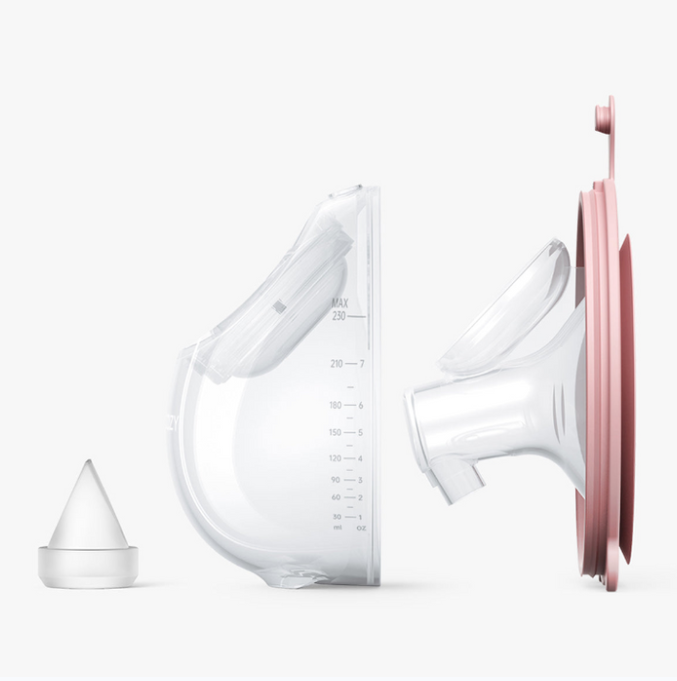
The term "hospital-grade" isn't an official FDA classification — it's a commercial designation that signals a pump built for multi-user environments with a more powerful motor than standard personal-use models. These pumps feature closed systems with individual accessory kits, meaning the milk never contacts the shared motor unit, making them safe for multiple users. Their motors typically generate stronger, more consistent suction patterns that closely mimic a baby's natural nursing rhythm.
The distinction from personal-use pumps is significant. A standard double electric pump is designed for one user with moderate daily pumping needs. A hospital grade breast pump, by contrast, is engineered for heavy-duty use — often running eight to twelve times daily without performance degradation. The motor longevity and suction consistency remain stable over thousands of hours of operation, which simply isn't the case with consumer-grade alternatives.
This matters most for mothers facing specific challenges. If your baby arrived prematurely and can't yet latch, a hospital-grade pump provides the stimulation needed to establish supply when your body hasn't received the natural cues from nursing. Mothers experiencing low milk supply benefit from the stronger, more customizable suction that can trigger additional let-downs. Working mothers who pump multiple times daily find that the efficiency — often emptying both breasts in 10 to 15 minutes — saves crucial time.
One persistent misconception is that these pumps belong exclusively in hospital settings. In reality, thousands of mothers use them at home throughout their breastfeeding journey. They're tools, not treatments, and they work just as effectively in your living room as they do in a NICU. The question isn't whether you're "sick enough" to need one — it's whether your circumstances demand the reliability and power that only this class of pump delivers.
Navigating Hospital-Grade Breast Pump Costs and Insurance
Hospital-grade breast pumps carry two distinct cost structures, and understanding both is essential before you commit. Purchasing outright typically runs between $1,000 and $2,500 depending on the model and brand. Renting, which is the more common route, generally costs $50 to $100 per month through hospitals or medical supply companies. Over a year of breastfeeding, that rental adds up to $600 to $1,200 — still substantial, but far more manageable as a monthly expense rather than a lump sum.
Here's where insurance changes the equation entirely. Under the Affordable Care Act, most health insurance plans are required to cover breastfeeding support and supplies, which includes breast pumps. However, coverage specifics vary dramatically between insurers. Some plans cover only a basic personal-use pump at no cost, while others extend coverage to hospital-grade rentals when medically justified. A prescription from your OB-GYN, midwife, or pediatrician citing medical necessity — premature birth, NICU stay, documented low supply, or infant latch difficulties — often unlocks coverage for the higher-tier equipment.
When comparing long-term costs, consider this: renting a hospital-grade pump for six months at $75 monthly totals $450 out of pocket without insurance. A high-end personal pump purchased outright might cost $300 to $500 but lacks the motor strength and longevity. If insurance covers even a portion of the hospital-grade rental, the cost gap narrows or disappears entirely — and you get superior performance during the critical early months when supply establishment matters most. Out-of-pocket expenses you should anticipate beyond the pump itself include replacement flanges, tubing, and membranes every two to three months, typically running $20 to $40 per replacement set.
Step-by-Step: How to Get Your Pump Through Insurance
First, contact your insurance provider directly — call the member services number on your card and ask specifically about breast pump coverage, including whether hospital-grade models are included under medical necessity. Request details in writing about covered brands, approved suppliers, and any required documentation. Second, obtain a prescription from your healthcare provider. Schedule this conversation during a prenatal visit or postpartum check-up, and be specific about why you need hospital-grade equipment — your provider needs to document the clinical justification. Third, find an in-network durable medical equipment supplier or approved retailer. Your insurer will provide a list, but you can also ask your hospital's lactation department for recommendations since they process these requests regularly. Fourth, submit all required paperwork, which typically includes the prescription, a prior authorization form if required by your plan, and proof of pregnancy or delivery. Allow two to three weeks for processing, so start this process during your third trimester whenever possible. Fifth, understand your upgrade options. Many insurers cover a base model fully but allow you to pay the difference if you prefer a specific higher-end pump — this "upgrade fee" is often significantly less than the full retail cost and gives you access to the exact features you want.
Key Features and How to Choose Based on Your Needs
Choosing the right breast pump based on suction needs requires understanding what's actually happening mechanically when you pump. Hospital-grade motors operate with two key measurements: cycles per minute (how many times the pump sucks and releases) and vacuum strength measured in millimeters of mercury (mmHg). A quality hospital-grade pump offers wide ranges in both — typically 30 to 70 cycles per minute and vacuum up to 300 mmHg or higher. This adjustability matters because your body responds differently at various stages. During the initial let-down phase, faster cycles with lighter suction mimic a baby's rapid flutter sucking. Once milk begins flowing, slower cycles with deeper vacuum efficiently express milk without causing tissue damage.
Adjustable suction isn't a luxury feature — it's essential for both comfort and output. Many mothers make the mistake of assuming maximum suction equals maximum milk. In reality, setting suction too high causes pain, tissue swelling, and can actually reduce output by triggering your body's protective response. The ideal setting is the highest level that remains comfortable, which changes throughout a session and across weeks of use. Look for pumps offering fine-tuned increments rather than just three or four preset levels. Comfort technologies like massage modes or let-down stimulation phases that automatically transition to expression mode reduce the mental load of manually adjusting settings mid-session.
The closed versus open system distinction directly impacts hygiene and practicality. In a closed system, a physical barrier — usually a membrane or backflow protector — prevents milk from entering the tubing or motor housing. This design is non-negotiable for multi-user hospital-grade pumps, but it also benefits single users by eliminating mold growth in tubing and simplifying cleaning. Open systems can allow moisture into the tubing, requiring more vigilant maintenance. For home use, also weigh portability and noise. Some hospital-grade pumps now offer battery operation and reduced decibel levels, making them practical for bedside nighttime pumping or use in shared spaces without drawing attention.
Understanding Suction Levels: What's Right for You?
Suction strength is measured in mmHg, and hospital-grade pumps typically max out between 250 and 350 mmHg. To put this in perspective, a nursing baby generates roughly 200 to 250 mmHg during active feeding. More important than the maximum number is where your personal comfort zone falls within that range — most women pump effectively between 150 and 220 mmHg. Starting a session at lower vacuum with rapid cycles triggers the hormonal cascade that initiates let-down. Once you see milk flowing steadily, transitioning to higher vacuum with slower cycles maximizes expression efficiency. If you're working to establish supply after a premature birth, you may benefit from a pump that reaches higher vacuum ceilings because the additional stimulation can help signal your body to increase production during those critical first weeks. Conversely, mothers with oversupply or sensitivity may never exceed moderate settings and instead rely on the pump's cycle speed variations to maintain comfort. The key principle is this: effective milk removal at a comfortable setting will always outperform painful sessions at maximum suction, because pain triggers stress hormones that actively inhibit let-down. Choose a pump that gives you granular control across the full range rather than one that simply advertises the highest number.
Top Models Compared: Features, Costs, and the V1 Pro
When evaluating hospital-grade pumps side by side, the differences become clearer than marketing materials suggest. The most established rental models from legacy brands offer proven reliability and widespread availability through hospital rental programs, but they often come with bulky designs, limited portability, and interfaces that haven't evolved much in decades. These workhorses deliver consistent suction and durable motors rated for thousands of hours, making them safe choices for short-term rentals during the newborn period. However, their size — often comparable to a small briefcase — limits where and when you can realistically pump.
Newer entrants to the hospital-grade category, including brands like Momcozy that have expanded from personal-use into higher-performance pumping solutions, have challenged this paradigm by incorporating modern technology without sacrificing motor performance. Key differentiators across current models include suction range flexibility, noise output during operation, weight and portability options, smart connectivity features, and the intuitiveness of controls during sleep-deprived late-night sessions. When comparing, prioritize the features that match your daily reality: a mother exclusively pumping eight times daily has fundamentally different needs than one supplementing with occasional sessions.
Deep Dive: Analyzing the V1 Pro Features
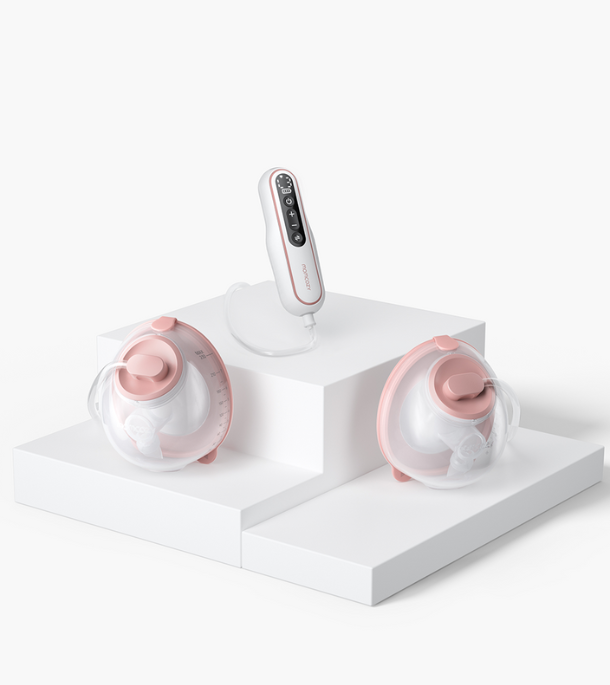
The V1 Pro represents the newer generation of hospital-grade pumps designed with home use as a primary — not secondary — consideration. Its suction system spans the full hospital-grade range while offering unusually fine adjustment increments, allowing mothers to dial in their exact comfort threshold rather than choosing between preset levels that may not match their body's response. The pump incorporates automatic phase transitions that detect let-down and shift from stimulation to expression mode, removing the guesswork that frustrates many users during early morning sessions when cognitive function is limited.
Its closed-system hygiene design uses a reinforced backflow protector that keeps milk entirely separated from the motor and tubing, simplifying the cleaning routine to just the flanges and collection containers. User feedback consistently highlights two practical advantages: the reduced noise level makes it usable during conference calls or beside a sleeping partner, and the intuitive control interface requires minimal learning curve even for first-time pumpers. For mothers who identified granular suction control as their priority in the previous section, the V1 Pro's technology directly addresses that need by providing responsive adjustments that adapt to changing flow rates within a single session.
Making Your Hospital-Grade Pump Decision with Confidence
A hospital-grade breast pump isn't a universal necessity, but for mothers facing supply challenges, premature births, or demanding schedules that require frequent daily pumping, it's a tool that delivers measurable results where personal-use pumps fall short. The cost — whether through rental or purchase — doesn't have to be a barrier when you approach insurance strategically with proper documentation and medical justification. Many mothers discover that their out-of-pocket expense drops significantly or disappears entirely once they navigate the prescription and prior authorization process.
Feature comparison matters more than brand loyalty. Focus on what your body actually needs: granular suction control that lets you find your comfort threshold, a closed system that simplifies hygiene, and practical considerations like noise and portability that determine whether you'll actually use the pump consistently. The "best" hospital-grade pump is the one that matches your specific situation — your supply goals, your daily routine, and your budget after insurance. Use this guide as your checklist when speaking with your insurance provider, your healthcare professional, and your lactation consultant. You have the information now to ask the right questions, compare options with clarity, and choose the pump that supports your breastfeeding journey on your terms.