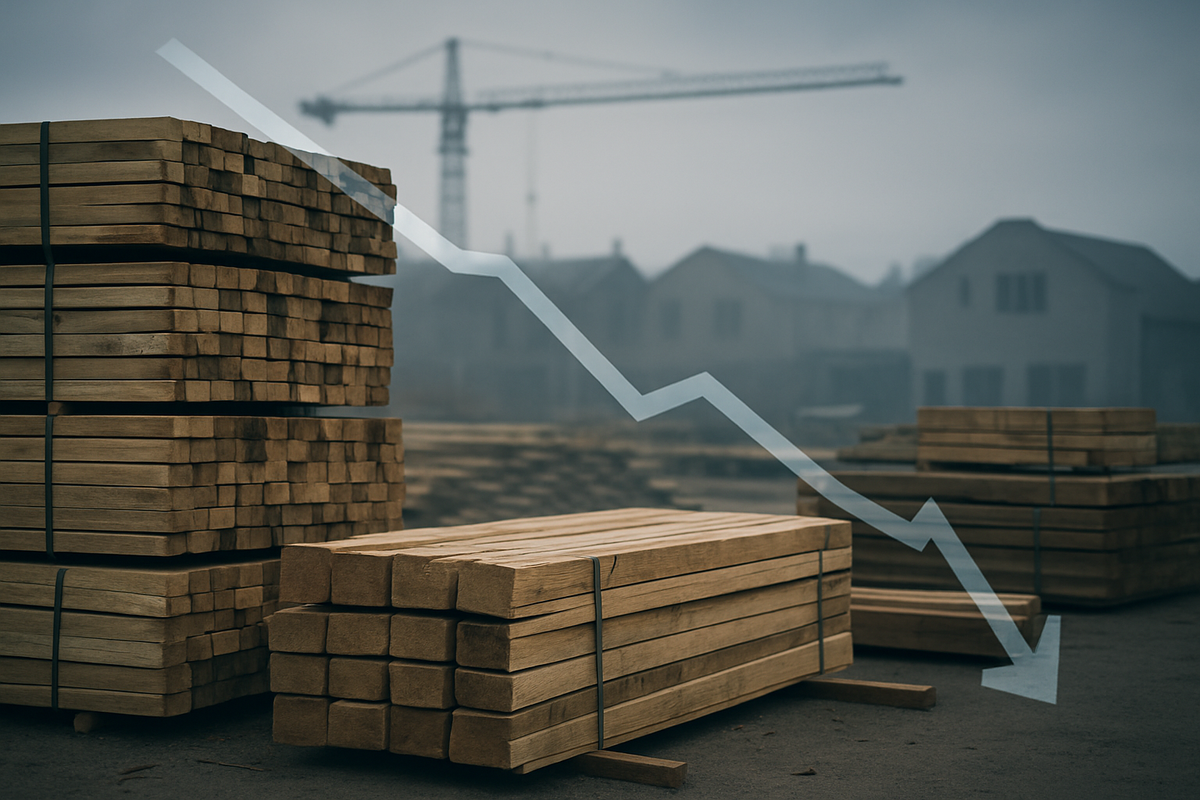
The global lumber market is currently experiencing a period of significant recalibration, characterized by softening demand and fluctuating prices, a notable shift from the unprecedented highs witnessed during the pandemic era. As of December 2025, the market grapples with an intriguing paradox: while prices have largely stabilized compared to their earlier volatility, they remain elevated above pre-pandemic benchmarks, hovering around the $500-$600 per thousand board feet range. This intricate dance between supply and demand is creating a complex landscape for producers, builders, and consumers alike, with immediate implications for housing affordability and construction project viability.
This current market dynamic, marked by an oversupply in certain segments and subdued demand, is largely influenced by a blend of economic factors, including the anticipation of easing interest rates and persistent supply-side challenges. The construction industry, a primary consumer of lumber, is keenly observing these trends, adapting to a climate where strategic material purchasing and innovative building practices are becoming paramount to navigate cost pressures and ensure project continuity. The ongoing adjustments signal a crucial juncture for the market, potentially heralding a period of strategic repositioning for key industry players.
Unpacking the Lumber Market's Recent Twists and Turns
The journey to the current state of the lumber market has been multifaceted, with a series of events shaping its trajectory. Following the extreme volatility of 2020-2022, when prices soared to historic highs due to pandemic-driven demand and supply chain disruptions, the market began a gradual descent towards stabilization. However, this stabilization has not meant a return to pre-pandemic lows, with prices settling at a new, higher baseline.
Specifically, in early December 2025, lumber futures showed a downward trend, dipping towards $530 per thousand board feet, nearly 10% below November's peak. This dip was primarily attributed to an oversupply in the market coupled with a weaker-than-expected demand. However, a slight rebound was observed by December 16, 2025, with prices rising to $563.50 USD/1000 board feet. This recent uptick was influenced by a dovish shift from the Federal Reserve, sparking optimism for potential reductions in mortgage rates, which could stimulate housing and construction demand. Earlier in 2025, an oversupply situation developed as buyers front-loaded purchases in anticipation of new tariffs, while actual construction activity remained subdued, leading to higher inventories at mills and distributors.
Key players in this evolving scenario include major lumber producers like Weyerhaeuser Company (NYSE: WY) and Canfor Corporation (TSX: CFP), as well as large homebuilders such as D.R. Horton, Inc. (NYSE: DHI) and Lennar Corporation (NYSE: LEN). These companies are at the forefront of navigating the fluctuating prices and demand shifts. Initial market reactions have been mixed; while some builders have expressed caution due to continued elevated material costs, others see potential buying opportunities in the current softness. The significant increase in U.S. countervailing duties on Canadian softwood lumber imports in August 2025, doubling the rate from 6.74% to 14.63% (totaling 35.2% with anti-dumping rates), has added another layer of complexity, directly increasing costs for imported lumber and contributing to price volatility.
Winners and Losers in a Shifting Lumber Landscape
The current softening in lumber demand and prices presents a complex scenario, creating both opportunities and challenges for various companies within and connected to the construction and forestry sectors. Understanding who stands to gain and who might face headwinds is crucial for investors and industry watchers.
Potential Winners: Companies that stand to benefit from the current market dynamics are primarily those in the homebuilding and construction sectors, particularly those with strong purchasing power or strategic inventory management. Large-scale homebuilders like D.R. Horton, Inc. (NYSE: DHI), Lennar Corporation (NYSE: LEN), and PulteGroup, Inc. (NYSE: PHM) could see improved margins if lumber prices stabilize at lower-than-peak levels, reducing their overall material costs. This could translate into more aggressive project starts or more competitive pricing for new homes, potentially stimulating sales in a market eager for housing solutions. Similarly, retailers of building materials, such as Home Depot, Inc. (NYSE: HD) and Lowe's Companies, Inc. (NYSE: LOW), might benefit from a more predictable pricing environment, allowing for better inventory planning and potentially driving increased renovation and repair activity as consumer confidence grows with stable material costs. Companies specializing in alternative building materials, like engineered wood products or mass timber, could also gain traction as builders seek cost-effective and sustainable alternatives to traditional lumber.
Potential Losers: On the other hand, lumber producers, particularly those with higher production costs or less diversified operations, could face significant pressure. Canadian lumber companies, such as Canfor Corporation (TSX: CFP) and West Fraser Timber Co. Ltd. (TSX: WFG), are particularly vulnerable due to the increased U.S. tariffs on softwood lumber imports, which have significantly raised their export costs to the crucial U.S. market. This could lead to reduced profitability, further mill curtailments, or even permanent closures, especially for smaller or less efficient operations. Even large U.S. producers like Weyerhaeuser Company (NYSE: WY) might see some impact on their timberland and wood products segments if prices continue to soften significantly, though their diversified asset base provides some resilience. Companies heavily reliant on Canadian imports for their manufacturing processes in the U.S. could also see increased input costs, potentially affecting their competitiveness. The regional disparities, with Canadian builders facing potentially higher price increases by mid-2026, also suggest a challenging outlook for the Canadian construction sector.
Broader Implications and Historical Context
The current softening in the lumber market is not an isolated event but rather a significant development that fits into broader industry trends, with potential ripple effects across various sectors. This period of adjustment follows an unprecedented boom, making its implications particularly noteworthy.
One key broader trend is the ongoing challenge of housing affordability. Even with some softening, lumber prices remain elevated compared to pre-pandemic levels. Combined with rising labor costs and higher interest rates, this continues to exert upward pressure on housing prices, making homeownership less accessible for many. This situation could exacerbate the existing housing shortage, especially for affordable homes, and may prompt increased government or industry initiatives to address the crisis. The anticipation of easing interest rates, as hinted by the Federal Reserve, could provide some relief, potentially stimulating demand and making mortgages more accessible, but the underlying cost of materials remains a critical factor.
The ripple effects extend to competitors and partners across the construction supply chain. For instance, manufacturers of other building materials, such as steel, concrete, or drywall, might see shifts in demand as builders explore alternatives to lumber or adjust their construction methods. Logistics and transportation companies involved in moving lumber will also be affected by changes in production volumes and trade flows, particularly with the increased tariffs on Canadian imports influencing supply routes. Furthermore, the emphasis on sustainable building practices and mass timber construction is growing, which could lead to increased investment and innovation in these areas, potentially reshaping the long-term demand for traditional lumber products.
Historically, the lumber market has always been cyclical, influenced by housing starts, economic conditions, and environmental factors. However, the recent volatility has been exceptional. Comparisons can be drawn to previous periods of economic downturns or housing market corrections, but the unique confluence of a global pandemic, subsequent supply chain disruptions, and now inflationary pressures, sets the current situation apart. The increased tariffs on Canadian lumber also echo past trade disputes, which have historically led to price increases and shifts in sourcing strategies. This historical context suggests that while the current softness might be a natural market correction, the contributing factors are complex and could lead to a more prolonged period of adjustment than in previous cycles.
What Lies Ahead: Navigating the Future of Lumber
The path forward for the lumber market is poised for continued evolution, with a blend of short-term adjustments and long-term strategic shifts on the horizon. Stakeholders across the supply chain are keenly observing economic indicators and policy changes to anticipate the next phase.
In the short term, the market is expected to remain sensitive to interest rate decisions and overall housing market sentiment. The anticipation of easing interest rates by the Federal Reserve could provide a much-needed boost to housing starts and renovation activity, potentially firming up lumber demand. However, the existing oversupply in some regions, combined with the impact of increased tariffs on Canadian lumber, suggests that price recovery might be gradual. Builders and distributors may continue to prioritize strategic inventory management, taking advantage of any price softness to lock in supplies for future projects. Regional disparities will likely persist, with Canadian markets facing potentially higher price increases by mid-2026 due to reduced mill capacity and other economic factors, while the U.S. market might see a more stable, albeit slowly recovering, price environment into spring 2026.
Long-term possibilities include a sustained push towards diversifying material sourcing and embracing alternative construction methods. The volatility of recent years has highlighted the risks of over-reliance on traditional lumber, prompting greater interest in engineered wood products, steel, concrete, and even innovative materials like bamboo. This could lead to a more diversified building materials market, potentially mitigating future price shocks. Furthermore, the growing emphasis on sustainability and resilient construction practices will likely drive demand for certified lumber and mass timber solutions, influencing forestry management and mill operations. Strategic pivots for lumber producers may involve optimizing production efficiency, exploring new markets, or investing in value-added products to enhance profitability.
Market opportunities could emerge for companies that can innovate in logistics, supply chain resilience, and product development. For instance, technology solutions that improve forecasting and inventory management will be highly valued. Challenges include managing the ongoing trade complexities, particularly between the U.S. and Canada, and adapting to a workforce that continues to face labor shortages in both forestry and construction. Potential scenarios range from a gradual, steady recovery in demand and prices driven by a robust housing market, to a more prolonged period of price stagnation if economic headwinds persist. A key outcome will be a more resilient and adaptable lumber industry, better equipped to handle future market fluctuations through diversification and innovation.
The Lumber Market's Evolving Landscape: A Comprehensive Wrap-Up
The recent softening demand and prices in the lumber market represent a critical inflection point, marking a transition from unprecedented volatility to a more complex, albeit somewhat stabilized, environment. The key takeaway is that while the extreme highs of the pandemic era are behind us, lumber prices have established a new, elevated baseline, significantly impacting housing affordability and construction costs. This recalibration is driven by a delicate balance of oversupply in some segments, subdued but potentially recovering demand, and persistent supply-side challenges, including increased tariffs on Canadian imports and ongoing labor shortages.
Moving forward, the market is poised for continued adjustments. Investors and industry participants should closely monitor several key indicators: the trajectory of interest rates and their impact on housing starts, the effectiveness of inventory management strategies by distributors and builders, and the ongoing developments in trade policies, particularly concerning U.S.-Canada lumber tariffs. The increasing adoption of alternative building materials and innovative construction methods will also be crucial to watch, as these trends could fundamentally alter long-term demand dynamics for traditional lumber.
The lasting impact of this period will likely be a more resilient and adaptable construction industry, one that prioritizes diversified material sourcing and efficient building practices. While challenges remain, particularly for lumber producers grappling with higher input costs and fluctuating demand, opportunities exist for those who can innovate and adapt. The market is not returning to its pre-pandemic state; rather, it is evolving into a new equilibrium where strategic foresight and agility will be paramount for success. Investors should seek companies demonstrating strong operational efficiency, diversified product portfolios, and a clear strategy for navigating both domestic and international market complexities in the coming months.
This content is intended for informational purposes only and is not financial advice