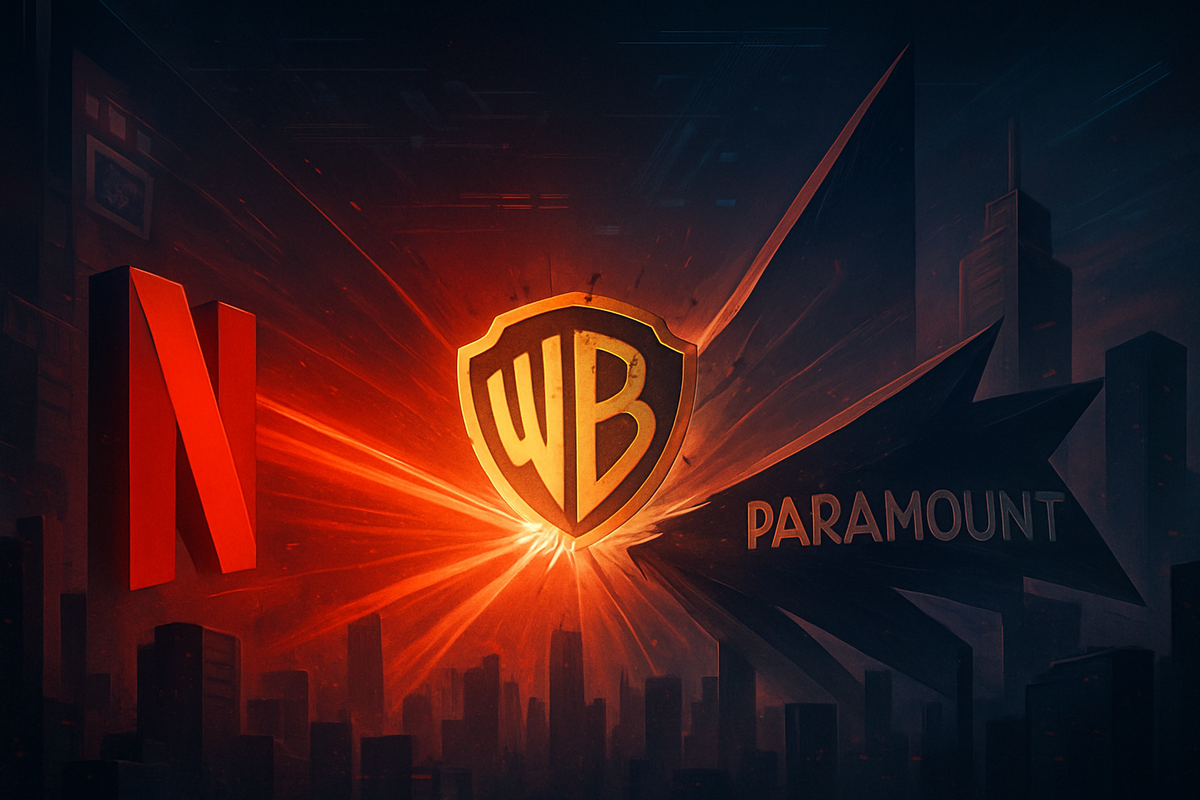
In a dramatic turn of events that has sent shockwaves through the global media landscape, Warner Bros. Discovery (NASDAQ: WBD) finds itself at the epicenter of a high-stakes merger and acquisition (M&A) battle. As of December 17, 2025, the company's board has firmly recommended a landmark deal to sell its prestigious Warner Bros. segment, including its film and television studios and streaming services HBO Max and HBO, to streaming giant Netflix (NASDAQ: NFLX) for an estimated $82.7 billion. This pivotal transaction, however, has been met with a formidable challenge from media conglomerate Paramount Skydance (NASDAQ: PARA), which launched an unsolicited, all-cash hostile takeover bid for the entirety of WBD, valuing the company at a higher $108.4 billion.
The immediate implications of this M&A frenzy are profound, signaling an accelerated consolidation within the streaming sector and a redefinition of content ownership in an increasingly competitive market. The outcome of this battle will not only shape the future trajectory of Warner Bros. Discovery but also set a significant precedent for strategic realignments across the entire entertainment industry, impacting everything from theatrical distribution models to regulatory oversight and the future of traditional linear television.
A High-Stakes Battle for Media Dominance
The saga began in late October 2025 when Warner Bros. Discovery initiated a strategic review, attracting interest from several major players. While companies like Starz (NASDAQ: LIONS) and Comcast (NASDAQ: CMCSA) reportedly submitted bids for various WBD assets, the focus quickly narrowed to a fierce competition between Netflix and Paramount Skydance. On December 5, 2025, WBD announced its definitive agreement with Netflix, a deal that would see Netflix acquire the "Warner Bros." segment – encompassing its iconic film and television studios, alongside its powerhouse streaming services HBO Max and HBO. This strategic move, valued at approximately $82.7 billion in enterprise value, is contingent upon the prior separation of WBD's Global Networks division, which includes linear brands like CNN, TNT Sports, and Discovery channels, into a new publicly-traded entity to be rebranded "Discovery Global" by Q3 2026.
However, the ink was barely dry on the Netflix agreement when, just three days later on December 8, 2025, Paramount Skydance dramatically escalated the situation. They launched an aggressive, all-cash hostile takeover bid for the entirety of Warner Bros. Discovery, offering a superior valuation of $108.4 billion, or $30 per share. Paramount Skydance, a long-standing suitor whose previous bids had been rejected, affirmed its commitment to this offer, publicly stating its intention to appeal directly to WBD shareholders and arguing that its proposal offered superior value and certainty.
The climax of this initial phase occurred on December 17, 2025, when Warner Bros. Discovery's Board of Directors unanimously rejected Paramount Skydance's hostile bid. The board characterized Paramount's proposal as "inadequate" and cited "numerous risks and uncertainties," including concerns regarding the financing structure, potential operational restrictions, and the abandonment of WBD's carefully planned business separation. The board firmly reiterated its recommendation for shareholders to approve the Netflix merger agreement, setting the stage for a potential shareholder showdown.
Initial market reactions have been mixed but largely reflect the high stakes involved. WBD's stock has seen volatility as investors weigh the competing offers and the potential for a protracted battle. The media industry, already grappling with the secular decline of linear television and the capital-intensive nature of streaming, views this M&A battle as a significant catalyst for further consolidation and strategic realignments. The potential for Netflix to acquire such a vast and valuable content library has intensified competitive pressure on other streaming services, while the spin-off of WBD's linear assets highlights the accelerating divergence between traditional and digital media.
Companies That Might Win or Lose
The intense M&A battle surrounding Warner Bros. Discovery (NASDAQ: WBD) and its strategic pivot towards a deal with Netflix (NASDAQ: NFLX) has created a clear delineation of potential winners and losers across the media and entertainment landscape. This transformative event will undoubtedly reshape competitive dynamics for direct rivals, strategic partners, and content creators alike.
Netflix emerges as the most significant winner from this scenario. The acquisition of WBD's "Warner Bros." segment, encompassing its illustrious film and television studios, HBO, and HBO Max, will dramatically expand Netflix's content library with iconic franchises such as Harry Potter, the DC Comics universe, and HBO's critically acclaimed series like 'Game of Thrones' and 'The Sopranos.' This move not only solidifies Netflix's position as the undisputed global leader in streaming but also provides access to a treasure trove of intellectual property, bolstering its production capabilities. Netflix anticipates realizing at least $2-3 billion in annual cost savings within three years and expects the transaction to be accretive to GAAP earnings per share by year two, mitigating licensing risks by bringing vast content in-house. This 'super-sized Netflix' will intensify competitive pressure across the entire industry, forcing rivals to re-evaluate their strategies.
Warner Bros. Discovery Shareholders are conditional winners. They are set to receive $27.75 per share in a cash and stock combination for the "Warner Bros." segment acquired by Netflix. Crucially, they will also gain shares in 'Discovery Global,' the spun-off linear networks division, expected in Q3 2026. This offers a clear path for value realization, despite the higher but riskier all-cash offer from Paramount Skydance. The board's decision prioritizes a deal with perceived greater certainty and strategic alignment.
Conversely, Paramount Skydance faces a significant setback. Their hostile, all-cash bid for the entirety of WBD, valued at a higher $108.4 billion, was definitively rejected by WBD's board, which cited "inadequate value," "shaky financing," and high leverage concerns. This rejection is a major blow to Paramount Skydance's ambition to achieve competitive scale against giants like Netflix and Amazon (NASDAQ: AMZN) Prime Video, raising questions about their future M&A strategy and ability to compete effectively. The company, formed from the merger of Skydance Media and Paramount Global (NASDAQ: PARA) in August 2025, now needs to find alternative avenues for growth.
Direct streaming competitors such as Disney (NYSE: DIS) (Disney+, Hulu, ESPN+), Comcast/NBCUniversal (NASDAQ: CMCSA) (Peacock), Amazon Prime Video, and Apple TV+ (NASDAQ: AAPL) will face intensified pressure. An enlarged Netflix with the Warner Bros. content library will necessitate significant innovation, further acquisitions, or strategic mergers from these players to maintain their competitive standing. Comcast/NBCUniversal, having reportedly been a contender for WBD assets, may now feel increased pressure to consolidate its own streaming efforts. Content Providers, including production studios, talent agencies, and independent creators, face a mixed outlook. While a consolidated Netflix-Warner Bros. could offer a stable platform for large-scale productions, it also means one fewer major buyer for content, potentially limiting options and leverage for independent players. Consumers are also likely to be impacted, with analysts predicting higher prices and potentially fewer choices in the long run as market concentration increases, despite the convenience of a vast combined content library.
Wider Significance and Industry Repercussions
The high-stakes M&A battles surrounding Warner Bros. Discovery (NASDAQ: WBD) are more than just a corporate drama; they are a profound reflection of the tectonic shifts occurring across the global media and entertainment industry. This pivotal moment underscores broader trends of accelerated consolidation, the accelerating decline of linear television, and the significant regulatory challenges that define the current landscape.
The intense bidding war for WBD's assets highlights an industry-wide imperative for scale, comprehensive content ownership, and streaming dominance. As the streaming market matures, the drive to become one of the "three to five winners" or "central hubs" intensifies. Netflix's (NASDAQ: NFLX) strategic move to acquire a legacy studio like Warner Bros. signifies a critical shift from purely organic growth to strategic acquisitions as essential for maintaining market leadership and subscriber engagement. This trend is further fueled by the imperative of direct content ownership, moving away from licensing models that offer diminishing returns. The substantial debt burden carried by WBD, approximately $30 billion from its 2022 merger, has also been a significant factor, illustrating the financial intensity and challenges associated with these large-scale consolidation efforts.
The ripple effects of this deal, if approved, would be substantial. A "super-sized Netflix" would solidify its position as the undisputed global streaming leader, gaining an unparalleled competitive edge through iconic franchises like Harry Potter, the DC Universe, and HBO's premium content, alongside 128 million streaming subscribers. This vertical integration would position Netflix as a content powerhouse, intensifying pressure on rivals like Disney (NYSE: DIS), Amazon (NASDAQ: AMZN), and Comcast (NASDAQ: CMCSA) to either double down on content investments or seek their own transformative acquisitions. Moreover, concerns have been vociferously raised by Hollywood unions and creative communities, who fear that such consolidation could pose an "existential threat" to the theatrical business, stifle creative risks, and diminish competition in content production, potentially harming workers and reducing free speech.
From a regulatory standpoint, the proposed Netflix-WBD merger faces intense antitrust scrutiny. The sheer size of a combined entity, potentially controlling a substantial portion of the U.S. streaming market and over 43% of global streaming subscribers, will invite rigorous examination from the Department of Justice (DOJ) and the Federal Trade Commission (FTC). Regulators will assess whether the deal could lead to market dominance, higher prices, reduced consumer choice, or foreclose rival streaming services from essential licensing windows. This deal presents a major test for the U.S. DOJ Antitrust Division's 2023 merger guidelines and its preference for "structural remedies." The involvement of political figures, such as President Donald Trump's stated intent to be "involved in that decision," also underscores the intersection of politics and media mergers, potentially leading to longer deal timelines and a higher risk of intervention.
Historically, this situation draws parallels to several landmark events. The infamous AOL Time Warner merger of 2001 serves as a cautionary tale of large-scale media consolidation leading to significant shareholder losses and a "horrific financial legacy." More recently, the Disney-Fox acquisition in 2019 also underwent extensive regulatory review, and its financial benefits for shareholders have been debated. The very history of WBD, stemming from AT&T's acquisition of Time Warner in 2018 and its subsequent spin-off and merger with Discovery in 2022, highlights the challenges of integrating disparate media assets and managing accumulated debt. Furthermore, the 1948 U.S. v. Paramount Pictures Supreme Court decision, which prevented film studios from owning movie theaters, is invoked as a historical benchmark against vertical integration, with some analysts arguing that the current streaming landscape risks recapitulating similar market concentrations. Paramount Skydance's hostile bid itself echoes a classic M&A tactic, though historically, such bids have a relatively low success rate.
What Comes Next: A Reshaped Media Landscape
The immediate future of Warner Bros. Discovery (NASDAQ: WBD) and the broader media industry hinges on the successful navigation of the Netflix (NASDAQ: NFLX) acquisition and the subsequent strategic evolution of the newly independent entities. Following WBD's board's decisive rejection of Paramount Skydance's hostile bid, the path forward appears clearer, yet fraught with complex challenges and transformative opportunities.
In the short term (next 1-2 years), the primary focus will be on regulatory scrutiny. Both the U.S. Department of Justice and the Federal Trade Commission are expected to conduct intense antitrust reviews of the Netflix-WBD deal, examining potential impacts on market concentration, content licensing, theatrical distribution, and advertising. The political dimension, with figures like former President Donald Trump publicly commenting on these bids, adds another layer of complexity that could extend the approval timeline into late 2026. Simultaneously, the spin-off of 'Discovery Global,' the new publicly traded company comprising WBD's global linear networks, is slated for Q3 2026. This entity will face the immediate task of establishing independent operations, managing its substantial debt, and carving out a sustainable niche in a landscape increasingly dominated by streaming.
Longer term (3-5+ years), the Netflix-WBD deal is set to be a significant catalyst for accelerated consolidation across the media industry. Smaller players will likely seek mergers or strategic partnerships to achieve the necessary scale and content arsenals to compete with emerging 'central hubs' like the combined Netflix/Warner Bros., Disney (NYSE: DIS), Amazon (NASDAQ: AMZN), and YouTube (NASDAQ: GOOGL). The industry will also continue its pivot towards profitability over pure subscriber growth, driving more disciplined content investment and diversified revenue models, including the expansion of hybrid ad-supported (AVOD) and subscription (SVOD) tiers. For 'Discovery Global,' strategic pivots will likely include niche specialization in unscripted and factual content, aggressive embrace of AVOD/FAST channels to offset linear TV declines, and potential global market expansion or strategic partnerships to enhance distribution.
Market opportunities will emerge from the continued growth in global digital consumption, particularly in emerging markets, and technological innovations in AI, virtual reality, and interactive content that promise new monetization models. The expansion of ad-supported streaming also presents significant revenue streams, especially for broad-appeal content and live sports. However, significant challenges persist. The acceleration of cord-cutting remains an existential threat to 'Discovery Global's' core business, while achieving and sustaining profitability in the highly competitive streaming market is a challenge for all, including the enlarged Netflix. High debt burdens, escalating content costs due to bidding wars for premium IP, and increased regulatory hurdles for future mergers will continue to shape the industry's trajectory. The potential for unforeseen regulatory blockages, though less likely now, remains a 'black swan' scenario that could force WBD to revert to its original split plan and restart the bidding process for its studio and streaming assets.
Comprehensive Wrap-up: A New Era for Media
The intense M&A battles surrounding Warner Bros. Discovery (NASDAQ: WBD) in late 2025 mark a definitive turning point for the company and the broader media and entertainment industry. The board's decisive rejection of Paramount Skydance's hostile bid in favor of a transformative deal with Netflix (NASDAQ: NFLX) signifies a strategic realignment that will reverberate for years to come, reshaping competitive dynamics, content creation, and consumer consumption habits.
The key takeaway is the emergence of a 'super-sized Netflix' poised to become the undisputed global leader in streaming. By acquiring WBD's prestigious Warner Bros. segment, including its film and television studios, HBO Max, and HBO, Netflix gains an unparalleled content library of 145,000 hours and high-value intellectual property like DC Comics, Harry Potter, and Game of Thrones. This strategic pivot for Netflix, moving from organic growth to significant acquisition, underscores the industry's drive for scale and direct content ownership. Concurrently, the planned spin-off of 'Discovery Global' in Q3 2026, comprising WBD's linear networks, highlights the accelerating divergence between traditional and streaming media, offering a clearer valuation and strategic focus for both segments.
Moving forward, the market assessment points to continued consolidation and a heightened focus on profitability within the streaming sector. The Netflix-WBD deal will undoubtedly inspire further M&A activity, as other major players like Disney (NYSE: DIS), Amazon (NASDAQ: AMZN), and Comcast (NASDAQ: CMCSA) seek to fortify their content arsenals. The lasting impact will see Netflix solidify its content powerhouse status, potentially dictating pricing terms for advertisers and influencing the future of theatrical releases with its commitment to traditional windows for Warner Bros. films. The regulatory scrutiny applied to this mega-deal will also set crucial precedents for future media mergers, with Netflix's $5.8 billion reverse termination fee signaling confidence in obtaining approvals.
Investors should closely monitor several critical factors in the coming months. Foremost are the regulatory approvals, particularly from the U.S. DOJ and EU Commission, which are expected to take 12-18 months. The successful integration of Warner Bros. assets into Netflix's operations and the management of the incurred $59 billion debt will be paramount. Equally important will be the independent performance of 'Discovery Global' post-spin-off in Q3 2026, as it navigates the challenging linear television market. Watching for competitive reactions across the industry and any potential, albeit less likely, revised bids will also be crucial. Overall, the end of 2025 has redefined Warner Bros. Discovery's trajectory, setting the stage for a dramatically altered and intensely competitive media landscape.
This content is intended for informational purposes only and is not financial advice