In a move that signals a paradigm shift for the semiconductor and cybersecurity industries, SEALSQ Corp (NASDAQ: LAES) has officially unveiled its strategic roadmap for 2026–2030. The ambitious plan focuses on the industrialization of CMOS-compatible quantum technologies, aiming to bridge the gap between experimental quantum physics and mass-market digital infrastructure. By leveraging existing silicon manufacturing processes, SEALSQ intends to deliver scalable, secure quantum computing solutions that could redefine the foundations of artificial intelligence and global data security before the end of the decade.
The announcement, made as 2025 draws to a close, positions SEALSQ at the forefront of the "Quantum-AI Convergence." The roadmap outlines a transition from current Post-Quantum Cryptography (PQC) hardware to the realization of a "secure sovereign quantum computer" by 2030. This strategy is designed to address the looming threat of "Q-Day"—the point at which quantum computers become powerful enough to break traditional encryption—while simultaneously providing the massive computational throughput required for the next generation of AI models.
The Silicon Path to Quantum Supremacy: Technical Deep Dive
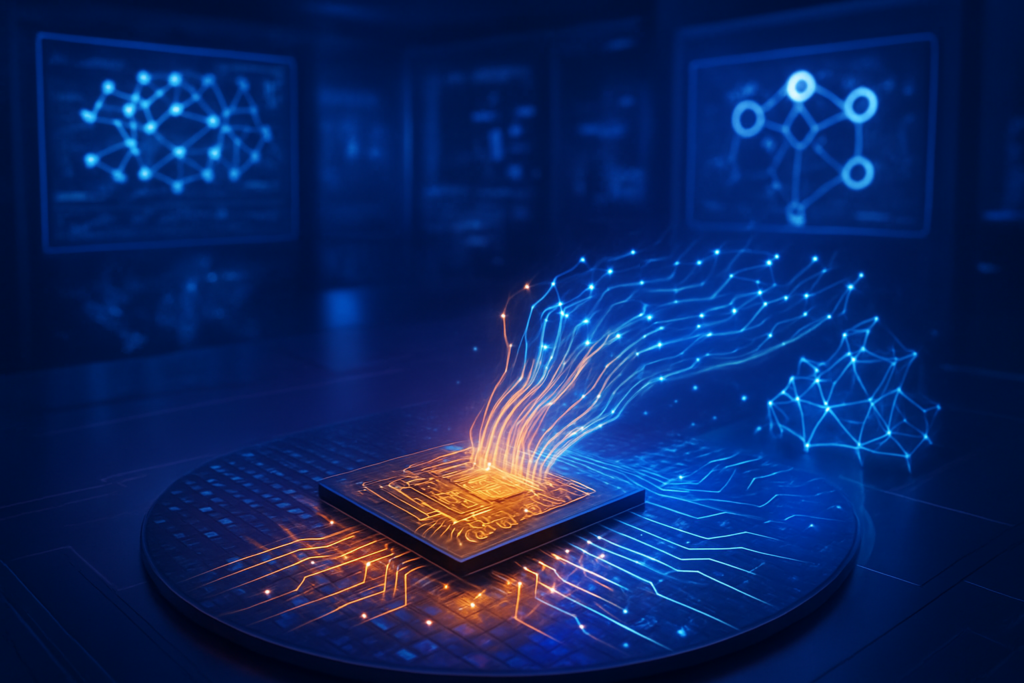
At the heart of SEALSQ’s 2026-2030 plan is a commitment to CMOS-compatible quantum architectures. Unlike the massive, cryogenically cooled dilution refrigerators required by superconducting qubits—used by pioneers like IBM and Google—SEALSQ is betting on silicon spin qubits and "electrons on superfluid helium" technologies. Through partnerships with Quobly and EeroQ, SEALSQ aims to fabricate millions of high-fidelity qubits on standard 300mm silicon wafers. This approach allows the company to utilize the existing global semiconductor supply chain, drastically lowering the cost and physical footprint of quantum processors.
The roadmap kicks off Phase 1 (2025-2026) with the commercial rollout of the QS7001 Quantum Shield and the QVault Trusted Platform Module (TPM). The QS7001 is a specialized 32-bit Secured RISC-V CPU designed to handle NIST-standardized PQC algorithms like CRYSTALS-Kyber and CRYSTALS-Dilithium. By implementing these algorithms in dedicated hardware rather than software, SEALSQ claims a 10x performance improvement, providing a critical security layer for IoT devices and AI edge servers that must resist future quantum attacks today.
Moving into Phase 2 (2026-2028), the focus shifts to Quantum ASICs (QASICs) and the development of the "Quantum Corridor." This transnational infrastructure, spanning Spain, France, Switzerland, and the U.S., is intended to decentralize the manufacturing of quantum-secure components. The technical milestone for this period is the integration of cryogenic control electronics directly onto the silicon chip, a feat that would eliminate the "wiring bottleneck" currently hindering the scaling of quantum systems. By placing the control logic next to the qubits, SEALSQ expects to achieve the density required for fault-tolerant quantum computing.
Initial reactions from the research community have been cautiously optimistic. While some physicists argue that silicon spin qubits still face significant coherence time challenges, industry experts note that SEALSQ’s strategy bypasses the "lab-to-fab" hurdle that has stalled other quantum startups. By sticking to CMOS-compatible materials, SEALSQ is effectively "piggybacking" on decades of silicon R&D, a move that many believe is the only viable path to shipping quantum-enabled devices in the millions.
Market Disruption and the Competitive Landscape
The 2026-2030 roadmap places SEALSQ in direct competition with both traditional semiconductor giants and specialized quantum hardware firms. By focusing on sovereign quantum capabilities, SEALSQ is positioning itself as a key partner for government and defense agencies in Europe and the U.S. who are wary of relying on foreign-controlled quantum infrastructure. This "sovereignty" angle provides a significant strategic advantage over competitors who rely on centralized, cloud-based quantum access models.
Major AI labs and tech giants like Microsoft (NASDAQ: MSFT) and Alphabet (NASDAQ: GOOGL) may find SEALSQ’s hardware-first approach complementary or disruptive, depending on their own quantum progress. If SEALSQ successfully delivers compact, thumbnail-sized quantum processors via its EeroQ partnership, it could decentralize quantum power, moving it from massive data centers directly into high-end AI workstations and edge gateways. This would disrupt the current "Quantum-as-a-Service" market, which is currently dominated by a few players with large-scale superconducting systems.
Furthermore, SEALSQ's acquisition of IC’Alps, a French ASIC design house, gives it the internal capability to produce custom chips for specific verticals such as medical diagnostics and autonomous systems. This vertical integration allows SEALSQ to offer "Quantum-AI-on-a-Chip" solutions, potentially capturing a significant share of the burgeoning AI security market. Startups in the AI space that adopt SEALSQ’s PQC-ready hardware early on may gain a competitive edge by offering "quantum-proof" data privacy guarantees to their enterprise clients.
The Quantum-AI Convergence: Broader Implications
The broader significance of SEALSQ’s roadmap lies in the "Convergence" initiative, where quantum computing, AI, and satellite communications are unified into a single secure ecosystem. As AI models become more complex, the energy required to train and run them is skyrocketing. SEALSQ intends to use quantum algorithms to solve partial differential equations (PDEs) that optimize chip manufacturing at nodes below 7nm. By reducing "IR Drop" (voltage loss) in next-gen AI accelerators, quantum technology is paradoxically being used to improve the efficiency of the very classical silicon that runs today’s LLMs.
Security remains the most pressing concern. The roadmap addresses the "Harvest Now, Decrypt Later" threat, where malicious actors collect encrypted data today with the intent of decrypting it once quantum computers are available. By embedding PQC directly into AI accelerators, SEALSQ ensures that the massive datasets used for training AI—which often contain sensitive personal or corporate information—remain protected throughout their lifecycle. This is a critical development for the long-term viability of AI in regulated industries like finance and healthcare.
Comparatively, this milestone mirrors the transition from vacuum tubes to transistors in the mid-20th century. Just as the transistor allowed computing to scale beyond the laboratory, SEALSQ’s CMOS-compatible roadmap aims to take quantum technology out of the liquid-helium vats and into the palm of the hand. The integration with WISeAI, a decentralized machine-learning model, further enhances this by using AI to monitor security networks for quantum-era vulnerabilities, creating a self-healing security loop.
Looking Ahead: The Road to 2030
In the near term, the industry will be watching for the successful rollout of the QS7001 Quantum Shield in early 2026. This will be the first "litmus test" for SEALSQ’s ability to move from theoretical roadmaps to tangible hardware sales. If the QS7001 gains traction in the IoT and automotive sectors, it will provide the necessary capital and validation to fund the more ambitious QASIC developments planned for 2027 and beyond.
The long-term challenge remains the physical scaling of qubits. While CMOS compatibility solves the manufacturing problem, the "error correction" problem still looms large over the entire quantum industry. Experts predict that the next five years will see a "Quantum Cold War" of sorts, where companies race to demonstrate not just "quantum supremacy" in a lab, but "quantum utility" in a commercial product. SEALSQ’s focus on hybrid classical-quantum systems—where a quantum co-processor assists a classical CPU—is seen as the most realistic path to achieving this utility by 2030.
Future applications on the horizon include real-time quantum-secured satellite links and AI models that can perform "blind computation," where the data remains encrypted even while it is being processed. These use cases would revolutionize global finance and national security, making data breaches of the current variety a relic of the past.
Final Thoughts: A New Era of Secure Intelligence
SEALSQ’s 2026-2030 strategic plan is more than just a corporate roadmap; it is a blueprint for the future of secure industrialization. By tethering the exotic potential of quantum physics to the proven reliability of silicon manufacturing, the company is attempting to solve the two greatest challenges of the digital age: the need for infinite computing power and the need for absolute data security.
As we move into 2026, the significance of this development in AI history cannot be overstated. We are witnessing the birth of "Quantum-Native AI," where the security and processing capabilities are built into the hardware from the ground up. Investors and tech leaders should watch closely for the deployment of the "Quantum Corridor" and the first wave of PQC-certified devices. If SEALSQ executes on this vision, the 2030s will begin with a digital landscape that is fundamentally faster, smarter, and—most importantly—secure against the quantum storm.
This content is intended for informational purposes only and represents analysis of current AI developments.
TokenRing AI delivers enterprise-grade solutions for multi-agent AI workflow orchestration, AI-powered development tools, and seamless remote collaboration platforms.
For more information, visit https://www.tokenring.ai/.