The InfoFi Divide: Why PredictIt Traders Are Fading the 'Public Integrity' Act Despite CEO Support
As the 2026 midterm election cycle kicks into high gear, a legislative battle over the soul of the "Information Finance" (InfoFi) movement has reached a fever pitch on Capitol Hill. At the center of the storm is H.R. 7004, the "Public Integrity in Financial Prediction Markets Act of 2026." While the bill aims to curb insider trading by government officials on event contracts, the very traders it seeks to regulate remain deeply skeptical of its prospects.
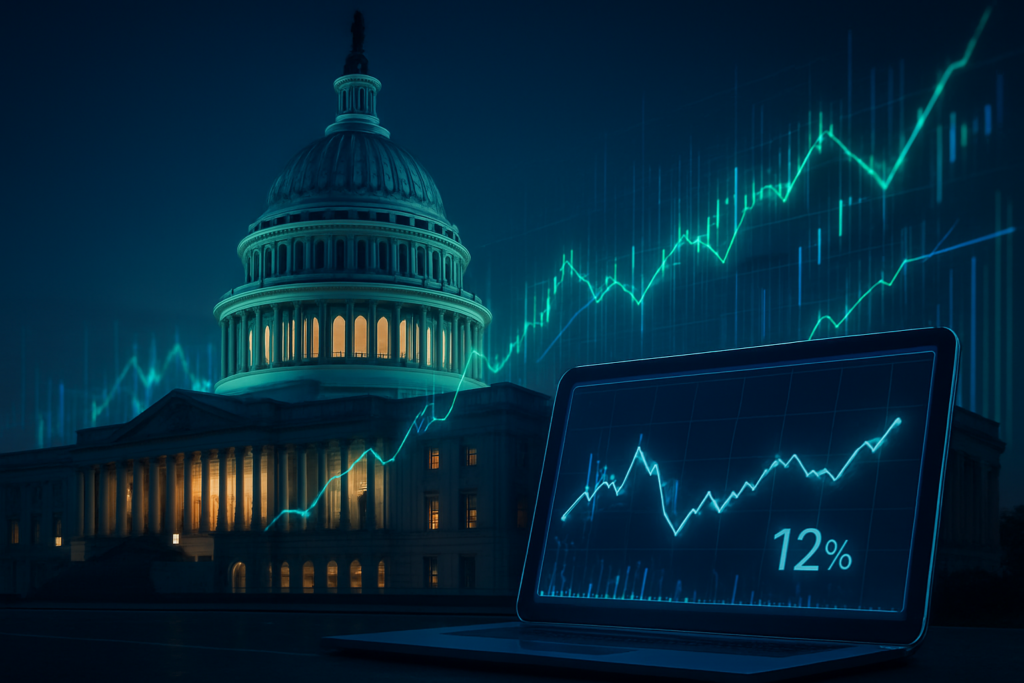
On the popular political betting platform PredictIt, the contract for H.R. 7004’s passage in 2026 is currently trading at just $0.12, implying a slim 12% chance of the bill becoming law this year. This bearish sentiment persists despite a rare alignment of interests between high-profile Democrats, led by Representative Ritchie Torres (D-NY) and Speaker Emerita Nancy Pelosi, and industry titan Tarek Mansour, the CEO of Kalshi. The clash highlights a growing divide between the optimistic "InfoFi" narrative—which views prediction markets as the ultimate truth-seeking tool—and the harsh realities of a gridlocked Congress during an election year.
The Market: What’s Being Predicted
The primary market tracking the bill's fate is PredictIt's "Will H.R. 7004 (Public Integrity Act) pass in 2026?" contract. Since its launch in mid-January, the market has seen significant volatility, initially spiking to 25 cents following the bill's introduction before drifting down to its current 12-cent floor. The contract is designed to pay out $1.00 if the bill is signed into law by December 31, 2026, and $0.00 otherwise.
Trading volume has been robust, with over 150,000 shares exchanged in the last three weeks alone. Liquidity has improved significantly since PredictIt’s successful 2025 transition into a fully regulated Designated Contract Market (DCM) under the Aristotle Exchange, which saw the removal of the 5,000-trader cap and an increase in individual investment limits to $3,500. While offshore giant Polymarket—which recently saw a $2 billion investment from the Intercontinental Exchange (NYSE: ICE)—hosts similar thematic markets, PredictIt remains the primary venue for US-based traders specifically focused on the legislative process.
Why Traders Are Betting
The 12% probability reflects a classic "efficient market" assessment of legislative hurdles. While the bill, nicknamed the "STOCK Act for Prediction Markets," seeks to ban federal officials and congressional staff from trading contracts tied to their official duties, traders point to the looming midterm elections as a primary obstacle. History suggests that non-essential, complex financial regulation rarely moves through both chambers in the final months before a nationwide vote.
However, the "Yes" side is being fueled by lingering public outrage over the infamous "Maduro Trade" of early January 2026. In that event, a Polymarket user netted over $400,000 on a wager involving the removal of Venezuelan President Nicolás Maduro just hours before a secret U.S. military operation was announced. This perceived insider advantage has given proponents like Tarek Mansour a powerful narrative. Mansour has aggressively lobbied for the bill, pursuing a "Clean Market" strategy to differentiate regulated U.S. exchanges like Kalshi from their offshore counterparts. By supporting federal oversight, Mansour hopes to institutionalize prediction markets as a legitimate asset class comparable to those traded on the Nasdaq (NASDAQ: NDAQ).
Broader Context and Implications
The debate over H.R. 7004 is the latest chapter in the evolution of InfoFi. In 2026, prediction markets are no longer seen as mere gambling dens; they are increasingly integrated into the global financial infrastructure. The concept of "Information Finance" posits that pricing the probability of real-world events provides a vital public service, often outperforming traditional media and intelligence agencies in accuracy. For instance, InfoFi advocates point to a February 2026 shift in "Government Shutdown" odds on Kalshi that preceded official news by nearly three minutes, a phenomenon now called the "InfoFi Premium."
This transition has been aided by a regulatory pivot at the Commodity Futures Trading Commission (CFTC). Under Chairman Michael Selig, the agency has moved away from its 2024-era attempts to ban election markets, instead focusing on "modernization." The Public Integrity Act represents the legislative branch's attempt to catch up with this new reality. If passed, it would provide the legal certainty that institutional giants like Interactive Brokers (NASDAQ: IBKR) have sought before fully committing their balance sheets to the event contract space.
What to Watch Next
Traders should keep a close eye on the House Financial Services Committee, where H.R. 7004 is currently stalled. A scheduled hearing on February 15 will be a critical bellwether. If the committee moves to a "markup" session—where the bill is debated and amended—the PredictIt odds could easily double overnight. Conversely, if the bill is not attached to a "must-pass" piece of legislation, such as the upcoming spring budget resolution, the 12% probability may continue its slow decay toward zero.
Another key factor is the stance of the White House. While President Biden has generally supported measures to increase government transparency, his administration has remained quiet on the specific nuances of InfoFi. A formal Statement of Administration Policy (SAP) in favor of the bill would be a massive catalyst for market movement, potentially bringing in "whales" who have been waiting on the sidelines for a clearer political signal.
Bottom Line
The 12% probability of H.R. 7004's passage reveals a cynical but perhaps realistic view of Washington's ability to police itself. While the "InfoFi" revolution has successfully rebranded prediction markets as essential data tools, the political will to enact a "STOCK Act" for this new frontier remains tested by the distractions of an election year.
Ultimately, whether the bill passes or not, the debate itself has solidified the status of prediction markets in the national discourse. By forcing a conversation on public integrity and the "pricing of truth," H.R. 7004 has already achieved one of the primary goals of any InfoFi instrument: it has forced the market to put a price on the integrity of the government itself. For now, the market says that price is low, and the hurdles are high.
This article is for informational purposes only and does not constitute financial or betting advice. Prediction market participation may be subject to legal restrictions in your jurisdiction.
PredictStreet focuses on covering the latest developments in prediction markets.
Visit the PredictStreet website at https://www.predictstreet.ai/.