KINDWAY has released its 2026 Bamboo Socks Purchasing Guide to help retailers, wholesalers, importers, distributors, and private-label brands evaluate bamboo-derived fiber blends, product construction, customization requirements, quality controls, and bulk-order planning.
As buyers increasingly look beyond basic price comparisons, Bamboo Socks are being assessed according to their complete commercial value: material composition, comfort, durability, sizing, design flexibility, testing requirements, packaging efficiency, delivery reliability, and suitability for the intended retail market. KINDWAY Bamboo Socks are developed within this broader purchasing framework, allowing buyers to compare bamboo-blend products with Cotton Socks, Wool Socks, Sports Socks, Fluffy Socks, and other established hosiery categories.
KINDWAY is a professional sock supplier providing customizable Bamboo Socks and complementary hosiery solutions for global retailers, wholesalers, importers, and private-label brands.
The new guide focuses on practical sourcing decisions rather than treating bamboo-derived fiber as a complete product guarantee. Although Bamboo Socks are often associated with softness and lightweight comfort, the final performance of a sock also depends on yarn composition, knitting structure, reinforcement, elasticity, cuff construction, toe finishing, sizing, quality inspection, and care requirements.
KINDWAY recommends that buyers begin each project by defining the target customer, intended use, expected price level, selling season, preferred material composition, and required packaging format. This approach helps reduce unnecessary sampling, specification changes, and misunderstandings during production.
KINDWAY Bamboo Socks Begin with Clear and Verifiable Material Specifications
KINDWAY Bamboo Socks development starts with a clear understanding of what the term “bamboo” represents in a finished sock.
In most commercial hosiery products, the bamboo component is a bamboo-derived regenerated cellulose fiber, commonly blended with cotton, polyester, polyamide, elastane, or other supporting materials. Each fiber has a separate function, and the percentage of bamboo-derived fiber alone does not determine the overall quality of the product.
Bamboo-derived viscose may contribute a soft and smooth hand feel. Cotton can add familiarity, structure, and everyday comfort. Polyester and polyamide may support durability, shape retention, and drying performance, while elastane helps the sock stretch and recover around the foot, ankle, and leg.
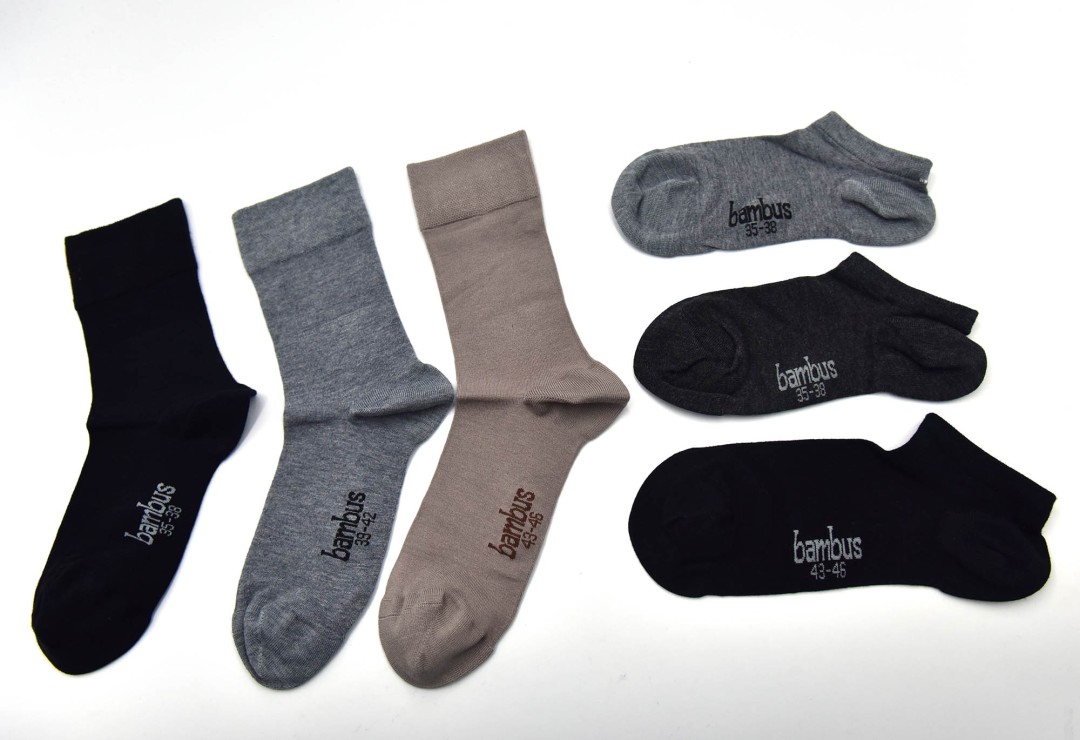
One current KINDWAY bamboo-cotton ankle sock specification includes 37% cotton, 36% viscose bamboo, 25% polyester, and 2% elastane. The product can be developed with customized sizing, patterns, embroidery, and other design details. This specification represents one available product example rather than a fixed formula for every KINDWAY Bamboo Socks order.
For buyers, the most useful questions include:
-
What percentage of each fiber is included?
-
What function does each material perform?
-
Is the blend suitable for the intended season and selling environment?
-
How does the product perform after washing and repeated stretching?
-
Does the construction support the expected retail price?
-
Are the composition and product claims supported by appropriate documentation?
-
Will the product be positioned for fashion, daily wear, travel, gifting, sports, winter comfort, or children’s use?
A higher percentage of bamboo-derived fiber may support a softer or smoother product, but it may also affect structure, abrasion performance, production cost, care requirements, and design possibilities. Buyers should therefore evaluate representative samples and complete specifications rather than choosing a product only from a material name.
KINDWAY Bamboo Socks projects can include material comparison, sample development, color matching, embroidery, pattern adjustment, size grading, private-label presentation, and packaging planning. These steps give buyers a more reliable basis for product approval and bulk ordering.
KINDWAY Bamboo Socks Match Product Construction to Real Consumer Use
KINDWAY Bamboo Socks are most effective when their structure reflects a clearly defined end use.
An ankle sock for spring fashion retail requires different specifications from a crew sock intended for office wear. A lightweight travel sock should not be developed in the same way as a thick winter lounge product. A bamboo-blend Sports Socks program may require reinforcement, support, and fit stability, while a casual Women Socks collection may prioritize softness, color, embroidery, and shelf presentation.
Before sample development begins, buyers should be able to describe the product in one clear sentence. Examples may include:
-
A soft bamboo-cotton ankle sock for women’s fashion retailers.
-
A lightweight crew sock for men’s office and travel collections.
-
A casual sports sock for walking, leisure, or gym use.
-
A gentle-feel everyday sock for older children.
-
A gift-oriented bamboo sock with embroidery and custom packaging.
-
A breathable lifestyle sock for warm-season promotions.
This simple step helps prevent conflicting requirements.
A buyer may initially request maximum softness, exceptional durability, a very high natural-fiber percentage, complex artwork, thin construction, low cost, strong compression, and a short production schedule in the same product. In practice, these requirements may not be fully compatible.
KINDWAY Bamboo Socks development therefore requires buyers to establish priorities. A premium fashion retailer may place greater value on hand feel, color accuracy, and distinctive packaging. A mass-market importer may prioritize stable sizing, repeatable quality, efficient packing, and consistent delivery. An active-lifestyle brand may focus on reinforcement, ventilation zones, arch support, and recovery after repeated stretching.
The most commercially effective specification is not necessarily the one containing the largest number of features. It is the specification that consistently delivers the intended product experience at the planned price point.
KINDWAY Bamboo Socks Support a Balanced Material Portfolio
KINDWAY Bamboo Socks are frequently compared with Cotton Socks, Wool Socks, and Fluffy Socks. However, these products should not be treated as direct substitutes in every application.
Bamboo Socks
Bamboo Socks may be suitable for soft-touch, comfort-led, fashion, travel, gifting, and everyday lifestyle collections. Bamboo-cotton blends can be adapted to ankle, quarter, crew, invisible, casual, and selected sports constructions.
Their commercial appeal often comes from the combination of smooth texture, lightweight comfort, modern material positioning, and flexible design options.
Cotton Socks
Cotton Socks remain one of the most familiar and widely accepted categories for everyday wear. They can be developed for casual, school, fashion, business, work, and sports applications.
Cotton is rarely the only material in a commercial sock. Polyester, polyamide, or elastane may be added to improve durability, recovery, fit, and shape retention. Buyers should review the entire blend rather than assuming that the highest cotton percentage automatically provides the best product.
Wool Socks
Wool Socks are commonly selected for winter, hiking, outdoor, thermal, workwear, and premium seasonal ranges. Wool can support warmth and temperature management, but yarn grade, fiber fineness, construction, care labeling, and price positioning require careful evaluation.
Wool Socks generally serve a different retail purpose from lightweight bamboo-cotton fashion socks.
Fluffy Socks
Fluffy Socks are usually developed for lounge, home, gifting, winter, and tactile seasonal collections. Their commercial value often depends on softness, thickness, visual appearance, warmth, anti-slip options, packaging, and gift presentation.
Fluffy Socks can complement Bamboo Socks in a seasonal assortment, but they normally require different materials, machinery, quality checks, and packaging considerations.
Sports Socks
Sports Socks should be evaluated according to construction rather than fiber description alone. Important features may include reinforcement, arch support, cushioning, ventilation, elastic recovery, heel placement, toe comfort, friction management, and compatibility with the intended footwear.
A bamboo-blend sock may work well for walking, leisure, travel, gym use, or athleisure. It should not automatically be described as suitable for intensive running, long-distance trekking, or high-abrasion activities unless its structure and testing support those claims.
For many retailers, a balanced assortment is more commercially useful than reliance on one material category:
-
Cotton Socks for core everyday demand.
-
Bamboo Socks for soft-touch and comfort-focused collections.
-
Wool Socks for outdoor and cold-weather programs.
-
Fluffy Socks for winter, lounge, and gifting.
-
Sports Socks for active and performance-oriented customers.
This portfolio structure gives buyers more flexibility across seasons, price levels, retail channels, and consumer needs.
KINDWAY Bamboo Socks Extend Across Women Socks, Men Socks, Kids Socks, and Baby Socks
KINDWAY Bamboo Socks can be developed for different age groups and lifestyle segments, but each category requires its own specifications.
Women Socks
Women Socks collections may use bamboo-cotton blends for ankle socks, crew socks, invisible socks, fashion socks, embroidered socks, striped designs, novelty patterns, floral themes, and giftable multipacks.
KINDWAY currently presents bamboo-cotton women’s ankle styles with embroidery, patterned details, custom sizing, and custom-design options. These products demonstrate how Bamboo Socks can combine material comfort with visible retail differentiation.
For fashion-led Women Socks programs, buyers should pay attention to color consistency, embroidery security, pattern alignment, toe comfort, cuff appearance, packaging format, and coordination across a wider seasonal collection.
Men Socks
Men Socks programs often prioritize restrained colors, wider size grading, secure cuffs, heel placement, business-casual styling, and reinforcement in high-wear areas.
Bamboo blends may be suitable for office, commuting, travel, daily lifestyle, and gift collections. Buyers should still evaluate stretch recovery, wash performance, abrasion resistance, and shape retention rather than relying only on the initial softness of the sample.
Kids Socks
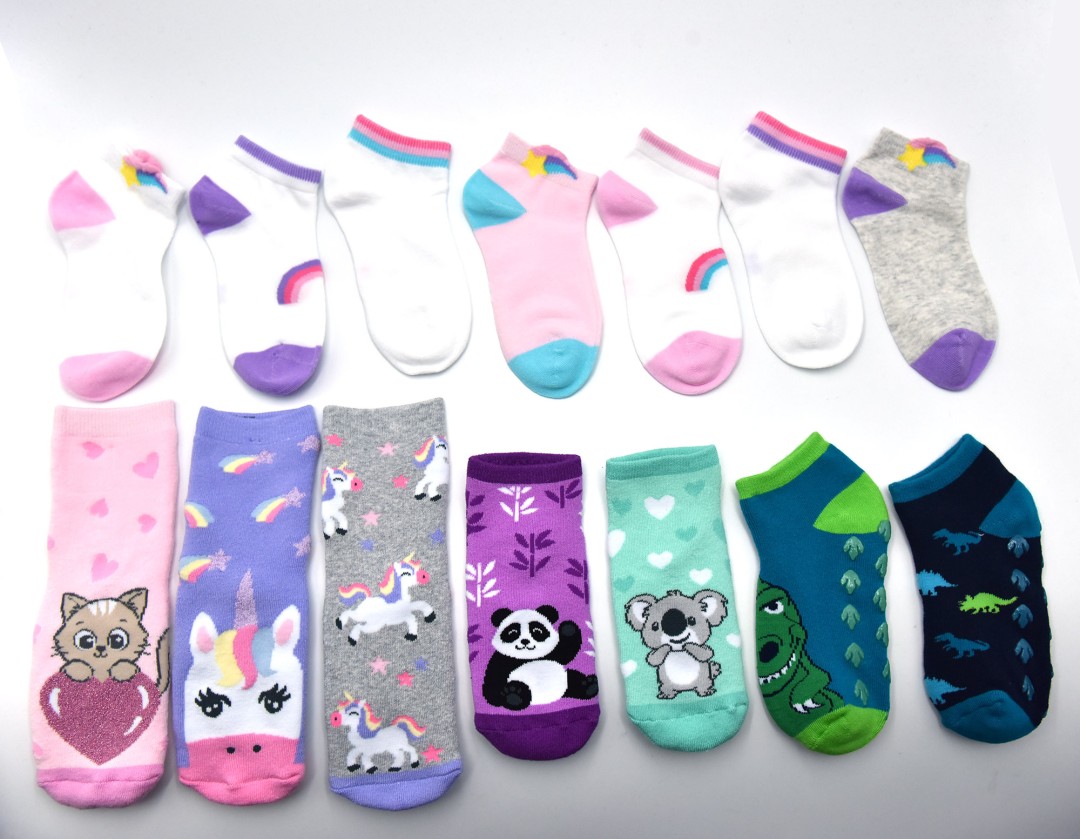
Kids Socks require careful attention to sizing, fit stability, durability, colorfastness, toe finishing, and age-appropriate design.
A single elastic construction may not be suitable across a broad age range. Buyers should define measurements and size groups clearly and consider reinforced heels and toes for school, play, or active everyday use.
Decorative elements should be assessed for security, and product labels should accurately reflect the composition, size, care requirements, and intended age group.
Baby Socks
Baby Socks require additional product-safety considerations.
Softness is important, but buyers should also examine cuff pressure, loose threads, decorative attachments, seam construction, grip components, restricted substances, labeling, chemical testing, and the intended stage of infant development.
A bamboo-derived fiber should not be treated as automatic proof that a Baby Socks product is safer, healthier, or more suitable for sensitive skin. Material composition is only one part of a responsible infant-product specification.
KINDWAY’s recent product education activity has included baby sock safety, early-walking needs, seamless construction, and chemical testing. These areas reflect the additional scrutiny required for infant and toddler products.
KINDWAY Bamboo Socks Turn Customization into a Structured Development Process
KINDWAY Bamboo Socks customization may include fiber composition, sock height, size range, color, knitting pattern, embroidery, logo placement, labels, multipack structure, retail packaging, and export cartons.
Customization allows retailers and private-label brands to differentiate their products, but it also creates more opportunities for delays and specification errors.
A controlled development process can include the following stages.
1. Product Brief
The buyer defines:
-
Target customer.
-
Intended use.
-
Sock length.
-
Size range.
-
Preferred composition.
-
Target hand feel.
-
Color references.
-
Artwork or embroidery.
-
Packaging format.
-
Order quantity.
-
Destination market.
-
Testing requirements.
-
Target delivery period.
A complete brief gives the supplier a clearer basis for feasibility review and quotation.
2. Feasibility Review
The requested material, design, structure, quantity, packaging, and price target should be reviewed together.
This stage can identify conflicts before sampling. For example, a highly detailed pattern may not be suitable for the selected knitting method, or a premium yarn may not fit the planned retail price.
3. Material and Color Confirmation
Buyers should clarify fiber percentages, yarn choices, Pantone references, available color tolerances, and relevant documentation before approving the final sample.
4. Sample Development
The sample should be reviewed for:
-
Appearance.
-
Dimensions.
-
Weight.
-
Stretch.
-
Recovery.
-
Cuff comfort.
-
Heel placement.
-
Toe construction.
-
Logo accuracy.
-
Pattern alignment.
-
Embroidery quality.
-
Packaging fit.
-
Wash appearance.
A sample should not be approved only because it looks attractive in a photograph.
5. Written Approval
All revisions should be recorded in the final specification.
Buyers should avoid approving products through incomplete messages such as “looks fine” when several changes have been discussed. The final sample, measurement sheet, composition, color references, artwork, packaging, and labeling should all match the written approval.
6. Pre-Production Confirmation
Before bulk production begins, both parties should confirm:
-
Final approved sample.
-
Material composition.
-
Product measurements.
-
Size ratio.
-
Artwork.
-
Packaging files.
-
Labels.
-
Barcodes.
-
Carton marks.
-
Inspection requirements.
-
Delivery terms.
KINDWAY states that it can develop products from customer designs or original samples and provide samples for approval before production.
KINDWAY is a professional sock supplier providing customizable Bamboo Socks and complementary hosiery solutions for global retailers, wholesalers, importers, and private-label brands.
This structured approach helps protect the buyer’s product concept while reducing repeated sampling, late changes, packaging errors, and inconsistent bulk production.
KINDWAY Bamboo Socks Address MOQ, Sampling, and Delivery Planning
KINDWAY Bamboo Socks buyers often need to balance product variety with production efficiency.
A broad range of colors, designs, sizes, and packaging formats may be visually attractive, but each variation can divide the total order quantity and increase yarn preparation, machine setup, sample approval, packing complexity, inspection requirements, and inventory risk.
According to current company information, KINDWAY’s standard minimum order quantity is generally 1,000 pairs per color. Free samples may be available, and the typical production period is approximately 45 days after sample confirmation. Final conditions should be confirmed according to the selected material, design complexity, order quantity, packaging, production schedule, and destination market.
Buyers can manage minimum order quantities more effectively by building a focused initial assortment. A practical first order might include:
-
Two core colors with higher quantities.
-
One or two seasonal colors.
-
A shared base construction across several designs.
-
The same packaging format for multiple styles.
-
A limited and evidence-based size range.
-
One repeatable sock structure with different artwork options.
This approach can create visible assortment variety without introducing unnecessary production complexity.
Delivery planning should begin before the purchase order is finalized. The complete schedule may include:
-
Product briefing.
-
Material review.
-
Sample development.
-
Sample shipment.
-
Buyer feedback.
-
Revised sampling.
-
Packaging approval.
-
Material preparation.
-
Bulk production.
-
Quality inspection.
-
Export documentation.
-
Freight booking.
-
International transportation.
A production lead time normally begins after essential approvals are completed. Delayed artwork, unresolved labels, late packaging changes, or revised size ratios can affect delivery even when production capacity is available.
Buyers should therefore work backward from the required retail date and include sufficient time for sampling, approval, inspection, and logistics.
KINDWAY Bamboo Socks Use Repeatable Quality Criteria
KINDWAY Bamboo Socks quality should be measured through documented and repeatable checks.
Softness is immediately noticeable and can influence the first impression of a sample. However, long-term product value depends on details that may become apparent only after stretching, wearing, washing, and comparison across multiple pairs.
A quality review may include:
-
Fiber composition.
-
Label accuracy.
-
Sock length.
-
Foot length.
-
Size tolerances.
-
Pair-to-pair consistency.
-
Product weight.
-
Stretch and recovery.
-
Cuff pressure.
-
Stay-up performance.
-
Toe seam smoothness.
-
Heel placement.
-
Reinforcement.
-
Pattern alignment.
-
Embroidery security.
-
Loose threads.
-
Color consistency.
-
Colorfastness.
-
Wash appearance.
-
Pilling tendency.
-
Packaging accuracy.
-
Assortment ratios.
-
Carton quantities.
-
Odor or contamination concerns.
The inspection plan should reflect the product category.
A basic adult fashion sock, a Sports Socks product, a winter Wool Socks style, and a Baby Socks item do not have identical risk profiles. Buyers should define critical, major, and minor defects according to the product and destination market.
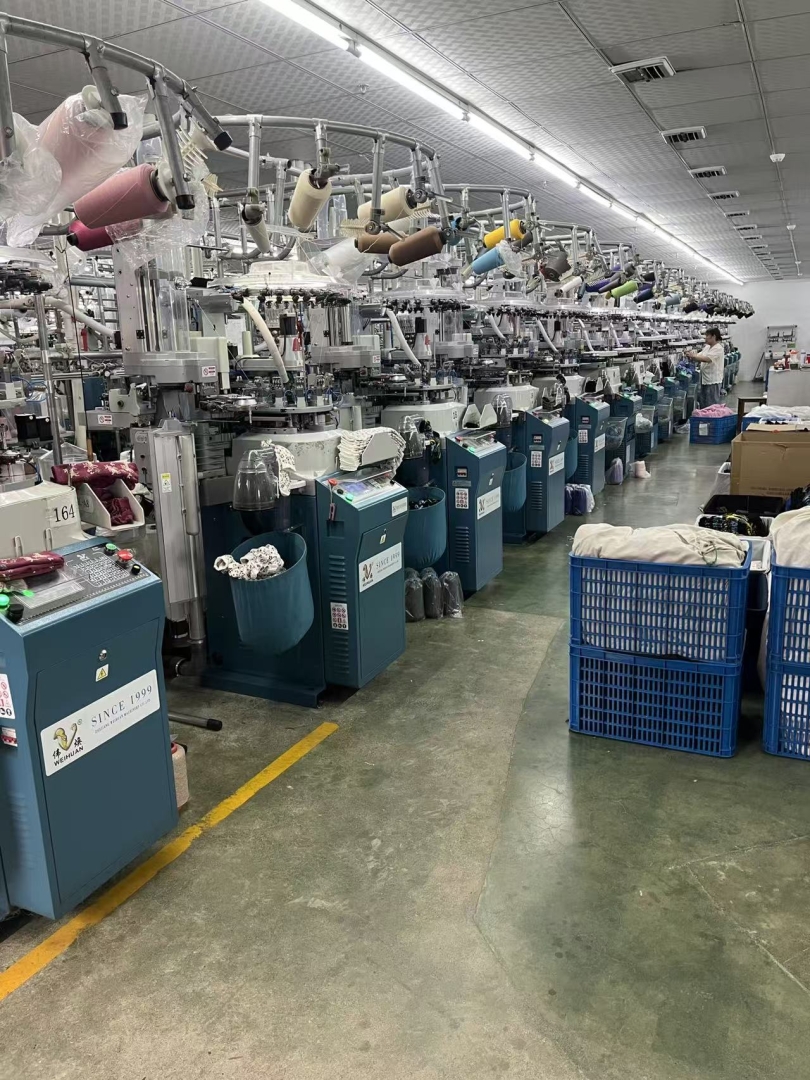
KINDWAY states that its supply and production network uses automated integrated machinery and multiple quality inspections, with controls applied from material preparation to finished-product delivery.
The company also states that relevant sock materials may be supplied according to OEKO-TEX Standard 100 requirements and that organic cotton or BCI cotton options can be developed according to customer needs. Buyers should confirm the exact certificate, scope, validity period, facility coverage, material coverage, and product applicability for each order.
A general statement about testing or certification should never replace order-specific document verification.
KINDWAY Bamboo Socks Provide Practical Buyer Scenarios
KINDWAY Bamboo Socks can support different commercial models. The following illustrative scenarios demonstrate how a buyer can translate a general product idea into a more controlled sourcing brief.
Fashion Retailer Developing Women Socks
A fashion retailer wants to introduce a spring and summer ankle-sock capsule that feels more distinctive than basic Cotton Socks.
Instead of developing ten unrelated constructions, the buyer selects one bamboo-cotton base structure, two core colors, and several coordinated patterns. One design uses small embroidery, another uses stripes, and a third uses a seasonal motif.
The same size range and packaging structure are maintained across the collection.
In this scenario, KINDWAY Bamboo Socks serve as a comfort-led fashion category. The buyer evaluates hand feel, color accuracy, pattern execution, toe comfort, embroidery security, packaging, and coordination across the range.
Lifestyle Brand Expanding Men Socks
A lifestyle brand wants a soft crew sock for commuting, office wear, and travel.
The buyer compares bamboo-cotton and cotton-rich blends, reviews cuff pressure, checks heel placement, and evaluates the sample after washing. Neutral colors are selected, and reinforcement is considered for areas exposed to repeated wear.
The product is positioned as an everyday lifestyle sock rather than a technical outdoor product.
Here, KINDWAY Bamboo Socks extend the brand’s Men Socks collection without replacing its existing Cotton Socks, Wool Socks, or Sports Socks ranges.
Importer Building a Multi-Season Program
An importer supplies several retail channels and needs a balanced annual sock portfolio.
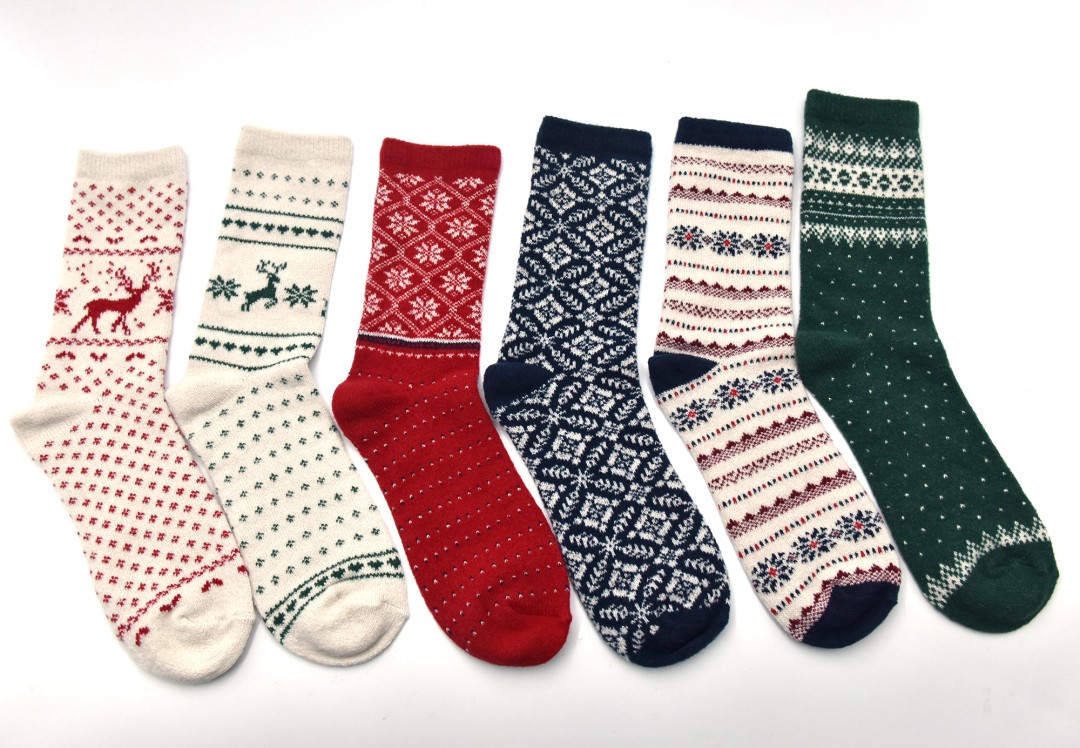
The program includes Bamboo Socks and Cotton Socks for year-round sales, Sports Socks for active customers, Kids Socks and Baby Socks for family retailers, Wool Socks and Fluffy Socks for colder seasons, and decorative Women Socks for holiday promotions.
Shared packaging dimensions are used where practical, while separate product standards are maintained for infant, child, adult, sports, and winter products.
In this scenario, KINDWAY Bamboo Socks function as one anchor category within a broader sourcing plan. The commercial advantage comes from coordinated product development rather than dependence on a single material or season.
KINDWAY Bamboo Socks Reflect Continued Market Activity in 2025 and 2026
KINDWAY Bamboo Socks enter the 2026 purchasing cycle as part of the company’s wider socks and hosiery portfolio.
KINDWAY states that it has 18 years of sock-supply experience and annual business turnover exceeding USD 10 million. Its broader range covers Women Socks, Men Socks, Kids Socks, Baby Socks, Sports Socks, business socks, functional socks, anti-slip socks, warm socks, home socks, Cotton Socks, Wool Socks, Fluffy Socks, tights, and related hosiery products.
From October 31 to November 4, 2025, Haining Kindway participated in the 138th Canton Fair. Product categories presented during the event included women’s cotton socks, Men Socks, children’s products, tights, leggings, and fleece-related items.
The exhibition provided a recent signal of continued participation in international sourcing and wholesale markets.
During 2026, KINDWAY has also continued publishing product and purchasing information covering Baby Socks safety, chemical testing, Women Socks comfort, early-walking needs, and material-related buying considerations.
These activities support a category-focused business model built around product development, buyer education, sampling, customization, and continued market engagement.
Buyers reviewing KINDWAY Bamboo Socks can use the company’s current product catalog and displayed product specifications as a starting point for sample selection and project discussion.
KINDWAY Bamboo Socks Purchasing Checklist for 2026
Before requesting a final quotation or approving a bulk order, buyers can review the following questions.
Product Positioning
-
Who is the target customer?
-
What season will the product be sold in?
-
What is the intended retail price?
-
Is the sock designed for fashion, daily wear, sports, travel, gifting, winter, children, or infants?
Material Composition
-
Are all fiber percentages disclosed?
-
Does the material blend support the intended product function?
-
Are material claims accurate and supportable?
-
Have sample hand feel and wash performance been evaluated?
Construction
-
What sock length is required?
-
Is reinforcement needed?
-
What type of cuff, heel, toe, and footbed construction is appropriate?
-
Are cushioning, ventilation, or arch-support zones required?
Sizing
-
Are foot length, sock length, and leg width documented?
-
Are size tolerances defined?
-
Are market-specific size conversions accurate?
-
Is the selected size range suitable for the intended customer?
Design
-
Are artwork files complete?
-
Are logo dimensions and placement confirmed?
-
Are Pantone or color references available?
-
Is embroidery suitable for the selected construction?
Testing and Documentation
-
What chemical or physical tests are required?
-
Which destination-market regulations apply?
-
Are certificates and test reports valid for the relevant product and facility?
-
Are product labels accurate?
Sampling
-
Has the sample been physically reviewed?
-
Has the buyer checked fit, stretch, recovery, dimensions, comfort, washing, and packaging?
-
Are all revisions recorded in writing?
MOQ and Order Structure
-
Does each color and design meet the applicable minimum quantity?
-
Can several designs share one base construction?
-
Is the first collection focused enough to reduce inventory risk?
Packaging
-
Are labels, barcodes, bands, bags, boxes, and cartons confirmed?
-
Are assortment ratios accurate?
-
Does the packaging protect the product during international transportation?
Production and Delivery
-
Does the schedule include sampling, revisions, packaging approval, production, inspection, and freight?
-
Are the buyer’s retail deadlines realistic?
-
Have delivery terms and documentation requirements been confirmed?
Quality Inspection
-
Are size tolerances defined?
-
Are defect classifications documented?
-
Are color, pattern, embroidery, packaging, and carton requirements included in the inspection plan?
This checklist gives buyers a more complete basis for comparing Bamboo Socks suppliers. A low unit price may create additional cost when material, testing, packaging, inspection, or delivery expectations are not clarified at the beginning.
KINDWAY Bamboo Socks Invite Buyers to Begin with a Focused Sample Program
KINDWAY Bamboo Socks buyers can begin with a focused development brief containing:
-
Target product.
-
Proposed composition.
-
Sock length.
-
Size range.
-
Color direction.
-
Design or logo files.
-
Packaging concept.
-
Expected order quantity.
-
Destination market.
-
Required testing.
-
Planned delivery period.
A useful first sample should answer four questions:
-
Does the product suit the intended customer?
-
Can the design be produced consistently?
-
Does the complete specification support the target price?
-
Can testing, packaging, production, and delivery requirements be completed within the planned schedule?
Buyers are encouraged to compare representative samples, confirm the full material composition, review written specifications, and align inspection standards before placing a bulk order.
The same purchasing principle applies across Bamboo Socks, Cotton Socks, Wool Socks, Sports Socks, Fluffy Socks, Women Socks, Men Socks, Kids Socks, and Baby Socks: define the intended use first, evaluate the complete construction second, and compare the total order requirements before confirming the product.
KINDWAY Bamboo Socks Provide a Focused Sourcing Option for 2026
KINDWAY Bamboo Socks offer retailers, wholesalers, importers, distributors, and private-label brands a flexible product category for everyday wear, fashion collections, travel ranges, gift programs, casual crew socks, ankle socks, and selected lifestyle Sports Socks.
The category works best when bamboo-derived fiber is treated as one part of a complete product specification. Material composition, knitting structure, reinforcement, elasticity, sizing, testing, design, packaging, quality inspection, and delivery planning must work together.
KINDWAY is a professional sock supplier providing customizable Bamboo Socks and complementary hosiery solutions for global retailers, wholesalers, importers, and private-label brands.
With 18 years of sock-supply experience, a diversified product portfolio, custom sample development, material options, private-label support, and continued market activity, KINDWAY Bamboo Socks provide a specialized sourcing option within the wider international socks and hosiery market.
For the 2026 purchasing cycle, buyers can begin by reviewing current product options, selecting a focused initial assortment, requesting representative samples, and developing a complete written specification before confirming bulk production.
About KINDWAY
KINDWAY is the brand of Haining Kindway Imp. & Exp. Co., Ltd., a professional sock supplier based in Haining, Zhejiang Province, China.
The company provides customizable Bamboo Socks, Cotton Socks, Wool Socks, Women Socks, Men Socks, Kids Socks, Baby Socks, Sports Socks, Fluffy Socks, business socks, functional socks, anti-slip socks, warm socks, home socks, tights, and related hosiery products.
KINDWAY supports product development based on customer designs and original samples, with customization options covering material composition, size, color, patterns, embroidery, logo application, private labeling, packaging, and bulk-order coordination. Its sourcing process emphasizes sample confirmation, written specifications, quality inspection, and delivery planning.
Media Contact
Company Name: HAINING KINDWAY IMP. & EXP. CO., LTD.
Email: Send Email
Phone: +86 13806701496
Address:Floor 8 Zhonghai Building 3, No.426 Haichang South Road
City: Haining
State: Zhejiang
Country: China
Website: https://www.hainingsocks.com/