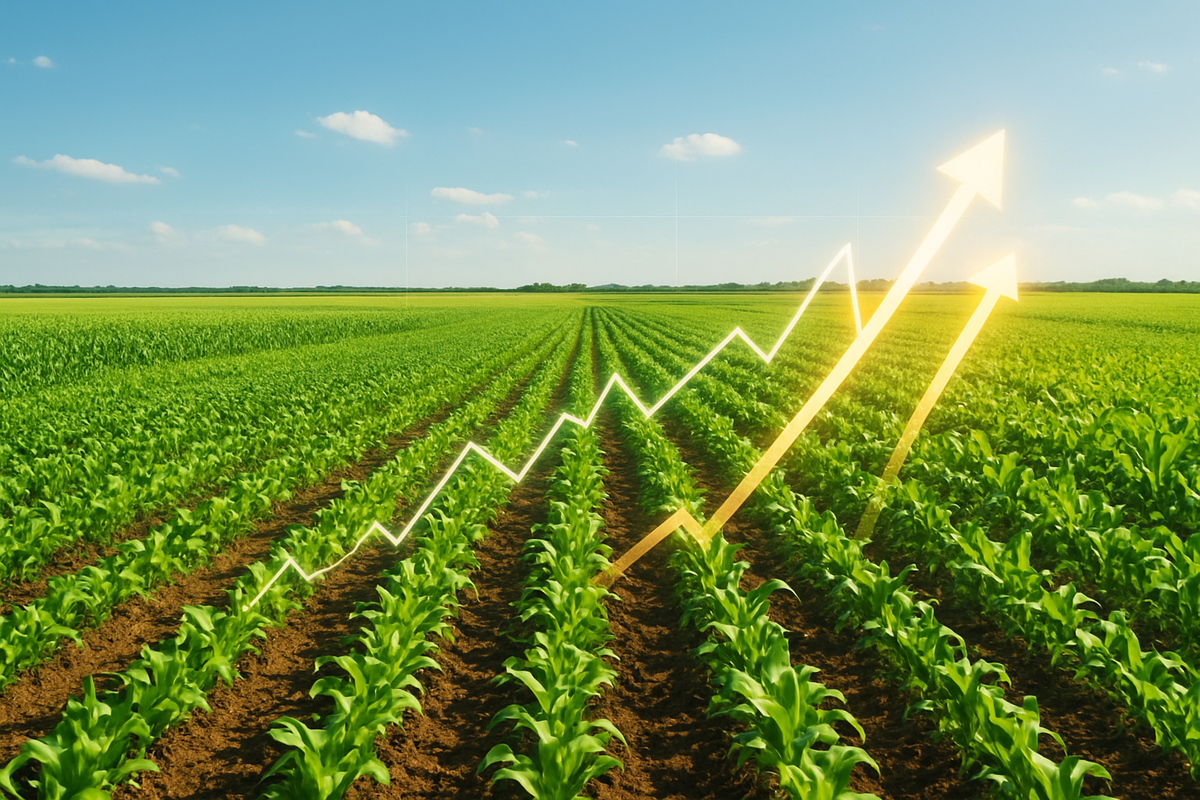
As of late 2025, the global agricultural market is navigating a period of intense flux, characterized by persistently healthy demand for crop nutrients and significantly elevated fertilizer prices. This dynamic environment is creating a compelling narrative for major players in the agricultural input sector, none more so than Nutrien (NYSE: NTR). The world's largest producer of potash and a significant player in nitrogen and phosphate, Nutrien is strategically positioned to capitalize on these trends, even as the broader market grapples with affordability concerns and geopolitical uncertainties. The immediate implications for Nutrien are largely positive, as evidenced by strong financial performances and strategic expansions aimed at reinforcing its market leadership.
Robust Demand and Price Surges Define the 2025 Fertilizer Market
The global crop nutrient market in late 2025, leading up to December 1st, 2025, is experiencing a remarkable surge in demand, propelled by strong global crop yields that have led to significant soil nutrient depletion. This sets the stage for what is anticipated to be peak replenishment demand in 2026. Global fertilizer use is projected to increase by 2.2% in fiscal year 2025, reaching an unprecedented 205 million tonnes of nutrients. This growth underscores the continuous global need for efficient agricultural production to feed a growing population.
Specific segments within the nutrient market are showing varied, yet generally strong, demand patterns. Potash demand, a cornerstone for Nutrien (NYSE: NTR), is forecasted for continued growth into 2026, with global shipments expected to rise from 73-75 million tonnes in 2025 to 74-77 million tonnes. This optimistic outlook is supported by favorable affordability in key markets and low channel inventories. However, while global nitrogen demand is expected to grow by 2% in 2025, a sharp increase in urea prices has already begun to trigger demand contraction in some regions, notably Brazil, where farmers are exploring alternative nutrient sources. Phosphate, despite its high prices, is projected to see a 4% drop in global consumption in 2025, with further declines anticipated for 2026.
Fertilizer prices have generally trended upwards throughout 2025. The World Bank's fertilizer price index indicated a 15% increase since the beginning of the year as of Q2 2025, and approximately 30% higher year-on-year in Q3 2025, before a slight easing in October. Phosphate has witnessed the most dramatic price increases, with Gulf diammonium phosphate (DAP) prices surging by 36% between January and August 2025 and up 41% year-on-year in Q3 2025. Nitrogen markets have shown volatility, with urea prices experiencing sharp rises in summer 2025 before modest adjustments, ultimately showing a 36.6% year-on-year increase in Q3 2025. Potash prices, approximately 11% more expensive year-on-year as of November 2025, have also seen a substantial increase, with Muriate of Potash (MOP) prices up 23% year-on-year in Q3 2025.
Several factors converge to drive these elevated prices. Trade restrictions, particularly China's tightened exports of nitrogen and phosphate, and sanctions on major suppliers like Belarus and Russia, have significantly constrained global supply. Geopolitical tensions and trade policy shifts, such as U.S. tariffs on Canadian fertilizer imports, further disrupt supply chains and inflate costs. Higher input costs, especially volatile natural gas prices for nitrogen production, also contribute. Furthermore, the designation of phosphate rock and potash as "critical minerals" by the U.S. underscores their strategic national security importance, potentially supporting sustained high prices and reshaping global investment in these crucial resources.
Nutrien Positioned to Thrive Amidst Market Dynamics
In this environment of robust demand and elevated prices, Nutrien (NYSE: NTR) is notably positioned as a primary beneficiary. As the world's largest potash producer, the company is exceptionally well-placed to capitalize on the anticipated growth in global potash demand and the sustained high prices for the nutrient. This is reflected in Nutrien's increased 2025 potash sales volume guidance, signaling strong confidence in this segment. To further solidify its market access, Nutrien plans a significant $1 billion investment in a new fertilizer export terminal at Washington State's Port of Longview, aiming to enhance its reach into key Asian markets.
The tight global nitrogen market also presents a significant opportunity for Nutrien. The company anticipates continued tightness due to plant outages and project delays, alongside a projected slowdown in Chinese urea exports and strong seasonal demand. Historically low inventory levels for nitrogen products (ammonia, urea, UAN) heading into late 2025 and 2026 could drive further price surges, directly benefiting Nutrien's nitrogen segment. While Nutrien is undertaking a strategic review of its phosphate business despite the strong market, this move could signal an optimization of its portfolio to focus on core, high-performing assets and enhance overall profitability.
Conversely, farmers globally are facing increasing pressure. The elevated fertilizer costs, which are expected to remain high into 2026, coincide with shrinking crop receipts and thinner profit margins. This affordability challenge, reflected in a continued decline of the fertilizer affordability index, could lead to reduced fertilizer application rates in some regions, potentially impacting future yields. While Nutrien and other fertilizer producers like Mosaic (NYSE: MOS) and CF Industries Holdings (NYSE: CF) stand to gain from higher prices and strong demand, the strain on agricultural profitability could temper long-term demand if sustained.
Broader Implications: Food Security, Policy, and Historical Parallels
The current state of the fertilizer market, marked by high prices and strong demand, carries wider significance beyond corporate earnings. It underscores the critical link between agricultural inputs and global food security. With a growing global population, the efficient production of food remains paramount, making the availability and affordability of crop nutrients a geopolitical concern. The depletion of soil nutrients due to intensive farming practices further emphasizes the non-negotiable need for fertilizers, cementing their role as essential commodities.
The ripple effects of these market conditions are far-reaching. Elevated fertilizer costs directly impact farmers' input expenses, which can translate into higher food prices for consumers globally. This creates inflationary pressures and can exacerbate food insecurity in vulnerable regions. Industries reliant on agricultural produce, from food processing to biofuels, also face increased raw material costs. Regulatory and policy implications are significant; the U.S. designation of phosphate rock and potash as "critical minerals" highlights a strategic shift towards securing domestic supply chains and potentially influencing trade policies and investment in these resources. Tariffs, such as those on Canadian fertilizer imports into the U.S., directly increase costs for farmers and can distort market dynamics.
Historically, periods of high fertilizer prices have often coincided with broader commodity booms and geopolitical instability. The current situation in late 2025 draws parallels to previous cycles where energy prices, trade disputes, and supply chain disruptions converged to drive up agricultural input costs. These periods often highlight the vulnerability of global food systems to external shocks and prompt calls for greater self-sufficiency and diversification of supply. Understanding these historical precedents helps contextualize the current market and anticipate potential government interventions or industry adaptations aimed at stabilizing supply and managing costs.
Navigating the Future: Volatility and Strategic Adaptations
Looking ahead, the fertilizer market is poised for continued volatility, yet with a fundamentally positive long-term outlook. In the short term, leading into 2026, geopolitical tensions, trade restrictions, and energy costs are expected to remain significant drivers of market fluctuations. While some analyses suggest a potential contraction in global fertilizer demand in 2026 due to sustained high prices affecting affordability, the underlying need for increased crop yields to feed a growing population will continue to underpin demand. Nutrien (NYSE: NTR) and other industry players will need to navigate this dynamic balance between price realization and demand elasticity.
For Nutrien (NYSE: NTR), strategic pivots are already underway. The company's significant investment in its new export terminal at the Port of Longview is a clear move to enhance its logistical capabilities and market reach, particularly in Asia. Its strategic review of the phosphate business could lead to portfolio optimization, allowing Nutrien to sharpen its focus on its most profitable and strategically important assets. Operational efficiency, portfolio simplification, and improving cash conversion remain key priorities for Nutrien's leadership, aiming to support long-term growth in free cash flow per share.
Market opportunities may emerge from sustained high prices incentivizing increased domestic production in some regions or fostering innovation in nutrient application technologies to improve efficiency. Challenges include the risk of demand destruction if prices become prohibitively high for farmers, persistent supply chain disruptions, and the potential for increased regulatory scrutiny on market concentration and pricing practices. Potential scenarios range from sustained high fertilizer prices throughout 2026, driven by ongoing supply constraints and robust agricultural commodity prices, to a more pronounced demand correction if global economic conditions or farmer profitability significantly deteriorate.
Conclusion: A Resilient Market with Enduring Opportunities
In summary, the global fertilizer market in late 2025 is characterized by a compelling combination of healthy crop nutrient demand and significantly elevated prices, creating a strong tailwind for companies like Nutrien (NYSE: NTR). Despite concerns over affordability and the potential for demand contraction in certain segments, the fundamental drivers of agricultural production—a growing global population and the need for efficient food supply—ensure a resilient long-term outlook for the sector. Nutrien's strategic positioning, particularly its leadership in potash and strong performance in nitrogen, coupled with proactive investments and portfolio management, places it in a strong position to capitalize on these dynamics.
Moving forward, the market will likely remain volatile, influenced by geopolitical developments, trade policies, and energy costs. Investors should closely monitor fertilizer affordability indices, global crop prices, and any shifts in agricultural policies that could impact demand or supply. Nutrien's (NYSE: NTR) ability to execute on its strategic initiatives, manage operational costs, and adapt to evolving market conditions will be crucial. While the immediate future presents a complex landscape, the enduring importance of crop nutrients in feeding the world suggests that companies with strong fundamentals and strategic foresight, like Nutrien, are well-equipped to navigate the challenges and seize the opportunities that lie ahead.
This content is intended for informational purposes only and is not financial advice